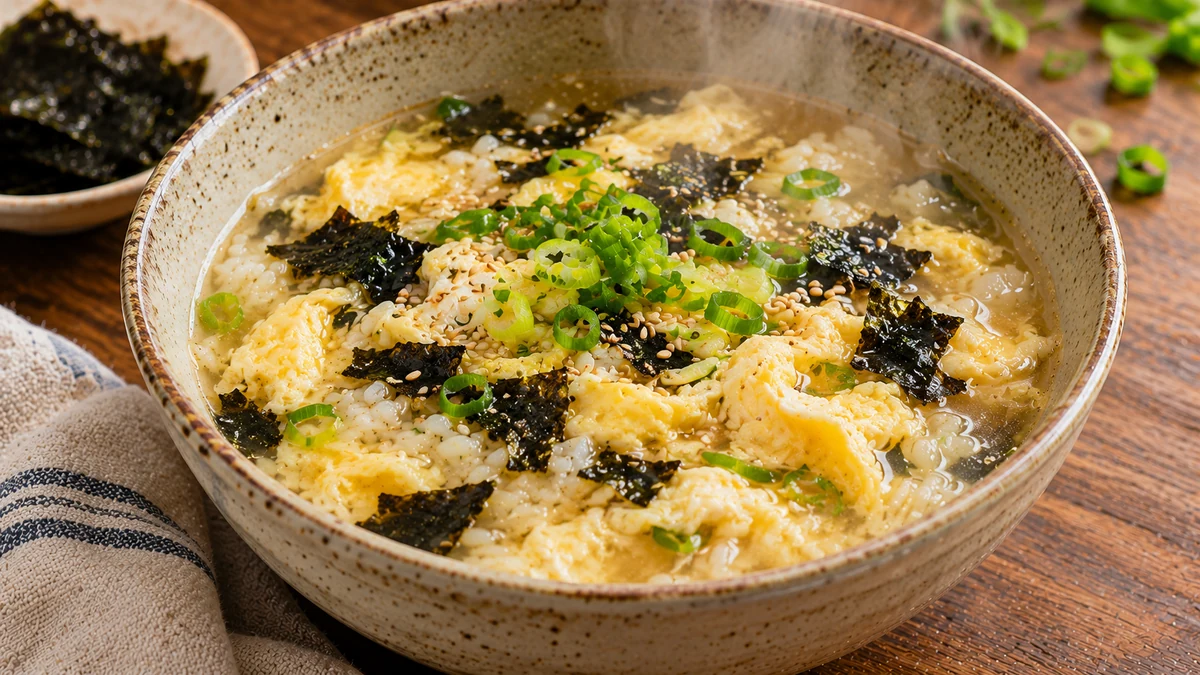
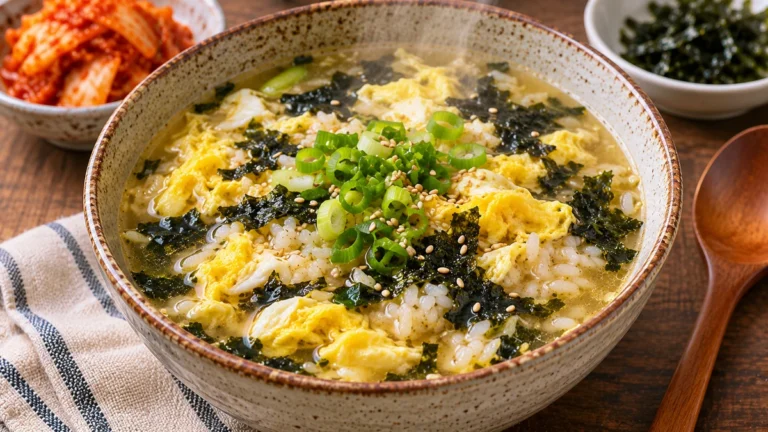
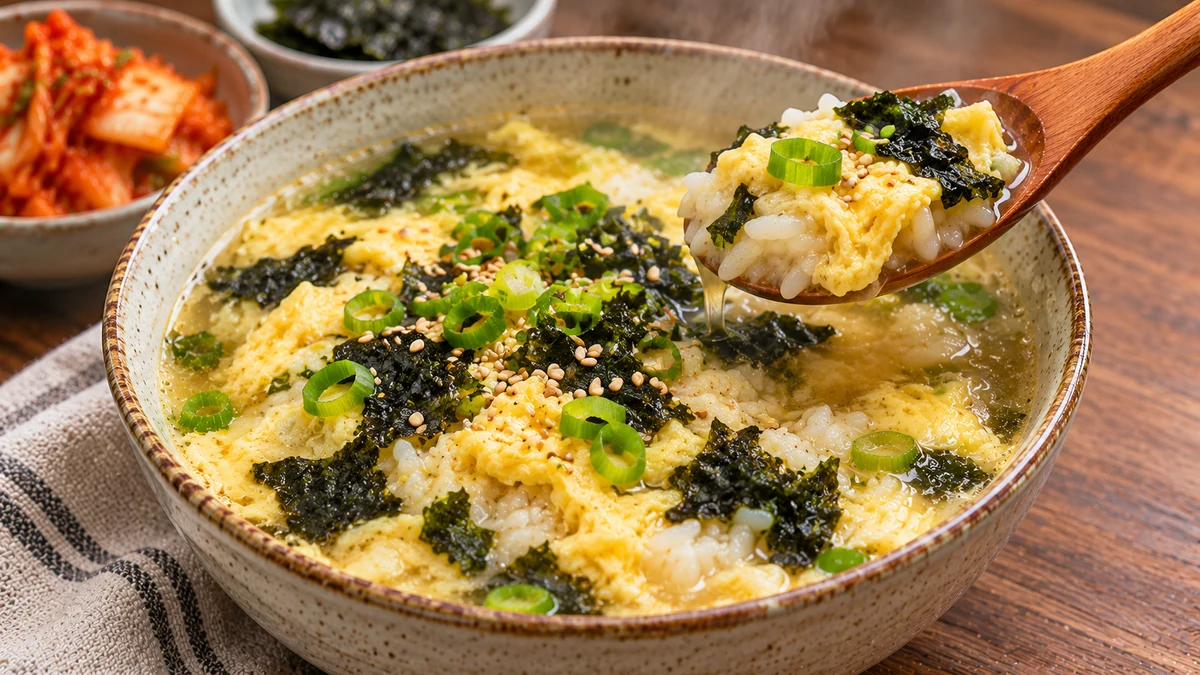
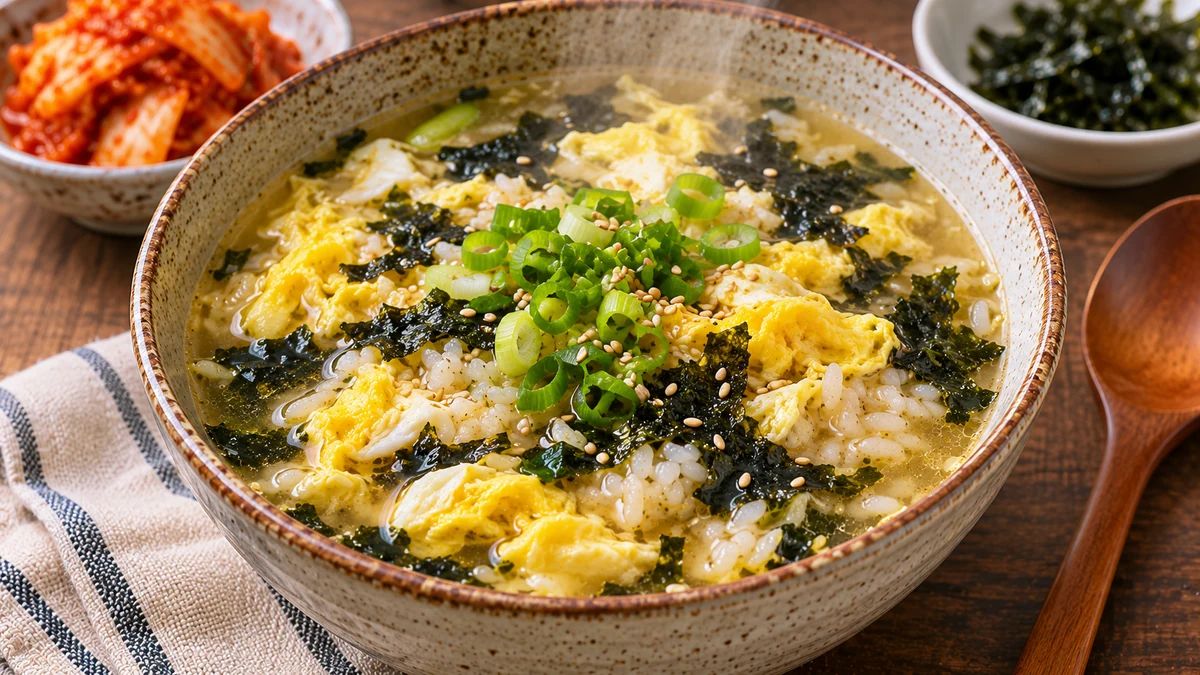
Korean egg and seaweed rice soup is a light, savory bowl made by simmering cooked rice in water seasoned with a little Korean tuna extract, then adding soft egg ribbons and torn roasted gim (seaweed). It is quick enough for breakfast and gentle enough for a simple lunch. The rice makes the broth slightly silky, while the seaweed brings a distinctly toasted flavor.
This American-kitchen adaptation makes two bowls in about 15 minutes, provided your rice is already cooked. You need just a small amount of bottled tuna extract, rather than a whole pot of homemade stock. It is not the same recipe as classic Korean beef-and-seaweed soup, and it is not a verified transcription of a social-media video. The method and quantities below are specified so that a home cook can reproduce the result.
Table of Contents
Why Korean Egg and Seaweed Rice Soup Is Trending
A Korean short-form cooking video called Easy Rice Soup for Days Without Appetite, posted November 5, 2026 by DalDalMeal, brought new attention to a combination of egg, cooked rice, seasoned gim and tuna seasoning. A video-trend tracker recorded about 67,400 to 227,000 views in its early November 6 snapshot. That number describes video views—not U.S. Google searches—and traditional Korean rice soups certainly existed before the clip.
The practical appeal of Korean egg and seaweed rice soup is straightforward: cooked rice becomes a warm soup in minutes, and you do not have to open a long list of sauces. For another breakfast trend with a completely different texture, see our Earl Grey yogurt toast. The idea here is a savory pantry meal, not a diet or detox promise.
What Makes Korean Egg and Seaweed Rice Soup Different?
Cooked rice goes into the broth: you are not cooking raw rice from scratch, as you would for a long-simmered porridge.
Eggs are added near the end: a gentle pour creates tender yellow ribbons rather than scrambled egg curds.
Seasoned gim is torn into the finished soup: it softens quickly and contributes toasted, savory notes.
A teaspoon of chamchi-aek seasons the water: this is a concentrated Korean tuna-extract condiment, not the packing liquid from a can of tuna.
Two bowls are ready quickly: the 15-minute total assumes rice is already fully cooked and safely stored.
Ingredients for Korean Egg and Seaweed Rice Soup
1 cup (160 g) cooked short-grain white rice: freshly cooked or properly refrigerated leftover rice. Short-grain rice is pleasantly soft, but medium-grain rice also works.
2 large eggs: lightly beaten. One egg per bowl adds rich flavor without making the soup heavy.
2 1/2 cups (600 ml) water: enough for a spoonable, brothy texture. Add a splash more for a thinner result.
1 teaspoon (5 ml) Korean tuna extract (chamchi-aek): a bottled savory liquid seasoning. Check its label for fish, soy, wheat and other allergens.
1 small packet (about 5 g) seasoned roasted gim: tear or snip into bite-sized pieces. Choose Korean snack seaweed or comparable seasoned nori.
2 scallions (about 30 g), sliced: save a little for the top so the bowl stays fresh-looking.
1/2 teaspoon toasted sesame oil: add at the end for aroma, not to fry the egg.
1 teaspoon toasted sesame seeds: divide between the two bowls. Sesame is an allergen; omit it if needed.
Fine salt, optional: taste the soup after adding tuna extract and seasoned gim; many brands need no extra salt.
What Is Tuna Extract (Chamchi-aek)?
Korean chamchi-aek (참치액) is a prepared liquid seasoning containing tuna extract and often other umami ingredients. A CJ Foods product explanation describes versions built with tuna-aging liquid, kombu and different aromatics. It is not the water drained from canned tuna, and it is not automatically identical to fermented fish sauce. Different bottled brands vary in intensity and salt.
For an example of why labels matter, one Dongwon tuna-extract label lists about 11,740 mg sodium per 100 g and identifies soy and wheat. That means even a teaspoon is a significant source of sodium. Start with the measured amount, and taste only after the rice and seaweed have flavored the broth. Do not call the base recipe vegetarian, vegan or guaranteed gluten-free.
Seasoned Gim vs. Miyeok Seaweed
For Korean egg and seaweed rice soup, use thin roasted gim, usually sold as snack-sized seasoned sheets. It softens in seconds, needs no soaking, and gives a toasted aroma. By contrast, miyeok is the thicker dried seaweed typically soaked for Korean seaweed soup. An established seaweed egg drop soup uses the rehydrated kind in a different broth method. The two ingredients are related, but they are not interchangeable one-for-one: a handful of dried miyeok expands dramatically and changes the texture.
How to Make Korean Egg and Seaweed Rice Soup
You need one small saucepan, a bowl to beat the eggs, and a spoon. Measure everything before heating the pan: this is a short recipe, and the egg step goes quickly. Keep the soup at a gentle simmer rather than a rolling boil once the eggs are added.
A quick Korean-inspired rice soup with fully cooked egg ribbons, seasoned roasted gim, scallions and a savory teaspoon of bottled tuna-extract seasoning. Ready in 15 minutes with pre-cooked rice.
Total Time:15 minutes
Yield:2 bowls
Ingredients
Scale
1 cup (160 g) cooked short-grain white rice, cooled and stored safely if using leftovers
2 large eggs, lightly beaten
2 1/2 cups (600 ml) water, plus a little more as needed
1 teaspoon (5 ml) Korean tuna extract (chamchi-aek), from a labeled bottle
1 small packet (about 5 g) seasoned roasted gim (Korean snack seaweed), torn
2 scallions (about 30 g), thinly sliced
1/2 teaspoon (2.5 ml) toasted sesame oil
1 teaspoon (3 g) toasted sesame seeds
Fine salt, optional, only after tasting
Instructions
Bring 2 1/2 cups water and 1 teaspoon Korean tuna extract to a gentle simmer in a small saucepan.
Stir in the cooked rice, separating clumps with a spoon. Simmer gently for 4 minutes until hot and slightly softened. Add a splash of hot water if the broth is too thick.
Beat the eggs until mostly uniform. Stir the soup once, then pour the eggs into the gently simmering liquid in a thin stream. Do not stir for 20 to 30 seconds.
Gently lift the egg ribbons with a spoon and simmer 1 to 2 minutes more, until the eggs are fully cooked and no liquid egg remains; egg dishes should reach 160°F.
Turn off the heat. Stir in about three-quarters of the torn seasoned gim, most of the scallions, and the sesame oil. Taste before adding any salt.
Divide the soup evenly between 2 bowls and top with the reserved gim and scallions plus 1 teaspoon toasted sesame seeds divided between the bowls. Serve hot.
Notes
Total time assumes the rice is already cooked. Cooking raw rice adds additional time.
Chamchi-aek is bottled Korean tuna-extract seasoning; it is not the packing liquid from canned tuna.
Use only cooked rice that was cooled and refrigerated promptly. Refrigerate leftovers promptly and reheat thoroughly to 165°F.
This version contains egg, fish and sesame. Some brands of tuna extract also contain wheat and soy. Read labels.
Nutrition estimates use 160 g cooked rice, 2 large eggs, 5 g seasoned gim, 30 g scallions, 5 ml tuna extract, 3 g sesame seeds and 2.5 ml sesame oil; no optional salt. Sauce and seaweed labels can change sodium considerably.
The meal is not classified as high-protein; adding an extra egg or swapping seasonings changes the nutrition per serving.
Author:Adam Moretti
Prep Time:5 minutes
Cook Time:10 minutes
Category:Soup
Method:Stovetop
Cuisine:Korean-inspired
Diet:Dairy-Free
Step 1: Warm the Rice and Broth
Pour 2 1/2 cups water into a saucepan and stir in 1 teaspoon tuna extract. Bring to a gentle simmer. Add 1 cup cooked rice, breaking up any cold clumps with a spoon. Let it simmer for about 4 minutes so the grains warm through and release just enough starch to lightly thicken the liquid. If you prefer a looser soup, stir in a few tablespoons of hot water.
Step 2: Beat the Eggs
While the rice simmers, crack 2 eggs into a bowl and beat them until the whites and yolks are mostly combined. Do not add salt yet. Stir the rice soup gently once to create a slow circular motion, then pour the beaten eggs in a thin stream over the surface. Resist stirring for 20 to 30 seconds; this gives the egg strands time to take shape.
Step 3: Cook the Egg Fully
After the initial pause, gently lift the egg ribbons with a spoon and cook another 1 to 2 minutes until no runny egg remains. The surface should look softly set, with yellow and white strands between the rice grains. Avoid hard boiling, which breaks the egg into tiny fragments and can make the broth cloudy. The FDA advises cooking egg dishes to 160°F; use an instant-read thermometer if you need to verify the temperature.
Step 4: Add Gim and Finish
Turn off the heat. Tear the packet of seasoned gim into small pieces and stir about three-quarters of it into the soup with most of the scallions. Add 1/2 teaspoon toasted sesame oil, taste, and adjust with a tiny pinch of salt only if needed. Ladle into two bowls and top with the reserved gim, scallions and 1 teaspoon sesame seeds divided between them. Eat while warm, before the last pieces of seaweed lose their crisp edges.
Texture Tips: Brothy, Silky, or More Like Porridge
In Korean egg and seaweed rice soup, the difference between light broth and thick porridge is partly the water-to-rice ratio. The base ratio here is 2 1/2 cups water to 1 cup cooked rice. After four minutes, the grains should still be distinct but soft. Keep that ratio if you want a breakfast soup you can drink from a spoon without feeling that you are eating a solid bowl of rice.
For a thinner bowl: add 1/4 cup hot water before the egg goes in and taste the seasoning again.
For more body: simmer the rice 2–3 minutes longer and lightly press a spoonful of grains against the pan, then add eggs.
For longer egg ribbons: use a thin stream and delay stirring for half a minute.
For very soft seaweed: stir in all the gim and wait a minute before serving; for contrast, reserve some for topping.
If the soup gets too salty: add hot water and a spoonful more plain rice; do not try to fix excess salt with more tuna extract.
Common Mistakes and How to Fix Them
The Egg Turns Into Tiny Specks
Usually the broth was boiling too aggressively or the eggs were stirred continuously while still liquid. Lower the heat to a gentle simmer, pour the beaten eggs in a narrow stream, and allow the surface to set briefly before stirring. If it already happened, the soup is still edible after the eggs are cooked through; the appearance is simply less ribbon-like.
The Rice Becomes Mushy
Some rice varieties are softer than others, and rice that has been cooked twice can break down quickly. Shorten the first simmer to two minutes when the cooked rice is very tender. If you are using refrigerated rice, gently separate the grains before adding them so you do not have to stir repeatedly over high heat.
The Broth Tastes Too Fishy or Strong
Tuna-extract products are concentrated and not all have the same flavor. Measure one teaspoon, not one tablespoon. If your brand is very strong, start with 1/2 teaspoon and add the rest only after tasting. The mild rice and eggs are meant to balance the seafood umami; extra sauce can easily overpower the bowl.
Substitutions and Variations
No Korean tuna extract? Start with 1/2 teaspoon mild fish sauce and adjust gradually, or use a little low-sodium vegetable broth and a splash of soy sauce for a fish-free variation. Neither option reproduces the tuna-extract flavor exactly. If avoiding fish, also check the seasoned gim ingredients. If avoiding wheat, select seasonings verified for your needs instead of assuming tuna sauce is gluten-free.
Brown rice: use 1 cup cooked brown rice and simmer it 2–3 minutes longer because the bran layer keeps the grains firmer. Extra egg: add a third egg for a more egg-forward bowl; each serving then contains one-and-a-half eggs and a different nutrition total. Plain nori: use unseasoned nori and add a touch more toasted sesame oil or seasoning, then recalculate sodium if you track it. Chili: a small pinch of gochugaru at the table makes a spicy serving without changing the whole pot.
If a make-ahead egg breakfast is more useful than a soup, our cottage cheese egg bake is a different, sliceable option. If you want a chewy, unusual Asian-inspired recipe instead of a brothy rice bowl, try carrot button noodles. Neither uses the same cooking method or ingredients as this soup.
Nutrition, Allergens, and Sodium
One serving is half the pot, including half the garnishes. Based on 160 g cooked white rice, 2 large eggs, about 5 g seasoned gim, 30 g scallions, a teaspoon each of sesame seeds and tuna extract, and 1/2 teaspoon sesame oil, a bowl is estimated at roughly 215 calories, 9 g protein, 26 g carbohydrate and 8 g fat. This is a light meal rather than a high-protein entrée. For ingredient baselines, see USDA FoodData Central and USDA’s large-egg nutrition reference.
Sodium is the least predictable value: concentrated tuna extract and seasoned gim vary by brand. The recipe card uses a representative approximately 460 mg sodium per bowl without extra salt, based on a tuna-extract label and common seasoned-seaweed values; the actual total could be higher. Fish, egg and sesame are present. Tuna seasonings can also contain soy or wheat. Check each packaged item for allergens and any cross-contact concerns; swapping a sauce means the estimate no longer applies.
How to Store Korean Egg and Seaweed Rice Soup Safely
Korean egg and seaweed rice soup tastes best freshly made because the rice swells and gim softens as it stands. If you plan to save a portion, cool it promptly in a shallow container and refrigerate at 40°F or below. The FoodSafety.gov cold storage chart gives soups and stews 3–4 days refrigerated, although this rice-and-egg bowl will have a better texture when eaten sooner. Reheat thoroughly to 165°F, adding a little water to loosen the rice.
Leftover cooked rice must be handled carefully even before it enters the pot. Do not use cooked rice that was left out for hours: FoodSafety.gov includes cooked rice among perishable leftovers that should be refrigerated promptly. Cooking it again does not reliably undo unsafe prior storage. When possible, portion and chill rice soon after cooking, then use a clean utensil to measure it for soup.
Korean Egg and Seaweed Rice Soup FAQs
Is This the Same as Korean Miyeok-guk?
No. Miyeok-guk commonly uses rehydrated, wider seaweed, often with beef or seafood, simmered as a distinct soup. This quick recipe uses roasted gim and cooked rice, with egg ribbons added late in the process. Both are Korean-inspired seaweed soups, but their texture, ingredients and cooking times differ.
Can I Make This Soup Without Fish?
Yes, as a variation. Replace the tuna extract with a small amount of mild vegetable broth or a low-sodium soy-and-kombu seasoning, adjusting by taste. Check the nori label too. The result will have a different savory profile, and the original nutrition and allergen classifications will not apply unchanged.
Can I Use Cold Cooked Rice?
Yes, if it was cooled and refrigerated promptly. Break it into small clumps before putting it into simmering water, and give it enough time to become hot throughout. Discard rice if you do not know how long it sat at room temperature.
Should the Seaweed Go in Before or After the Eggs?
Add most of the gim after the eggs have set, and save a little for the top. Roasted sheets soften as soon as they contact hot liquid. Putting all the gim in at the beginning gives a more uniformly seaweed-flavored broth but removes the toasted contrast that makes the quick version appealing.
Can I Use Canned Tuna Instead of Tuna Extract?
Canned tuna can be added as a separate fish-and-rice soup variation, but the liquid from the can is not a direct substitute for bottled chamchi-aek. A small spoonful of canned tuna changes the texture and protein content; the drained packing liquid also varies in salt and flavor. If you add tuna, treat it as a different recipe and adjust the seasoning.
Final Tips
Keep the broth mild, simmer the already-cooked rice only until tender, and add beaten eggs in a thin stream while the liquid is barely bubbling. Finish with roasted gim at the last moment and taste before adding salt. Those timing decisions produce a better Korean egg and seaweed rice soup than adding more condiments or letting the pot boil hard.
The attraction of this viral-style bowl is that it uses familiar rice and eggs in an unfamiliar but very practical combination. It is a simple, savory meal with a distinct toasted-seaweed finish—not a wellness shortcut or a new invention. Make the base version first, then adjust the broth and toppings to suit your own pantry.
Reviewed recipe options
Make this recipe fit me
Choose one of seven popular diet options. NutriMatch will confirm whether the recipe already fits, show a reviewed adaptation when available, or recommend recipes that match your choice.
Please choose a diet first.
Already a reviewed match
This recipe already fits Dairy-Free.
No changes are needed based on its reviewed NutriMatch classification. Check the complete ingredients, product labels, and serving details for your own needs.
Recipe details, product formulas, and cross-contact information can change. Confirm current labels and use professional guidance when medically necessary.
Not available for this recipe
This recipe cannot currently be made Gluten-Free with a reviewed adaptation.
NutriMatch will not guess at substitutions. Try one of these recipes that is already reviewed for your choice.
Recipe details, product formulas, and cross-contact information can change. Confirm current labels and use professional guidance when medically necessary.
Not available for this recipe
This recipe cannot currently be made High Protein with a reviewed adaptation.
NutriMatch will not guess at substitutions. Try one of these recipes that is already reviewed for your choice.
Recipe details, product formulas, and cross-contact information can change. Confirm current labels and use professional guidance when medically necessary.
Not available for this recipe
This recipe cannot currently be made Keto with a reviewed adaptation.
NutriMatch will not guess at substitutions. Try one of these recipes that is already reviewed for your choice.
Recipe details, product formulas, and cross-contact information can change. Confirm current labels and use professional guidance when medically necessary.
Not available for this recipe
This recipe cannot currently be made Low Carb with a reviewed adaptation.
NutriMatch will not guess at substitutions. Try one of these recipes that is already reviewed for your choice.
Recipe details, product formulas, and cross-contact information can change. Confirm current labels and use professional guidance when medically necessary.
Not available for this recipe
This recipe cannot currently be made Vegan with a reviewed adaptation.
NutriMatch will not guess at substitutions. Try one of these recipes that is already reviewed for your choice.
Recipe details, product formulas, and cross-contact information can change. Confirm current labels and use professional guidance when medically necessary.
Not available for this recipe
This recipe cannot currently be made Vegetarian with a reviewed adaptation.
NutriMatch will not guess at substitutions. Try one of these recipes that is already reviewed for your choice.
Recipe details, product formulas, and cross-contact information can change. Confirm current labels and use professional guidance when medically necessary.