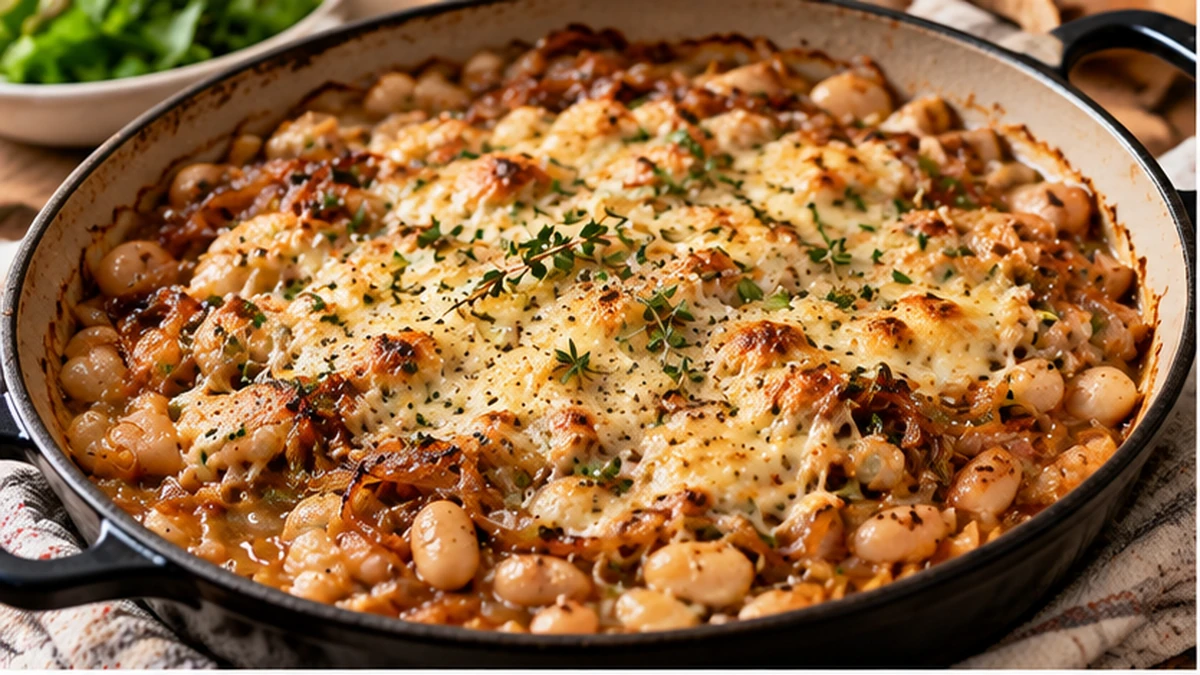
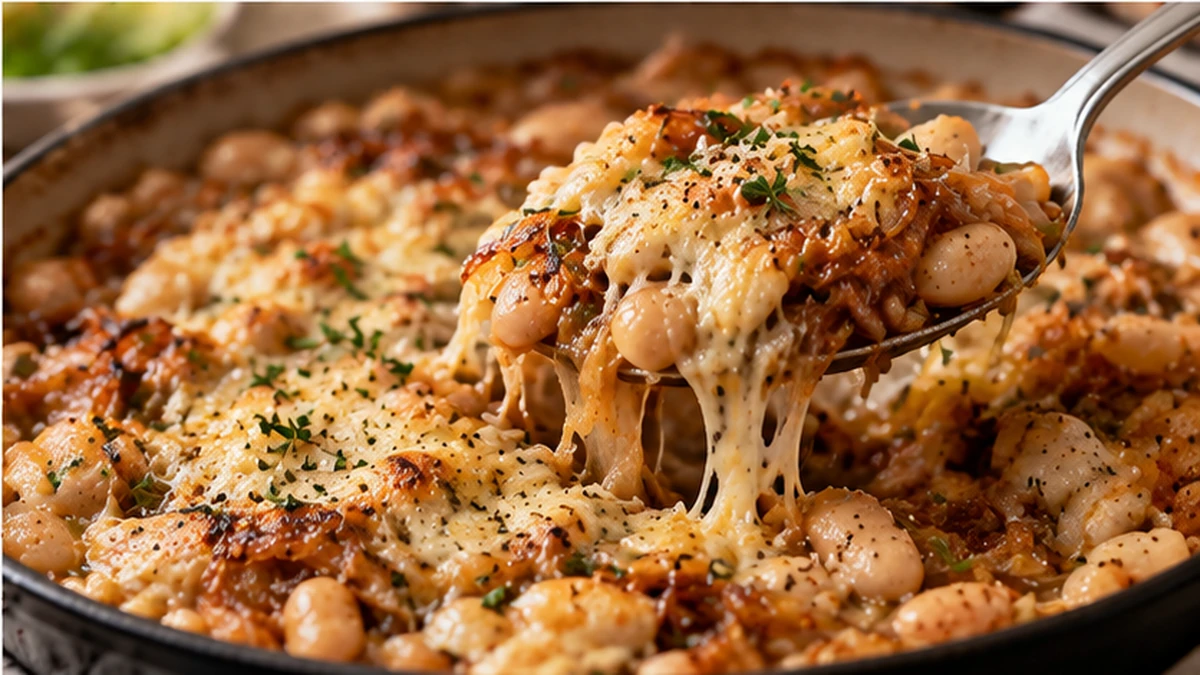
French onion white beans turn a few pantry ingredients into a rich one-pan dinner built around deeply caramelized onions, creamy white beans, thyme, and a browned layer of melted cheese. The flavor is inspired by French onion soup, but the beans make the skillet substantial enough to serve as the main dish instead of a starter.
This version skips heavy cream and condensed soup. Instead, a small portion of the beans is mashed directly into the broth to give the skillet body while the rest stay whole and creamy. The onions do the real flavor work, so they are cooked patiently until deep golden before the broth and beans go in.
Table of Contents
Why You’ll Love These French Onion White Beans
Everything cooks in one oven-safe skillet, so cleanup stays simple.
Caramelized onions create the sweet-savory base without bottled onion soup mix.
Mashed white beans thicken the broth naturally without heavy cream.
The recipe uses familiar supermarket ingredients and canned beans for convenience.
It works as a vegetarian dinner when the cheese is made with vegetarian or microbial rennet.
Leftovers reheat well for an easy lunch the next day.
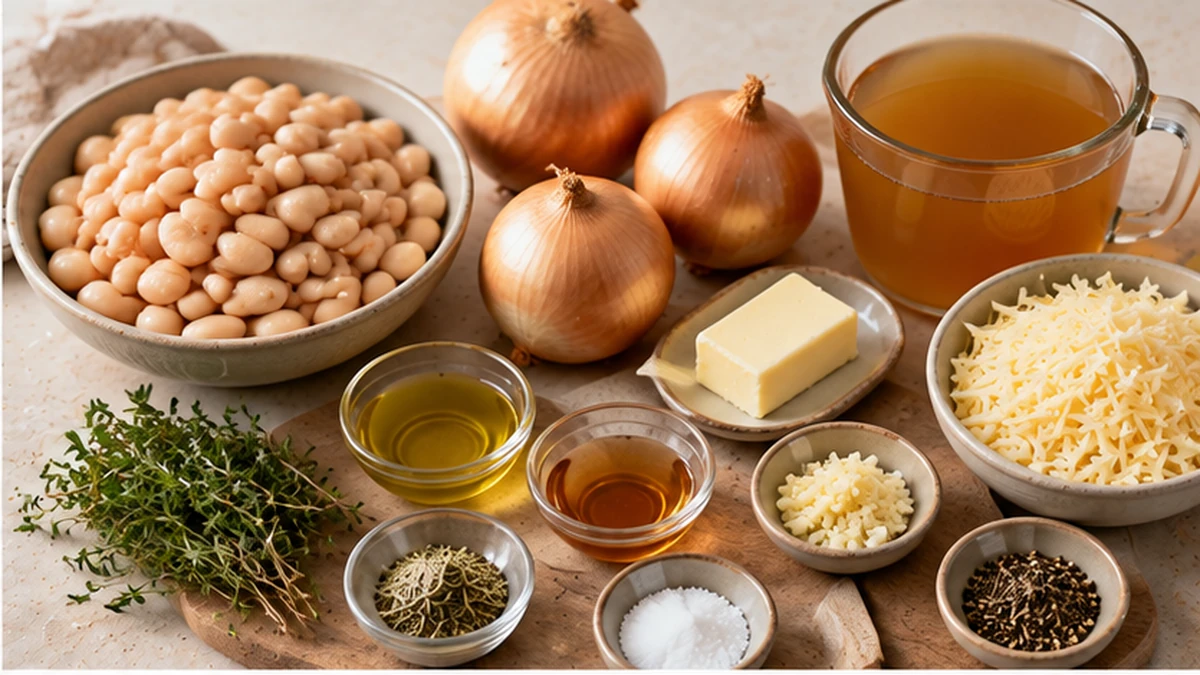
Ingredients You’ll Need
Yellow Onions
Use three medium-to-large yellow onions, sliced from pole to pole into thin strips. Yellow onions become sweet and mellow as they cook and are easy to find year-round. The exact cooking time depends on the width of the slices, the skillet, and the heat, so judge the onions by color and texture rather than the clock alone.
White Beans or Butter Beans
Cannellini, Great Northern, or butter beans all work. Cannellini beans are creamy while still holding their shape; butter beans are larger and create a more spoonable, substantial bite. Use two 15- to 15.5-ounce cans, drain them, rinse briefly, and let them sit in the colander while the onions cook.
Vegetable Broth, Thyme, and Garlic
Low-sodium vegetable broth keeps the skillet savory without taking control of the seasoning. Fresh thyme is ideal, but dried thyme works when that is what you have. Garlic goes in only after the onions are caramelized so it can become fragrant without spending 30 minutes in the pan and turning bitter.
Cheese
Gruyère-style or Swiss-style cheese gives the top the nutty, browned finish associated with French onion dishes. If you want the finished recipe to remain vegetarian, choose a cheese labeled as made with vegetarian or microbial rennet. A good melting Swiss cheese is often easier to find and usually costs less than imported Gruyère.
The Most Important Step: Caramelize the Onions
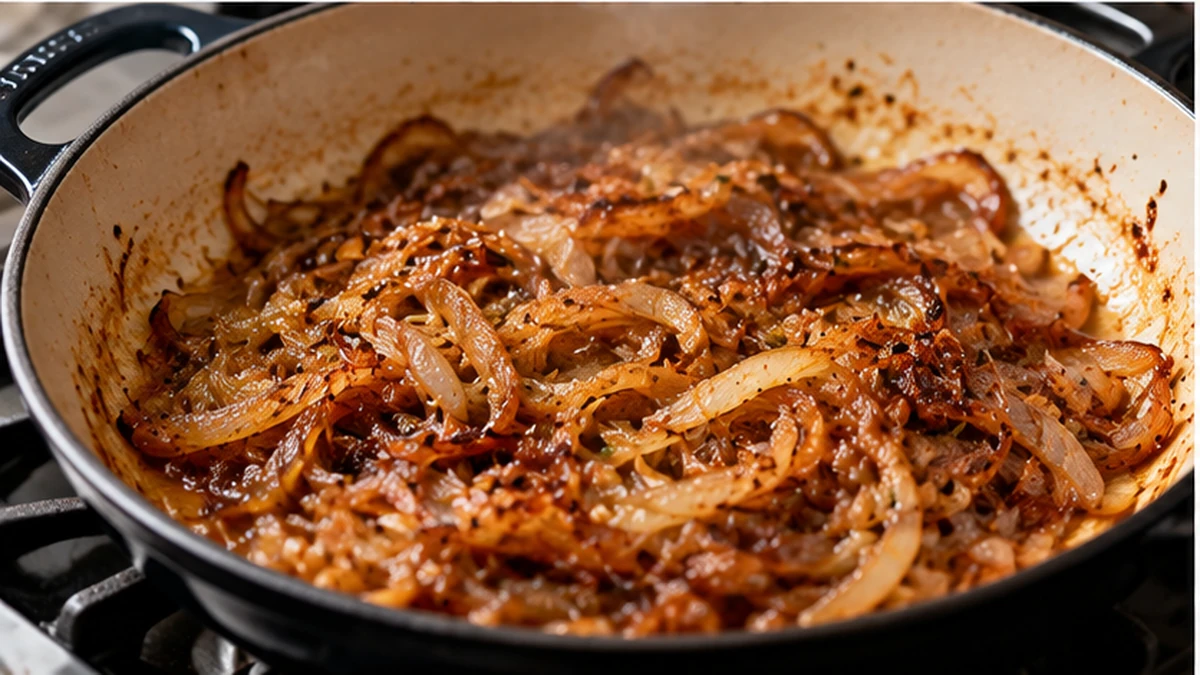
Melt the butter with the olive oil over medium heat, add the sliced onions and salt, and toss until every strand is coated. After the first few minutes, lower the heat to medium-low. The onions need time to release water, soften, then gradually brown. Stir every few minutes, scraping the browned film from the bottom of the skillet back into the onions.
If the bottom begins to darken faster than the onions, add one or two tablespoons of water and scrape the pan. That small splash loosens the browned bits without washing away the flavor. Continue until the onions are soft, jammy, and deep golden, usually 30 to 35 minutes in a wide skillet. Pale onions will still taste good, but the finished French onion white beans will not have the same depth.
1 teaspoon fresh thyme leaves, plus more for serving (or 1/2 teaspoon dried thyme)
1 tablespoon balsamic vinegar
1 cup low-sodium vegetable broth
2 (15- to 15.5-ounce) cans cannellini, Great Northern, or butter beans, drained and rinsed
1/4 teaspoon black pepper
1 cup (4 ounces) shredded Swiss-style or Gruyère-style cheese, made with vegetarian rennet if needed
Instructions
Melt the butter with the olive oil in a 10- to 12-inch oven-safe skillet over medium heat. Add the sliced onions and salt and toss to coat.
Cook for 5 minutes, then reduce the heat to medium-low. Continue cooking for 25 to 30 minutes, stirring every few minutes, until the onions are very soft and deep golden. If browned bits begin to darken too quickly, add 1 to 2 tablespoons water and scrape the skillet.
Stir in the garlic and thyme and cook for 30 seconds. Add the balsamic vinegar and scrape up the browned bits from the bottom of the skillet.
Pour in the vegetable broth and add the drained beans and black pepper. Mash about 1/2 cup of the beans against the side of the skillet, then stir them back into the broth.
Bring to a gentle simmer and cook uncovered for 6 to 8 minutes, stirring occasionally, until the broth lightly coats the beans. Taste and adjust the salt if needed.
Heat the broiler. Sprinkle the cheese evenly over the beans and broil for 2 to 4 minutes, watching closely, until the cheese is melted and browned in spots.
Let the skillet rest for 5 minutes. Garnish with extra thyme and black pepper and serve warm.
Notes
For a vegetarian recipe, use vegetable broth and a cheese made with vegetarian or microbial rennet.
Butter beans are softer than cannellini or Great Northern beans, so stir them gently.
If your skillet is not broiler-safe, cover it on the stovetop after adding the cheese and cook until the cheese melts.
Nutrition is estimated without bread or other optional serving items.
Author:Adam Moretti
Prep Time:15 minutes
Cook Time:45 minutes
Category:Dinner
Method:Stovetop and Broiler
Cuisine:American
Diet:Vegetarian
How to Make French Onion White Beans
Once the onions are fully caramelized, stir in the garlic and thyme for about 30 seconds. Add the balsamic vinegar and scrape the skillet well. The vinegar should cook down quickly and leave brightness rather than a sharp acidic taste.
Pour in the vegetable broth and add the drained beans. Use the back of a spoon or potato masher to mash about one-half cup of the beans against the side of the skillet. Stir those mashed beans back into the broth. This gives the sauce a creamy consistency without blending the entire dish or adding cream.
Simmer uncovered for 6 to 8 minutes, just until the broth lightly coats the beans. Taste before adding more salt because the cheese will add seasoning. Sprinkle the shredded cheese evenly over the top, then transfer the oven-safe skillet under the broiler for 2 to 4 minutes until the cheese is melted and browned in spots. Watch closely because broilers vary significantly.
What the Finished Skillet Should Look Like
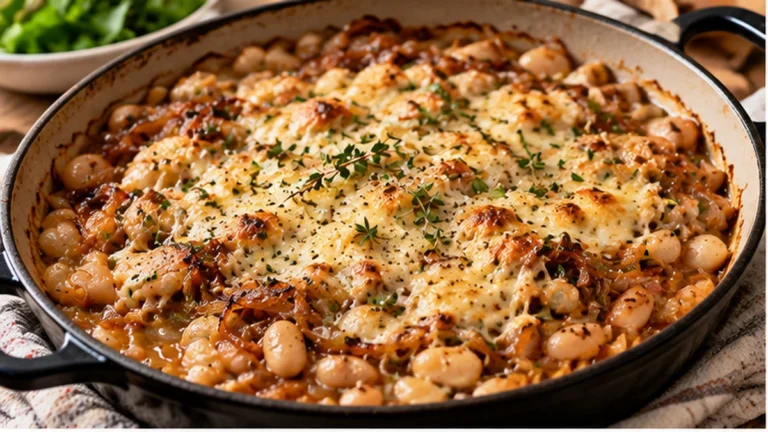
The finished skillet should be saucy rather than soupy. When you drag a spoon across the bottom, the broth should slowly flow back into the space instead of looking watery. The whole beans should still hold their shape, and the mashed portion should disappear into the onion broth.
The cheese should be fully melted with browned patches across the top. Let the skillet stand for 5 minutes before serving. That short rest gives the bean starches and melted cheese time to settle, so each scoop is creamy rather than runny.
How This Differs From French Onion Soup
Classic French onion soup is broth-forward and is usually served with bread and cheese on top. French onion white beans use the same general flavor direction—deeply browned onions, thyme, broth, and melted cheese—but the beans absorb much of the liquid and turn the skillet into a fuller dinner. The goal here is not to reproduce soup exactly; it is to carry the onion flavor into a practical bean-based meal.
If you want the chicken version of the same flavor family, our French onion chicken casserole uses chicken, white beans, cottage cheese, and Gruyère for a higher-protein casserole. Keeping this bean skillet meat-free gives it a different search intent and a much simpler ingredient list.
Serving Ideas
Serve the skillet with toasted sourdough, a crusty baguette, or simple garlic toast if you want something to catch the onion broth. For a lighter plate, pair it with roasted broccoli, green beans, or a crisp salad dressed with lemon or vinegar.
For more weeknight options, the Healthy American Bites dinner recipes page collects reviewed main dishes by meal type. If you like bean-based skillet dinners, our gluten free pizza beans take white beans in a completely different tomato-and-mozzarella direction.
Substitutions and Variations
Different White Beans
Great Northern beans stay a little firmer than cannellini beans, while butter beans are larger and softer. Any of the three works. If you cook beans from dry, use about 3 cups of fully cooked, drained beans. The beans need to be tender before they enter the skillet because this recipe only simmers them briefly.
No Gruyère Available
Use a good melting Swiss cheese, Emmental-style cheese, or a combination of Swiss and a small amount of Parmesan. Cheddar melts well but changes the flavor direction noticeably. Whatever cheese you choose, grate it yourself when possible because freshly grated cheese tends to melt more smoothly than some pre-shredded products.
Gluten-Free Version
The core skillet does not require bread or flour. Use a vegetable broth and cheese that meet your gluten-free needs and serve with gluten-free toast if desired. If avoiding gluten for medical reasons, always check labels because packaged broths and flavorings can vary.
Vegan Version
Use olive oil instead of butter and choose a plant-based melting cheese. The final flavor will differ from dairy Gruyère, but the caramelized onion and bean base still works. For a meal that is vegan by design rather than adapted, try our high protein vegan dense bean salad.
Troubleshooting French Onion White Beans
My onions are burning before they caramelize
Lower the heat and add one or two tablespoons of water. A wide skillet helps moisture evaporate, but very high heat can scorch the natural sugars before the onions have time to soften. Caramelization should be gradual, with dark golden onions rather than black edges.
The skillet is too watery
Simmer it uncovered for a few additional minutes and mash another small spoonful of beans into the broth. Remember that the skillet thickens slightly during the 5-minute rest after broiling, so stop before it becomes dry.
The beans are getting mushy
Use firmer canned beans, drain them well, and stir gently after they enter the skillet. Only the small portion used for thickening needs to be mashed. Butter beans are naturally softer than Great Northern beans, so handle them especially gently.
Make-Ahead, Storage, and Reheating
You can caramelize the onions up to two days ahead and refrigerate them in a covered container. When ready to cook, warm the onions in the skillet, then continue with the garlic, thyme, broth, beans, and cheese. This is the best make-ahead option because the final bean texture is freshest when the skillet is assembled close to serving time.
For leftovers, cool the beans promptly and transfer them to a covered container. The USDA leftovers and food safety guidance states that cooked leftovers can generally be kept in the refrigerator for 3 to 4 days. Reheat gently on the stovetop or in the microwave; add a splash of broth or water if the beans have absorbed most of the sauce.
FAQs about French Onion White Beans
Are French onion white beans vegetarian?
They can be. Use vegetable broth and choose Swiss- or Gruyère-style cheese made with vegetarian or microbial rennet. Traditional cheeses can use animal rennet, so check the ingredient information if vegetarian suitability matters to you.
Can I use butter beans instead of cannellini beans?
Yes. Butter beans are an excellent choice and make the skillet especially creamy. They are larger and softer, so fold them in gently and mash only the amount needed to thicken the broth.
Do I need an oven-safe skillet?
Only if you want the browned cheese finish under the broiler. If your skillet is not oven-safe, cover it on the stovetop for a few minutes after adding the cheese and let the residual steam melt the topping. The flavor stays the same, but the cheese will not brown as much.
Can I make French onion white beans without cheese?
Yes. The caramelized onion and bean base is flavorful on its own. Without cheese, taste the broth carefully and add a little extra black pepper or thyme if needed. The finished skillet will be lighter and less rich.
Can I freeze the finished skillet?
You can freeze it, but the beans become softer after thawing and the melted cheese can change texture. For the best result, freeze the onion-and-bean base without the cheese, thaw it overnight in the refrigerator, reheat it, then add fresh cheese before serving.
Final Tips
The quality of French onion white beans depends much more on the onions than on extra ingredients. Give them enough time to become deeply golden, scrape the flavorful browned bits back into the pan, and season only after the broth and cheese are in place. Mash just enough beans to thicken the sauce while leaving most of them whole.
Once the cheese is browned, let the skillet rest for a few minutes and serve it hot with toast or vegetables. The result is a practical one-pan dinner with the cozy flavor of French onion soup and the creamy texture of white beans, without turning the dish into another soup or casserole.
Reviewed recipe options
Make this recipe fit me
Choose one of seven popular diet options. NutriMatch will confirm whether the recipe already fits, show a reviewed adaptation when available, or recommend recipes that match your choice.
Please choose a diet first.
Not available for this recipe
This recipe cannot currently be made Dairy-Free with a reviewed adaptation.
NutriMatch will not guess at substitutions. Try one of these recipes that is already reviewed for your choice.
Recipe details, product formulas, and cross-contact information can change. Confirm current labels and use professional guidance when medically necessary.
Not available for this recipe
This recipe cannot currently be made Gluten-Free with a reviewed adaptation.
NutriMatch will not guess at substitutions. Try one of these recipes that is already reviewed for your choice.
Recipe details, product formulas, and cross-contact information can change. Confirm current labels and use professional guidance when medically necessary.
Not available for this recipe
This recipe cannot currently be made High Protein with a reviewed adaptation.
NutriMatch will not guess at substitutions. Try one of these recipes that is already reviewed for your choice.
Recipe details, product formulas, and cross-contact information can change. Confirm current labels and use professional guidance when medically necessary.
Not available for this recipe
This recipe cannot currently be made Keto with a reviewed adaptation.
NutriMatch will not guess at substitutions. Try one of these recipes that is already reviewed for your choice.
Recipe details, product formulas, and cross-contact information can change. Confirm current labels and use professional guidance when medically necessary.
Not available for this recipe
This recipe cannot currently be made Low Carb with a reviewed adaptation.
NutriMatch will not guess at substitutions. Try one of these recipes that is already reviewed for your choice.
Recipe details, product formulas, and cross-contact information can change. Confirm current labels and use professional guidance when medically necessary.
Not available for this recipe
This recipe cannot currently be made Vegan with a reviewed adaptation.
NutriMatch will not guess at substitutions. Try one of these recipes that is already reviewed for your choice.
Recipe details, product formulas, and cross-contact information can change. Confirm current labels and use professional guidance when medically necessary.
Already a reviewed match
This recipe already fits Vegetarian.
No changes are needed based on its reviewed NutriMatch classification. Check the complete ingredients, product labels, and serving details for your own needs.
Recipe details, product formulas, and cross-contact information can change. Confirm current labels and use professional guidance when medically necessary.