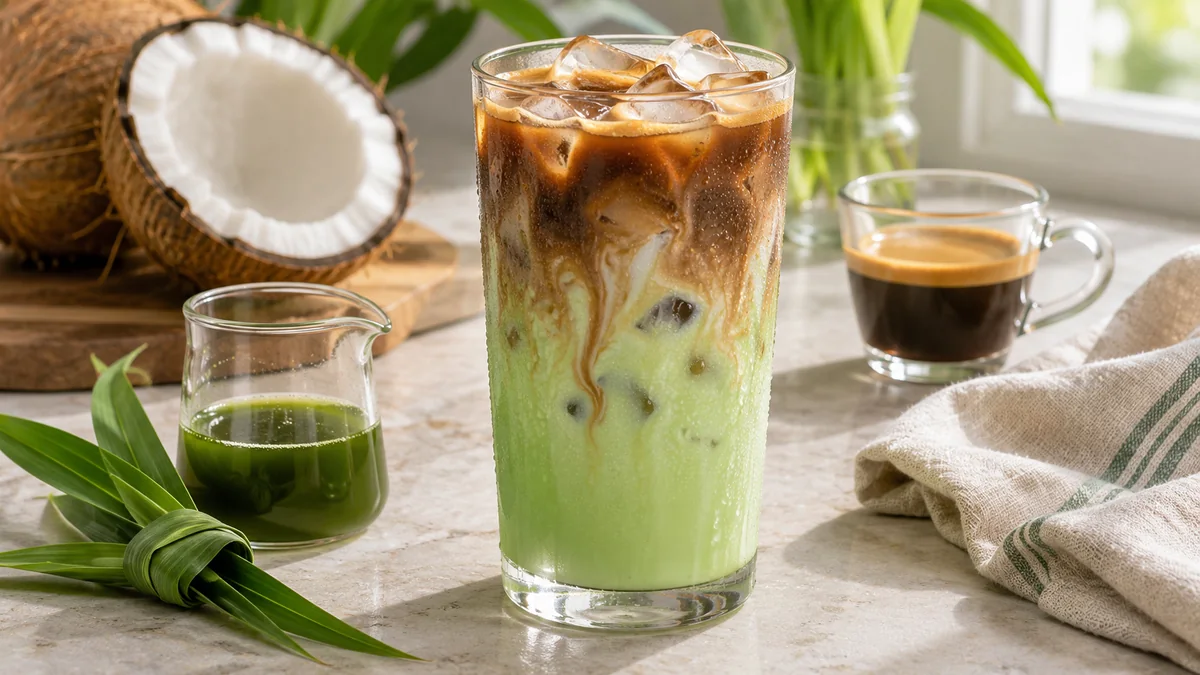
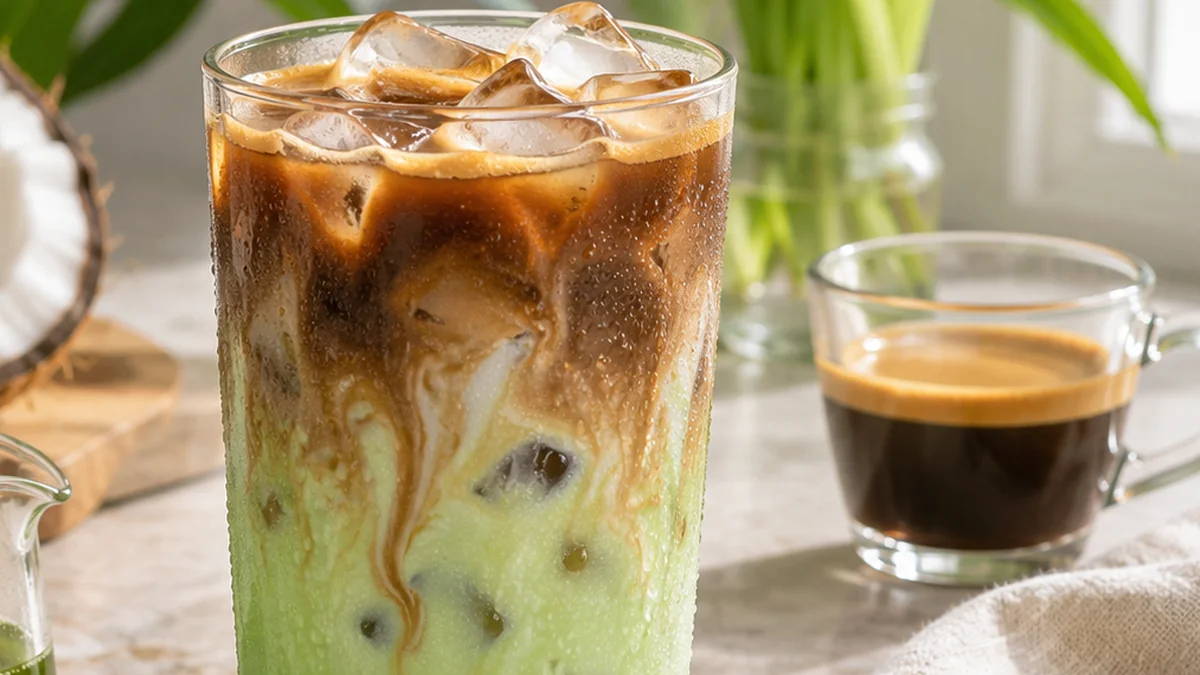
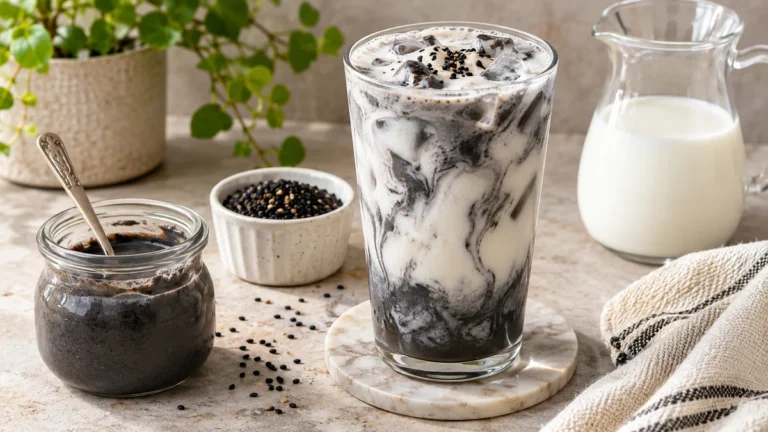
This pandan latte recipe makes a fragrant iced coconut-coffee drink from real pandan leaves, a quick homemade syrup, chilled milk, and espresso. Pandan brings a grassy, vanilla-like aroma rather than a strong minty or matcha flavor. The practical secret is to steep the leaves gently, strain the syrup thoroughly, and add espresso last so the green-tinted milk and coffee form visible layers before you stir.
You will make two generous iced drinks using two tablespoons of homemade pandan syrup per glass, one espresso shot per glass, and a blend of regular 2% milk with an unsweetened coconut milk beverage. The syrup batch makes more than the two drinks require: save the remainder in a clean covered jar. There is also a hot option and a shortcut for food-grade pandan extract if you cannot find leaves at a local Asian market.
Unlike our black sesame latte, which starts with sesame paste and does not need coffee, this version is designed to taste like an actual espresso latte. It is also different from our vegan iced coffee: pandan, rather than sweetener alone, supplies the distinctive aroma.
Table of Contents
What Is Pandan Latte?
Pandan is an aromatic tropical leaf widely used across parts of Southeast Asia to flavor rice, desserts, coconut preparations, and drinks. The edible culinary species is Pandanus amaryllifolius. An iced pandan latte is usually a café-style combination of pandan flavor, milk, ice, and often espresso; some shops instead serve a coffee-free pandan milk drink. This version deliberately includes espresso because readers searching for a latte may expect coffee.
The flavor is easiest to describe as gently floral, warm, grassy, and reminiscent of vanilla with a faint toasted-rice note. It is not the same ingredient as green matcha powder. If you want a tea-based option with a different flavor profile, try our iced sugar cookie cream matcha.
A feature in the Washington Post describes blending culinary pandan leaves with milk or water to release their aroma; King Arthur Baking also explains the distinction between leaves, juice, extract, paste, and powder. These are useful references when selecting the right pandan product, but they do not prove that one homemade latte formula is nutritionally superior to another. Pandan cooking context and ingredient-form guidance.
Why This Pandan Latte Recipe Works
Pandan leaves are gently simmered and briefly steeped, giving a controllable syrup rather than an unpredictable squeeze of concentrated extract.
Straining removes fibrous pieces that would otherwise end up in the straw or cling to ice.
An unsweetened carton coconut milk beverage provides a subtle coconut note without the heaviness of full-fat canned coconut cream.
Chilled espresso is poured last for a distinct coffee layer; stirring just before drinking distributes the flavor.
The syrup and milk are measured separately, so sweetness and coffee strength can be adjusted without remaking the whole batch.
The method offers both a full leaf-based approach and a clearly labeled shortcut with food-grade pandan flavoring.
The recipe is intended for regular U.S. home kitchens: one small saucepan, a strainer, espresso or strong coffee, and glasses. A blender is not required, and you do not need green food coloring. For another versatile homemade coffee add-in, our banana syrup recipe for coffee uses a different fruit-forward syrup technique.
Ingredients for Iced Coconut Pandan Latte
For this pandan latte recipe, the quantities below make about one-half cup of pandan syrup, of which you use four tablespoons across two drinks. That separation matters for both taste and nutrition; the unused syrup is not counted in the per-glass estimate.
Fresh or frozen food-grade pandan leaves: 5 leaves, rinsed and tied in loose knots; choose the culinary pandan species, not arbitrary ornamental landscaping foliage.
Water: 3/4 cup for the syrup.
Granulated sugar: 1/4 cup for the syrup. This is sweet enough to extract a syrup flavor without turning it into a thick candy sauce.
2% dairy milk: 1 cup total, 1/2 cup per glass.
Unsweetened coconut milk beverage from a carton: 1/2 cup total, 1/4 cup per glass; this is not the same as canned coconut milk.
Espresso: 2 single shots, about 2 fluid ounces total. Let it stop steaming before assembling.
Ice: approximately 2 cups to divide between two tall glasses.
Optional: one tiny pinch of salt in the syrup to round out flavor; do not add coloring or a pandan leaf garnish unless it is food grade.
Choose the Right Pandan Ingredient
Fresh and frozen pandan leaves are the easiest to understand: they are entire leaves that can be washed, knotted, simmered, then removed. Pandan essence or paste sold in small bottles can vary greatly in concentration, sweetness, and food coloring. Pandan powder may behave differently again and can leave fine sediment if not dissolved or strained. Check that the product is specifically labeled for food use and follow its dosage instructions; do not substitute a random plant or a cosmetic fragrance.
If you use ready-made pandan syrup rather than leaves, use approximately two tablespoons per glass as an initial test and reduce it if the package is very sweet. If using concentrated extract, begin with the label’s minimum suggested quantity in the prepared syrup or milk and adjust a drop at a time; do not treat tablespoons of extract as interchangeable with tablespoons of syrup.
How to Make Pandan Syrup for Coffee
Step 1: Rinse, knot, and simmer the leaves
For the pandan latte recipe, rinse five fresh or fully thawed pandan leaves under cool running water. Fold and knot them loosely so they fit the saucepan without being pressed into a tight wad. Put the leaves, three-quarters of a cup of water, and one-quarter cup granulated sugar into a small saucepan. Heat over medium until the liquid just begins to simmer; reduce the heat and simmer gently for eight to ten minutes. Avoid a rolling boil because excessive evaporation can give inconsistent yield and a duller aroma.
Step 2: Steep and strain the syrup
Turn off the heat, cover the saucepan, and let the leaves steep for about ten minutes. Remove the leaves with tongs. Pour the liquid through a fine-mesh strainer into a heatproof measuring cup; if you blended or shredded the leaves, use a second fine filter to catch green fibers. Aim for approximately one-half cup finished syrup. If the amount differs slightly, measure your drink portions rather than trying to boil the syrup aggressively to an exact line.
Let the syrup cool before it touches ice or chilled milk. Cooling prevents the drink from melting too quickly and becoming watery. For food safety, move syrup to a clean shallow container if necessary, cool promptly, cover, and refrigerate. Do not leave a saucepan of syrup on the counter overnight.
Step 3: Prepare the coffee and milk
Pull two single espresso shots, about one ounce each. If you do not own an espresso machine, use a small amount of very strong brewed coffee instead; the flavor will be gentler and the visible layers less dramatic. Stir the dairy milk and unsweetened coconut beverage together in a measuring jug and keep cold. Choose a carton beverage with minimal added sugar when comparing brands.
Step 4: Build the iced pandan latte
To assemble this pandan latte recipe, divide ice between two 12- to 16-ounce glasses. Add two tablespoons cooled pandan syrup to each glass, followed by half of the prepared milk mixture. Pour one slightly cooled espresso shot slowly over the ice or down the inside of each glass. You should see dark coffee move through pale green milk. Stir before drinking; the layers are for presentation, not separate flavors you need to sip in order.
Use a longer spoon to scrape any concentrated syrup from the bottom. Taste first: if you want a stronger pandan note, add one teaspoon more syrup; if it is too sweet, dilute with a little extra milk or chilled coffee. For a different fruit-and-coffee pairing, the blueberry coffee recipe also uses a separately made, strained syrup, while our cranberry coffee plays on sharper berry acidity.
2 single espresso shots (2 fl oz / 60 mL total), allowed to cool briefly
2 cups ice cubes, divided between glasses
Optional: tiny pinch salt in syrup, added to taste
Instructions
Rinse and loosely knot the pandan leaves. Place them in a small saucepan with 3/4 cup water and 1/4 cup sugar. Bring just to a simmer, then cook over low heat 8–10 minutes without a vigorous boil.
Cover the saucepan and steep off the heat for 10 minutes. Lift out the leaves, strain through a fine-mesh strainer and cool the syrup. Expect about 1/2 cup, depending on evaporation. Refrigerate unused syrup promptly.
Brew 2 single espresso shots; let them stop steaming. Mix 1 cup cold 2% milk and 1/2 cup unsweetened carton coconut beverage in a measuring jug.
Fill two tall glasses with ice. Add 2 tablespoons cooled pandan syrup to each, then divide the milk mixture evenly between them.
Slowly pour 1 espresso shot over the ice in each glass to create a dark coffee layer. Stir well before drinking. Taste and adjust with a little extra milk or syrup if necessary.
Notes
This recipe makes 2 iced espresso drinks and a small surplus of pandan syrup. The nutrition estimate counts only 2 tbsp syrup per latte, not the unused syrup.
Culinary pandan leaves should be purchased fresh or frozen from a reputable Asian grocery. Do not substitute ornamental plants.
Do not replace tablespoons of syrup with tablespoons of concentrated pandan extract; follow its food-use label instead.
For a hot option, omit ice, steam the milk mixture and combine with the syrup and freshly brewed espresso.
Contains dairy. Different coconut beverages may contain other allergens; read package labels.
Refrigerate homemade syrup promptly at 40°F (4°C) or below and use within five days as a cautious home guideline. It is not shelf stable.
Author:Adam Moretti
Prep Time:10 minutes
Cook Time:10 minutes
Category:Drinks
Method:Stovetop and iced assembly
Cuisine:Southeast Asian-inspired / American home café
Diet:Vegetarian
Make a Hot Pandan Latte
The hot pandan latte recipe uses the same syrup and milk amounts but skips the ice. Warm one-half cup dairy milk and one-quarter cup coconut beverage per drink in a saucepan over medium-low heat until steaming; do not boil. Froth if you have a handheld frother. Add two tablespoons cooled syrup to the mug, pour in the hot milk, then add freshly pulled espresso. The sweet aromatic pandan will be slightly more prominent in the hot version, and the coconut note can feel richer. A hot serving can be assembled after the syrup is prepared, without the cold-drink cooling period.
If you like dessert-style espresso rather than tropical aromatics, our cookies and cream latte and cookie butter cloud Dunkalatte copycat use very different flavor profiles. Keep pandan as the star here rather than adding a large amount of cookie butter or chocolate.
Pandan Latte Recipe: Fix the Most Common Problems
Why is my drink not bright green?
A pandan latte recipe made with real leaves typically produces a lighter, more muted green than vivid bottled extracts or artificial coloring. A pale hue does not automatically mean your syrup failed. Focus on the familiar pandan aroma, and do not add extra leaves only to chase a saturated green color. Ingredients, age of leaves, water quantity, and the amount of dark espresso all affect the final look.
Why does the syrup taste weak?
The leaves may be old, the simmer too brief, or the final syrup too diluted. Frozen pandan should be properly thawed and aromatic. Increase leaf quantity slightly in the next batch or steep a few more minutes, but avoid cooking down the syrup until it becomes bitter. A small pinch of salt in the syrup can make the flavor easier to notice without making it salty.
Why are there green strands or grit?
A loose mesh strainer or aggressively blended leaf pulp can leave particles behind. Strain twice if needed, and use a coffee filter for a particularly clear syrup. Do not blend leaf pieces directly into the finished iced drink if your goal is a café-smooth texture. Some fine settling is normal with powders, but this leaf-syrup method is designed to minimize it.
Why did my drink separate or become watery?
Warm syrup and hot espresso melt ice quickly. Cool both until they stop steaming before assembling, use enough ice, and begin with well-chilled milk. Layering is temporary; once mixed, the drink should taste integrated. If using richer canned coconut milk, shaking or stirring that product first can help, but the texture and calorie estimate will change.
Three Useful Variations
Coconut pandan latte without dairy milk
Replace the one cup of 2% milk with an unsweetened oat or soy beverage and keep the quarter cup coconut beverage per serving. This makes a dairy-free version if all purchased ingredients are suitable, but it is not the quantified recipe in the nutrition card. Read labels for sweeteners and allergens. Our vegan iced coffee recipe is another approachable dairy-free coffee template.
Pandan cold foam topping
Make the base drink as written, then froth a few tablespoons of very cold milk with a teaspoon of pandan syrup and float it on top just before serving. The topping adds its own calories and sugar. If you want a separate technique for a light, pourable foam, follow our strawberry cold foam without heavy cream and substitute a small amount of pandan syrup for its flavoring.
Iced pandan coffee with stronger espresso
Brew a double espresso for each glass instead of one shot, or replace part of the milk with cold brew concentrate. Keep the syrup amount unchanged at first so the balance is not lost. If you primarily like coffee-forward drinks, compare the method with our brown sugar cookie shaken espresso, where coffee is shaken rather than floated over milk.
Storage and Food Safety
Keep the finished pandan syrup in a clean, covered jar in the refrigerator at 40°F (4°C) or lower. For this small homemade batch, use within five days as a conservative kitchen guideline, and discard it sooner if you notice cloudiness unrelated to ingredients, fermentation, mold, or an off smell. It has not been tested for shelf stability; never store it in a pantry as if it were commercially bottled syrup.
Refrigerate milk and coconut beverage according to the package labels, and do not store assembled iced lattes with melting ice for later. You can measure the syrup and milk ahead, then pull the espresso and add fresh ice right before serving. The FoodSafety.gov cold-food storage reference provides general refrigeration guidance; the five-day homemade syrup suggestion here is an editorial precaution, not a validated expiration date.
If you enjoy building sweet café drinks in advance, our banana coffee syrup is designed to be prepared separately as well. For a texture-based coffee idea rather than another syrup, look at the coffee jelly in a bottle recipe, which uses gelatin and has a different storage requirement.
Nutrition: What the Estimate Includes
For this pandan latte recipe, the card estimates about 125 calories and 4 grams of protein per iced latte, using one-half cup 2% dairy milk, one-quarter cup unsweetened carton coconut milk beverage, two tablespoons of a syrup made with one-quarter cup sugar per approximate half-cup batch, and one single espresso shot. This is an ingredient calculation rather than a laboratory measurement. The unsweetened coconut beverage brand can move the number, and replacing dairy with sweetened oat milk can change it substantially.
The syrup batch contains approximately eight tablespoons. The two drinks use four tablespoons total: only half of the sugar used in preparing the batch is allocated to the drinks. Unused syrup is not silently counted in the two-serving nutrition. Adding extra syrup, whipped cream, full-fat canned coconut milk, or additional sweetener requires a new calculation. For a caffeine-free drink, skip espresso; that creates pandan milk rather than the espresso-based latte described by this card.
FAQs About Pandan Latte Recipe
Does a pandan latte contain coffee?
Not always. The word latte can describe flavored steamed milk, and some cafés sell a coffee-free pandan milk drink. This particular pandan latte recipe contains one shot of espresso per serving. For a non-coffee option, simply leave out the espresso and serve pandan-flavored milk over ice.
Can I use pandan extract instead of fresh leaves?
Yes, but read the package carefully. Concentrated pandan flavoring is often much stronger than homemade leaf syrup and can already be sweetened or colored. Start with the smallest food-use dose recommended by the manufacturer. Do not substitute two tablespoons of extract for two tablespoons of syrup.
Does pandan taste like matcha?
No. Both can color a drink green, but matcha is powdered green tea and typically tastes vegetal and tea-like, with caffeine. Pandan has its own softer, sweet-grassy, vanilla-like aroma. If you prefer the distinctive flavor of matcha, our iced sugar cookie cream matcha is a different recipe.
Is coconut milk required?
No. You can use only dairy milk, but the coconut beverage adds a gentle tropical note that pairs naturally with pandan. Use carton coconut beverage for the nutrition estimate given here. Full-fat canned coconut milk is much richer and can dominate the drink.
Where can I buy pandan leaves in the United States?
Check Asian grocery stores, particularly Southeast Asian markets, and look for fresh or frozen culinary pandan leaves. Confirm the exact culinary product rather than substituting an ornamental screwpine leaf. A food-grade syrup or extract from a reputable grocery brand is a reasonable alternative when leaves are unavailable.
Can I double the syrup batch?
Yes, scale the leaves, water, and sugar in the same proportions, use a larger saucepan, and keep the liquid at a gentle simmer. Because evaporation varies with pan size, measure the final syrup and adjust drinks by taste. Refrigerate promptly, do not assume a larger batch lasts longer, and use clean utensils.
Can I make this drink less sweet?
Begin with one tablespoon syrup per glass instead of two. The pandan aroma may also be milder, so balance with an extra few tablespoons of milk and a slightly stronger espresso shot rather than compensating with a large quantity of bitter leaf extract. Do not keep the nutrition estimate unchanged if you alter syrup amounts.
What should I serve with a pandan latte?
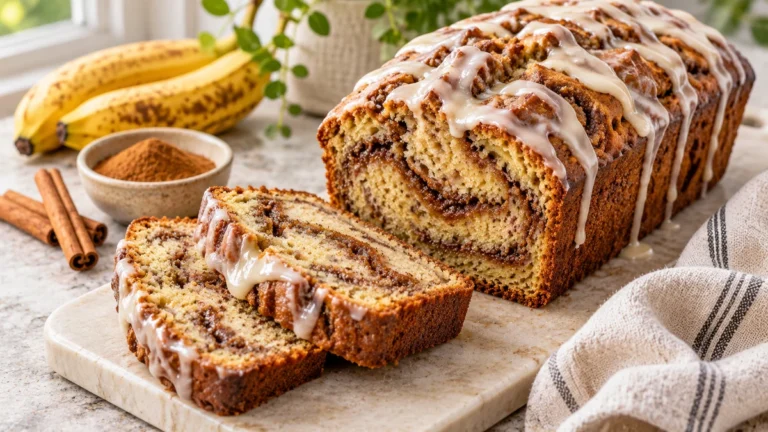
For breakfast, pair it with a simple toast, egg dish, or fruit. For a more dessert-like café choice, you can compare our banana bread latte or cookies and cream latte as separate treats rather than mixing several flavors into one glass.
Final Tips
The best pandan latte recipe result comes from a gentle pandan steep, careful straining, cold milk, and espresso poured after the syrup-and-milk base. Taste the syrup before it goes into the glass. A naturally muted green color is normal; flavor and texture matter more than trying to imitate a neon commercial drink. Prepare the syrup once, assemble two iced coffees as needed, and use the remainder in a later drink within the recommended storage window.
If you are trying this pandan latte recipe for the first time, stick with the measured two-tablespoon syrup portion and one espresso shot. Then decide whether you want more coconut, more coffee, or a little less sweetness. The recipe works best as a controlled starting point rather than a guessing game with concentrated pandan products.
Reviewed recipe options
Make this recipe fit me
Choose one of seven popular diet options. NutriMatch will confirm whether the recipe already fits, show a reviewed adaptation when available, or recommend recipes that match your choice.
Please choose a diet first.
Not available for this recipe
This recipe cannot currently be made Dairy-Free with a reviewed adaptation.
NutriMatch will not guess at substitutions. Try one of these recipes that is already reviewed for your choice.
Recipe details, product formulas, and cross-contact information can change. Confirm current labels and use professional guidance when medically necessary.
Not available for this recipe
This recipe cannot currently be made Gluten-Free with a reviewed adaptation.
NutriMatch will not guess at substitutions. Try one of these recipes that is already reviewed for your choice.
Recipe details, product formulas, and cross-contact information can change. Confirm current labels and use professional guidance when medically necessary.
Not available for this recipe
This recipe cannot currently be made High Protein with a reviewed adaptation.
NutriMatch will not guess at substitutions. Try one of these recipes that is already reviewed for your choice.
Recipe details, product formulas, and cross-contact information can change. Confirm current labels and use professional guidance when medically necessary.
Not available for this recipe
This recipe cannot currently be made Keto with a reviewed adaptation.
NutriMatch will not guess at substitutions. Try one of these recipes that is already reviewed for your choice.
Recipe details, product formulas, and cross-contact information can change. Confirm current labels and use professional guidance when medically necessary.
Not available for this recipe
This recipe cannot currently be made Low Carb with a reviewed adaptation.
NutriMatch will not guess at substitutions. Try one of these recipes that is already reviewed for your choice.
Recipe details, product formulas, and cross-contact information can change. Confirm current labels and use professional guidance when medically necessary.
Not available for this recipe
This recipe cannot currently be made Vegan with a reviewed adaptation.
NutriMatch will not guess at substitutions. Try one of these recipes that is already reviewed for your choice.
Recipe details, product formulas, and cross-contact information can change. Confirm current labels and use professional guidance when medically necessary.
Already a reviewed match
This recipe already fits Vegetarian.
No changes are needed based on its reviewed NutriMatch classification. Check the complete ingredients, product labels, and serving details for your own needs.
Recipe details, product formulas, and cross-contact information can change. Confirm current labels and use professional guidance when medically necessary.