This black sesame latte recipe makes a creamy, nutty drink with roasted black sesame paste, milk, a little maple syrup, and a pinch of salt. The key is to loosen the thick paste with a small amount of warm water before adding the milk, so the sesame blends smoothly instead of sticking to the bottom. It takes about eight minutes for a hot cup, and the same measured ingredients work over ice.
A traditional-style black sesame milk latte does not automatically contain coffee. This base is naturally caffeine-free if your ingredients are caffeine-free; you can add a shot of espresso for a café-style variation. Below are both versions, plus precise substitutions, texture fixes, storage advice, and an ingredient-based nutrition estimate. No blender is required when you begin with smooth, unsweetened roasted sesame paste.
Table of Contents
What Is a Black Sesame Latte?
Black sesame latte, sometimes called kuro goma latte, is a milk drink flavored with ground roasted black sesame. The seeds make it gray, smoky-looking, and deeply toasted in flavor; the milk supplies a mellow, creamy background. Depending on the café or recipe, it may be served hot, poured over ice, or made with an optional espresso shot. Its dark color comes from the sesame rather than charcoal, cocoa, or coffee.
For this black sesame latte recipe, the roasted paste is the starting point. It is not the same as a matcha latte. Matcha is powdered green tea, whereas black sesame contributes the primary flavor here. If you want a separate green-tea drink, our iced sugar cookie cream matcha takes a very different sweet, tea-based direction. For this sesame version, using a smooth paste matters more than creating elaborate latte art.
Why This Black Sesame Latte Recipe Works
The paste disperses first. A two-tablespoon warm-water slurry prevents cold milk from hitting a thick clump of sesame.
It tastes like sesame. One tablespoon of unsweetened paste delivers a pronounced toasted flavor without relying on highly sweetened instant latte powder.
Sweetness is adjustable. Two teaspoons of maple syrup are enough to soften bitterness without turning the drink into dessert.
Both temperatures use the same base. Stir the slurry into warmed milk for a cozy cup or pour it over cold milk and ice.
No coffee is required. The espresso version is optional, which suits the different ways people use the word “latte.”
Unlike a flavored espresso drink such as our banana bread latte, this drink starts with sesame and milk. That difference makes it useful even when you want the comforting texture of a latte without a coffee flavor.
Ingredients for the Black Sesame Latte Recipe
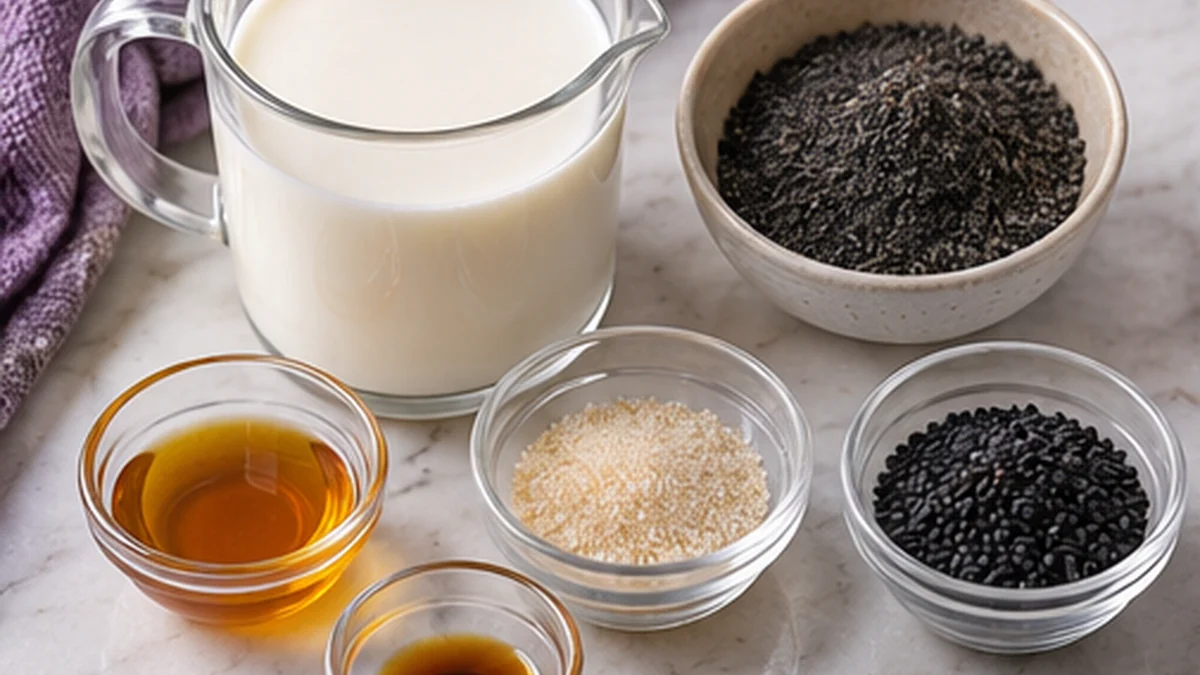
Unsweetened roasted black sesame paste — 1 tablespoon (about 16 g). Look for a jar whose ingredients are primarily or entirely roasted black sesame seeds. It should be spreadable and finely ground, not a bag of whole seeds. Stir the jar thoroughly if its natural oil has separated. Sweetened sesame dessert filling or pre-sweetened latte powder will need a different amount of syrup.
Warm water — 2 tablespoons (30 ml). This is not to dilute the whole drink; it is the small amount needed to turn stiff paste into a smooth slurry. Warm tap-temperature drinking water works, or gently heat water until warm but not boiling. Add a teaspoon extra only if your paste is unusually thick.
Milk — 1 cup (240 ml). For the nutrition calculation below, use 2% cow’s milk. Whole milk makes a richer drink; unsweetened oat milk brings gentle sweetness. Unsweetened soy milk is another workable choice. Our vegan iced coffee recipe discusses how different plant milks behave in cold drinks.
Maple syrup — 2 teaspoons (10 ml). Add after tasting if needed; liquid sweetener dissolves more reliably than granulated sugar in an iced drink. Honey is an option for those who use it, but it is not vegan. For an entirely unsweetened version, leave out the syrup and expect a stronger roasted note.
Vanilla — 1/4 teaspoon, plus a tiny pinch of fine salt. Vanilla rounds off the roasted edge, and a barely perceptible amount of salt prevents flatness. You do not need extra sesame oil, cream, or sweetened condensed milk to make the core recipe work.
For iced serving: about 3/4 to 1 cup of ice. Optional toppings: 1/2 teaspoon roasted black sesame seeds, added immediately before serving. An espresso shot is a variation, not part of the basic ingredients or nutrition estimate.
Black Sesame Paste vs. Powder vs. Whole Seeds
In this black sesame latte recipe, buying the right paste saves the most effort. Smooth roasted paste is the easiest choice. It has already been milled to a fine consistency, so whisking in a little water is usually enough. Be careful when shopping: black sesame paste and black tahini are often similar products, but brands can vary in roast level and texture. Prefer an unsweetened jar when following the measurements here.
If you cannot find paste, the black sesame latte recipe can be adapted. Black sesame powder can also work if it is truly finely ground, unsweetened, and intended for beverages. Start with roughly one level tablespoon, whisk with the water, then assess thickness; powders absorb liquid differently from a paste and may settle faster. Do not assume a sweetened instant drink mix has the same sugar or protein content.
Whole seeds need grinding. If you only have toasted seeds, grind a small quantity until very fine, scraping down your grinder as necessary. A regular blender may leave grainy fragments; a capable spice grinder or high-speed appliance produces a smoother texture. If you cannot make an even paste, sieve the resulting milk before serving. The simple paste-based approach avoids that extra work.
For another drink where a prepared ingredient creates the texture, see our coffee jelly in a bottle. Its chewy jelly cubes are deliberately separate; a black sesame drink should feel smooth rather than granular.
How to Make This Black Sesame Latte Recipe
The same first step works for the hot and iced versions. Use a small bowl or a wide mug and a little whisk or fork. A handheld milk frother is optional; start at low speed and keep the tip submerged to avoid splashing gray sesame droplets across the counter.
Step 1: Smooth out the black sesame paste
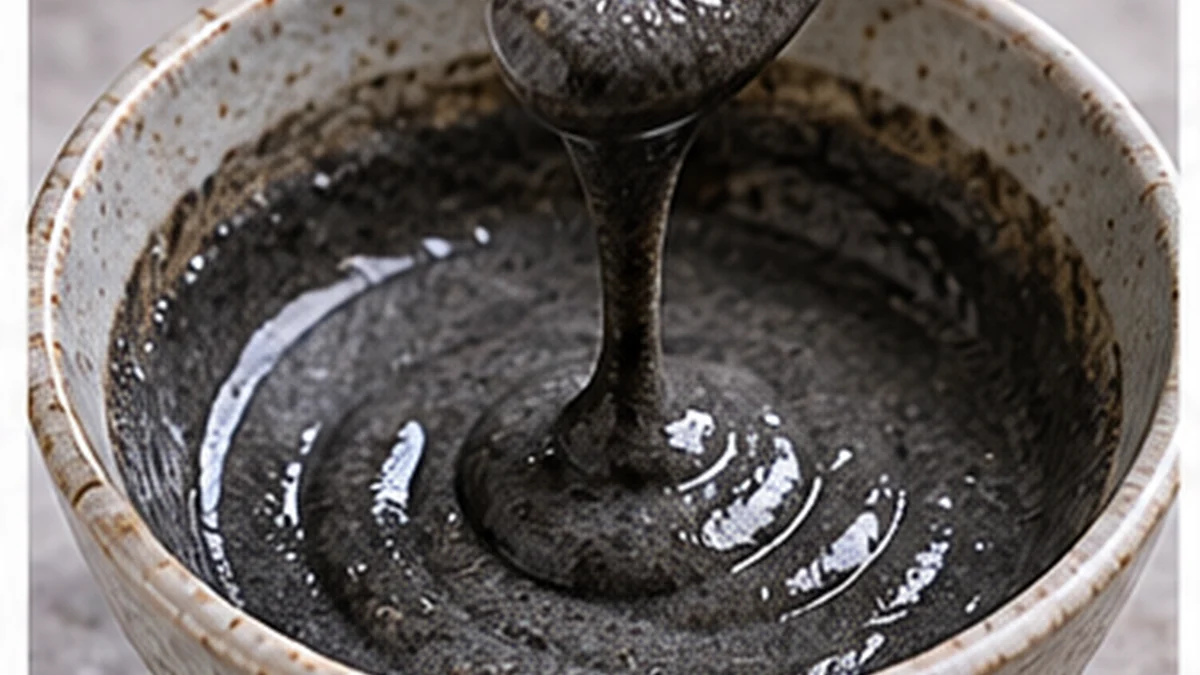
For reliable texture in this black sesame latte recipe, measure 1 tablespoon of sesame paste into a small bowl. Add 1 tablespoon of the measured warm water and whisk until the mixture looks glossy, dark gray, and lump-free. Add the second tablespoon gradually, then mix in the maple syrup, vanilla, and a tiny pinch of salt. You want a pourable, almost paint-like syrup with no thick residue along the sides of the bowl. This small step is more important than any decorative topping.
Step 2: Choose the hot or iced route
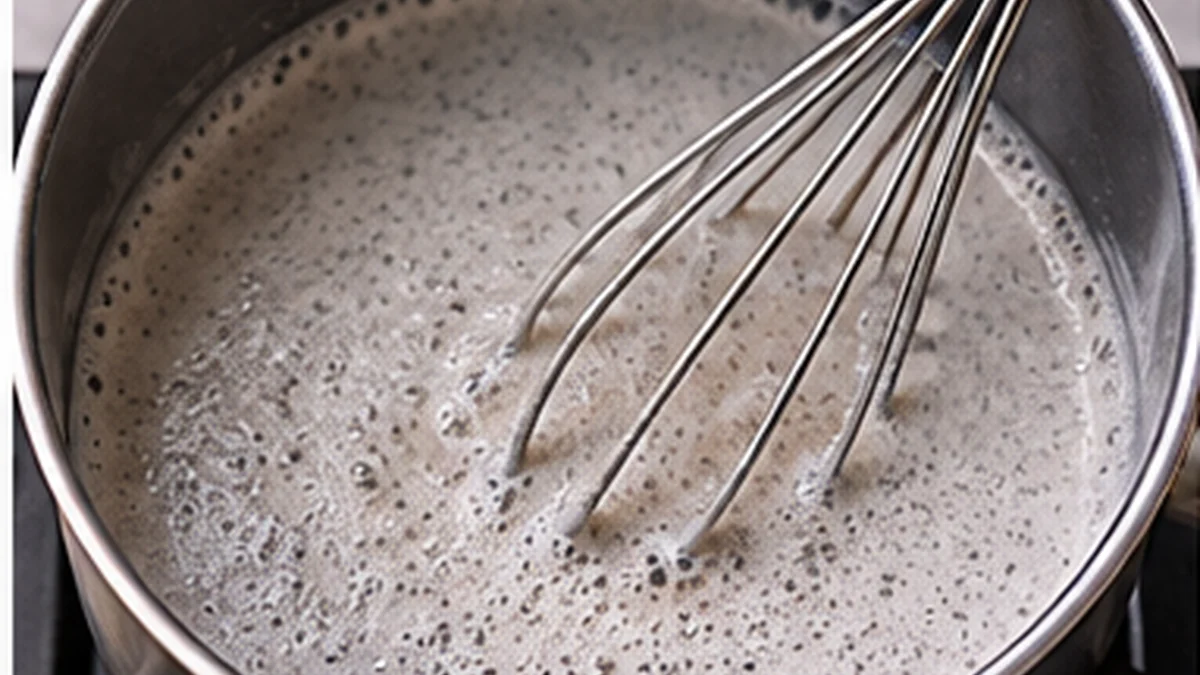
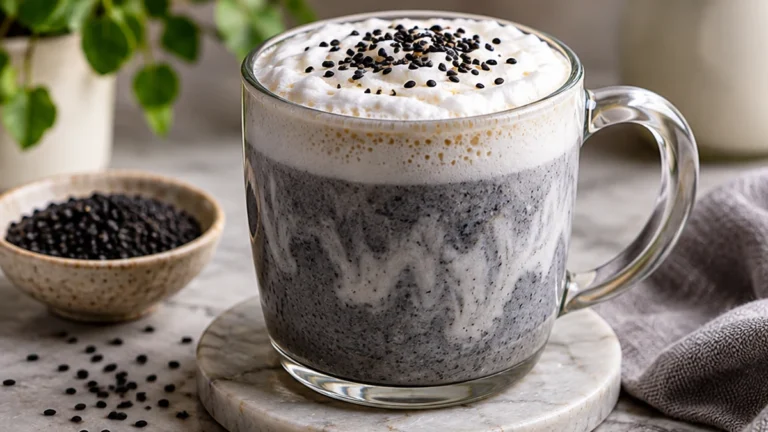
For the hot version of this black sesame latte recipe, follow the saucepan method. For a hot black sesame latte: warm 1 cup of milk in a small saucepan over medium-low heat until it is steaming but not boiling, typically 2 to 3 minutes. Reduce heat, add the sesame slurry, and whisk until the gray color is even. Turn off the heat. Froth briefly if you want a light foam, then pour into a warm mug. Vigorous boiling is unnecessary and can encourage a cooked-milk taste or a skin on the surface.
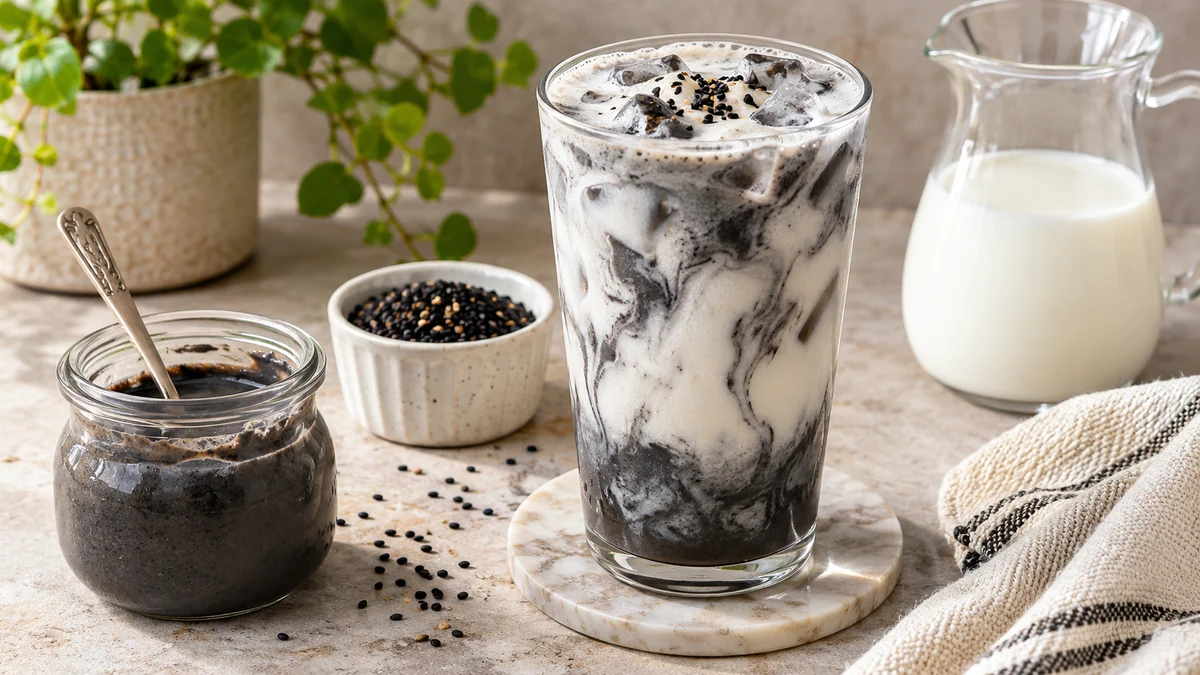
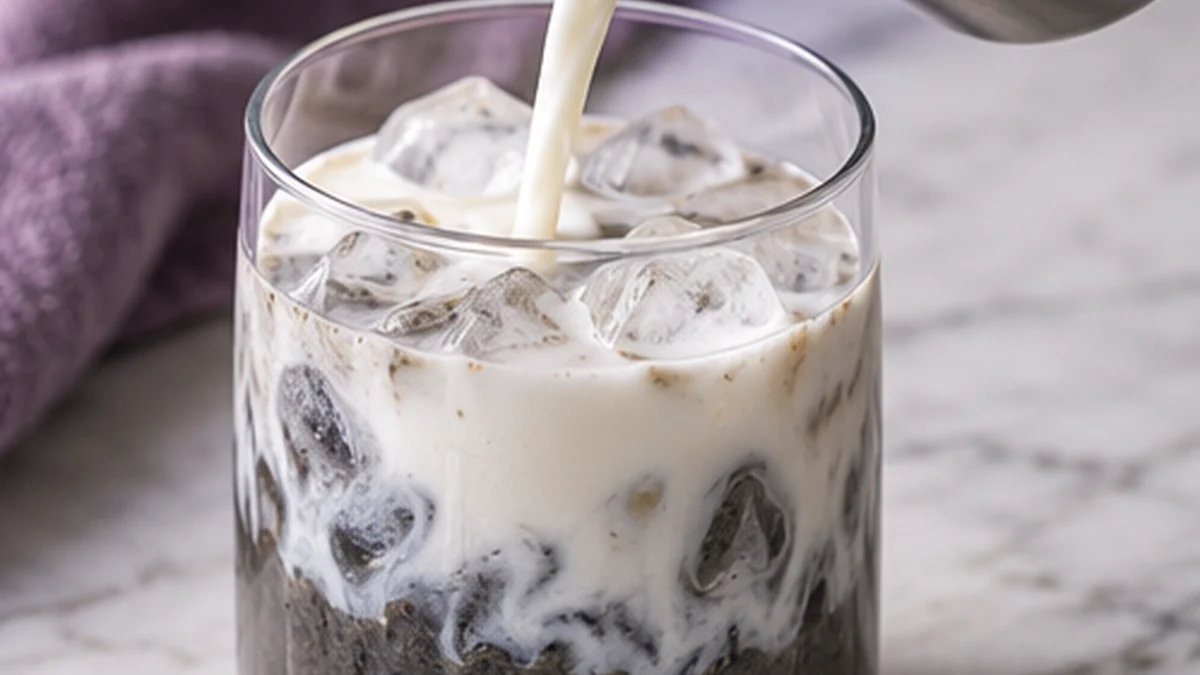
The iced black sesame latte recipe needs no saucepan. For an iced black sesame latte: add the prepared sesame slurry to the bottom of a 16-ounce glass. Add several ice cubes, pour in cold milk gradually, and stir well with a long spoon. For a striking black-and-white marbled glass, pour most of the milk first and add a little slurry along the side; then stir before drinking so the taste is consistent throughout.
Step 3: Taste and finish
Taste after the drink is fully mixed. If the sesame is more bitter than expected, stir in another 1/2 teaspoon maple syrup rather than masking it with a large amount of chocolate sauce. A few sesame seeds on top emphasize what is in the drink, but they are optional. A small amount of foam is enough; an oversized whipped topping would hide the flavor we are trying to highlight.
Creamy roasted black sesame latte made with smooth unsweetened paste, milk, maple syrup, and a pinch of salt. No coffee required; add optional espresso if preferred.
Total Time:8 minutes
Yield:1 large latte
Ingredients
Scale
1 tablespoon (about 16 g) unsweetened roasted black sesame paste, stirred until uniform
2 tablespoons (30 ml) warm water, plus 1 teaspoon more only if paste is very stiff
1 cup (240 ml) 2% milk (or unsweetened oat/soy milk; nutrition will change)
2 teaspoons (10 ml) pure maple syrup, plus more to taste if needed
1/4 teaspoon pure vanilla extract
Tiny pinch fine salt
For iced serving: 3/4 to 1 cup ice cubes
Optional: 1/2 teaspoon roasted black sesame seeds to garnish
Optional coffee variation: 1 shot (1 fl oz / 30 ml) espresso, not included in nutrition
Instructions
In a small bowl whisk black sesame paste with 1 tablespoon of the measured warm water until smooth. Gradually whisk in the remaining tablespoon of water to make a glossy, pourable slurry.
Whisk the maple syrup, vanilla, and tiny pinch of salt into the sesame slurry until fully combined.
HOT OPTION: Heat the milk in a small saucepan over medium-low heat just until steaming, about 2 to 3 minutes; do not boil. Whisk in the sesame slurry until evenly gray, then remove from heat. Froth briefly if desired and pour into a mug.
ICED OPTION: Spoon the slurry into a 16-ounce glass, fill with ice, pour cold milk slowly over the ice and stir well. Stir again before drinking if any sesame settles.
Taste and adjust with a little extra maple syrup or milk. Sprinkle on optional sesame seeds and serve promptly. For a coffee version, add the optional espresso to the slurry before adding milk.
Notes
Choose unsweetened roasted black sesame paste; sweetened powder changes sweetness and nutrition.
The hot serving takes about 8 minutes total; the iced version can be assembled in about 5 minutes.
No espresso in the base recipe. Optional espresso and toppings are excluded from the nutrition estimate.
Contains sesame, a major U.S. food allergen. Dairy milk also contains milk allergen; use alternative milk if suitable for your needs.
Refrigerate perishable leftovers promptly at 40°F (4°C) or below; serve fresh for best texture.
Author:Adam Moretti
Prep Time:5 minutes
Cook Time:3 minutes
Category:Drinks
Method:Stovetop or No-Cook
Cuisine:Japanese-inspired / American home café
Diet:Vegetarian
Hot Black Sesame Latte: Texture and Temperature Tips
In a hot black sesame latte recipe, the most noticeable mistake is heating the milk too aggressively. Steam is your cue: tiny bubbles at the edge mean you can stop heating. A milk frother will introduce air, but a regular whisk gives a pleasant light layer. A fine sieve can help if you are using a coarser homemade sesame paste, though the result will naturally lose some seed solids.
If you like the texture of our cloud coffee, remember that this drink is intentionally more substantial: ground sesame has real seed solids and will not remain perfectly suspended forever. A quick swirl before each sip is normal, even when you use good paste.
Iced Black Sesame Latte: How to Keep the Layers Attractive
The iced black sesame latte recipe looks best in a clear glass. For the most visible contrast, use plenty of ice and pour the cold milk slowly. A dark sesame base can stay toward the bottom for a few moments while the milk moves around the ice. Take your photo right away, but stir the finished drink before tasting. Drinking the separated layers means one sip tastes bland and the next tastes intensely roasted.
Ice does dilute the latte gradually. Starting with chilled milk reduces melting, and making the drink immediately before serving helps. If you prefer cold coffee drinks with fruit rather than roasted sesame, our blueberry coffee recipe is built around a completely different syrup-based flavor.
Espresso, Matcha and Other Variations
Black sesame espresso latte
Add 1 ounce (30 ml) of freshly brewed espresso to the sesame slurry before adding the milk. For the iced version, let the espresso cool a little so it does not melt all the ice. The espresso adds bitterness and caffeine; you may prefer an additional 1/2 teaspoon syrup. This is a coffee variation, not what the basic recipe requires. For a richer cookie-flavored espresso alternative, browse our cookies and cream latte recipe.
Black sesame matcha latte
Whisk 1 teaspoon matcha with about 2 tablespoons warm water in a separate cup and pour it over the prepared sesame milk. Matcha will give a second distinctive flavor and green layers; it also introduces caffeine. Keep the sesame sweetener modest at first, because both ingredients have assertive, earthy notes. The main recipe is not automatically a matcha drink.
Oat milk and dairy-free version
Substitute 1 cup unsweetened oat milk or soy milk for dairy milk, and verify your sesame paste has no added dairy ingredients. The result can be made without animal ingredients if you use maple syrup; however, do not call it allergy-free. If you want an extra pourable topping, the method in strawberry cold foam without heavy cream illustrates a cold-foam technique, although its strawberry flavor would change this latte significantly.
Less-sweet or dessert-style version
Reduce maple syrup to 1 teaspoon for a less-sweet drink. For a dessert-style latte, add up to 1 tablespoon of maple syrup total, but do so after tasting because the sweetness of the milk matters. A small spoonful of lightly whipped cream is optional, and its nutrition is not included in the base estimate. If you mainly want an indulgent seasonal coffee, our cookie butter cloud Dunkalatte copycat follows a different, coffee-forward flavor profile.
Black Sesame Latte Troubleshooting
Why is my latte gritty?
A gritty black sesame latte recipe usually means the paste has coarse particles or you used seeds that were not ground finely enough. Whisk the paste separately with warm water before adding milk. For a batch made from whole seeds, use a better grinder or pass the drink through a fine-mesh sieve. Straining removes some seed solids, so taste and adjust as needed.
Why is there a dark layer at the bottom?
Sesame particles are heavier than milk, so some settling is normal. A quick stir before sipping is the simplest fix. A well-emulsified store-bought paste suspends more evenly than poorly blended whole seeds. If the bottom becomes a thick paste after a few minutes, your slurry probably was not diluted enough at the beginning.
Why does it taste bitter or burnt?
Roasting level varies by brand. Deeply roasted sesame can taste pleasantly smoky, but scorched sesame is harsh. Choose a milder paste, use the full cup of milk, and adjust sweetness in small increments. If your whole seeds smell sharp or burnt when toasted, start over; syrup cannot reliably disguise genuinely scorched seeds.
Why is the drink thin or too thick?
For a thinner latte, add 1 to 2 tablespoons extra milk and stir. For a thicker, more intensely sesame-flavored version, increase paste by a teaspoon and dissolve that extra paste with a little warm water first. Do not simply dump extra paste into a cold, finished glass. The base should pour like a latte, not resemble pudding.
If you enjoy iced drinks built around clear ratios and strong flavors, see our brown sugar cookie shaken espresso for another example of how mixing order affects a beverage.
Make-Ahead, Storage and Food Safety
The black sesame latte recipe has its best texture immediately after mixing. You can measure the sesame paste, water, vanilla, and maple syrup in advance and keep the mixture covered and refrigerated for a short period, following your ingredient packaging guidance. Stir again before adding the milk. Because sesame pastes differ in oil separation and added ingredients, do not promise a long shelf life for a homemade slurry.
For a pre-mixed milk latte, use a clean sealed container and refrigerate promptly at 40°F (4°C) or below; for best flavor, prepare only what you expect to drink that day. The FoodSafety.gov food safety guidance advises refrigerating perishables within two hours, or within one hour in temperatures above 90°F. Do not leave a dairy-based iced latte out on the counter for an afternoon. For the iced version, store without ice and add fresh ice when serving.
Avoid freezing a finished milk latte solely to save time; thawing can emphasize separation or graininess. If you want an easy sweet drink to prepare alongside breakfast, a completely different option is our banana syrup recipe for coffee, which can be made separately and added to a drink later.
Sesame Allergy and Nutrition: Important Notes
Sesame is a major food allergen in the United States. It was added to the list of nine major allergens effective January 1, 2023, according to the U.S. Food and Drug Administration. This recipe is not suitable for anyone with a sesame allergy. Check packaged pastes, milk alternatives, and any toppings for their own allergen statements and possible cross-contact.
For one base serving made with 1 cup 2% milk, approximately 16 g unsweetened sesame paste, 2 teaspoons maple syrup and vanilla, a practical nutrition estimate is about 250 calories, 11 g protein, 24 g carbohydrates, and 14 g fat. Actual values change with your sesame brand and milk. The estimate is ingredient-based, not laboratory tested, and excludes optional espresso, toppings, and any additional sweetener. For ingredient benchmarks, compare USDA FoodData Central with the labels on the products you buy.
Black sesame brings seed fat, not a medical benefit you can assume from a single drink. This article is a cooking guide rather than a weight-loss or therapeutic recommendation. A sesame latte also should not be marketed as a high-protein drink simply because it contains seeds: most of the protein in the stated base serving comes from the milk.
FAQs About the Black Sesame Latte Recipe
Does a black sesame latte contain coffee?
Not necessarily. This black sesame latte recipe has a basic sesame-and-milk version containing no coffee or tea. You can add an espresso shot for a coffee version, but do not assume every black sesame latte sold by a café is caffeine-free; check the actual menu ingredients.
Can I use regular tahini instead of black sesame paste?
Yes, if that is what you have, but the result will be a pale tan sesame latte rather than the classic dark-gray drink. Regular tahini is typically made from lighter sesame seeds and can differ in flavor. Use the same starting tablespoon and adjust after tasting.
Should the black sesame seeds be toasted?
If you are making your own paste from raw seeds, brief, gentle toasting can deepen aroma, but avoid scorching them. When using a prepared roasted black sesame paste, there is no reason to toast it again. Grind or blend only after the seeds have cooled according to your appliance directions.
Can I use black sesame powder instead of paste?
Yes, if it is finely milled and unsweetened. It will behave differently from paste and may need extra whisking and a bit more warm water. Start with a small amount, increase gradually, and expect more settling than with a smooth, oily paste.
Can I make a black sesame latte without a frother?
Absolutely. A fork or small whisk is enough for the slurry, and a spoon mixes the finished drink. A frother helps with a foam cap, not with the essential flavor. In a hurry, a jar with a tight lid can combine the cooled mixture for the iced version, but never shake hot liquid in a sealed container.
How can I make it look more like a café latte?
Use a transparent iced glass, put the prepared black sesame mixture at the bottom, add ice, and pour milk slowly down the inside edge. For a hot cup, froth the milk gently and sprinkle a few sesame seeds over the foam. Take the picture before stirring, then blend the layers together before drinking.
Final Tips for the Best Sesame Latte
To make this black sesame latte recipe repeatable, start with unsweetened roasted black sesame paste, not a sweetened instant mix. Measure a single tablespoon, loosen it completely with warm water, and choose your serving temperature before adding the milk. The result should be creamy, lightly nutty, and smooth enough to sip without leaving a thick paste at the bottom. Once you know that base works with your preferred milk, vary the sweetness or add espresso—one adjustment at a time.
If you are comparing home café drinks, our blueberry coffee and cranberry coffee recipe showcase fruit-based flavors instead of sesame. They are useful internal alternatives, not substitutes for the toasted seed flavor here.
Reviewed recipe options
Make this recipe fit me
Choose one of seven popular diet options. NutriMatch will confirm whether the recipe already fits, show a reviewed adaptation when available, or recommend recipes that match your choice.
Please choose a diet first.
Not available for this recipe
This recipe cannot currently be made Dairy-Free with a reviewed adaptation.
NutriMatch will not guess at substitutions. Try one of these recipes that is already reviewed for your choice.
Recipe details, product formulas, and cross-contact information can change. Confirm current labels and use professional guidance when medically necessary.
Not available for this recipe
This recipe cannot currently be made Gluten-Free with a reviewed adaptation.
NutriMatch will not guess at substitutions. Try one of these recipes that is already reviewed for your choice.
Recipe details, product formulas, and cross-contact information can change. Confirm current labels and use professional guidance when medically necessary.
Not available for this recipe
This recipe cannot currently be made High Protein with a reviewed adaptation.
NutriMatch will not guess at substitutions. Try one of these recipes that is already reviewed for your choice.
Recipe details, product formulas, and cross-contact information can change. Confirm current labels and use professional guidance when medically necessary.
Not available for this recipe
This recipe cannot currently be made Keto with a reviewed adaptation.
NutriMatch will not guess at substitutions. Try one of these recipes that is already reviewed for your choice.
Recipe details, product formulas, and cross-contact information can change. Confirm current labels and use professional guidance when medically necessary.
Not available for this recipe
This recipe cannot currently be made Low Carb with a reviewed adaptation.
NutriMatch will not guess at substitutions. Try one of these recipes that is already reviewed for your choice.
Recipe details, product formulas, and cross-contact information can change. Confirm current labels and use professional guidance when medically necessary.
Not available for this recipe
This recipe cannot currently be made Vegan with a reviewed adaptation.
NutriMatch will not guess at substitutions. Try one of these recipes that is already reviewed for your choice.
Recipe details, product formulas, and cross-contact information can change. Confirm current labels and use professional guidance when medically necessary.
Already a reviewed match
This recipe already fits Vegetarian.
No changes are needed based on its reviewed NutriMatch classification. Check the complete ingredients, product labels, and serving details for your own needs.
Recipe details, product formulas, and cross-contact information can change. Confirm current labels and use professional guidance when medically necessary.