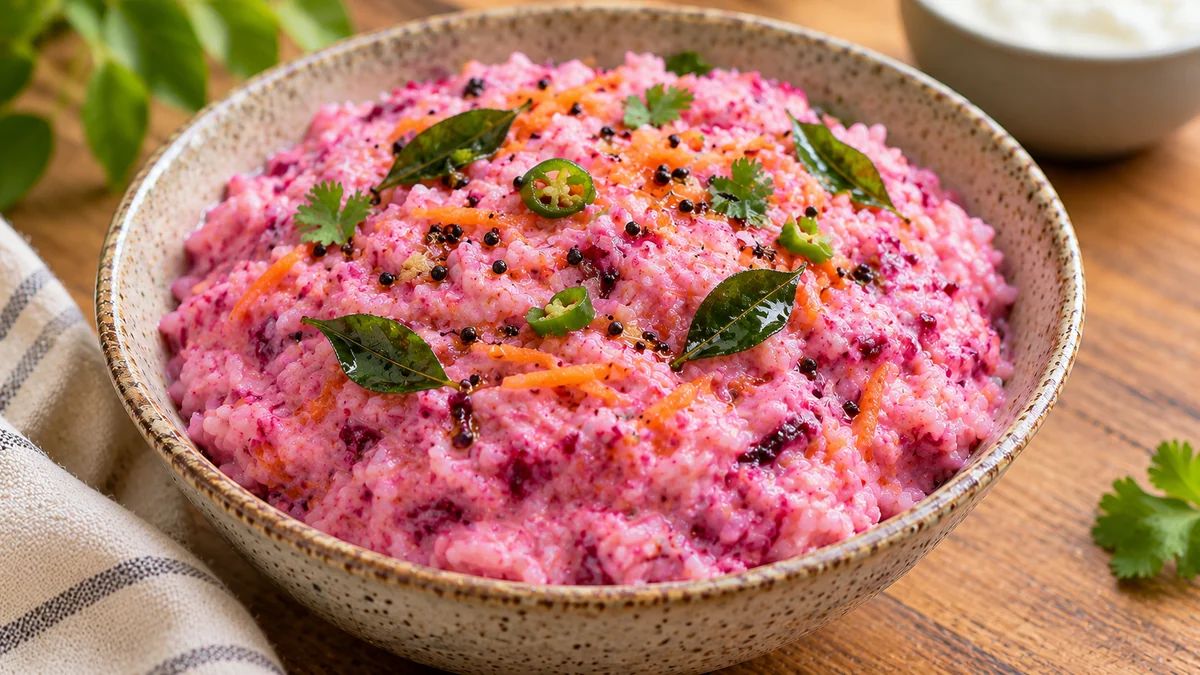
This carrot beetroot curd rice combines cool, tender rice, plain yogurt, finely grated orange carrot, and ruby-red beetroot in a creamy pink bowl. A quick South Indian-style tempering of mustard seeds, curry leaves, and a little chana dal gives the mild rice its savory finish. Start with properly chilled cooked rice and you can prepare three side-dish servings in about 21 minutes.
In American supermarkets, “curd” in this dish means plain cultured yogurt, not cottage cheese or a sweet curd. Choose unsweetened regular whole-milk yogurt for a smooth, loose coating that clings to the grains. The small amount of beetroot is for color as much as flavor; you can make it pale blush or a brighter pink by adjusting how finely it is grated.
This version is an independently measured home recipe inspired by a recent social-media video, not a transcription of a creator’s ingredient amounts. It uses familiar U.S. measurements, tells you how to keep the yogurt from separating, and explains how to store cooked rice safely.
Table of Contents
What Is Carrot Beetroot Curd Rice?
Curd rice, sometimes called thayir sadam, is rice mixed with yogurt and often finished with a seasoned oil known as a tempering or tadka. In a vegetable variation, grated beetroot colors the yogurt pink while carrot brings a sweet, crisp contrast. The mustard seeds and curry leaves do the flavor work. The rice is soft and gently tangy rather than spicy or intensely earthy.
A November 3, 2026 social-media video titled “Healthy & Tasty Carrot Beetroot Curd Rice” had about 1.1 million views in a November 8 snapshot, according to a third-party recipe trend tracker. That is a view-count snapshot, not a measurement of U.S. Google searches. Beetroot yogurt rice predates that video; a 2023 Indian Express recipe demonstrates an older version with curd, rice, and beetroot. This article focuses on cooking a useful bowl, not claiming the dish was recently invented.
Why This Carrot Beetroot Curd Rice Works
A measured ratio of two cups cooked rice to one cup plain yogurt keeps the texture creamy rather than soupy.
The beetroot and carrot are warmed briefly in the tempering, removing some raw crunch without cooking them until mushy.
Tempering mustard seeds and curry leaves in a small quantity of hot oil makes them fragrant while the rest of the dish stays cool.
Soft grains, tiny vegetable shreds, and crunchy toasted chana dal make every spoonful feel different.
You can control the pink shade by folding in the vegetable mixture gradually and stopping when it looks right.
The recipe uses ordinary precooked white rice; there is no need to cook a fresh pot solely for this meal if you have safely chilled leftovers.
If you enjoy vegetables mixed into rice, try our Brazilian broccoli rice for a warm, garlic-forward side. It has an entirely different cooking method and flavor, so the two recipes are useful for different meals.
Ingredients for Pink Carrot and Beet Curd Rice
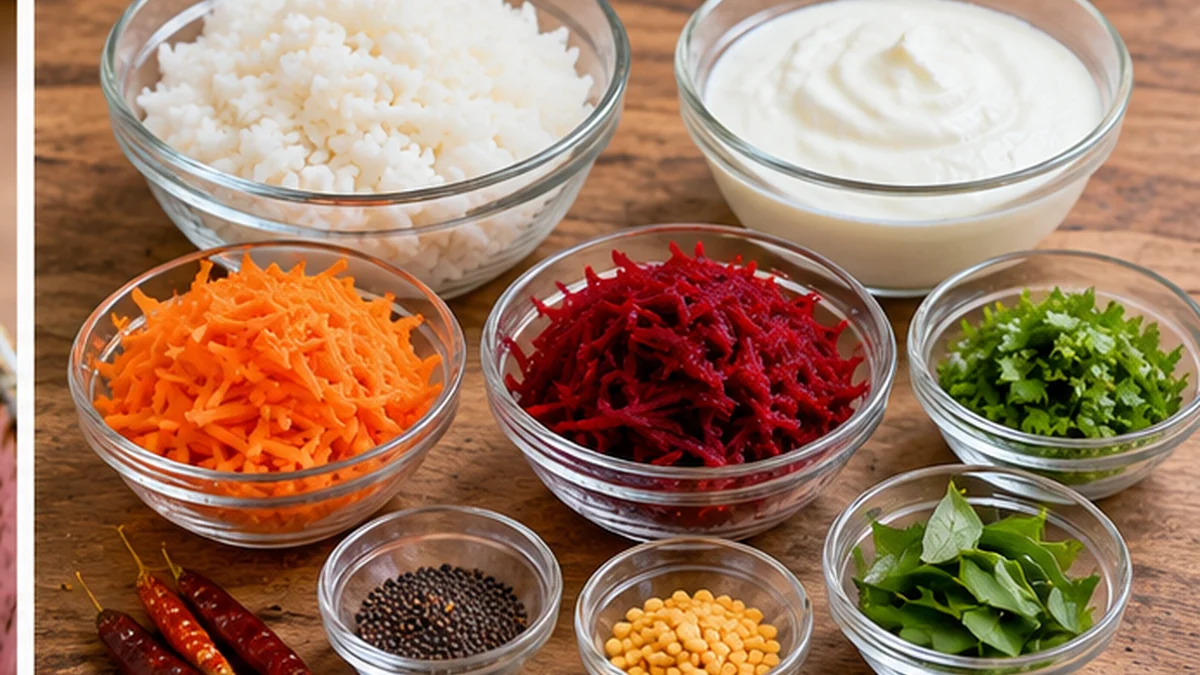
Cooked white rice: Use 2 cups (about 320 g) cooked white rice that has been cooled promptly and refrigerated. Medium-grain or jasmine rice works well; slightly soft grains are ideal. Dry, hard refrigerator rice needs a spoonful or two of cold water before the yogurt will coat it evenly.
Plain whole-milk yogurt: Use 1 cup (about 245 g) unsweetened, unflavored yogurt. Regular yogurt is preferable to thick strained Greek yogurt for the classic creamy texture. Greek yogurt can work if you whisk in 1 to 2 tablespoons of cold water, but the protein and nutrition will change.
Carrot and beetroot: Grate 1 medium carrot (about 80 g) and 1/2 medium peeled beet (about 70 g) on the small holes of a box grater. Small shreds soften faster and color the yogurt more evenly. If you grate the beet roughly, you will get noticeable dark streaks instead of uniform pink.
For the tempering: Measure 2 teaspoons neutral oil, 1/2 teaspoon black mustard seeds, 1 teaspoon dry chana dal, 8 fresh curry leaves, and 1 small dried red chili. Thinly sliced fresh green chili, 1 teaspoon grated fresh ginger, and 2 tablespoons chopped cilantro finish the flavor. Use 1/2 teaspoon fine salt for the batch, then adjust only after tasting.
Curry leaves are fragrant leaves from the curry-leaf tree, not the same ingredient as curry powder. An Indian grocery or an online Indian-food retailer is the likeliest source. If you cannot find them, omit rather than swapping in curry powder; the result will be good but less traditionally aromatic. The chana dal in the tempering is a very small quantity for crunch, not the main protein ingredient.
2 cups (about 320 g) safely cooled cooked white rice
1 cup (about 245 g) plain whole-milk yogurt, unsweetened
1 medium carrot (about 80 g), peeled and finely grated
1/2 medium beetroot (about 70 g), peeled and finely grated
2 teaspoons (about 9 g) neutral oil, such as sunflower or canola
1/2 teaspoon black mustard seeds
1 teaspoon dry split chana dal
8 fresh curry leaves, clean and completely dried
1 small dried red chili, left whole or broken once
1 teaspoon freshly grated ginger
1 small green chili, thinly sliced, seeds removed for milder heat (optional)
1/2 teaspoon fine salt, plus more only after tasting
2 tablespoons chopped fresh cilantro
1–2 tablespoons cold drinking water, only if needed to loosen the yogurt mixture
Have all ingredients measured before heating the oil: the tempering takes less than a minute after the seeds begin to crackle, and curry leaves can splatter when they touch hot oil if they are wet. Use a small skillet with enough room to stir rather than balancing a tiny pan over an oversized burner.
Creamy, naturally pink South Indian-inspired yogurt rice with grated carrot and beetroot, mustard-seed curry-leaf tempering, and a little crunchy chana dal. Three savory side portions.
Total Time:21 minutes
Yield:3 side-dish servings
Ingredients
Scale
2 cups (about 320 g) cooked white rice, safely cooled and refrigerated
1 cup (about 245 g) unsweetened plain whole-milk yogurt
1 medium carrot (about 80 g), peeled and finely grated
1/2 medium beetroot (about 70 g), peeled and finely grated
2 teaspoons (about 9 g) neutral oil (sunflower or canola)
1/2 teaspoon black mustard seeds
1 teaspoon dry split chana dal
8 fresh curry leaves, washed and thoroughly dried
1 small dried red chili
1 teaspoon freshly grated ginger
1/2 teaspoon fine salt, plus more only after tasting
2 tablespoons finely chopped fresh cilantro
Optional: 1 small green chili, very thinly sliced and deseeded for mild heat (not included in nutrition)
Optional: 1–2 tablespoons cold drinking water to loosen the mixture, as needed
Instructions
Place the safely chilled, cooked rice in a mixing bowl. Separate hard clumps with a fork. Whisk the plain yogurt until smooth and fold it into the rice; add up to 1 tablespoon cold water only if the mixture is stiff.
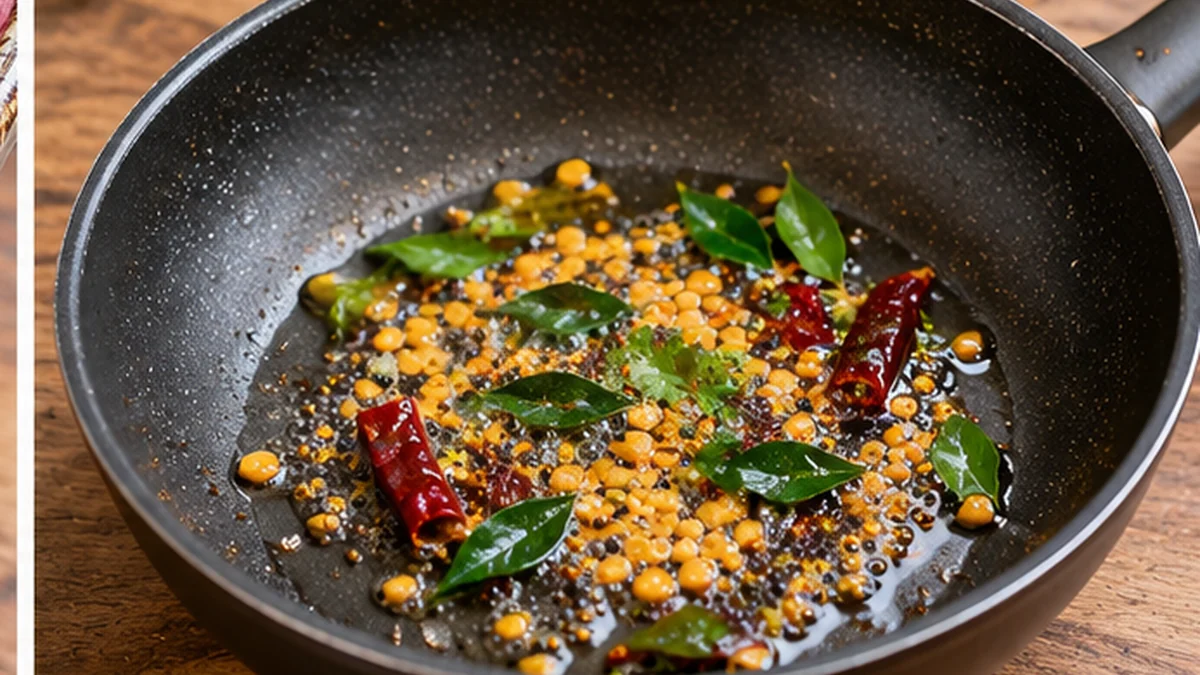
Heat 2 teaspoons neutral oil in a small skillet over medium heat. Add the chana dal and stir for 45–60 seconds until lightly golden. Add the mustard seeds and allow them to crackle.
Reduce heat; add completely dry curry leaves and the dried red chili, stirring about 15 seconds. The leaves may splatter in hot oil, so stand back and keep water away from the pan.
Add grated ginger, carrot, and beetroot. Cook, stirring, about 3–4 minutes until the shreds soften and any excess moisture mostly evaporates. Remove from heat.
Spread the cooked vegetables in the pan or on a clean plate for about 5 minutes, until no longer steaming. Do not put steaming-hot vegetables directly into cold yogurt.
Fold the vegetable mixture into the yogurt rice in two additions, adjusting the shade of pink to preference. Add 1/2 teaspoon fine salt and the cilantro. If needed, loosen with up to 1 tablespoon more cold water and add the optional fresh green chili.
Divide into three small bowls and serve cool or chilled. Refrigerate any leftovers promptly; keep at or below 40°F (4°C).
Notes
This independently measured recipe is inspired by a 2026 viral carrot-and-beet curd rice video. Curd rice predates the trend. This is not a claimed copy of the creator’s unpublished measurements.
Total time 21 minutes assumes you already have safely cooled and refrigerated cooked rice. It includes 15 minutes hands-on preparation and cooling plus approximately 6 minutes stovetop cooking.
Use regular unsweetened whole-milk yogurt. Greek yogurt may need an extra tablespoon or two of cold water and changes the nutrition.
If substituting oil with ghee or adding peanuts, the nutrition figures change. Chana dal in the tempering is a teaspoon for texture, not a high-protein ingredient.
The rice must have been cooled and stored properly; do not use cooked rice left at room temperature for more than two hours (one hour above 90°F). Refrigerate promptly, keep at 40°F or below, and eat prepared yogurt rice preferably within one day for texture.
Contains MILK. This recipe is vegetarian, not vegan or dairy-free. Check all packaged spice and ingredient labels when strict gluten avoidance matters.
Nutrition assumes cooked white rice 320 g, plain whole-milk yogurt 245 g, carrot 80 g, beetroot 70 g, canola oil 9 g, chana dal ~5 g, and 1/2 teaspoon fine salt; estimate for 3 servings. Optional fresh chili and extra water are excluded.
Use fresh curry leaves when available. Dry leaves well before adding to hot oil, and remove the dried chili before serving if you prefer mild heat.
Author:Adam Moretti
Prep Time:15 minutes
Cook Time:6 minutes
Category:Side Dish
Method:Stovetop tempering and mixing
Cuisine:South Indian-inspired
Diet:Vegetarian; contains milk; check labels for gluten-sensitive diets
How to Make Carrot Beetroot Curd Rice
Step 1: Prepare the cooled rice and yogurt
Put the chilled rice in a large mixing bowl and break up any hard clumps with a fork or clean fingertips. Whisk the plain yogurt separately until smooth. Fold yogurt into the rice, adding just one tablespoon cold water if the rice feels dry. You want a thick coating around individual grains, not a puddle of yogurt collecting at the base.
Step 2: Temper the mustard seeds and curry leaves
Heat the oil in a small skillet over medium heat. Add the chana dal and stir for about 45–60 seconds, until it starts to deepen slightly in color. Add the black mustard seeds and wait for them to pop. Reduce the heat, add the completely dry curry leaves and dried chili, and stir for about 15 seconds. Be careful of splattering oil. The leaves should smell fragrant and look glossy, not blackened.
Step 3: Soften the grated vegetables
Add the ginger, carrot, and grated beet to the tempered oil. Stir for about 3–4 minutes until the vegetable shreds soften but still keep some definition. The beet may stain the skillet and the carrot shreds pink; that is expected. The mixture should not be watery. If the beet releases a lot of moisture, cook for an extra minute to let it evaporate.
Step 4: Cool the vegetables briefly
Take the skillet off the heat. Spread the warm vegetables across the pan or a clean plate for roughly 5 minutes, until no longer steaming hot. Do not fold very hot oil or vegetables straight into cold yogurt: the dairy may loosen or form small curds. The seasoned oil can stay with the vegetables because it carries the mustard and curry-leaf flavors.
Step 5: Fold, season, and serve
Add the seasoned vegetables to the rice-yogurt bowl in two batches. Stir gently until the rice turns pink and the carrot remains visible. Add the measured salt and cilantro. Taste, then add a few fresh green chili rings if you want more heat. Serve the curd rice cool or lightly chilled, with any remaining tempering scattered over the top.
How to Get Bright Pink Carrot Beetroot Curd Rice
The deepest color comes from finely grated beetroot and enough stirring to release its pigment into the yogurt. Start with about two-thirds of the cooked beet mixture; add the rest only if you want a stronger color. Do not blend the entire batch, which would turn the rice into a uniform paste and eliminate the grains that make curd rice recognizable.
Moisture control matters more than the exact beet size. After sautéing, the grated vegetables should look glossy and slightly softened, not surrounded by juice. Drain any excess liquid before folding them into the yogurt. If the finished rice seems loose, refrigerate for 10 minutes so the yogurt and grains settle; if too thick, fold in cold water one teaspoon at a time.
Serve carrot beetroot curd rice in a plain white bowl for an especially dramatic presentation, or a speckled stoneware bowl for a more everyday look. The contrast between pink rice, dark mustard seeds, orange carrot, and glossy green curry leaves creates the distinctive appearance without artificial food coloring.
What Does It Taste Like?
Expect a mild tang from yogurt, gentle sweetness from carrot and beet, and earthy fragrance from curry leaves. Black mustard seeds bring small sharp pops of flavor; chana dal contributes a few toasted, nutty bites. The chili should be background warmth unless you intentionally use more. This is not a spicy beet curry or a sweet dessert rice.
This carrot beetroot curd rice works best as a modest scoop beside a bean dish, cooked vegetables, or a more substantial main course. The recipe is designed for three side portions and provides some protein from yogurt, but it is not a high-protein entrée on its own. If you want a different portable lunch based around a yogurt dressing, our fibermaxxing pea salad uses peas and vegetables in a very different texture.
Troubleshooting Common Problems
Why is my yogurt rice watery?
The cooked rice may have been wet, the grated beet may have released too much juice, or you may have added more water than necessary. Next time, let the rice drain and cool properly, sauté the vegetables until excess moisture evaporates, and only thin the yogurt after mixing. Extra yogurt will make a thin bowl thinner, not rescue it.
Why did the yogurt turn grainy?
Most often, the vegetable mixture or tempering was still very hot when it was stirred into the cold yogurt. Make the tempering first and give it a few minutes to cool. Another possibility is a highly acidic or very thick yogurt. Choose plain, unsweetened yogurt and whisk it smooth before mixing; do not boil the yogurt-rice mixture.
Why is the beet flavor too strong?
Raw beetroot can taste earthy, especially if grated coarsely. Sauté the beet completely with the carrot and start with half the amount. The final bowl should taste mostly tangy and savory, with beet providing a visual note. A little fresh cilantro or an extra mustard-seed tempering can rebalance an overly earthy version without adding sugar.
Why is the rice hard or clumpy?
Rice becomes firmer in the refrigerator. Break it apart before adding yogurt; if it remains unusually rigid, stir in one tablespoon cold water and wait a minute. Freshly cooked rice must be cooled promptly before mixing. Do not leave a large warm pot at room temperature for an extended period simply to bring it down to yogurt temperature.
Variations and Substitutions
Without curry leaves: Use the mustard seeds and ginger for the tempering, and finish with cilantro. It will lose a recognizable South Indian aroma but still have good texture. Do not substitute a spoonful of commercial curry powder; that changes the dish rather than replacing the leaves.
Greek yogurt version: Use the same volume of unsweetened plain Greek yogurt and gradually whisk in about 2 tablespoons cold water. The bowl will be thicker and its nutritional values, particularly protein, will differ from the recipe card. You may also use a little less rice for a yogurt-forward result; that would make it a new variation, not the nutrition calculated here.
Milder version: Leave out the green and dried chilies, but keep the mustard seeds and curry leaves. For additional crunch, add roasted peanuts just before serving if no one has a peanut allergy. A tablespoon of peanuts adds fat and calories, so they are excluded from the base recipe estimate.
Dairy-free version: An unsweetened plant yogurt may work, but texture and taste vary considerably. The original recipe is made with dairy yogurt; do not treat an alternate yogurt as a nutritionally identical substitution. Choose a product that is explicitly unsweetened and check how it reacts to the seasoned oil.
Extra vegetables: Add up to 1/4 cup finely diced cucumber when the mixture is cool, but expect it to release water during storage. Add cucumber immediately before eating for the crispest effect. If you are serving a mixed platter of unusual carrot dishes, our carrot button noodles offer a chewy, hot contrast.
Carrot Beetroot Curd Rice Storage and Food Safety
Cooked rice deserves special care even when the dish is served cold. Bacillus cereus can occur in rice that is held too long at room temperature. FoodSafety.gov advises refrigerating cooked rice and other leftovers promptly in shallow containers instead of leaving a large pot to cool slowly. Use only rice that was stored correctly before making this recipe.
Once the yogurt, rice, and vegetables are mixed, transfer leftovers to a covered shallow container and refrigerate at 40°F (4°C) or colder within two hours; within one hour if the temperature is above 90°F (32°C). Those thresholds are also explained by the CDC food-safety guidance. Do not pack this dish in an unrefrigerated lunchbox for several hours.
For best flavor and texture, eat the prepared curd rice the day it is made or the following day. It may thicken in the fridge; loosen each serving with a teaspoon of cold water or yogurt. The mustard-seed tempering will soften over time. Freezing is not recommended because yogurt can separate and rice can become grainy when thawed. Discard any portion that was left out too long rather than trying to rescue it by reheating.
Nutrition and Dietary Features
This carrot beetroot curd rice recipe makes three side-dish servings. Using roughly 320 g cooked white rice, 245 g plain whole-milk yogurt, 80 g carrot, 70 g beet, 9 g neutral oil, a teaspoon of chana dal, the seasonings, and 1/2 teaspoon fine salt, each portion is estimated at about 250 calories, 7 g protein, 40 g carbohydrate, and 6 g fat. These are calculated approximations from common ingredient reference values and divided by three, not lab-tested measurements. Plain yogurt brands and the amount of oil left in the skillet affect the actual result.
This dish is vegetarian when made with ordinary dairy yogurt and plant-derived seasonings. It contains milk and is not vegan or dairy-free in its standard form. Rice, beet, carrot, mustard seeds, and curry leaves do not inherently require wheat ingredients, but cross-contact and packaged seasoning labels matter for a strict gluten-free diet. We do not label it certified gluten-free and do not promise any particular medical or weight-loss effect.
For ingredient-level nutrition comparisons, the U.S. Department of Agriculture provides FoodData Central. If you replace regular yogurt with Greek yogurt, use a different amount of oil, or add peanuts or beans, calculate the new serving values rather than reusing the numbers below.
Carrot Beetroot Curd Rice FAQs
Is curd rice the same as rice pudding?
No. South Indian-style curd rice is savory, made with unsweetened yogurt, and usually seasoned with mustard seeds and curry leaves. Rice pudding is generally sweet and cooked with milk, sugar, and dessert spices. The bright pink color in this recipe comes from beetroot, not berry jam or food coloring.
Can I use uncooked beetroot?
Some versions use finely grated raw beetroot, but this measured recipe briefly sautés the beet and carrot to soften the shreds and reduce excess moisture before adding them to yogurt. If you prefer a raw vegetable topping, use a small quantity and add it just before serving; the flavor will be earthier and the texture crunchier.
Should the rice be warm or cold?
Use cooked rice that has been cooled safely and refrigerated. Cool rice keeps the yogurt from splitting and makes the finished bowl refreshing. If you cooked rice specifically for this dish, follow a prompt-cooling method rather than leaving it sitting at room temperature. The recipe time assumes the cooked rice is already available.
Can I make the rice pink without beetroot?
Carrot alone gives an orange tint, not the same magenta pink. You could use a small amount of cooked purple cabbage, but the color and flavor are different and depend on acidity. For the recognizable carrot beetroot curd rice appearance, beetroot is the simplest way to get a vivid natural color.
Can I pack it for lunch?
Yes, provided it stays cold. Use a chilled container and an insulated bag with ice packs, and return leftovers to a refrigerator promptly. Do not rely on yogurt acidity to protect rice that was stored incorrectly. Keep especially crunchy toppings separate until serving.
Is this a high-protein meal?
Not by itself. The measured serving contains only about seven grams of protein and is best treated as a side dish or light component of a larger meal. Higher-protein yogurt or an added protein source can change that, but those substitutions also change the recipe-card nutrition.
Final Tips for Creamy Pink Rice
Remember the sequence: cool the rice safely, whisk the yogurt, temper the aromatics, soften the grated vegetables, let them stop steaming, and then fold everything together. Add the colored vegetables gradually, so you can stop at the shade and texture you like. Taste after the mustard and curry leaves are incorporated; they contribute enough savory flavor that you may not need extra salt.
The visual appeal of carrot beetroot curd rice comes from ordinary food rather than a trick: naturally pink yogurt, orange carrot threads, and glossy curry leaves. Keep the dish chilled until serving, make the tempering fresh when possible, and serve it as a colorful side that is practical long after the current video stops trending.
Reviewed recipe options
Make this recipe fit me
Choose one of seven popular diet options. NutriMatch will confirm whether the recipe already fits, show a reviewed adaptation when available, or recommend recipes that match your choice.
Use the substitutions below to prepare a Dairy-Free version while keeping the rest of the recipe as close as possible to the original.
Ingredient swaps
1 cup (about 245 g) unsweetened plain whole-milk yogurtUse 1 cup (about 245 g) unsweetened plain whole-unsweetened soy milk yogurt
1 cup (about 245 g) unsweetened plain whole-milk yogurtUse 1 cup (about 245 g) unsweetened plain whole-milk unsweetened dairy-free yogurt
Instruction changes
Use the dairy-free milk in the same measured amount unless the product label recommends otherwise.
Use unsweetened dairy-free yogurt in the same measured amount and adjust thickness only if needed.
Check: Check packaged substitutes for milk ingredients and the cross-contact information you need.
Use these reviewed changes with the original ingredient quantities and instructions above. The original recipe card stays unchanged.
Recipe details, product formulas, and cross-contact information can change. Confirm current labels and use professional guidance when medically necessary.
Not available for this recipe
This recipe cannot currently be made Gluten-Free with a reviewed adaptation.
NutriMatch will not guess at substitutions. Try one of these recipes that is already reviewed for your choice.
Recipe details, product formulas, and cross-contact information can change. Confirm current labels and use professional guidance when medically necessary.
Not available for this recipe
This recipe cannot currently be made High Protein with a reviewed adaptation.
NutriMatch will not guess at substitutions. Try one of these recipes that is already reviewed for your choice.
Recipe details, product formulas, and cross-contact information can change. Confirm current labels and use professional guidance when medically necessary.
Not available for this recipe
This recipe cannot currently be made Keto with a reviewed adaptation.
NutriMatch will not guess at substitutions. Try one of these recipes that is already reviewed for your choice.
Recipe details, product formulas, and cross-contact information can change. Confirm current labels and use professional guidance when medically necessary.
Not available for this recipe
This recipe cannot currently be made Low Carb with a reviewed adaptation.
NutriMatch will not guess at substitutions. Try one of these recipes that is already reviewed for your choice.
Recipe details, product formulas, and cross-contact information can change. Confirm current labels and use professional guidance when medically necessary.
Use the substitutions below to prepare a Vegan version while keeping the rest of the recipe as close as possible to the original.
Ingredient swaps
1 cup (about 245 g) unsweetened plain whole-milk yogurtUse 1 cup (about 245 g) unsweetened plain whole-unsweetened soy milk yogurt
1 cup (about 245 g) unsweetened plain whole-milk yogurtUse 1 cup (about 245 g) unsweetened plain whole-milk unsweetened vegan yogurt
Instruction changes
Use unsweetened soy milk in the same measured amount unless the recipe needs a different thickness.
Use unsweetened vegan yogurt in the same measured amount and adjust thickness only if needed.
Check: Check packaged substitutes, sauces, seasonings, and toppings for animal-derived ingredients.
Use these reviewed changes with the original ingredient quantities and instructions above. The original recipe card stays unchanged.
Recipe details, product formulas, and cross-contact information can change. Confirm current labels and use professional guidance when medically necessary.
Already a reviewed match
This recipe already fits Vegetarian.
No changes are needed based on its reviewed NutriMatch classification. Check the complete ingredients, product labels, and serving details for your own needs.
Recipe details, product formulas, and cross-contact information can change. Confirm current labels and use professional guidance when medically necessary.
A thick, loaded Jimmy John’s holiday-inspired Griswold Family Chaos Cookie with chocolate chips, festive candies, pretzels, toasted marshmallows, peppermint and…