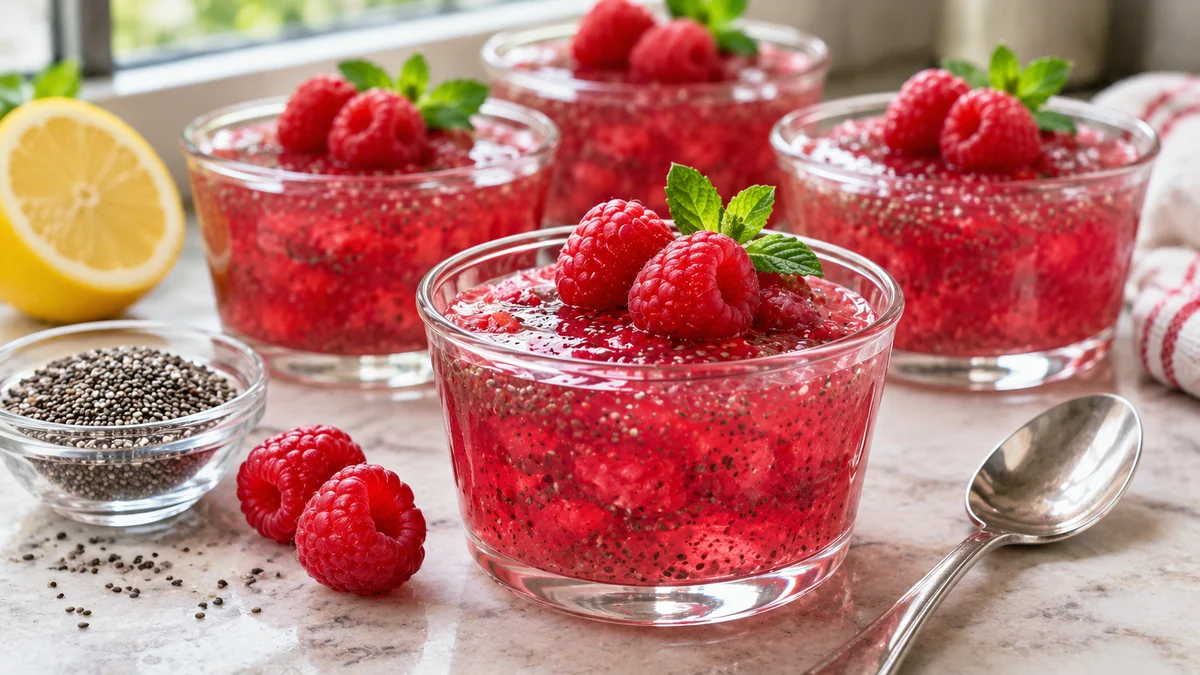
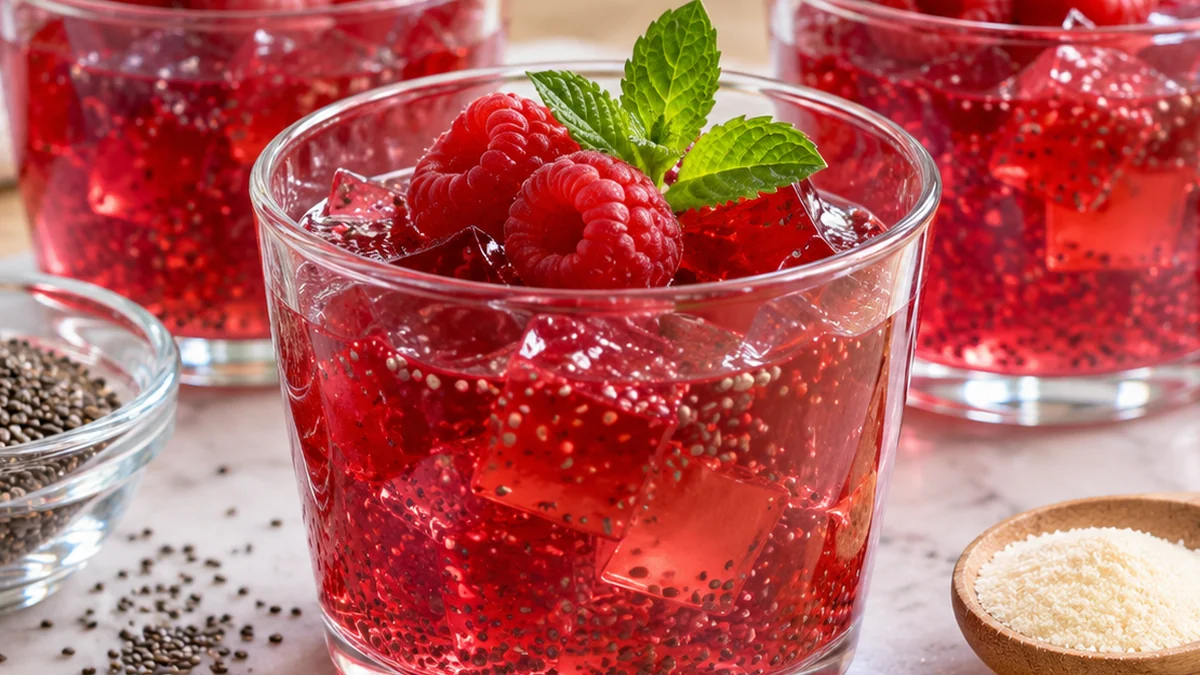
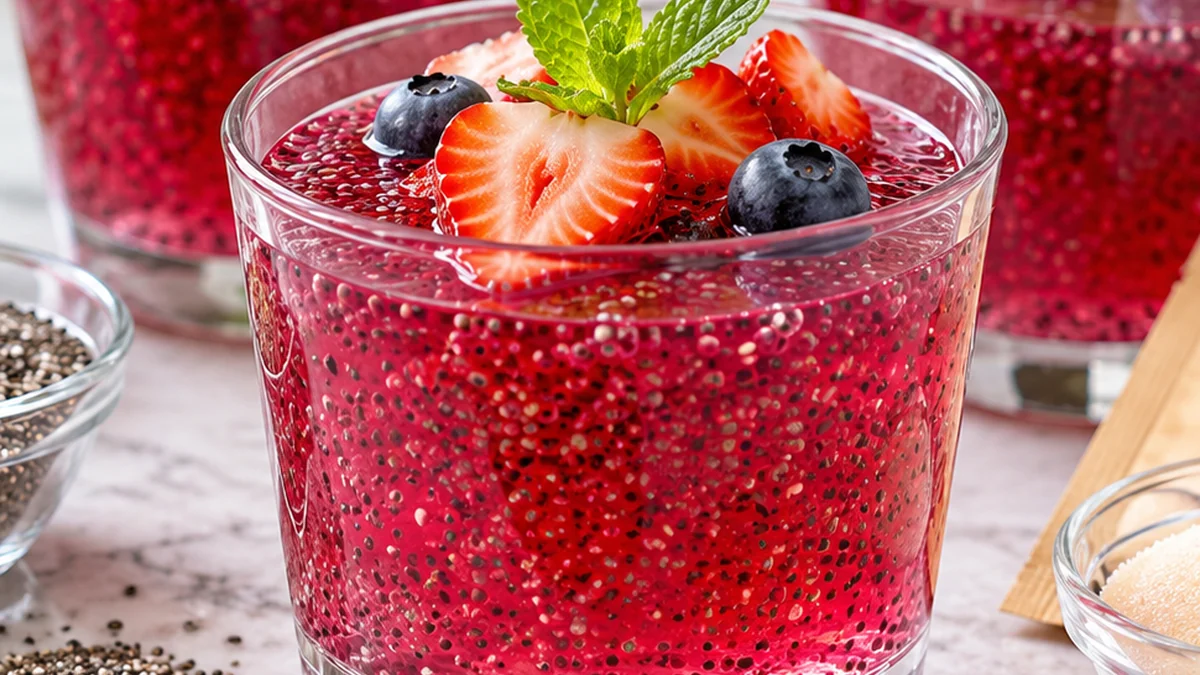
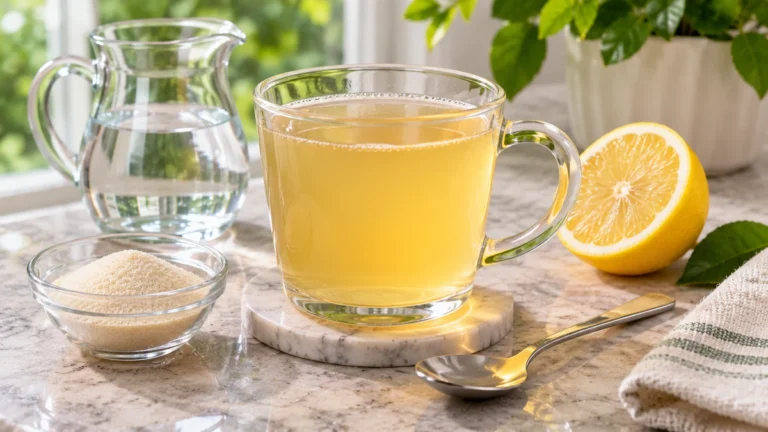
This chia gelatin weight loss recipe makes four chilled raspberry-lemon jelly cups with whole chia seeds and real fruit. It is a make-ahead, spoonable snack—not a supplement, a fat-burning drink, or a treatment. The base batch uses 1 cup raspberries, 2 tablespoons chia seeds, one 7 g packet unflavored gelatin, one cup water, and a teaspoon of lemon juice. The finished cups are lightly tart, softly set, and speckled with hydrated seeds.
Unlike the warm lemon three-ingredient gelatin trick drink, this version has enough hydrated chia and mashed berries to make a visibly seeded fruit jelly. The steps matter: soak the chia in its own cold water, bloom plain gelatin separately, dissolve it completely, and combine everything before chilling. That sequence prevents dry seed clumps and keeps the gelatin from gathering into rubbery threads.
The term “weight loss” appears in the name because people search for this trending food. There is no convincing clinical evidence that a homemade chia-and-gelatin recipe by itself produces meaningful weight loss. Enjoy it as a modest portion of food, not as a replacement for a balanced meal or prescribed medication. For a larger protein-and-fiber meal, our high protein high fiber smoothie has a very different nutritional profile.
Table of Contents
Why This Chia Gelatin Weight Loss Recipe Is Different
A real spoonable fruit jelly with raspberry pulp, rather than a pre-meal gelatin drink.
Two tablespoons of chia for the whole batch add measurable fiber and a speckled texture.
Unflavored gelatin supplies gentle structure without a flavored Jell-O packet or artificially colored dessert powder.
The one-cup water measurement is divided precisely, so bloom and hydration steps do not add extra unnoticed liquid.
Four measured small servings are easier to plan than an ambiguous large jar.
Optional sweeteners and toppings are clearly excluded from the baseline nutrition estimate.
These are culinary advantages, not proof of a special dieting effect. Our Botox Jelly berry bars are made with a firmer fruit-and-gelatin formula intended for slicing, while this raspberry chia gelatin stays soft enough to spoon directly from a cup. If you want a dairy-based dessert, Greek yogurt Jello fluff has a different creamy texture and more protein.
Ingredients for Raspberry Chia Gelatin Cups
1 cup (123 g) raspberries, fresh or fully thawed: Mash the fruit with a fork or a few brief pulses of a blender, keeping the pulp and seeds. Straining the puree removes part of the fruit fiber, which would make the recipe less representative of the nutrition estimate. Choose ripe raspberries for natural flavor; add sweetener only if needed after tasting.
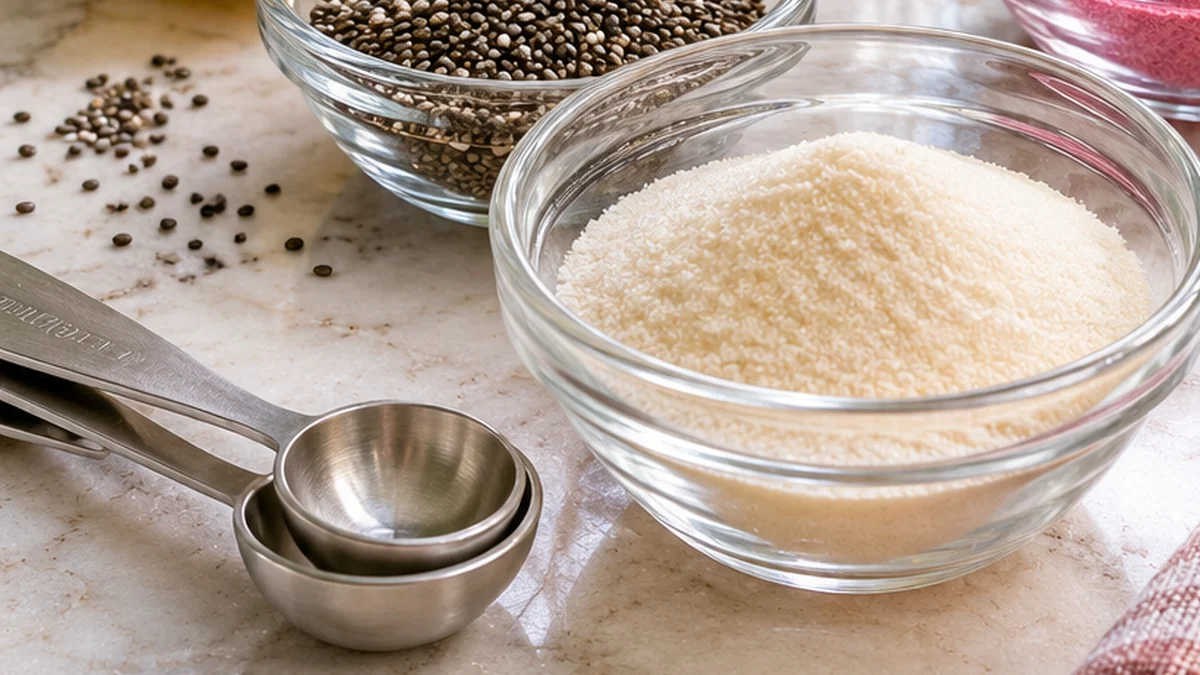
2 level tablespoons (about 24 g) dry chia seeds: Choose plain food-grade black or white chia. Soak them first in 1/2 cup (120 ml) cool water for at least 20 minutes, stirring twice. The hydrated seeds swell and form a soft gel. This is more chia than the tiny optional teaspoon in our original gelatin-trick post, and it changes both texture and nutritional values.
1 standard 7 g packet (about 2 1/2 teaspoons) unflavored gelatin: Use actual gelatin, not collagen peptides or agar powder. Collagen peptides do not set reliably; agar uses a different boiling method and cannot be swapped teaspoon for teaspoon. Gelatin is animal-derived, so the finished recipe is not vegetarian or vegan.
1/2 cup (120 ml) water for gelatin: Divide this into 1/4 cup (60 ml) cold for blooming and 1/4 cup (60 ml) very hot for dissolving. Combined with the 1/2 cup for chia, the recipe uses 1 cup (240 ml) water total. Measure all portions before you begin.
1 teaspoon fresh lemon juice: Brightens the berries without making the jelly taste like lemonade. A little lemon zest can be added for aroma, but it is optional. This is a lightly tart dessert; it does not contain tea, cider vinegar, pink salt, or a medication-like ingredient.
Optional, not included in nutrition: 1–2 teaspoons maple syrup for the whole batch, a small amount of a preferred sweetener, or a few extra fresh raspberries on top. If you prefer a fully different breakfast made with chia and yogurt, try our apple peanut butter chia pudding rather than adding yogurt to this gelatin formula without adjusting the set.
Quick Method: Chia Gelatin Weight Loss Recipe
Hydrate the two tablespoons chia in half a cup of cool water for 20–25 minutes. Bloom the 7 g plain gelatin in a separate quarter cup of cold water for five minutes. Whisk in one-quarter cup steaming hot water until smooth and completely dissolved. Mash one cup raspberries with a teaspoon lemon juice, then fold the berry pulp and hydrated chia gel into the dissolved gelatin. Divide into four small glasses and refrigerate for about three hours until softly set. The printable card below contains the full measurements and timing.
Soft raspberry chia gelatin cups with real berries, hydrated seeds and unflavored gelatin. A small spoonable chilled snack, not a clinically proven weight-loss remedy.
Total Time:3 hours 37 minutes
Yield:4 small dessert cups
Ingredients
Scale
2 level tablespoons (24 g) dry chia seeds
1/2 cup (120 ml) cool drinking water FOR CHIA
1 standard packet (7 g, about 2 1/2 teaspoons) plain unflavored gelatin powder
1/4 cup (60 ml) cold water FOR BLOOMING GELATIN
1/4 cup (60 ml) very hot water FOR DISSOLVING GELATIN
1 cup (123 g) fresh raspberries, or thawed frozen raspberries with their juice; mash but do not strain
1 teaspoon (5 ml) fresh lemon juice
Optional, not included in nutrition: 1–2 teaspoons maple syrup for the entire batch or a few fresh raspberries for garnish
Instructions
Stir the chia seeds into the measured 1/2 cup cool water in a small bowl. Stir well now and again after 5 minutes; let stand for 20–25 minutes until evenly thick and hydrated.
Put 1/4 cup cold water in a heat-safe bowl and sprinkle the entire 7 g gelatin packet over it. Let bloom for 5 minutes until evenly swollen.
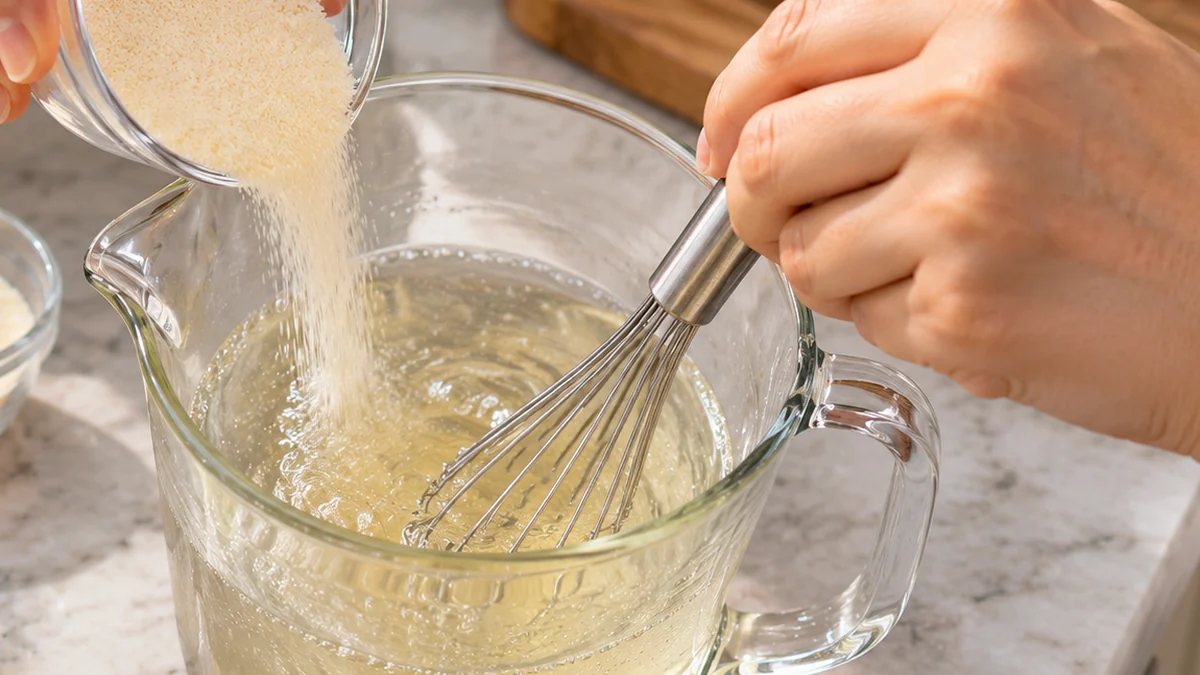
Add 1/4 cup steaming hot water to the bloomed gelatin and whisk until completely smooth with no visible granules. Let cool 3–5 minutes so warm but still fluid.
Mash the cup of raspberries with a fork, keeping the seeds and pulp, then mix in 1 teaspoon lemon juice.
Whisk two spoonfuls of mashed raspberries into the warm gelatin to temper, then stir in the rest of the berries. Fold in all the hydrated chia gel, including its soaking water, until evenly combined.
Taste and optionally sweeten the batch. Divide evenly between 4 small food-safe cups (about 1/2 cup per serving). Cover and refrigerate at 40°F (4°C) or below for about 3 hours until softly set. Add any optional berry garnish just before serving.
Notes
Water total is exactly ONE cup (240 ml): 1/2 cup for chia plus 1/4 cup cold and 1/4 cup hot for gelatin. Do not add extra water.
Use 7 g unflavored setting gelatin, not collagen peptides, instant pudding powder or agar; these are not direct substitutes.
Use fully thawed raspberries if frozen, keep all fruit pulp and juices, and do not strain if using the stated fiber estimate.
Unflavored gelatin is animal-derived. Do not label this gelatin recipe vegan or vegetarian.
Nutrition is an estimate for 4 servings using 24 g dry chia, 123 g raspberries, 7 g unflavored gelatin, 1 tsp lemon juice and water: about 53 kcal, 3 g protein and 4 g fiber per cup. Sweetener, garnish and fruit substitutions change totals.
No published clinical trial confirms that this particular chia gelatin mixture causes significant weight loss or imitates GLP-1 medications.
Refrigerate covered at or below 40°F (4°C) and use preferably within 2–3 days. Do not store at room temperature or substitute for a complete meal.
Active preparation about 12 minutes; chia hydration approximately 25 minutes, gelatin bloom 5 minutes overlapping the hydration, chilling approximately 3 hours. Total about 3 hours 37 minutes.
Author:Adam Moretti
Prep Time:12 minutes
Chia hydration and chilling:3 hours 25 minutes
Cook Time:0 minutes
Category:Snack / Dessert
Method:No bake / Chill
Cuisine:American-inspired
Diet:Contains animal-derived gelatin; not vegetarian
How to Make Chia Gelatin Cups Step by Step
Step 1: Hydrate the Chia Seeds First
Put 2 level tablespoons dry chia into a small bowl and add exactly 1/2 cup cool drinking water. Stir with a fork for 30 seconds, wait five minutes, and stir again to break up any clumps on the bottom. Let it stand for another 15–20 minutes, until the seeds are surrounded by an even, glossy gel. There should be no dry clusters. This soaking step is important for comfort and texture; do not scatter a mouthful of dry chia over a serving and expect it to hydrate after eating. This chia gelatin weight loss recipe begins with hydration because chia develops its gel separately from animal gelatin.
Step 2: Bloom and Dissolve the Gelatin
In a separate heat-safe mixing bowl, pour 1/4 cup cold water, then sprinkle the entire 7 g gelatin packet evenly over its surface. Leave it undisturbed for five minutes. Once swollen, add 1/4 cup very hot water that is steaming but not violently boiling. Whisk gently until the bloom melts into a clear, smooth liquid with no grains attached to the whisk. A few tiny air bubbles are harmless; gelatin chunks are not. Plain unflavored powder is the setting ingredient in this chia gelatin weight loss recipe.
Step 3: Mash the Raspberries Without Straining
Mash 1 cup raspberries with a fork, or use an immersion blender for just a few seconds. Stir in 1 teaspoon lemon juice. Keep the fruit pulp and seeds; we want an actual raspberry jelly rather than a bright red but fiber-poor juice. If using frozen berries, thaw them fully in the refrigerator first and include their released juices as part of the measured fruit, rather than adding extra water. The berry pulp is what gives this chia gelatin weight loss recipe its fruit character rather than the taste of plain water.
Step 4: Combine the Berry Puree, Chia Gel and Gelatin
Let the dissolved gelatin cool for about 3–5 minutes so it is comfortably warm and still fluid. Stir two spoonfuls of mashed raspberries into it first, then add the remaining berries slowly. Fold in all the hydrated chia gel, including its liquid. Mix thoroughly for about 30–45 seconds, scraping down the bowl so the chia is evenly distributed. Taste a drop; if the berries are very tart, add optional sweetener now, not after the cups have set. Working while fluid is the easiest way to distribute chia through this chia gelatin weight loss recipe.
Step 5: Portion, Cover and Chill
Divide the mixture into four small food-safe cups, using roughly 1/2 cup per serving. Stir once in each cup if you see the chia sinking, then refrigerate promptly at or below 40°F (4°C). Cover the cups and chill for approximately three hours, or until a spoonful comes away as a soft jelly rather than a flowing liquid. Deep cups or unusually cold berries may need longer. Top with extra berries only when serving so the garnish stays fresh. Refrigeration turns the chia gelatin weight loss recipe into an actual dessert instead of a warm drink.
The Right Consistency: Soft Jelly, Not a Rubber Block
The set should tremble gently when the cup moves but still hold a spoon mark. It will look pink-red and slightly opaque because of the raspberry pulp, with hydrated chia distributed throughout. It will not resemble translucent commercial Jell-O. The combination of fruit solids and chia gel gives body even before gelatin fully sets, so the finished dessert is thicker than the lemon drink version. A successful chia gelatin weight loss recipe should remain spoonable rather than rubbery.
If you want the spoon to cut clean cubes, you need a different liquid-to-gelatin ratio. Do not keep adding powdered gelatin without adjusting the liquid, because that quickly gives an unpleasant rubbery chew. Our coffee jelly in a bottle deliberately uses firmer coffee jelly cubes for an entirely different beverage.
How Much Fiber, Protein and Sugar Are in Each Cup?
Using 2 tablespoons dry chia (about 24 g), 1 cup raspberries (123 g), 7 g plain gelatin and 1 teaspoon lemon juice, the full batch has approximately 205–215 calories. Dividing into four cups gives about 53 calories, 3 g protein and 4 g fiber per serving. The only meaningful sugar comes naturally from raspberries, at roughly 1–2 g per cup; this is an estimate, not a laboratory result. The nutrition estimate is specific to this chia gelatin weight loss recipe, not a general figure for any trending gelatin cup.
For transparency, U.S. dietary-guideline reference tables list approximately 58 calories and 4.1 g fiber per tablespoon of dried chia, and 32 calories and 4 g fiber per half cup of raspberries. Two tablespoons chia plus one cup fruit therefore contribute about 16 g fiber to the full batch, before any small rounding differences. The gelatin adds protein but no fiber. See the USDA and HHS food-sources-of-fiber table for the reference portions, and confirm calories against the food labels you actually use.
This is a small snack, not a high-protein meal. If you need a complete meal with protein and vegetables, our high protein low calorie lunch bowl is designed for that purpose. Likewise, our high protein overnight oats offers a more substantial breakfast with measured chia, oats and dairy.
Does Chia Gelatin Actually Cause Weight Loss?
No reliable study establishes that this specific chia gelatin weight loss recipe causes sustained weight loss. Chia provides fiber, and a modest serving of gelatin contributes protein, but neither fact proves a special fat-burning effect. Memorial Sloan Kettering Cancer Center reports that limited research does not establish a weight-loss effect from chia itself. GoodRx and McGill University also caution against treating the gelatin trend as a proven method. Naming a food a chia gelatin weight loss recipe does not mean it carries proven weight-loss effects.
A snack can fit a weight-management routine if it suits your preferences and overall eating pattern. Still, a 53-calorie jelly should not replace a balanced lunch or become a rule for suppressing hunger. For a practical snack with more food groups, our GLP-1 snack plate offers a measured mini-meal with dairy, vegetables and protein; it does not claim to treat any medical condition either.
Chia Gelatin vs. the Plain Gelatin Trick vs. Chia Pudding
This recipe: a refrigerated raspberry jelly with a full two tablespoons of chia in a four-portion batch; it is served with a spoon and contains actual fruit pulp. Basic gelatin trick: a lemon gelatin drink or plain set cup without fruit and with an optional tiny teaspoon of chia. Chia pudding: seeds thickening milk or yogurt, generally with no animal gelatin at all. Search terms overlap, but the final foods, proportions and preparation are distinct.
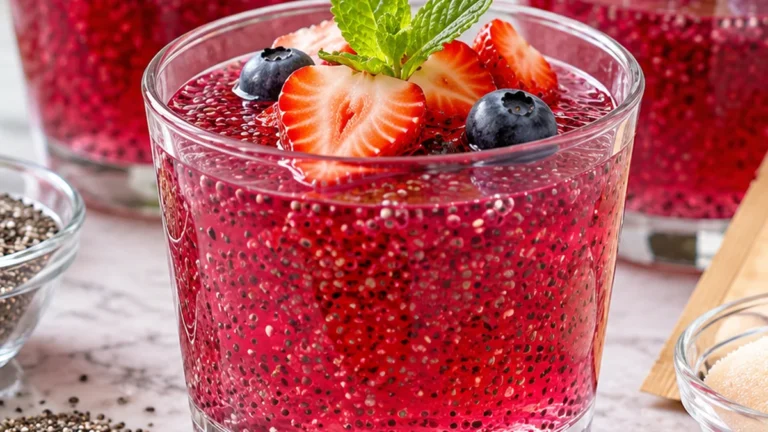
Replace the 123 g raspberries with 1 cup (about 150 g) chopped, thoroughly mashed strawberries. Keep the 2 tablespoons chia, 7 g gelatin and one cup total water unchanged. Because strawberries have different sweetness and fiber from raspberries, recalculate nutrition before publishing a strawberry-specific claim. This version looks lighter pink and may have a milder berry taste.
Blueberry-Lemon Chia Jelly
Use 1 cup (about 148 g) blueberries instead of raspberries and mash them well before combining. Increase the lemon juice to 2 teaspoons if you want a brighter finish. The result is darker purple and slightly more textured from blueberry skins. For a separate café drink with blueberry, our blueberry coffee recipe uses a strained syrup rather than seeded jelly.
Hibiscus-Raspberry Chia Gelatin
For a deeper color and floral note, replace only the 1/4 cup hot water in the gelatin step with 1/4 cup freshly brewed, unsweetened hot hibiscus tea. Keep the 1/4 cup cold blooming water and 1/2 cup chia water unchanged. Do not simply pour in an extra cup of tea; increasing liquid without changing gelatin can make the jelly refuse to set.
Sweeter Dessert, Still a Small Serving
If tart raspberries are not appealing, stir 1–2 teaspoons maple syrup into the full batch just before portioning. A teaspoon of maple syrup adds roughly 17 calories to the entire recipe, so the per-cup number changes slightly. This addition is for taste, not for weight loss. Always distinguish sweetened versions from the base unsweetened nutrition line.
Troubleshooting: Five Common Problems
My Chia Seeds Formed Dry Clumps
The seeds were probably added all at once without a second stir. Mix them into their measured half cup cool water, whisk well, and stir again after five minutes before combining with the gelatin. If a dry clump survives, break it apart with a spoon before chilling.
The Gelatin Formed Rubbery Strings
Gelatin can begin setting if very cold raspberry puree is dumped into a small quantity of hot concentrate. Use thawed—not icy—fruit, allow the gelatin to cool briefly, and temper with a little fruit before adding the rest. If strings form, warm the bowl gently over a pan of warm water and stir until smooth; never heat aggressively after the fruit is mixed in.
My Cups Will Not Set After Three Hours
Check the packet: this formula needs 7 g of unflavored setting gelatin. Collagen peptides and many “gelatin alternatives” cannot be substituted using this method. Confirm the recipe uses one cup total added water, not one cup plus separate soaking and blooming water. Give very deep cups more refrigerator time; if they remain pourable overnight, the type or quantity of gelatin may have been incorrect.
Chia Seeds Have Sunk to the Bottom
The seeds were likely not hydrated long enough, or the mixture was very thin during portioning. Let the chia soak until thick and glossy, fold it thoroughly into the berry mixture, and give each cup a final gentle stir immediately before chilling. Uneven seeds do not mean the recipe is unsafe, but the texture will vary between spoonfuls.
The Jelly Tastes Too Tart or Has a Seedy Bite
Raspberries vary in acidity. Taste after combining all components and sweeten the whole batch lightly if desired. Retaining raspberry seeds increases texture and keeps the pulp and fiber; if that is unpleasant, use mashed strawberries or blended blueberries as described above, and adjust your nutrition estimate for the different fruit. Do not strain and still claim the same fiber quantity.
Make Ahead, Refrigeration and Storage
Divide into four covered cups and store at 40°F (4°C) or below. This fresh-fruit gelatin is best eaten within 2–3 days for flavor and texture, even if the refrigerator stays cold. Do not leave the finished cups on a buffet for several hours or store them at room temperature. The FDA refrigerator guide gives the 40°F recommendation and the two-hour rule for perishables. Proper refrigeration is essential for this fresh-fruit chia gelatin weight loss recipe.
Do not freeze and thaw if you want a reliably smooth set: gelatin can release moisture after thawing, and raspberry pulp may turn grainy. Mix the chia gel only when you are ready to prepare the rest of the recipe; do not keep a wet seed mixture at room temperature all day. If you want meal-prep options that store more predictably, browse our healthy snack recipes and choose an appropriate refrigerator or freezer recipe.
FAQs About Chia Gelatin Weight Loss Recipe
Do I Drink This Before Meals?
No timing protocol is necessary for this dish. It is a small, chilled snack served with a spoon. Claims that a pre-meal gelatin drink suppresses appetite in a way that guarantees weight loss have not been established for this recipe. Eat it when a snack fits your day, and do not use it to ignore hunger or replace meals.
Can I Make It Without Gelatin?
You can make raspberry chia pudding by soaking seeds in liquid, but then it is a different recipe with a different set and timing. You cannot remove the animal gelatin and expect the same spoonable jelly texture using these quantities. For gelatin-free options, our apple peanut butter chia pudding relies on chia and dairy rather than a gel-setting agent.
Is This the Same as Jello Mounjaro?
No. “Jello Mounjaro” is an online nickname for various homemade gelatin recipes, not an official preparation of the prescription medicine Mounjaro (tirzepatide). This raspberry chia gelatin contains no drug ingredient and cannot mimic its medical effects. The recipe is not a treatment or alternative to prescribed weight-management medication.
Can I Use Sugar-Free Strawberry Jell-O?
That is a different formula: a small packet of flavored gelatin dessert powder already contains gelling ingredients, sweeteners and flavoring, so do not stack a full packet on top of the 7 g plain gelatin here. Use one tested formulation at a time. Our Greek yogurt Jello fluff was developed specifically around a measured zero-sugar flavored gelatin packet.
Does Chia Add Protein or Mostly Fiber?
Both, but at the quantities in one small cup the most notable difference from plain gelatin is the added fiber. Two tablespoons of chia in the whole batch contribute roughly 8 g fiber using the cited dietary-guideline portion values. Gelatin adds protein but is not a complete substitute for other protein foods. For more meal ideas, our fibermaxxing pea salad combines vegetables and a separate protein source.
Can Children Eat This?
Gelatin and soaked chia can be part of foods, but portion size, texture and chewing/swallowing ability matter, particularly for very young children. This recipe is written for typical adult home cooks and is not a pediatric weight-loss plan. A caregiver should ask an appropriate clinician about special diets or swallowing concerns rather than using a viral internet recipe.
Final Tips for Soft Raspberry Chia Jelly
To make this chia gelatin weight loss recipe reliably, hydrate 2 tablespoons chia with their measured water, bloom a separate 7 g packet of plain gelatin, keep the raspberry pulp, and chill the four cups until the set is soft and spoonable. Do not count optional toppings in the basic nutrition, and do not turn a modest dessert into a promised treatment. The pleasant result is a tangy fruit jelly with visible seeds and a transparent recipe.
If you need more high-fiber meal ideas, use the healthy breakfast recipes collection or high protein high fiber smoothie as more substantial starting points. This small cup is best understood as a dessert or snack that happens to contain chia and gelatin—not a shortcut around balanced eating.
Reviewed recipe options
Make this recipe fit me
Choose one of seven popular diet options. NutriMatch will confirm whether the recipe already fits, show a reviewed adaptation when available, or recommend recipes that match your choice.
Please choose a diet first.
Not available for this recipe
This recipe cannot currently be made Dairy-Free with a reviewed adaptation.
NutriMatch will not guess at substitutions. Try one of these recipes that is already reviewed for your choice.
Recipe details, product formulas, and cross-contact information can change. Confirm current labels and use professional guidance when medically necessary.
Not available for this recipe
This recipe cannot currently be made Gluten-Free with a reviewed adaptation.
NutriMatch will not guess at substitutions. Try one of these recipes that is already reviewed for your choice.
Recipe details, product formulas, and cross-contact information can change. Confirm current labels and use professional guidance when medically necessary.
Not available for this recipe
This recipe cannot currently be made High Protein with a reviewed adaptation.
NutriMatch will not guess at substitutions. Try one of these recipes that is already reviewed for your choice.
Recipe details, product formulas, and cross-contact information can change. Confirm current labels and use professional guidance when medically necessary.
Not available for this recipe
This recipe cannot currently be made Keto with a reviewed adaptation.
NutriMatch will not guess at substitutions. Try one of these recipes that is already reviewed for your choice.
Recipe details, product formulas, and cross-contact information can change. Confirm current labels and use professional guidance when medically necessary.
Not available for this recipe
This recipe cannot currently be made Low Carb with a reviewed adaptation.
NutriMatch will not guess at substitutions. Try one of these recipes that is already reviewed for your choice.
Recipe details, product formulas, and cross-contact information can change. Confirm current labels and use professional guidance when medically necessary.
Not available for this recipe
This recipe cannot currently be made Vegan with a reviewed adaptation.
NutriMatch will not guess at substitutions. Try one of these recipes that is already reviewed for your choice.
Recipe details, product formulas, and cross-contact information can change. Confirm current labels and use professional guidance when medically necessary.
Not available for this recipe
This recipe cannot currently be made Vegetarian with a reviewed adaptation.
NutriMatch will not guess at substitutions. Try one of these recipes that is already reviewed for your choice.
Recipe details, product formulas, and cross-contact information can change. Confirm current labels and use professional guidance when medically necessary.