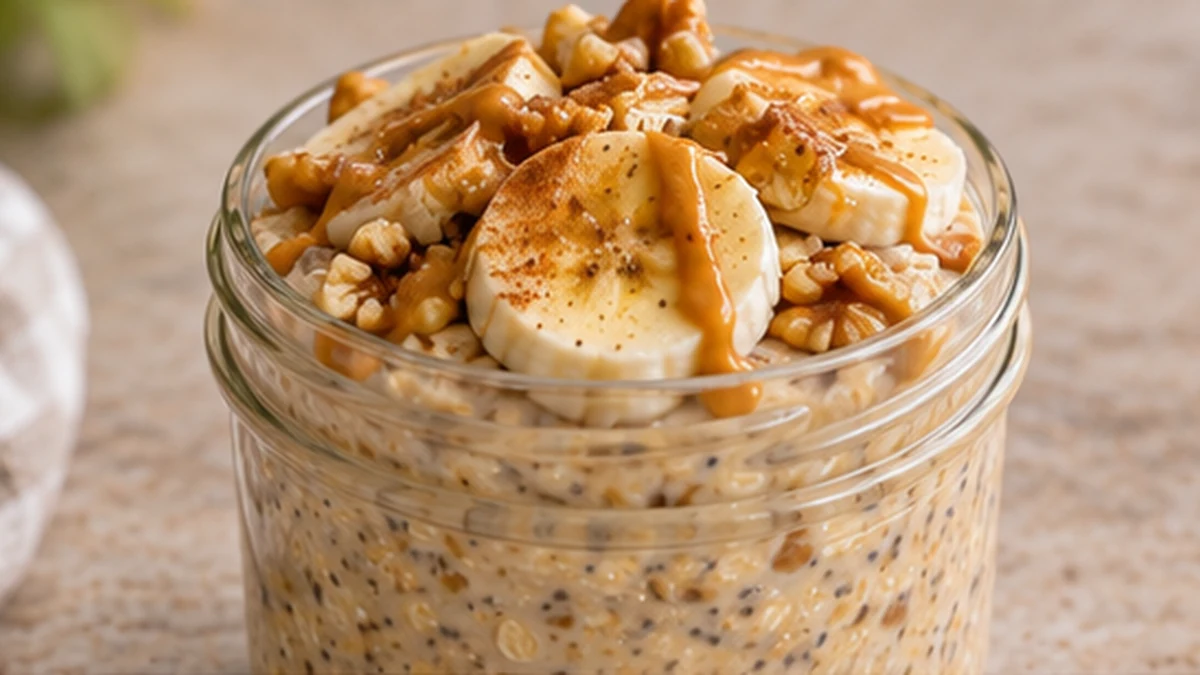
These high calorie overnight oats without protein powder combine rolled oats, whole milk, Greek yogurt, peanut butter, banana, walnuts, and chia seeds into a thick, creamy make-ahead breakfast. One generous bowl provides approximately 900 calories and 36 grams of protein, including the toppings, with no scoop of whey or plant protein powder. If you are looking for a more moderate-calorie breakfast that prioritizes protein, our high protein overnight oats recipe has a different base and uses protein powder.
This version is designed for days when a small jar of oats is not enough and you want more energy from ordinary groceries. The banana and cinnamon bring a familiar breakfast flavor, the peanut butter gives the oats body, and walnuts add crunch at the end. The recipe makes one large serving, but you can split it into two smaller portions if that suits your appetite better. Allow eight hours in the refrigerator so the rolled oats and chia have time to absorb the liquid.
Table of Contents
Why Make High Calorie Overnight Oats Without Protein Powder?
The goal of high calorie overnight oats without protein powder is energy density rather than simply increasing the amount of protein. A larger quantity of oats alone can turn breakfast into a very bulky meal. Nut butter, whole-milk dairy, and chopped nuts make the mixture more energy-dense without requiring a huge bowl of dry grain. Unlike a drink, the finished oats are designed to be eaten with a spoon and retain the soft, distinct texture of rolled oats.
There are two advantages to using ordinary dairy instead of powder in this particular mixture: you do not have to compensate for the thickening behavior of a scoop of protein powder, and the ingredients have familiar flavors. Plain Greek yogurt adds tang and a creamy texture. The combination is especially convenient when you want to prepare breakfast ahead, although it is not intended as a universal calorie target or a treatment for low body weight.
For comparison, the high calorie high protein smoothie for weight gain is designed to be sipped. This recipe uses some of the same grocery staples, but the overnight hydration, spoonable texture, and separate crunchy topping make it a different breakfast. Choose the format you actually enjoy eating.
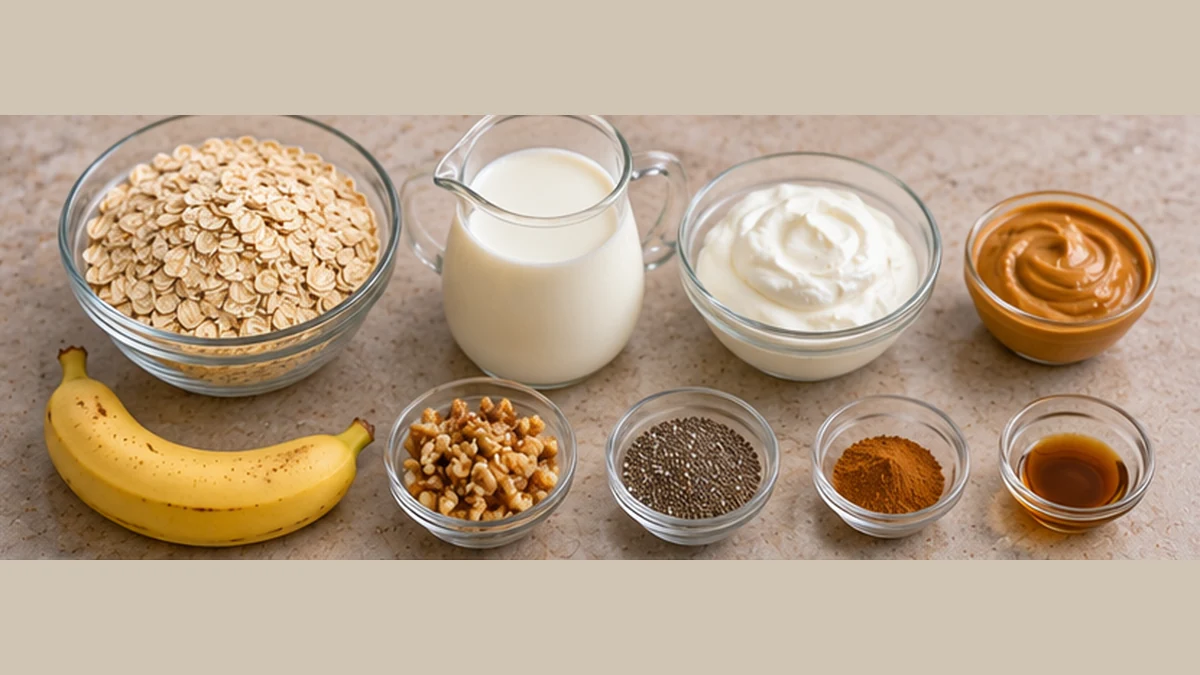
Ingredients for High Calorie Overnight Oats Without Protein Powder
When making high calorie overnight oats without protein powder, measure the oats, nut butter, nuts, and seeds by weight when possible. A rounded spoonful of peanut butter can be much heavier than a level tablespoon. Weighing these ingredients is especially helpful when calories are the reason for choosing the recipe.
Old-fashioned rolled oats form the base. Look for plain flakes, not sweetened instant packets. Quick oats can be used in a pinch but tend to soften more completely, while steel-cut oats remain quite chewy with this cold-soaking method. Follow any cooking instructions on your oat package; choose rolled oats suitable for no-cook recipes.
Whole milk supplies the main hydration and some additional energy. Full-fat plain Greek yogurt contributes protein and gives the mixture a creamy, slightly tangy finish. Greek yogurt varies considerably in thickness and fat content, so use the listed gram weight as a starting point. A particularly thick yogurt may need a splash of milk at serving time.
Peanut butter is the most compact calorie booster in the base. Choose a smooth unsalted variety and stir the jar before measuring if the oil has separated. Mix three quarters of the measured amount into the liquid and save the last quarter for the topping. Walnuts should stay out of the mixture until serving; their texture is much better when they have not spent the night absorbing milk.
Chia seeds help bind the milk as they hydrate. One level tablespoon is sufficient here; adding extra dry chia can make the oats dense and difficult to stir. The banana is divided between the base and the topping. A ripe banana gives sweetness without a separate syrup, and the vanilla and cinnamon round out the flavor. For a different seed-thickened breakfast, see our apple peanut butter chia pudding, which uses a different ratio and texture.
Equipment and Jar Size for a Large Serving
For this high calorie overnight oats without protein powder recipe, use a medium mixing bowl, whisk or fork, measuring spoons, a kitchen scale if available, a spoon, and a clean 24- to 32-ounce food-safe container with a lid. A standard eight-ounce jam jar is far too small for the full portion. A wide-mouth container gives you room to mix and allows a spoon to reach the corners. If you are dividing the recipe, two smaller covered containers work well. Keep the topping space free rather than filling the container to its rim.
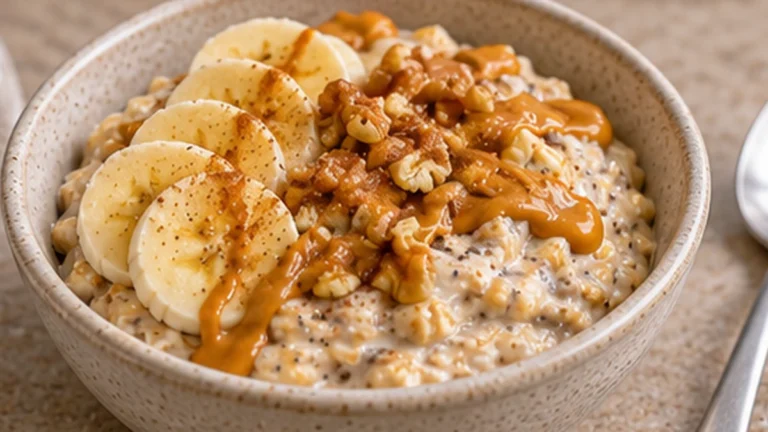
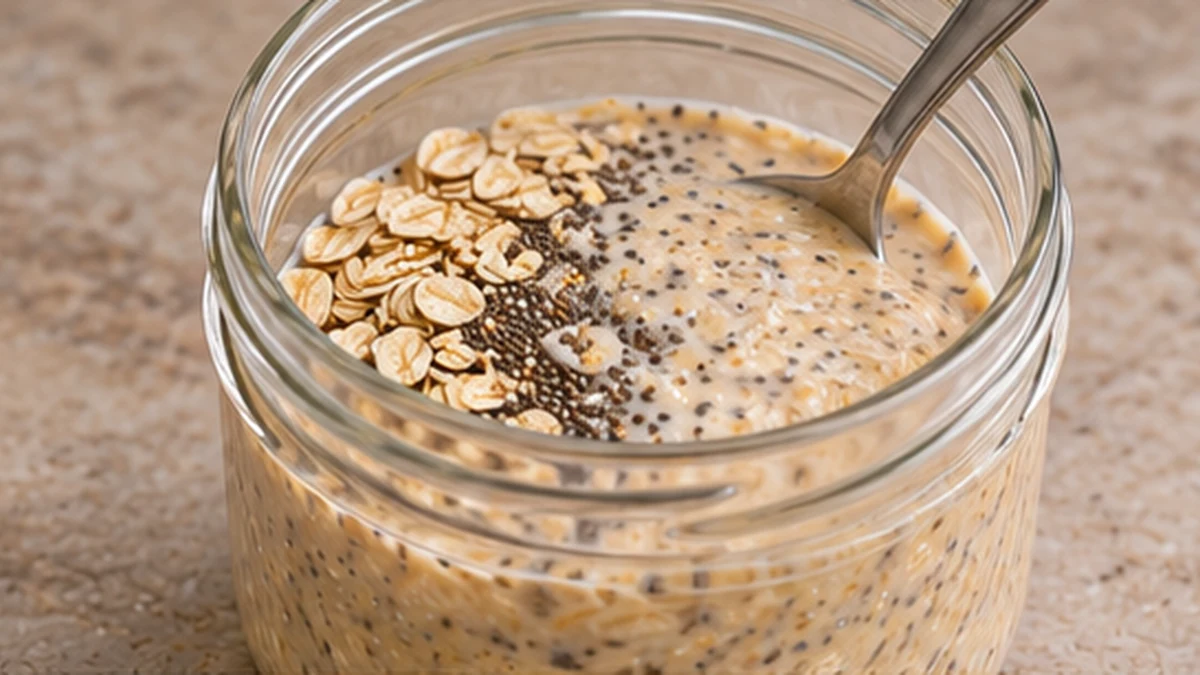
Creamy banana peanut butter overnight oats with whole milk, Greek yogurt, chia seeds and crunchy walnuts. About 900 calories per full serving, no protein powder.
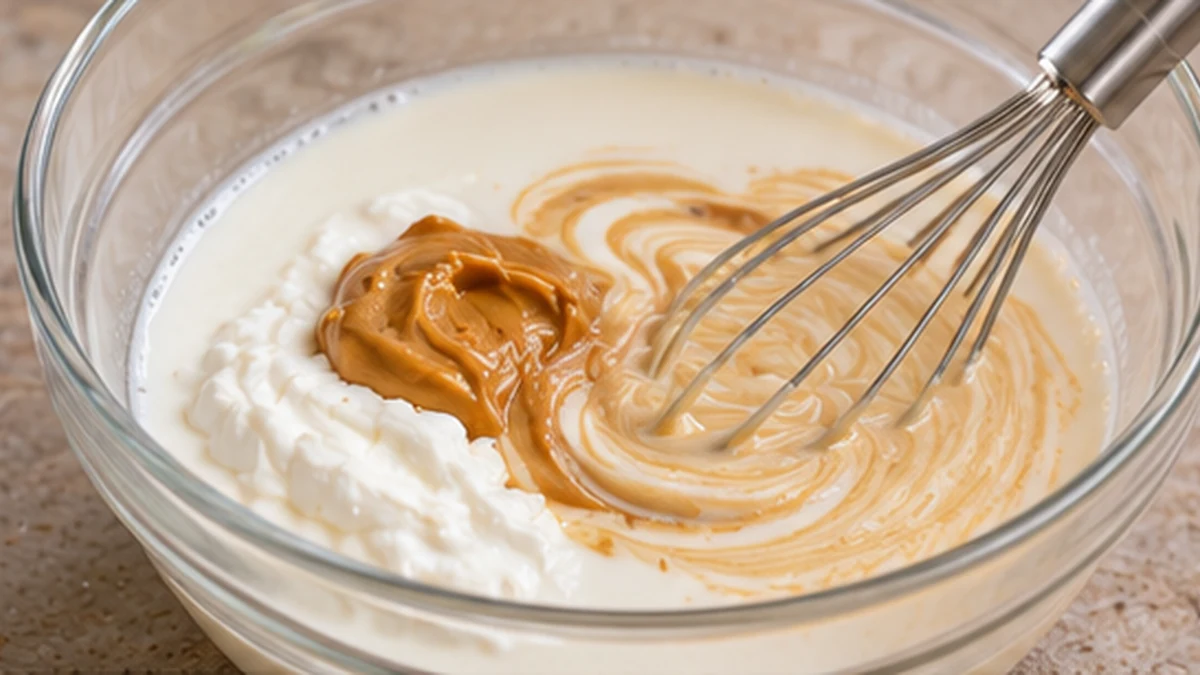
Whisk the milk, Greek yogurt, 1 1/2 tablespoons (24 g) peanut butter, vanilla, and most of the cinnamon in a mixing bowl. Reserve the remaining 1/2 tablespoon (8 g) peanut butter and a pinch of the measured cinnamon for serving.
Mash half the banana (59 g) and stir into the creamy mixture. Add rolled oats and chia seeds and stir thoroughly. Transfer to a clean 24- to 32-ounce container, wait about 5 minutes, and stir again.
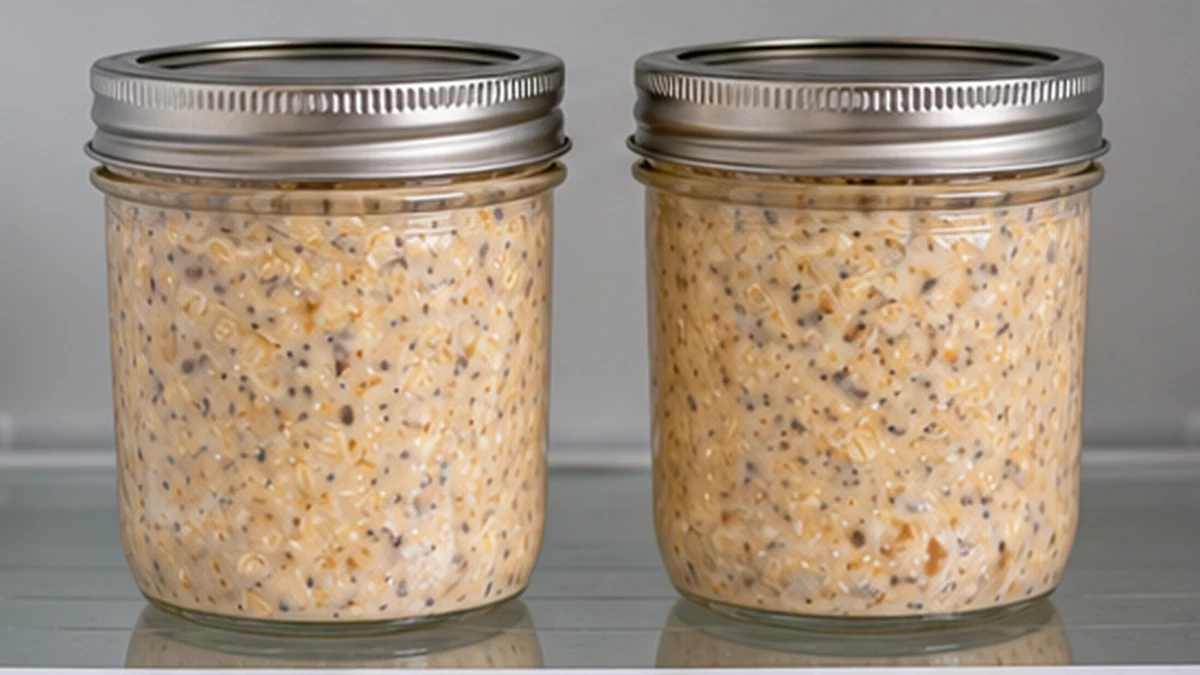
Cover and refrigerate for 8 hours at 40°F (4°C) or below. To make two portions, divide the base into two containers before chilling.
Stir, slice the remaining half banana, and top with the chopped walnuts, reserved peanut butter and cinnamon. If desired, add a tablespoon of milk at a time to loosen; extra milk is not included in the nutrition estimate. Serve cold.
Notes
Prep time includes mixing, a 5-minute rest and topping. Additional time: 8 hours of refrigerated soaking.
Nutrition is for the entire recipe, including all listed toppings. Estimates use representative generic food composition values; products and actual weights vary.
Divide the base and toppings evenly for two smaller portions. Store the base at 40°F or below for up to 3 days using fresh dairy; add walnuts and sliced banana just before serving.
Contains milk, peanuts and walnuts. Use oats labeled gluten-free only if needed and check all other ingredients and cross-contact.
No protein powder or added sweetener is required. The portion size is not a universal nutrition target.
Author:Adam Moretti
Prep Time:15 minutes
Cook Time:0 minutes
Category:Breakfast
Method:No-Cook
Cuisine:American
Diet:Vegetarian
How to Make High Calorie Overnight Oats Without Protein Powder
1. Whisk the creamy base
In a bowl, whisk the whole milk, Greek yogurt, 1 1/2 tablespoons (24 g) peanut butter, vanilla, and most of the cinnamon until evenly combined. Reserve 1/2 tablespoon (8 g) peanut butter and a small pinch of the measured cinnamon for the morning. If the peanut butter is stiff, whisk it into a few spoonfuls of milk first, then gradually add the rest. This avoids a large lump at the bottom of the jar.
2. Add oats, banana, and chia
Mash half of the banana (about 59 g) with a fork and stir it into the dairy mixture. Add the rolled oats and chia seeds, and stir thoroughly, scraping the sides and bottom. The flakes should be surrounded by liquid with no dry clusters of chia. Transfer to a large jar or lidded container, wait about five minutes, and stir again to disperse any seeds that have settled. The oats should look looser than you want the finished breakfast to be.
3. Chill overnight
Cover and refrigerate at 40°F (4°C) or colder for eight hours. Keep the container in the main compartment of the refrigerator rather than on the countertop or in a lunch bag at room temperature. The mixture thickens gradually as the flakes absorb milk and the chia seeds hydrate. For a smaller serving, divide the base between two containers before chilling and split the toppings equally when serving.
4. Finish with the toppings
Stir the chilled oats in the morning. If they are too thick, add one tablespoon of cold milk at a time until the spoon moves easily through the mixture. Slice the reserved half of the banana, add the chopped walnuts, drizzle or dot the remaining peanut butter over the oats, and finish with the reserved cinnamon. Eat cold with a spoon. The extra milk, if used, is not counted in the base nutrition estimate.
The finished texture should be creamy and thick enough to hold the walnut pieces at the surface, but not so stiff that the oats can be cut like a solid bar. You can serve the mixture directly from a wide jar or transfer it to a shallow bowl so the toppings are distributed across more bites.
Calories by Ingredient: Where the Energy Comes From
The full serving of high calorie overnight oats without protein powder is estimated at approximately 900 calories. The following breakdown uses representative food composition values, with the banana, walnuts, and peanut butter topping included. Use the nutrition labels on your own products if you need a more precise number; full-fat Greek yogurt and peanut butter are particularly variable.
Rolled oats (60 g): about 227 calories.
Whole milk (183 g): about 112 calories.
Plain whole-milk Greek yogurt (113 g): about 110 calories.
Unsalted peanut butter (32 g): about 191 calories.
Banana (118 g): about 105 calories.
Walnuts (14 g): about 92 calories.
Chia seeds (12 g): about 58 calories.
Vanilla extract (2 g): about 6 calories.
Ground cinnamon (1.3 g): about 3 calories.
Adding the unrounded estimates gives about 904 calories, rounded to 900 for the recipe card. The entire bowl also supplies approximately 36 g protein, 96 g carbohydrate, 45 g fat, and 16 g fiber. A half serving provides roughly 450 calories and 18 g protein if all the ingredients and toppings are divided evenly. The reference database is USDA FoodData Central; these are generic ingredient estimates rather than laboratory measurements of the finished recipe.
Energy from the oats mainly comes from carbohydrate, while the peanut butter and walnuts supply substantial fat. Milk and yogurt contribute a mixture of protein, carbohydrate, and fat. There is no need to add a sweetened protein supplement to this recipe. The sugar in the base comes primarily from banana and the naturally occurring lactose in dairy; check the peanut butter and yogurt labels for added sugar.
How to Adjust the Calories Without Losing the Texture
To customize high calorie overnight oats without protein powder, start with the listed amounts before deciding whether you want a larger or smaller portion. It is easier to change a single ingredient and understand the result than to alter every part of the recipe at once. These examples use the same generic ingredient estimates as the base and are not separate recipe cards.
For a smaller breakfast: divide the complete recipe into two equal portions, including the toppings. This is the simplest way to preserve the original texture.
For a less rich full bowl: leave out the walnuts (about 92 fewer calories). The oat base does not need any other adjustment.
For a moderate reduction: use one tablespoon of peanut butter instead of two (about 96 fewer calories) and skip the walnuts. Reserve a small portion of the remaining peanut butter for the topping if desired.
For more energy: add another level tablespoon of peanut butter (about 96 extra calories) after chilling. Stir in a small splash of milk if it becomes too thick.
For a larger grain portion: add 1/4 cup (20 g) rolled oats for about 76 extra calories, plus enough additional milk to hydrate them. Count the extra milk separately.
Avoid assuming that more chia seeds will make a better high-calorie breakfast. They absorb a substantial amount of liquid, and the resulting volume or thickness may be uncomfortable for some people. Adding extra dry oats immediately before eating also creates a different texture. If you want a second helping, keeping the original ratio and scaling the entire recipe is the more predictable option.
Substitutions for High Calorie Overnight Oats Without Protein Powder
Milk and yogurt
Lactose-free whole milk and lactose-free full-fat Greek yogurt can work in the same proportions if the products have a similar consistency. For a dairy-free version, use unsweetened soy milk and a thick plant-based yogurt, then recalculate the nutrition from the labels. Coconut yogurt can be energy-dense but is often much lower in protein. These swaps do not turn the original dairy recipe into a vegan or dairy-free recipe; they are separate modifications.
Peanut butter and walnuts
Almond butter can replace peanut butter by weight if you enjoy its flavor. Sunflower seed butter is another possible substitute when appropriate for your allergy needs. Pumpkin seeds can replace the walnuts for crunch, but their energy and nutrient values differ. The base recipe contains milk, peanuts, and tree nuts (walnuts), all major food allergens identified by the FDA food allergy guidance. Check labels and cross-contact warnings rather than relying on a substitute name alone.
Banana and flavor
For a chocolate variation, mix in a teaspoon or two of unsweetened cocoa with the milk and yogurt and add a small splash of milk if needed. For a warmer flavor, add a little more cinnamon or a pinch of nutmeg. A chopped date or a spoonful of maple syrup can add sweetness, but neither is included in the standard nutrition calculation. For other banana breakfasts, try the banana bread without protein powder when you prefer a slice of something baked rather than a cold jar.
Troubleshooting: Too Thick, Watery, or Bland?
If the oats are too thick, first stir them thoroughly. Chia gel and yogurt can make the surface appear firm even when liquid remains beneath. Add cold milk a tablespoon at a time. If your mixture is too loose, give it more time in the refrigerator and stir once. If needed, mix in a teaspoon of rolled oats and let it hydrate before eating; avoid adding a large amount of dry chia to a ready-to-eat portion.
If the peanut butter forms clumps, whisk it with part of the milk before the oats go in next time. A thin natural peanut butter is easier to disperse than a very stiff one. If the flavor seems flat, check that the banana is ripe, then add a tiny pinch of cinnamon. If you dislike soft nuts, store them separately. Banana slices can darken overnight, so reserving half the banana for the morning gives a fresher-looking topping.
Make-Ahead, Storage, and Serving
Refrigerate high calorie overnight oats without protein powder as soon as the mixture is assembled. The FDA refrigerator safety guidance recommends keeping cold food at 40°F (4°C) or below. For this recipe, use the refrigerated base within three days, provided the dairy is fresh and within its recommended storage period. Three days is a conservative recipe-specific limit, not a shelf-life test. Store the walnuts and topping banana separately and add them only when you eat.
Do not leave the dairy-based oats out for more than two hours, or one hour when the temperature is above 90°F (32°C), consistent with FDA advice on chilling perishable foods. For a commute, use an insulated bag with ice packs if refrigeration is not immediately available. Discard oats that have been stored unsafely; smell is not a reliable safety test.
For a two-day meal prep, mix two batches and portion each separately. Keep a small container of measured walnuts for each day. You can add the sliced banana at the last minute so it does not soften or brown. Other make-ahead breakfast options include horchata overnight oats for a cinnamon-almond flavor and pumpkin muffins without protein powder for a baked option.
Frequently Asked Questions
Can I make high calorie overnight oats without protein powder?
Yes. In this recipe, oats, whole milk, Greek yogurt, peanut butter, walnuts, banana, and chia supply approximately 900 calories in the full portion. Protein powder is not necessary to make a calorie-dense breakfast, although whether this portion is right for you depends on your individual needs.
Are these overnight oats suitable for weight gain?
They can contribute to a higher-energy eating pattern, but a single food does not guarantee weight gain. Overall intake, activity, health, and appetite matter. If you have unexplained weight loss or a medical reason to change your weight, speak with a qualified clinician or registered dietitian. For an alternative oat breakfast with a warm texture, see our apple baked oats without protein powder.
Can I make the oats without Greek yogurt?
Yes, you can make high calorie overnight oats without protein powder and without Greek yogurt, but the texture and nutrition change. Replace the yogurt with a thick plain yogurt of your choice or start with a smaller amount of additional milk and adjust after soaking. Ordinary yogurt tends to be less thick than strained Greek yogurt. Do not expect the same protein or calorie total unless the replacement has matching nutrition values.
Can I eat this entire recipe at once?
This recipe for high calorie overnight oats without protein powder is calculated as one generous meal. If that feels too large, split it into two servings instead. A smaller portion is not a failure of the recipe; it can be a more comfortable way to enjoy the same ingredients. The half-portion estimate assumes that you divide both the base and toppings evenly.
Can I make these oats gluten-free?
The base uses oats, which can encounter wheat during processing. Choose oats specifically labeled gluten-free and check the other ingredient labels and kitchen cross-contact if you need a gluten-free version. The standard recipe is not labeled gluten-free because ordinary rolled oats are listed.
Can I prepare them in the morning instead?
You can refrigerate the mixture for a shorter period, but four hours may leave the flakes firmer. Eight hours is the recommended soaking time for this formula. Do not shorten the wait by leaving the oats at room temperature. If you need a breakfast to eat immediately, a warm recipe such as Bananas Foster baked oats may suit a different schedule, with its own cooking time.
Do I need honey or maple syrup?
No. The ripe banana is the main sweetener. If you prefer a sweeter breakfast, add a measured amount at serving time and include it in your calorie calculation. If the idea of chilled oats does not appeal to you, our high protein banana pudding offers a different creamy dessert format.
Final Tips
The best way to approach high calorie overnight oats without protein powder is to keep the base consistent, measure the energy-dense ingredients, and adjust the serving size rather than chasing a particular number at every meal. Whisk first, stir in the dry ingredients, refrigerate overnight, and keep the crunchy topping separate. The result is a practical breakfast with a familiar banana-peanut-butter flavor and a substantial amount of energy from everyday foods. Explore the breakfast recipe collection for more ways to vary your morning meals.
Reviewed recipe options
Make this recipe fit me
Choose one of seven popular diet options. NutriMatch will confirm whether the recipe already fits, show a reviewed adaptation when available, or recommend recipes that match your choice.
Please choose a diet first.
Not available for this recipe
This recipe cannot currently be made Dairy-Free with a reviewed adaptation.
NutriMatch will not guess at substitutions. Try one of these recipes that is already reviewed for your choice.
Recipe details, product formulas, and cross-contact information can change. Confirm current labels and use professional guidance when medically necessary.
Not available for this recipe
This recipe cannot currently be made Gluten-Free with a reviewed adaptation.
NutriMatch will not guess at substitutions. Try one of these recipes that is already reviewed for your choice.
Recipe details, product formulas, and cross-contact information can change. Confirm current labels and use professional guidance when medically necessary.
Not available for this recipe
This recipe cannot currently be made High Protein with a reviewed adaptation.
NutriMatch will not guess at substitutions. Try one of these recipes that is already reviewed for your choice.
Recipe details, product formulas, and cross-contact information can change. Confirm current labels and use professional guidance when medically necessary.
Not available for this recipe
This recipe cannot currently be made Keto with a reviewed adaptation.
NutriMatch will not guess at substitutions. Try one of these recipes that is already reviewed for your choice.
Recipe details, product formulas, and cross-contact information can change. Confirm current labels and use professional guidance when medically necessary.
Not available for this recipe
This recipe cannot currently be made Low Carb with a reviewed adaptation.
NutriMatch will not guess at substitutions. Try one of these recipes that is already reviewed for your choice.
Recipe details, product formulas, and cross-contact information can change. Confirm current labels and use professional guidance when medically necessary.
Not available for this recipe
This recipe cannot currently be made Vegan with a reviewed adaptation.
NutriMatch will not guess at substitutions. Try one of these recipes that is already reviewed for your choice.
Recipe details, product formulas, and cross-contact information can change. Confirm current labels and use professional guidance when medically necessary.
Already a reviewed match
This recipe already fits Vegetarian.
No changes are needed based on its reviewed NutriMatch classification. Check the complete ingredients, product labels, and serving details for your own needs.
Recipe details, product formulas, and cross-contact information can change. Confirm current labels and use professional guidance when medically necessary.