This bread egg puff recipe turns ordinary sandwich bread into golden, crisp triangular pockets filled with hard-boiled egg and gently spiced onions. You do not need puff pastry, an oven, or a special sandwich maker. A rolling pin and a skillet are enough. Serve two pockets for a savory breakfast or offer one at a time with other snacks, such as our crispy onion ring chips.
The inspiration is the Indian-style egg puff, but the wrapper here is soft white bread rather than laminated pastry. Each pocket holds half an egg and a small spoonful of cooked onion. The outside becomes crisp as it fries while the inside stays tender. The recipe below makes eight pockets, with four servings of two each. It is an original home-kitchen adaptation, not a claim to reproduce a particular viral video exactly.
Table of Contents
What is a bread egg puff?
A bread egg puff is a sealed bread pocket with a savory egg filling. Unlike a bakery egg puff, which usually uses sheets of puff pastry, this version relies on soft bread compressed into a thin wrapper. The name describes the rounded, filled shape rather than layers of butter-rich pastry. Do not expect the same flaky structure as a croissant; expect a toasted, crisp shell with a soft interior.
For this bread egg puff recipe, the filling is deliberately dry enough to stay inside the wrapper. A half egg gives each pocket a distinct center. Cooking the onion first removes excess moisture and develops sweetness, which balances the pepper and chili powder. This combination makes a satisfying alternative to a plain egg sandwich.
Ingredients and exact measurements
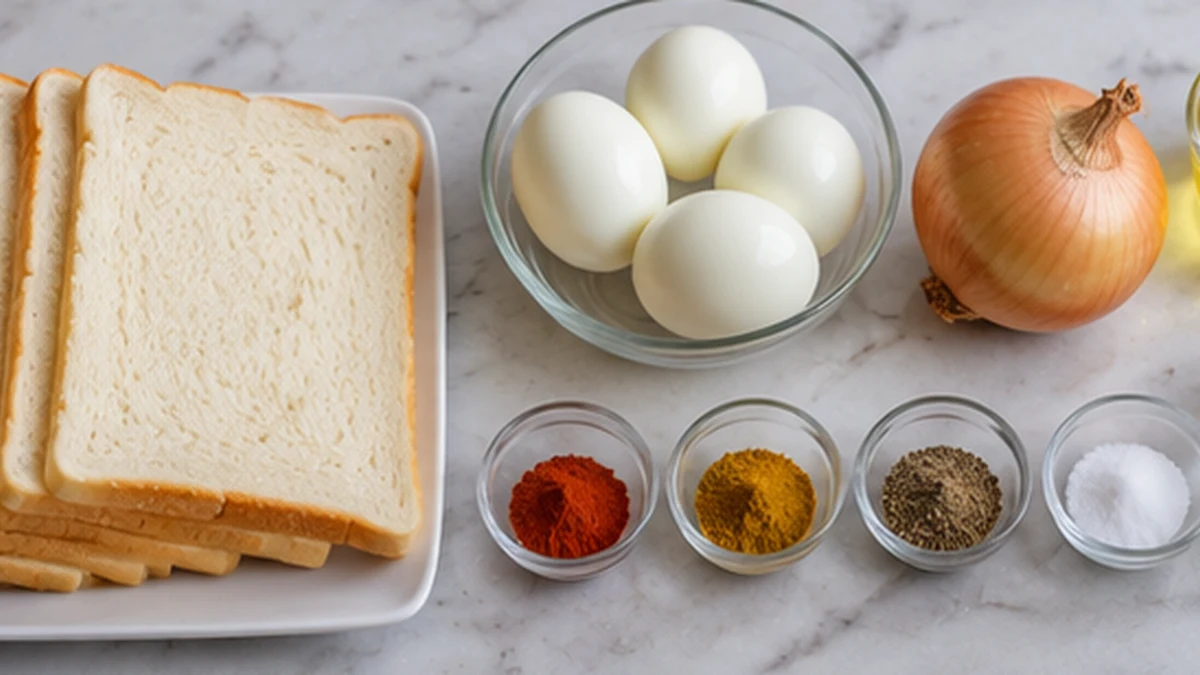
8 large soft white sandwich bread slices (about 240 g before trimming).
4 large eggs.
1 medium yellow onion (110 g), finely diced.
1 teaspoon canola oil for the onion.
1/2 teaspoon ground turmeric.
1/2 teaspoon mild chili powder.
1/4 teaspoon ground black pepper.
1/4 teaspoon fine salt.
2 tablespoons water for sealing, as needed.
1/3 cup (80 ml) canola oil for shallow frying (not all is absorbed).
Choose large, flexible sandwich slices, preferably about five inches across. Small or dry slices will not fold around a half egg easily. Trim only the firm crust and roll the center until thin and pliable. White bread is convenient because its soft crumb compresses without breaking. Whole-wheat sandwich bread can work if it is equally flexible, but very coarse seeded bread tends to split along the seam.
The spice blend uses mild ground chili, turmeric, pepper and salt. American chili powder blends often contain cumin and garlic as well as ground peppers, so the flavor will differ from pure Indian chili powder. If using a hot pure chili powder, start with a pinch. The onion should be diced finely enough that no large pieces poke through the bread.
Equipment and timing
Set out a small saucepan, bowl of ice water, rolling pin, cutting board, fork, wide skillet, tongs and wire rack. A frying thermometer is useful for checking the shallow oil. Use a rack over a rimmed baking sheet so the pockets drain without sitting in oil. Keep a lid nearby for the skillet, but never add water to hot oil.
Allow about 20 minutes of preparation and 30 minutes of cooking, including boiling the eggs, sautéing the onion and frying in batches. The bread egg puff recipe takes about 50 minutes from scratch, with the egg cooling and filling preparation overlapping where possible. Using already cooked eggs saves time, provided they have been refrigerated safely.
How to make bread egg puff recipe step by step
Boil and cool the eggs
Cover the eggs with cold water in a saucepan. Bring to a boil, cover, remove from heat and let stand 12 minutes. Transfer to ice water for 5 minutes, peel and halve lengthwise. Pat dry.
Cook the onion filling
Heat 1 teaspoon oil in a skillet over medium heat. Cook the diced onion for 6–8 minutes, stirring, until soft and lightly golden. Add turmeric, chili powder, black pepper and salt; stir for 30 seconds. Transfer to a plate and cool until no longer steaming. Divide into eight portions.
Flatten the bread
Trim the crusts from eight large bread slices. Roll each slice thin without tearing. Work with one slice at a time and keep the rest covered.
Rolling is not just about making the bread thinner. It presses the air out of the crumb so the two moistened edges can stick together. Avoid soaking the entire slice. A wet center can become gummy and may tear when you lift it.
Fill and seal each pocket
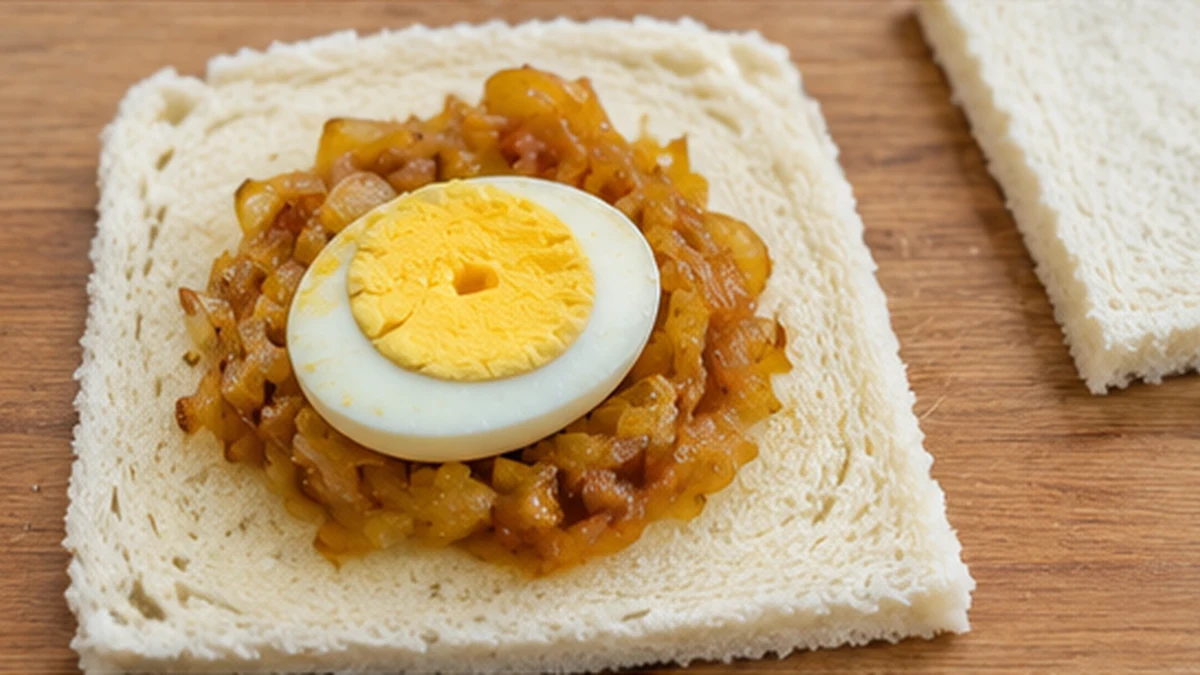
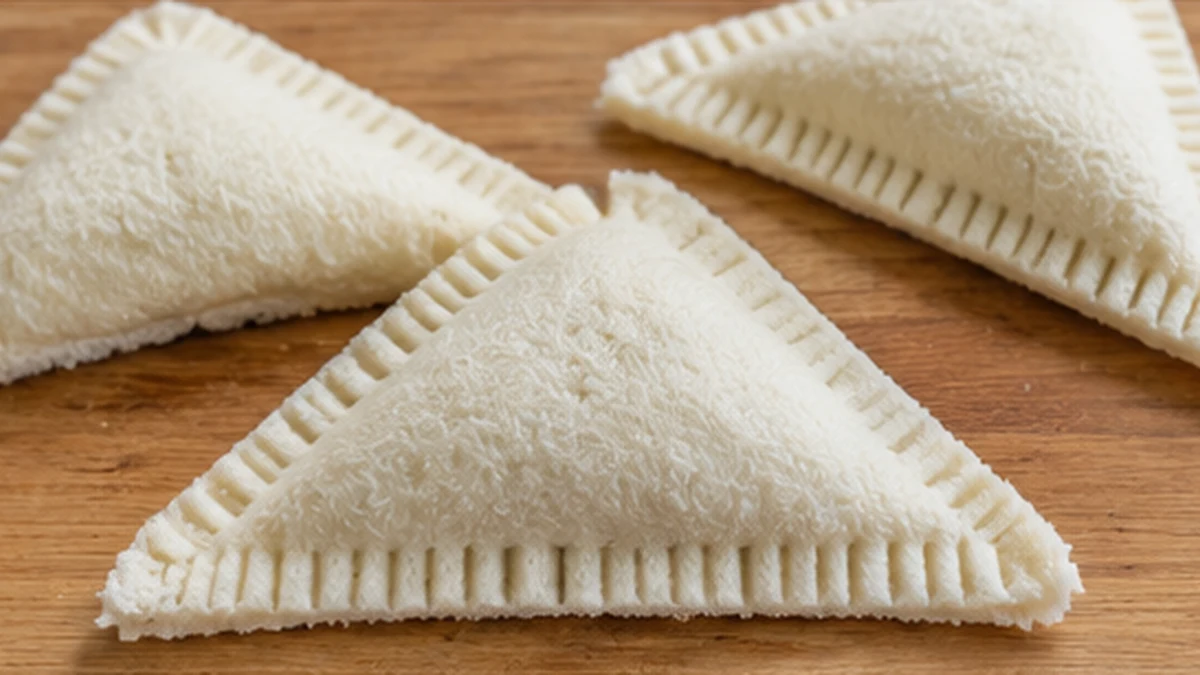
Place one portion of onion and half an egg slightly off center, cut side down. Leave a clear border. Dab the border lightly with water, fold diagonally, press out excess air and pinch the edges. Crimp with a fork. Repeat to make eight triangles.
The seam is the most important part of this bread egg puff recipe. Move the filling away from the edge if the two corners do not meet easily. A small amount of water softens the bread enough to seal, but too much makes it fragile.
Shallow-fry until golden
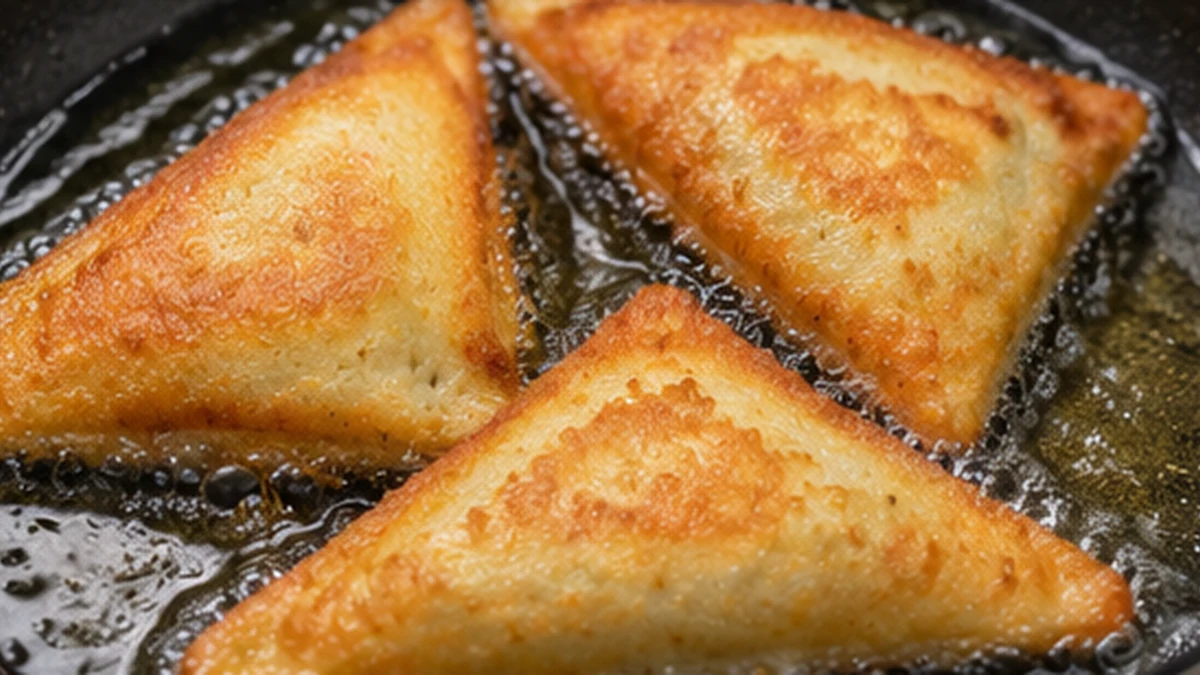
Heat the 1/3 cup oil in a wide skillet to around 350°F (175°C). Fry in batches of 2–3 pockets for about 2 minutes per side, or until evenly golden and crisp. Turn carefully using tongs. Adjust the heat between batches.
Watch the color at the edges, where the bread is thinnest. If the first side turns dark almost immediately, reduce the heat and let the oil settle before adding more pockets. If the bread stays pale and absorbs oil, allow the pan to heat again.
Golden triangular sandwich bread pockets with hard-boiled eggs and spiced onion.
Total Time:50 minutes
Yield:8 pockets (4 servings)
Ingredients
Scale
8 large soft white sandwich bread slices (about 240 g before trimming)
4 large eggs
1 medium yellow onion (110 g), finely diced
1 teaspoon canola oil for the onion
1/2 teaspoon ground turmeric
1/2 teaspoon mild chili powder
1/4 teaspoon ground black pepper
1/4 teaspoon fine salt
2 tablespoons water for sealing, as needed
1/3 cup (80 ml) canola oil for shallow frying (not all is absorbed)
Instructions
Cover the eggs with cold water in a saucepan. Bring to a boil, cover, remove from heat and let stand 12 minutes. Transfer to ice water for 5 minutes, peel and halve lengthwise. Pat dry.
Heat 1 teaspoon oil in a skillet over medium heat. Cook the diced onion for 6–8 minutes, stirring, until soft and lightly golden. Add turmeric, chili powder, black pepper and salt; stir for 30 seconds. Transfer to a plate and cool until no longer steaming. Divide into eight portions.
Trim the crusts from eight large bread slices. Roll each slice thin without tearing. Work with one slice at a time and keep the rest covered.
Place one portion of onion and half an egg slightly off center, cut side down. Leave a clear border. Dab the border lightly with water, fold diagonally, press out excess air and pinch the edges. Crimp with a fork. Repeat to make eight triangles.
Heat the 1/3 cup oil in a wide skillet to around 350°F (175°C). Fry in batches of 2–3 pockets for about 2 minutes per side, or until evenly golden and crisp. Turn carefully using tongs. Adjust the heat between batches.
Drain on a wire rack and serve warm.
Notes
Use large flexible bread slices and cool the filling before sealing.
Nutrition is an estimate counting full bread slices and 2 tablespoons retained frying oil plus 1 teaspoon filling oil. Dips excluded.
Refrigerate promptly and reheat leftovers to 165°F.
Choose vegetarian-compatible sandwich bread if needed.
Author:Adam Moretti
Prep Time:20 minutes
Cook Time:30 minutes
Category:Snack
Method:Stovetop
Cuisine:Indian-inspired
Diet:Vegetarian
Why the bread egg puff recipe works
The wrapper and filling have different moisture needs. The bread needs a dry surface for browning, while the filling needs enough moisture to taste tender. Sautéing the onions before filling removes much of their free water without drying them out. Cooling them on a plate prevents steam from softening the bread while you assemble the pockets.
A hard-boiled egg is easier to handle than a raw egg because it keeps its shape and does not leak through the seam. It also means the final frying step is mainly about browning the wrapper. There is no need to keep frying until the egg cooks from raw. Use eggs with fully set whites and yolks, following the FDA egg safety guidance.
Troubleshooting: keep the pockets crisp
The bread splits when folded
Use a larger, fresher slice and roll evenly. A particularly large egg half may need to be cut into two pieces and arranged in the center of the same pocket. Do not increase the filling amount just because the slice looks large.
The edges open in the pan
Remove any onion caught in the seam before pressing. Use a clean fork to crimp firmly. Fry one pocket first to check the seal, then continue with the others.
The outside becomes greasy
Avoid crowding the skillet or starting with cool oil. Crowding lowers the temperature and delays browning. Drain on a rack, not in a stack.
The filling tastes bland
Taste the cooked onion before assembling. The egg itself is unseasoned, so the onion mixture must provide the seasoning. Add a small pinch of pepper if needed, rather than adding liquid sauce inside.
The bread browns unevenly
Keep the oil at a moderate frying temperature and turn the pockets gently. If one side has a raised center, briefly tilt it toward the oil using tongs without splashing.
Serving ideas
Serve the bread egg puff recipe with tomato ketchup, a spoonful of plain yogurt, or our chipotle adobo ranch for a smoky dip. Keep wet sauces separate until the moment you eat so the crisp bread does not absorb them. For a mixed appetizer plate, fried pickle bites provide a tangy contrast; the bread pockets themselves are not keto.
Two pockets make a savory breakfast alongside fruit or a vegetable salad. For parties, offer smaller portions with other items from our appetizer collection, checking the dietary needs of guests separately. For packed meals, our school lunch ideas can help with planning, but these egg-filled pockets specifically require safe cold storage and an ice pack if they are not kept hot.
Ingredient substitutions and variations
For a milder bread egg puff recipe, reduce the chili powder or replace it with sweet paprika. Keep the turmeric modest so its earthy taste does not dominate. For a different flavor, finely chopped green onion can replace some of the yellow onion; cook it briefly and keep the filling dry. If adding cheese, use a small amount of vegetarian-friendly cheese and reduce the onion volume so the seam still closes. Added cheese is not included in the nutrition estimate.
An air fryer is a possible alternative, although the main recipe uses a skillet. Brush both sides lightly with oil, arrange the sealed pockets in one layer and start checking at 375°F (190°C) after 6 minutes, turning halfway. Continue until crisp and golden. Appliance performance varies, and this alternative has not been kitchen-tested for this article. It will use less oil than the shallow-fried version and will change the nutrition values.
Make ahead, storage and reheating
You can boil the eggs in advance and keep them refrigerated. The FoodSafety.gov cold storage chart recommends using hard-cooked eggs within one week and advises against freezing them. Cooked onion can be chilled separately. Assemble the pockets shortly before frying because a filled bread wrapper gradually absorbs moisture.
Refrigerate leftovers in a covered container at 40°F (4°C) or below within two hours of cooking, or within one hour if the ambient temperature exceeds 90°F (32°C). For best texture, eat within one to two days, and never extend the original storage life of the eggs by turning them into pockets. Reheat leftovers until the center reaches 165°F (74°C); a toaster oven or air fryer can help restore the crisp exterior. See FDA refrigeration advice for more details.
Nutrition and serving size
The bread egg puff recipe makes four servings of two pockets each. The estimated nutrition includes eight bread slices before trimming, four large eggs, one onion, seasonings, one teaspoon of oil for the filling and an assumed two tablespoons of frying oil retained across the batch. Counting the full bread slices is a conservative approximation because the crusts are discarded. The estimate uses generic food composition values, including USDA FoodData Central. Actual bread labels, discarded crust weight and retained oil will change the result. Dips are not included.
A serving provides approximately 270 calories, 31 grams of carbohydrate, 12 grams of protein and 12 grams of fat. The recipe contains wheat and eggs and is not gluten-free, vegan or keto. Choose bread made without animal-derived shortening or other nonvegetarian ingredients if serving vegetarian guests.
FAQs about Bread Egg Puff Recipe
Can I make this bread egg puff recipe without an oven?
Yes. The main method uses a saucepan for the eggs and a skillet for the filling and frying.
Can I use leftover sandwich bread?
Yes, if it is fresh enough to roll and fold without cracking. Avoid stale, brittle bread.
Do I need puff pastry or breadcrumbs?
No. The flattened sandwich bread forms both the wrapper and the crisp exterior.
Can I use scrambled eggs instead?
A firm, cooled scrambled egg filling may work, but it changes the texture and makes portioning different. The measured version uses four hard-boiled eggs.
Can I make the pockets ahead for a party?
Prepare the eggs and onions separately and refrigerate them. Assemble and fry close to serving time for the crispest result.
Can I freeze cooked egg puffs?
Freezing is not recommended for this version because hard-boiled egg whites can become rubbery and the bread can lose its texture.
Why does my bread egg puff recipe turn soggy?
The usual causes are wet filling, low oil temperature or stacking the hot pockets. Cool the filling, fry in batches and use a rack.
Final tips
For a successful bread egg puff recipe, prioritize flexible bread, a cool filling and a secure seam. Fry only a few pockets at a time and serve them while warm. This is a practical way to turn simple breakfast ingredients into a crisp savory snack without needing pastry dough.
Reviewed recipe options
Make this recipe fit me
Choose one of seven popular diet options. NutriMatch will confirm whether the recipe already fits, show a reviewed adaptation when available, or recommend recipes that match your choice.
Please choose a diet first.
Not available for this recipe
This recipe cannot currently be made Dairy-Free with a reviewed adaptation.
NutriMatch will not guess at substitutions. Try one of these recipes that is already reviewed for your choice.
Recipe details, product formulas, and cross-contact information can change. Confirm current labels and use professional guidance when medically necessary.
Not available for this recipe
This recipe cannot currently be made Gluten-Free with a reviewed adaptation.
NutriMatch will not guess at substitutions. Try one of these recipes that is already reviewed for your choice.
Recipe details, product formulas, and cross-contact information can change. Confirm current labels and use professional guidance when medically necessary.
Not available for this recipe
This recipe cannot currently be made High Protein with a reviewed adaptation.
NutriMatch will not guess at substitutions. Try one of these recipes that is already reviewed for your choice.
Recipe details, product formulas, and cross-contact information can change. Confirm current labels and use professional guidance when medically necessary.
Not available for this recipe
This recipe cannot currently be made Keto with a reviewed adaptation.
NutriMatch will not guess at substitutions. Try one of these recipes that is already reviewed for your choice.
Recipe details, product formulas, and cross-contact information can change. Confirm current labels and use professional guidance when medically necessary.
Not available for this recipe
This recipe cannot currently be made Low Carb with a reviewed adaptation.
NutriMatch will not guess at substitutions. Try one of these recipes that is already reviewed for your choice.
Recipe details, product formulas, and cross-contact information can change. Confirm current labels and use professional guidance when medically necessary.
Not available for this recipe
This recipe cannot currently be made Vegan with a reviewed adaptation.
NutriMatch will not guess at substitutions. Try one of these recipes that is already reviewed for your choice.
Recipe details, product formulas, and cross-contact information can change. Confirm current labels and use professional guidance when medically necessary.
Already a reviewed match
This recipe already fits Vegetarian.
No changes are needed based on its reviewed NutriMatch classification. Check the complete ingredients, product labels, and serving details for your own needs.
Recipe details, product formulas, and cross-contact information can change. Confirm current labels and use professional guidance when medically necessary.