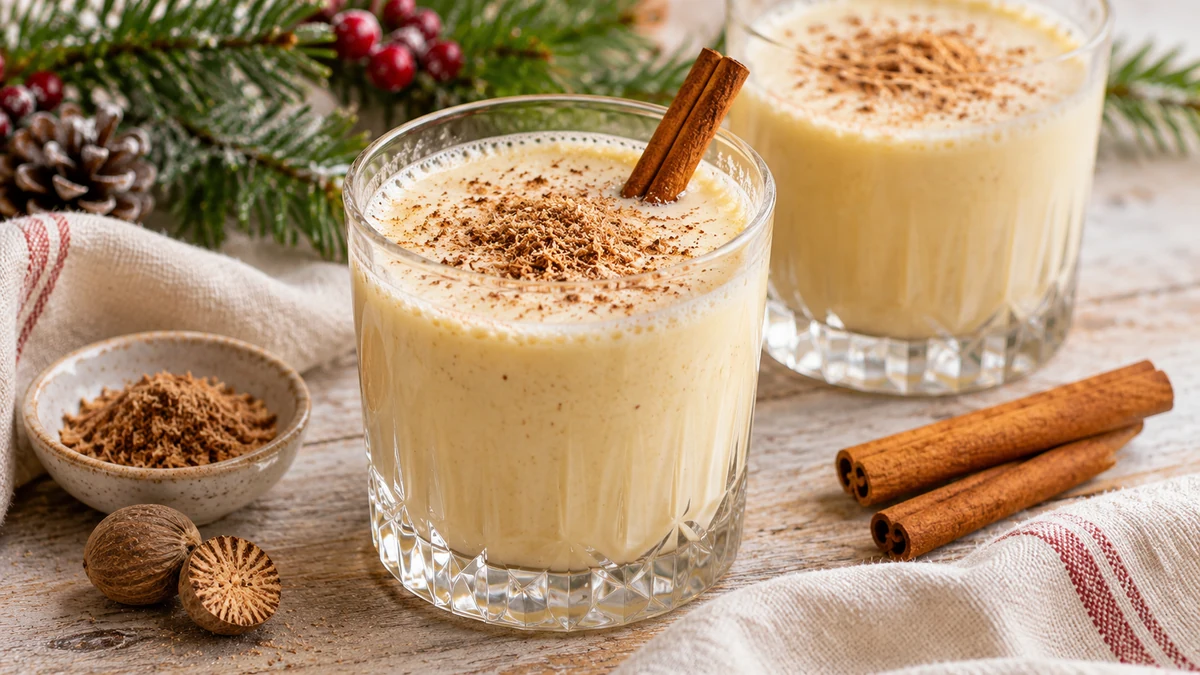
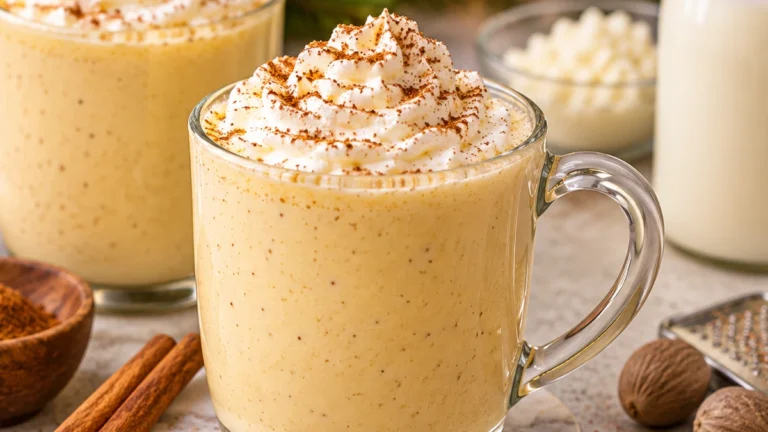
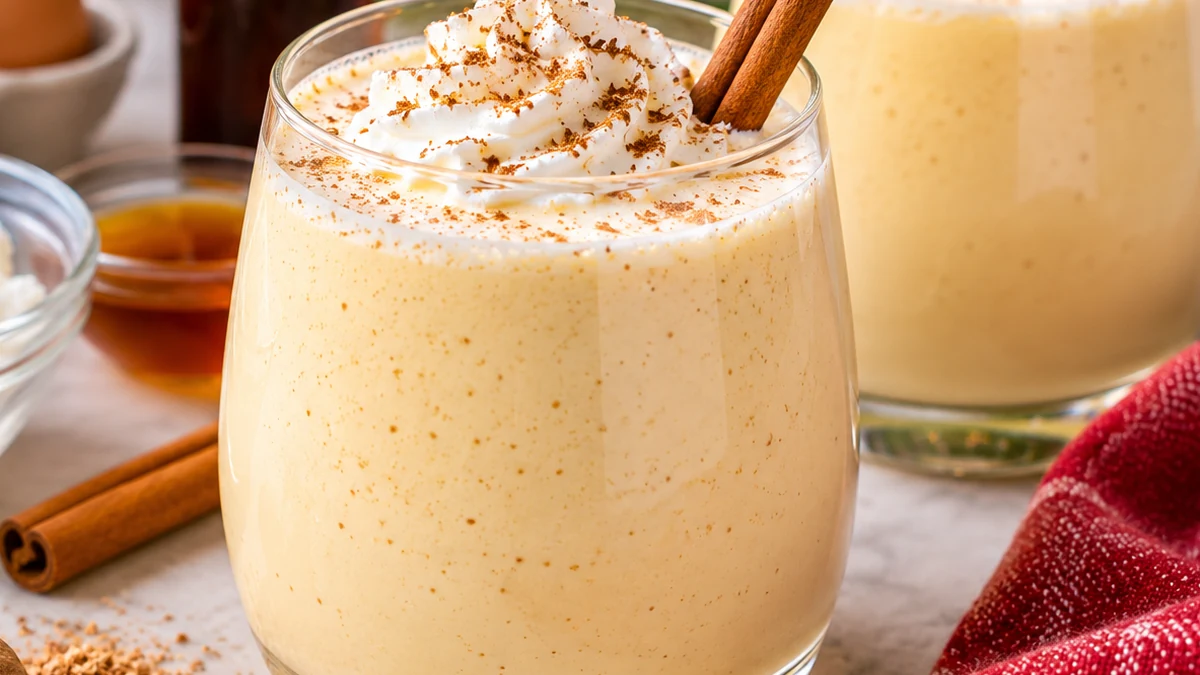
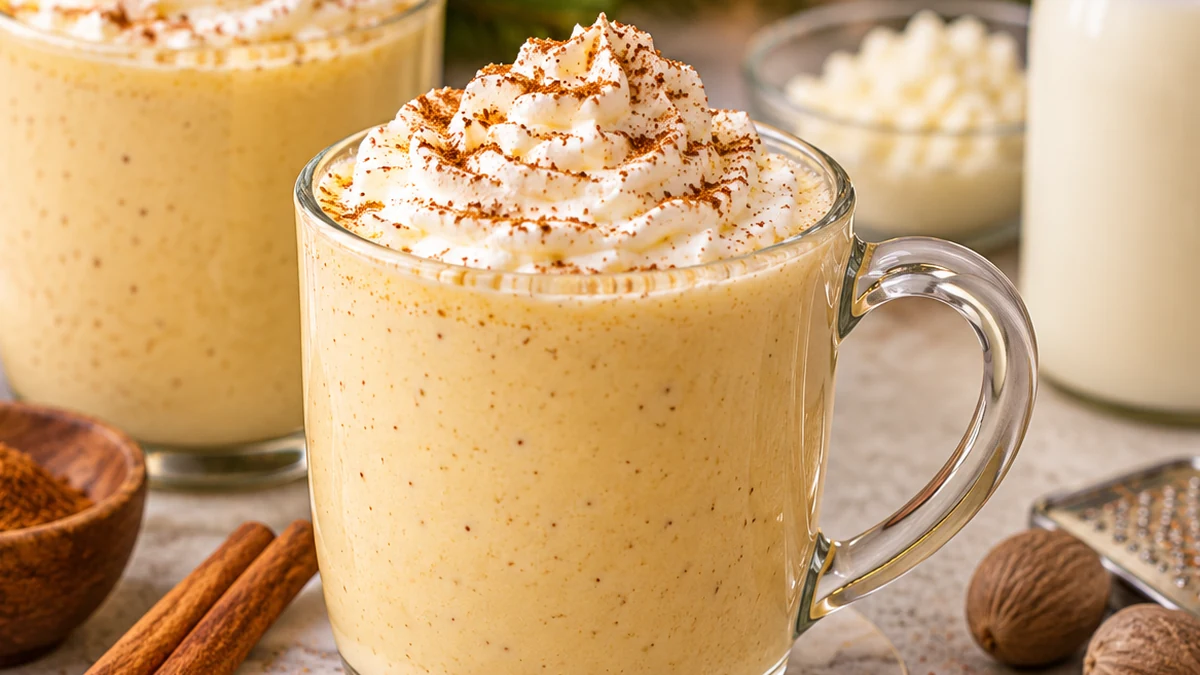
This high protein eggnog recipe without protein powder is a gently cooked, alcohol-free holiday drink made with two eggs, fat-free ultra-filtered milk, plain nonfat Greek yogurt, maple syrup, vanilla and nutmeg. It pours like rich, lightly thickened eggnog rather than a protein shake. The measured batch yields four glasses, with approximately 19 grams of protein per serving when made with the reference milk and yogurt below. If you are serving a festive brunch, pair a small glass with our high protein pumpkin muffins without protein powder for a baked option with the same cozy spice profile.
Unlike recipes that rely on flavored protein powders, this one gets its protein from dairy and eggs. The egg-and-milk base is heated to 160°F (71°C) with a thermometer and then cooled before the Greek yogurt is whisked in. This is a cooked eggnog, not a shortcut that asks you to drink raw eggs. Plan on 30 minutes of preparation and cooking plus two hours for cooling and chilling; the chilling time matters for both flavor and texture.
Table of Contents
Quick Recipe Snapshot
Yield: 4 servings, roughly 7–8 fluid ounces each depending on cooking evaporation and how much you blend.
Estimated per serving: 150 calories, 19 g protein, 12 g carbohydrates and 2.5 g fat.
Active time: 15 minutes preparation and 15 minutes cooking. Additional cooling/chilling: 2 hours. Total: 2 hours 30 minutes.
Main equipment: small heavy-bottomed saucepan, whisk, instant-read thermometer, fine-mesh strainer and mixing bowl.
Flavor: mellow vanilla, freshly grated nutmeg, a hint of cinnamon and moderate maple sweetness.
No protein powder, no alcohol, no uncooked egg. Contains milk and eggs; not dairy-free or vegan.
What Makes This Eggnog Higher in Protein?
Traditional homemade eggnog often uses cream, whole milk, egg yolks and sugar. Those ingredients give a rich, velvety texture, but heavy cream contributes little protein relative to its calories. This version starts with fat-free ultra-filtered milk, which is more protein-dense than standard milk, and plain strained Greek yogurt. Two whole eggs provide custard flavor and help the base thicken when heated slowly.
For our reference calculation, fairlife fat-free ultra-filtered milk provides 13 g protein and 80 calories per 1-cup serving, and FAGE Total 0% plain Greek yogurt provides 18 g protein and 90 calories per 170 g. Together with two large eggs, this makes about 75 g protein in the complete batch, divided into four drinks. It is a food-based estimate—not a tested nutritional analysis or a guarantee for every brand.
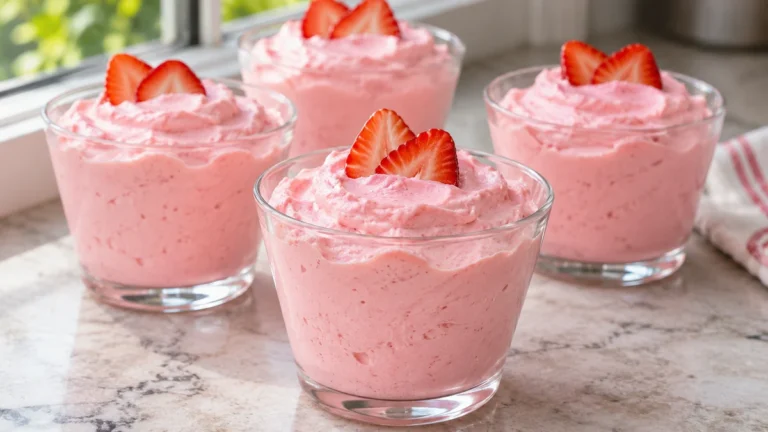
The reason for using strained yogurt after heating is texture. Directly boiling thick yogurt in a saucepan may make the drink split or taste tart. A measured cooling step keeps the cooked egg base smooth and allows the yogurt to disperse with a whisk or short blender pulse. For another cold recipe where yogurt carries much of the protein, see our Greek-yogurt high protein Jello fluff; unlike eggnog, that dessert sets with gelatin.
Ingredients and Exact Measurements
Two large eggs (100 g without shells): Use both whites and yolks. Yolks contribute the recognizable custard character, while the whites contribute protein. Whisk them thoroughly into cold milk before heating. If you use pasteurized shell eggs, the recipe should still be cooked as directed rather than treated as a raw-egg drink.
Two cups (480 ml) fat-free ultra-filtered milk: The reference product has 13 g protein per cup. Milk with a different protein concentration is an acceptable flavor substitution, but the printed 19 g protein figure will no longer be exact. Do not use sweetened vanilla milk without also reducing the maple syrup.
One and a half cups (340 g) thick nonfat plain Greek yogurt: This volume refers to approximately 340 g of the reference strained yogurt, not ordinary thin yogurt. Measure the weight if possible. Choose an unsweetened variety so sweetness remains controlled; flavored vanilla yogurt changes the sugar and nutrition.
Two tablespoons (40 g) pure maple syrup: Enough for a mildly sweet eggnog, not a syrup-heavy dessert. One tablespoon can be used if you prefer less sweetness, but the nutrition estimate would decrease. A granulated sugar substitute may alter taste and body; start with a smaller amount and follow its label.
One teaspoon pure vanilla extract, 1/2 teaspoon ground nutmeg, 1/4 teaspoon ground cinnamon and 1/8 teaspoon fine salt: Add the vanilla and spices after cooking. Freshly grated nutmeg is more aromatic than old preground nutmeg, so taste before adding extra. Optional cinnamon sticks or a tiny extra nutmeg dusting at serving are not included in the nutrition estimate.
The warm nutmeg-and-cinnamon profile also appears in our high protein horchata overnight oats, but this is an entirely different egg-based holiday drink with no oats, almond extract or protein powder.
High Protein Eggnog Recipe Card
The printable card below contains the complete four-serving formula and measured temperatures. Keep a food thermometer handy: visual thickness alone does not establish that the egg mixture reached a safe cooking temperature.
A gently cooked, alcohol-free holiday eggnog made with eggs, ultra-filtered fat-free milk, nonfat Greek yogurt, maple syrup, vanilla and nutmeg, with approximately 19 g protein per glass.
Total Time:2 hours 30 minutes
Yield:4 glasses
Ingredients
Scale
2 large eggs, about 100 g out of shells
2 cups (480 ml) fat-free ultra-filtered milk (reference: fairlife, 13 g protein per cup)
2 tablespoons (40 g) pure maple syrup
1 1/2 cups (340 g) plain nonfat strained Greek yogurt (reference: FAGE Total 0%, 18 g protein per 170 g)
1 teaspoon pure vanilla extract
1/2 teaspoon ground nutmeg, plus optional extra pinch to serve
1/4 teaspoon ground cinnamon
1/8 teaspoon fine salt
Optional garnish: a cinnamon stick or extra nutmeg, not included in nutrition
Instructions
Off heat, whisk the eggs in a heavy-bottomed small saucepan until uniform. Slowly whisk in cold ultra-filtered milk and maple syrup. Keep the Greek yogurt refrigerated for now.
Cook over medium-low heat, whisking continuously and scraping the bottom. Use an instant-read thermometer to heat the egg-and-milk mixture to 160°F (71°C), usually 8 to 12 minutes. Do not boil. Remove from heat immediately upon reaching the temperature.
Strain the cooked base through a fine-mesh sieve into a clean heat-safe bowl. Cool briefly in a cold-water bath, stirring, for about 15 minutes until lukewarm (around 110°F or less); do not leave it unattended at room temperature.
Whisk the cold Greek yogurt separately to loosen it. Stir a few tablespoons of the lukewarm cooked base into the yogurt, then whisk in the remaining base in several additions. Add vanilla, nutmeg, cinnamon and salt. If desired, pulse 5 to 10 seconds in a blender only after the mixture is cool.
Cover and refrigerate about 1 hour 45 minutes more, until fully chilled. Stir gently, divide the batch evenly among four glasses, and dust with optional extra nutmeg to serve. Keep cold.
Notes
Prep 15 min + cook 15 min + additional cooling/chilling 2 hr (roughly 15 min cooling and 1 hr 45 min refrigerated) = 2 hr 30 min total.
Heat the egg-and-milk base to 160°F using a food thermometer. Do not rely on appearance or merely warming the drink.
For a smooth drink, add the Greek yogurt only after the cooked base has cooled to lukewarm. Do not boil the mixed eggnog.
Nutrition per one-quarter batch is an estimate using 2 large eggs, 480 ml fairlife fat-free ultra-filtered milk (80 kcal and 13 g protein per cup), 340 g FAGE Total 0% yogurt (90 kcal and 18 g protein per 170 g), 40 g maple syrup and the stated spices/salt.
Maple syrup adds approximately 100 calories per batch; reducing it changes the sugar and calorie estimates. Different dairy brands significantly change the nutrition numbers.
Contains milk and egg. Gluten-free suitability depends on labels and cross-contact if that matters to you.
Homemade eggnog: store covered at 40°F or below, make near serving, refrigerate 2–4 days maximum by FoodSafety.gov guidance and do not freeze.
Optional garnishes including whipped cream are excluded from nutrition and not required.
Author:Adam Moretti
Prep Time:15 minutes
Cook Time:15 minutes
Category:Beverage
Method:Stovetop
Cuisine:American
Diet:Vegetarian
How to Make Smooth High Protein Eggnog
1. Whisk the cold milk, eggs and maple syrup
Set a heavy-bottomed saucepan on the counter, off the heat. Crack in two large eggs and whisk until uniform, with no ropes of egg white. Gradually whisk in 2 cups cold ultra-filtered milk and 2 tablespoons maple syrup. A cold start is important because it reduces the chance of scrambled bits forming as soon as the pot warms. Keep the Greek yogurt refrigerated for later; do not add it at this stage.
2. Cook slowly until the mixture reaches 160°F
Place the pan over medium-low heat. Stir constantly with a flexible whisk or heat-safe spatula, sweeping the bottom and corners. Check the temperature frequently with an instant-read thermometer held in the liquid, not against the pan. The base typically takes 8–12 minutes to reach 160°F, depending on cookware and burner. Remove it as soon as it reaches the target, stirring once more. FDA egg-safety guidance recommends pasteurized eggs for uncooked eggnog; here we use a cooked mixture to 160°F instead.
Avoid a rolling boil. If the custard begins bubbling vigorously or shows little curds before reaching the target, lower the heat and keep stirring. A few tiny clumps can be strained out, but a heavily scrambled batch cannot reliably be restored to a silky drink. The egg mixture may only slightly coat a spoon; the thermometer reading matters more than apparent thickness.
3. Strain and cool the cooked base
Immediately pour the base through a clean fine-mesh strainer into a heat-safe bowl or pitcher. Stir for a few minutes, then cool briefly in a shallow, cold-water bath or over a bowl of ice while keeping water out of the eggnog. Aim for lukewarm—not steaming—before stirring in yogurt; about 110°F or cooler is a useful texture target, not a second food-safety endpoint. Limit time at room temperature and put the mixture in the refrigerator promptly.
4. Whisk in the cold Greek yogurt and spices
Whisk the Greek yogurt separately in a bowl to loosen it. Add a few tablespoons of the lukewarm custard to the yogurt and stir until smooth, then add the rest in several additions. Whisk in vanilla, nutmeg, cinnamon and salt. If you want a more uniform pour, pulse the mixture in a blender for 5–10 seconds after it has cooled. Never seal a blender jar with hot liquid; blending hot custard can create dangerous pressure and splashes.
A few air bubbles on top are normal after whisking. The mixture should be ivory-colored, pourable and subtly speckled with nutmeg—not lumpy like yogurt curds. If it tastes a little tart while still warm, give it the full chilling period before deciding whether to add sweetener.
5. Chill, stir and divide into four glasses
Transfer to a clean covered pitcher and refrigerate until thoroughly cold, planning roughly 1 hour 45 minutes after a brief 15-minute controlled cool-down. Stir gently once before serving. Measure the finished batch into four even portions rather than estimating glass sizes by eye; this preserves the serving-based nutrition estimate. Add an optional dusting of nutmeg just before serving. Avoid leaving a dairy-and-egg drink on the buffet table for hours.
How to Keep It Creamy Instead of Grainy
The most common failure is overheating, especially when the pan is thin or the heat is high. Eggs coagulate quickly once hot, so cook gently and remove the pan when the thermometer reaches 160°F. The second failure is adding cold yogurt directly to a near-boiling custard. Giving the cooked base a short cool-down and whisking yogurt separately creates a smoother mixture.
Another cause of graininess is an under-mixed yogurt. Most plain nonfat Greek yogurts are thick, and a few firm clumps can remain if you add the entire amount at once. Loosen the yogurt with a little cooled egg base, then combine. You do not need extra cream or a scoop of protein powder to rescue it. If the base is too thick after chilling, add 1–2 tablespoons of additional milk per glass and note that this changes the final yield and nutrition.
For a very different yogurt-based preparation that gets its texture from blending rather than cooked eggs, our high protein high fiber smoothie uses fruit and seeds. The methods are not interchangeable, and that smoothie is not a substitute for this eggnog base.
Flavor Variations That Still Taste Like Eggnog
Extra nutmeg and a lighter maple note
For a classic spiced profile, keep the maple syrup at 2 tablespoons and add an extra tiny pinch of freshly grated nutmeg immediately before serving. Do not dump in a full teaspoon of nutmeg without tasting; its flavor can become harsh. If you reduce syrup by half, the drink will be less sweet and its printed nutrition will not apply exactly.
A little orange zest or espresso
Finely grate about 1/4 teaspoon orange zest into the chilled base for a subtle winter-citrus variation. For adults who enjoy coffee flavor, stir a teaspoon of cooled espresso into one serving. Avoid adding hot espresso to the entire yogurt mixture, which may change its texture. Our banana bread latte is another cinnamon-and-nutmeg beverage, but it is coffee-based and has its own ingredient balance.
What about cottage cheese or protein powder?
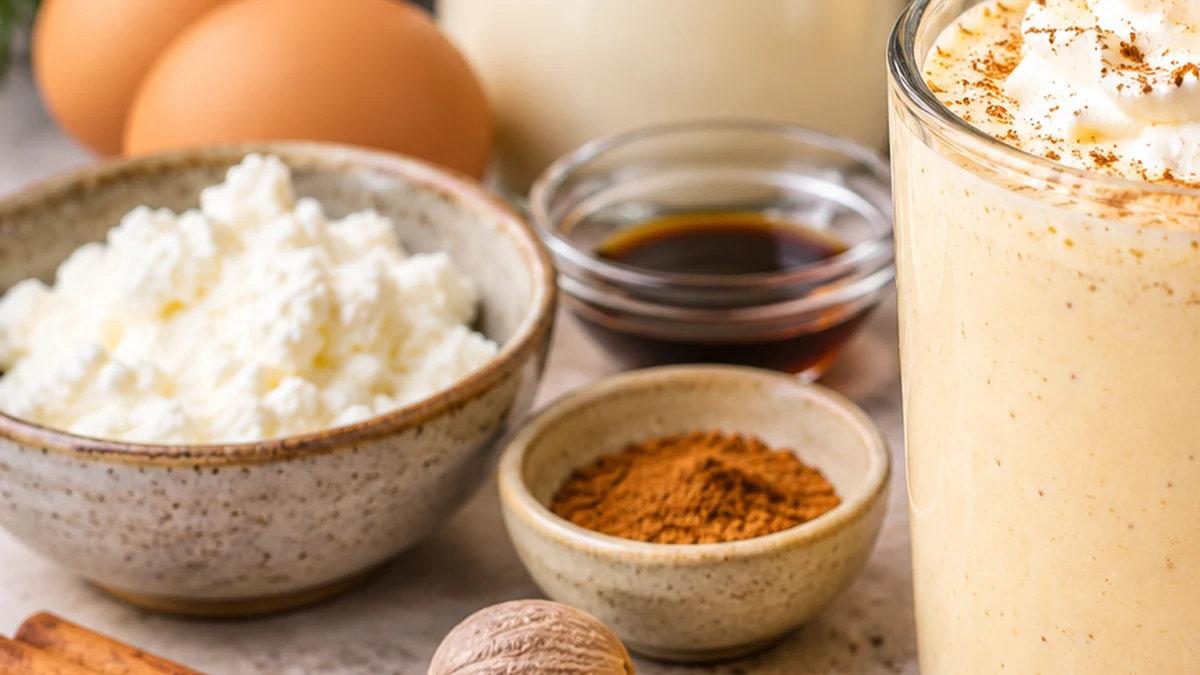
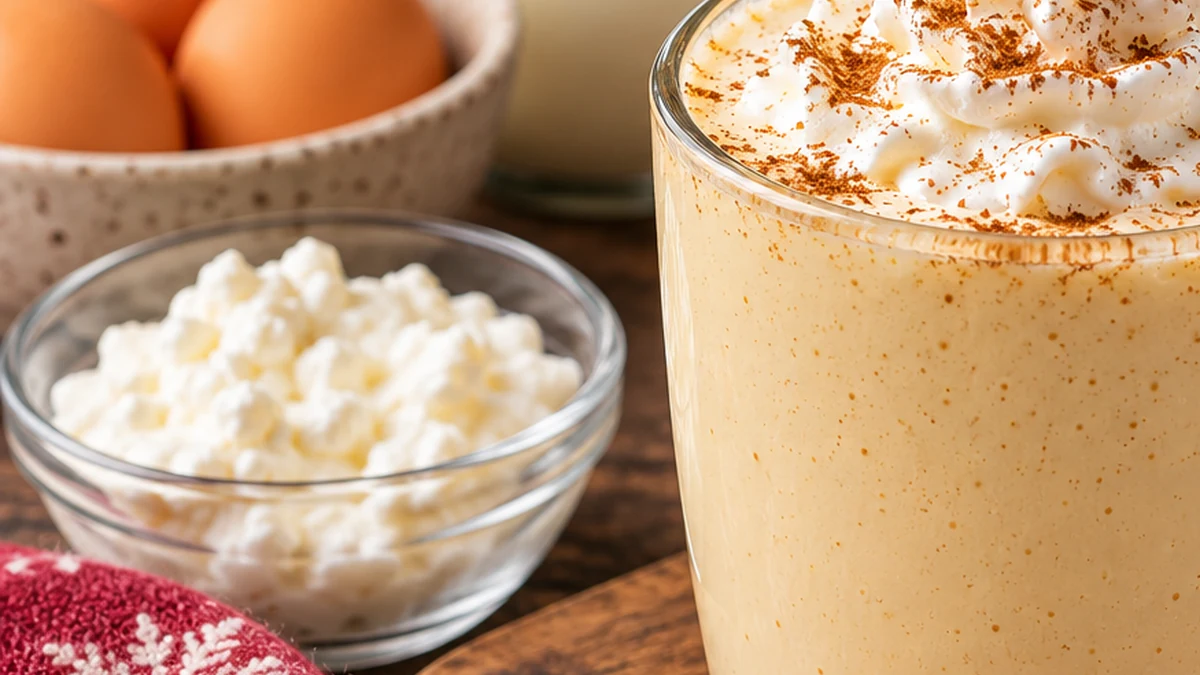
Cottage cheese can be blended into some dessert drinks, but it brings a different saltiness and texture. It is intentionally absent from this recipe; replacing the yogurt cup-for-cup would require new nutrition calculations. Protein powder is also intentionally absent. For an example of how dairy protein can be used in baked food without powder, see our high protein apple baked oats without protein powder.
Serving Ideas for a Holiday Brunch
Eggnog is rich in flavor, even in a lighter formulation, so a small chilled glass works well alongside baked goods. Try it with a thin slice of cinnamon roll banana bread if you want a cinnamon-swirled centerpiece. For a less sweet, whole-food-protein loaf, try our high protein banana bread without protein powder. Remember that the bread and any drink toppings are separate from the 150-calorie eggnog estimate.
For a no-bake dessert tray, high protein banana pudding gives guests a spoonable option instead of another beverage. Those serving ideas are for menu planning; they do not mean every combined meal is low in calories. When you want a chocolate alternative later in the season, our high protein chocolate mousse uses a very different blend of cultured dairy and cocoa.
Make Ahead, Refrigeration and Storage
This recipe is better after a complete chill because the spice flavor settles and the texture becomes more cohesive. You can make it the night before a gathering and portion it into four covered jars. Keep the eggnog at 40°F (4°C) or lower and put it back in the refrigerator promptly after serving. Give the pitcher a brief stir before pouring if a little whey separates on top.
The FoodSafety.gov storage chart lists homemade eggnog for 2–4 days in the refrigerator and advises against freezing it. For the best texture in this yogurt-based variation, aim to drink it within 2–3 days rather than stretching to the outer edge. Use clean utensils, and never leave homemade eggnog at room temperature beyond the two-hour limit. FoodSafety.gov food-handling guidance explains that temperature rule.
Freezing is not recommended here. When thawed, yogurt and cooked egg custard can separate into a grainy mixture, even if they were smooth when first prepared. Reheating is also not ideal because it can curdle the yogurt. This recipe is designed to be enjoyed chilled; if you prefer a hot winter beverage, choose a separately developed hot drink rather than boiling the completed eggnog.
Nutrition: What the 19 Grams of Protein Includes
These numbers are estimates per one-quarter batch, not lab results. We count two large eggs (about 100 g edible total), 480 ml of fairlife fat-free ultra-filtered milk, 340 g FAGE Total 0% Greek yogurt, 40 g maple syrup and the small amounts of spice and salt. Estimated values per glass are about 150 calories, 19 g protein, 12 g carbohydrates, 12 g sugar, 2.5 g total fat, 0 g fiber, 200 mg sodium and 98 mg cholesterol. A different milk or yogurt label may significantly change the protein, sugar and sodium.
Fat-free milk and nonfat Greek yogurt account for the majority of the protein here. The eggs contribute another roughly 13 g to the whole batch, along with fat and cholesterol. That means removing eggs without rebuilding the formula changes both the familiar eggnog flavor and the nutritional total. No wellness or medication outcome is implied by the protein count, and the drink is not a treatment or weight-loss hack.
FAQs about High Protein Eggnog
Does eggnog have to contain protein powder to be high in protein?
No. This batch relies on ultra-filtered milk, nonfat Greek yogurt and cooked whole eggs. With the stated reference products and four servings, it estimates about 19 g protein per glass. Protein powders are optional in other recipes, but you do not need them for this formula.
Can I make this eggnog with regular milk?
Yes, but regular milk usually has less protein per cup than the ultra-filtered reference product. The eggnog will still work as a cooked beverage, although the protein figure drops and sugar can change. Check the label on the milk you actually use rather than reusing the printed 19 g figure.
Is high protein eggnog safe if the eggs are raw?
This recipe does not serve raw eggs. The egg-and-milk base must reach 160°F (71°C) before cooling and adding yogurt. Use a thermometer: appearance alone is not a safety test. If you choose an uncooked eggnog from another source, use pasteurized egg products as advised by the FDA.
Can I substitute vanilla Greek yogurt?
You can, but most flavored yogurts have added sweetener and potentially less protein per equal weight. Reduce or skip part of the maple syrup according to taste, and recalculate nutrition from your yogurt label. Use plain strained yogurt for the reported recipe results.
Why is my homemade eggnog thinner than store-bought?
Store-bought eggnog may contain cream and stabilizers, while this homemade version uses fat-free milk and strained yogurt. Chill the full time before judging the consistency. Do not keep cooking it past 160°F just to make it thicker. More time on the heat risks egg curds rather than creamy custard.
Can this drink be made egg-free, vegan or dairy-free?
Not with the same formula. Eggs provide the custard flavor, and dairy provides most of the protein. An egg-free or plant-based beverage needs a separately developed recipe, different cooking steps and a new nutrition calculation. Do not label this version vegan, dairy-free or egg-free.
How far ahead can I prepare it for Christmas?
One day ahead is convenient and gives the spices time to settle. Keep it covered at 40°F or lower. Homemade eggnog has a limited refrigerated shelf life; the official chart allows 2–4 days, but we recommend making this yogurt-rich version close to serving and never freezing it.
Final Tips
Start with cold milk and eggs, heat slowly to a measured 160°F, and keep the Greek yogurt out of the hot pan. Use exact dairy weights if you want the estimated protein count to be meaningful. Once chilled, pour into four equal glasses and finish with a light nutmeg dusting. You get a recognizable holiday eggnog—lightly sweet, creamy and alcohol-free—without relying on any protein powder.
Reviewed recipe options
Make this recipe fit me
Choose one of seven popular diet options. NutriMatch will confirm whether the recipe already fits, show a reviewed adaptation when available, or recommend recipes that match your choice.
Please choose a diet first.
Not available for this recipe
This recipe cannot currently be made Dairy-Free with a reviewed adaptation.
NutriMatch will not guess at substitutions. Try one of these recipes that is already reviewed for your choice.
Recipe details, product formulas, and cross-contact information can change. Confirm current labels and use professional guidance when medically necessary.
Not available for this recipe
This recipe cannot currently be made Gluten-Free with a reviewed adaptation.
NutriMatch will not guess at substitutions. Try one of these recipes that is already reviewed for your choice.
Recipe details, product formulas, and cross-contact information can change. Confirm current labels and use professional guidance when medically necessary.
Already a reviewed match
This recipe already fits High Protein.
No changes are needed based on its reviewed NutriMatch classification. Check the complete ingredients, product labels, and serving details for your own needs.
Recipe details, product formulas, and cross-contact information can change. Confirm current labels and use professional guidance when medically necessary.
Not available for this recipe
This recipe cannot currently be made Keto with a reviewed adaptation.
NutriMatch will not guess at substitutions. Try one of these recipes that is already reviewed for your choice.
Recipe details, product formulas, and cross-contact information can change. Confirm current labels and use professional guidance when medically necessary.
Not available for this recipe
This recipe cannot currently be made Low Carb with a reviewed adaptation.
NutriMatch will not guess at substitutions. Try one of these recipes that is already reviewed for your choice.
Recipe details, product formulas, and cross-contact information can change. Confirm current labels and use professional guidance when medically necessary.
Not available for this recipe
This recipe cannot currently be made Vegan with a reviewed adaptation.
NutriMatch will not guess at substitutions. Try one of these recipes that is already reviewed for your choice.
Recipe details, product formulas, and cross-contact information can change. Confirm current labels and use professional guidance when medically necessary.
Already a reviewed match
This recipe already fits Vegetarian.
No changes are needed based on its reviewed NutriMatch classification. Check the complete ingredients, product labels, and serving details for your own needs.
Recipe details, product formulas, and cross-contact information can change. Confirm current labels and use professional guidance when medically necessary.
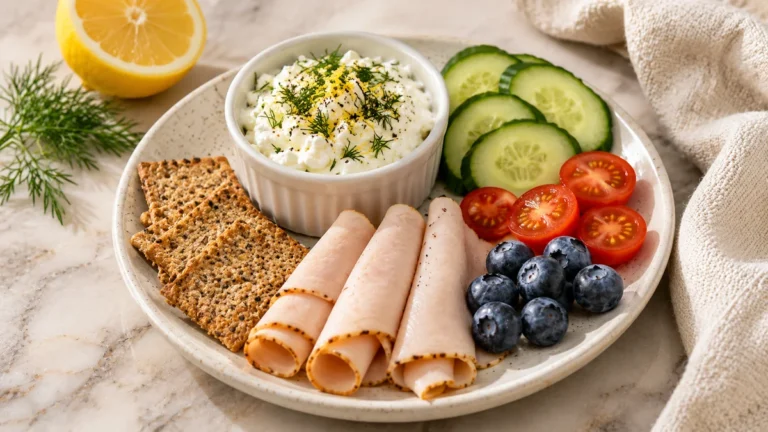
A ten-minute high-protein snack plate with cottage cheese, turkey, whole-grain crackers, cucumber, tomatoes, and blueberries. Estimated 29 g protein per…