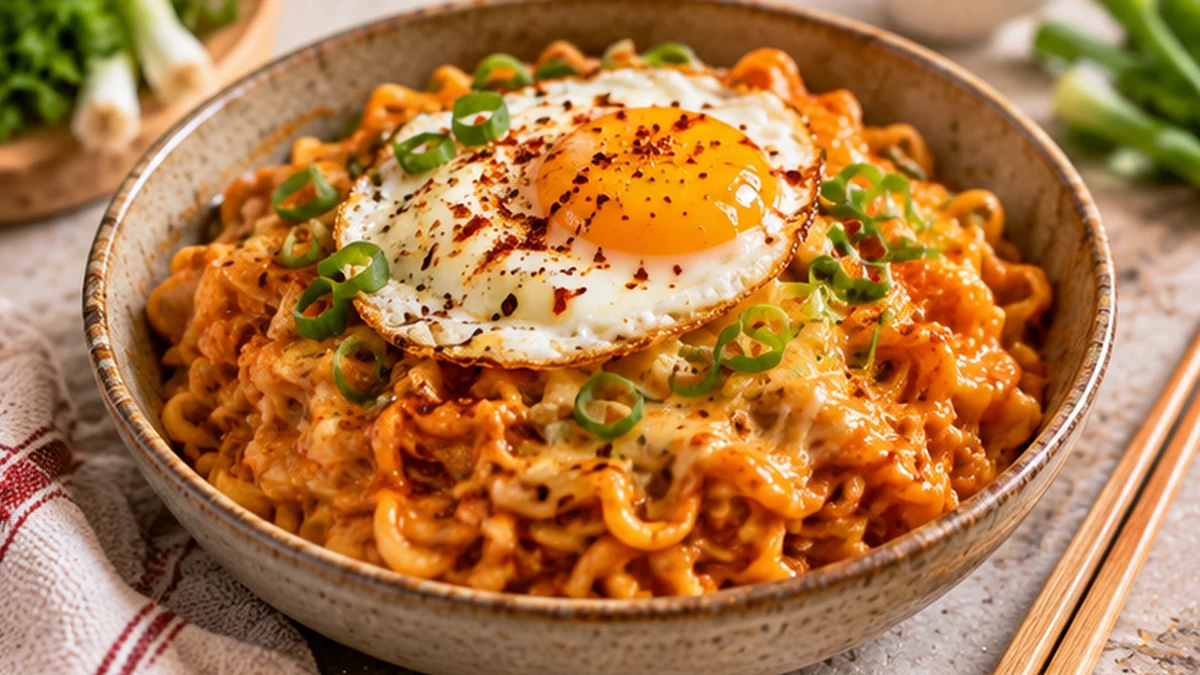
Spicy cheesy ramen with egg is a 15-minute stovetop bowl made with springy instant noodles, a smooth gochujang-and-cheese sauce, and one freshly cooked fried egg. This version skips the powdered ramen seasoning packet, so you can control the heat and build the sauce with measured ingredients rather than guessing at the salt level. If you like fast noodle dinners, our high protein peanut butter ramen is a dairy-free, chicken-and-edamame alternative with a completely different sauce.
The sauce in spicy cheesy ramen with egg is creamy but not soupy: a third cup of milk, a quarter cup of starchy noodle water, one slice of smooth-melting American cheese, and a small handful of mozzarella cling to the curls. Gochujang adds fermented chile flavor; a teaspoon of reduced-sodium soy sauce supplies savory depth. Unlike the handmade dough in our carrot button noodles, this dinner starts with a single instant ramen block and needs no kneading or special equipment.
This is an original, Korean-inspired American comfort-food variation rather than a claim to traditional Korean ramen. It makes one generous bowl and works best when eaten immediately. For another gochujang-based dinner that is designed for meal prep, see our Korean BBQ turkey meatball bowls; their sweet-spicy glaze behaves differently from a dairy cheese sauce. The ingredient amounts, quick timing, and troubleshooting below are the important parts.
Table of Contents
Why This Spicy Cheesy Ramen With Egg Works
A measured sauce replaces a full seasoning packet and gives you more control over salt.
A little starchy noodle water helps melted cheese cling instead of pooling in the bowl.
American cheese provides smooth melt while mozzarella adds stretch without dominating the flavor.
Gochujang supplies savory, slightly sweet chile flavor in a small amount.
The egg is cooked separately so the noodle sauce never relies on raw egg for creaminess.
One 3-ounce noodle block makes a satisfying single-serving dish in about 15 minutes.
The trick is to manage temperature. Bring the milk mixture to a gentle simmer, then lower the heat before adding cheese. A rolling boil can leave the sauce looking oily or grainy. This is a smaller, faster version of the cheese-melting principle in our Chick-fil-A mac and cheese copycat, but the seasonings, liquid volume, and noodles are deliberately different. You should end up with glossy strands rather than a pot of thick paste.
Ingredients You Need
Instant Ramen: Noodles Without the Seasoning Packet
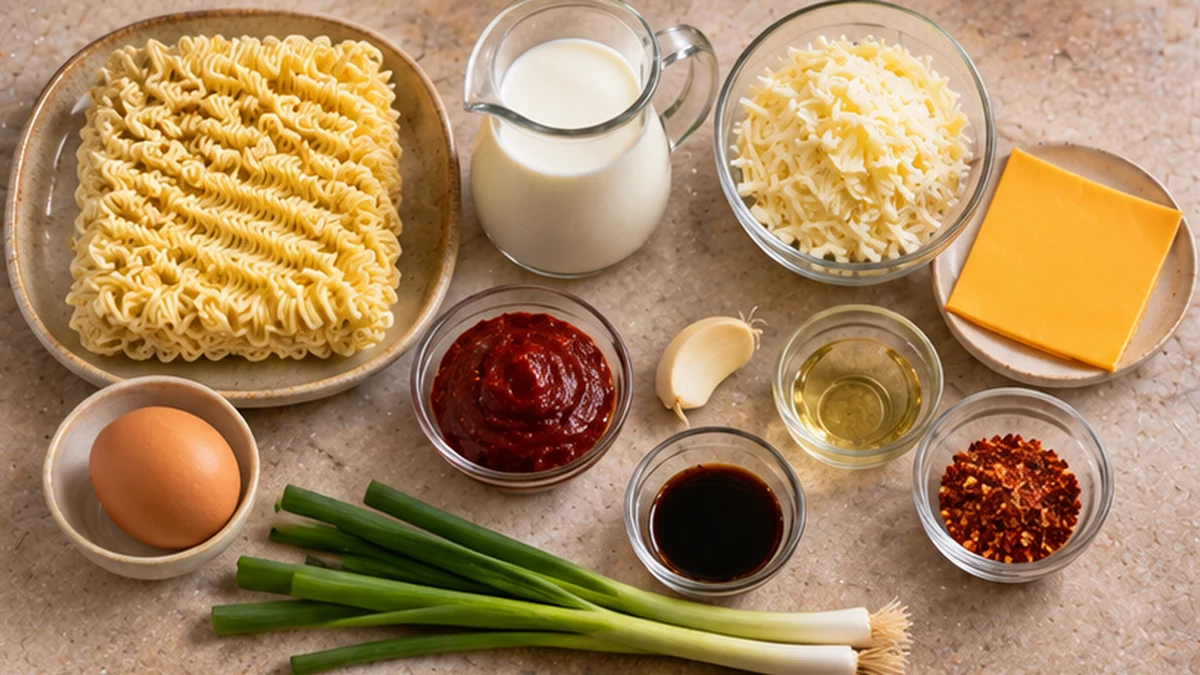
For spicy cheesy ramen with egg, choose one 3-ounce (85 g) block of plain instant wheat ramen, or a vegetarian-labeled noodle block if you are avoiding meat ingredients. Discard the seasoning packet if one comes with it. Many packaged broths contain concentrated salt, and some flavored products include meat or fish; choosing the noodle block alone keeps this recipe predictable. Our peanut butter ramen recipe also discards the packet, but pairs its noodles with peanut, lime, and chicken rather than cheese.
Gochujang, Garlic, and Soy Sauce
In spicy cheesy ramen with egg, two teaspoons of gochujang give a noticeable but manageable spice level. Brands range from sweet and mild to fiercely hot, so begin with one teaspoon if you are uncertain. One small minced garlic clove and one teaspoon reduced-sodium soy sauce complete the base. Our Korean BBQ turkey bowls use gochujang in a sticky glaze; here it disappears into a dairy sauce, creating a softer, rounded chili flavor.
Milk, American Cheese, and Mozzarella
For spicy cheesy ramen with egg, use one-third cup of 2% milk, one slice of American cheese (about 21 g), and one-quarter cup shredded low-moisture mozzarella (about 28 g). American cheese melts smoothly in small amounts; mozzarella brings a little stringiness. Avoid adding huge handfuls of dry shredded cheese, which can turn one noodle block into a heavy, gummy mass. The larger baked cheese blend in Tini Buffalo chicken mac and cheese is not a direct formula substitute.
A Fully Cooked Egg and Fresh Toppings
Cook one large egg separately using about a teaspoon of neutral oil divided between the egg pan and garlic. For the standard food-safety method, cook until the white and yolk are both firm. If you specifically want a soft or runny yolk, choose a pasteurized shell egg and follow the label; raw or undercooked ordinary shell eggs carry a Salmonella risk. For more cooked-egg technique in a quick dinner, compare our chicken fried rice meal prep, which cooks its eggs before combining them with other ingredients.
Spicy Cheesy Ramen With Egg Recipe Card
The spicy cheesy ramen with egg recipe card provides all quantities for one generous bowl, a 5-minute prep, a 10-minute cook, and a 15-minute total. Fry the egg until fully cooked for the default version and add it only after the noodles are coated. Looking for a different fast dinner instead? Browse our quick and easy recipes collection, which includes reviewed meals with a published total time of 30 minutes or less.
One generous bowl of spicy cheesy instant ramen with gochujang, silky American cheese, mozzarella, and a separately cooked egg. No ramen seasoning packet needed.
Bring water to a boil in a small saucepan. Heat a nonstick skillet over medium-low heat with about half the measured oil. Fry the egg gently until its white and yolk are set; cover the skillet briefly if needed. Transfer the cooked egg to a clean plate.
Add the ramen block to boiling water. Cook until the noodles separate and are just shy of tender, usually 2 to 3 minutes or about 1 minute less than the package direction.
Reserve at least 1/4 cup of the hot, starchy noodle water. Drain the noodles without rinsing.
In the same skillet over medium-low heat, add the remaining oil and minced garlic. Stir for about 20 seconds, then add gochujang and reduced-sodium soy sauce. Stir until fragrant but not browned.
Add the milk and 2 tablespoons reserved hot noodle water. Whisk gently until the gochujang is fully dissolved, keeping the mixture at a gentle simmer rather than a hard boil.
Reduce heat to the lowest setting. Tear in the American cheese and stir until smooth; add mozzarella a little at a time and stir to melt. Add extra reserved noodle water 1 teaspoon at a time if it becomes thick.
Add the drained ramen, toss for about 1 minute until hot and coated, then turn off the heat. Taste and adjust spice; do not add extra salt before tasting.
Transfer to a bowl, top with the fully cooked egg, scallion, and optional pepper flakes or sesame seeds. Serve immediately.
Notes
Yield is one large bowl. Times are based on overlapping the egg and noodle cooking; individual stoves and noodle brands vary.
The seasoning packet is not used. Check noodle, gochujang, soy sauce, and cheese labels for sodium and wheat/soy/milk/egg allergens.
USDA/FDA guidance for ordinary shell eggs recommends cooking both white and yolk until firm. If choosing a runny-yolk presentation, use pasteurized eggs and follow their product instructions.
For a vegetarian bowl, choose vegetarian-labeled noodles, gochujang and cheeses made without animal rennet. The standard dish is not gluten free, dairy free, or low sodium.
Best eaten immediately. Refrigerate leftovers promptly at 40°F or below, ideally use within 1 to 2 days for texture, and reheat thoroughly with a little liquid. Freezing is not recommended.
Nutrition is an illustrative estimate for one full bowl with a standard 3-ounce instant ramen block, 2% milk, a 21g American cheese slice, 28g mozzarella, one egg, gochujang, reduced-sodium soy sauce and 1 teaspoon oil; brand labels can materially change the result.
Author:Adam Moretti
Prep Time:5 minutes
Cook Time:10 minutes
Category:Dinner
Method:Stovetop
Cuisine:Korean-Inspired American
Diet:Vegetarian (check labels)
How to Make Spicy Cheesy Ramen With Egg
1. Heat the Water and Prepare the Egg
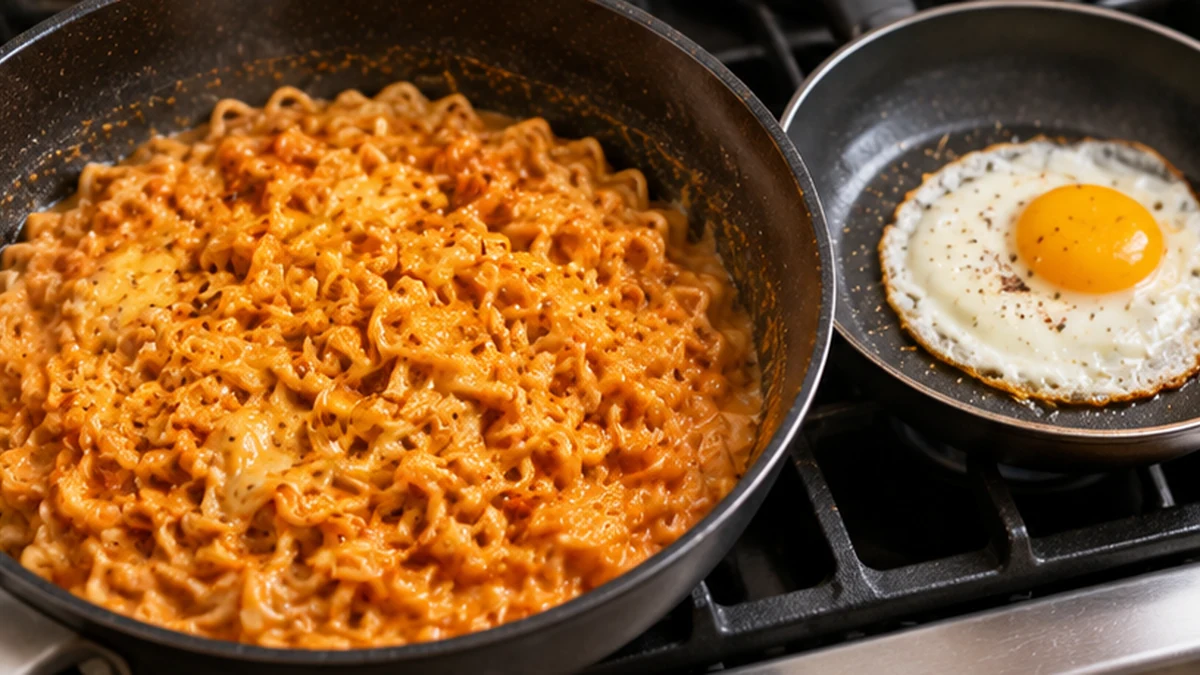
To begin spicy cheesy ramen with egg, fill a small saucepan with enough water to cover the ramen block and bring it to a boil. Meanwhile, warm a nonstick skillet with part of the measured teaspoon of neutral oil. Crack in the egg, reduce the heat to medium-low, and cook gently until the white is completely set and the yolk is firm. Cover briefly if needed to finish the top. Transfer it to a clean plate while you make the noodles.
2. Boil the Ramen Briefly and Reserve Water
For spicy cheesy ramen with egg, add the noodle block to boiling water and cook about two to three minutes, or begin checking one minute before the package time. Use chopsticks or tongs to separate the strands without breaking them into short pieces. Reserve at least a quarter cup of the hot starchy cooking water, then drain the rest. The noodles should still have a slight bite because they will spend another minute or two in the cheese sauce.
3. Bloom the Garlic and Gochujang
To build spicy cheesy ramen with egg, return the skillet or a small clean saucepan to medium-low heat and add any remaining measured oil. Cook the minced garlic about 20 seconds, just until fragrant, then stir in gochujang and reduced-sodium soy sauce. Work quickly so the garlic does not brown. Pour in the milk and two tablespoons of reserved noodle water, stirring until the red chile paste dissolves into a smooth orange base.
4. Melt the Cheese Over Low Heat
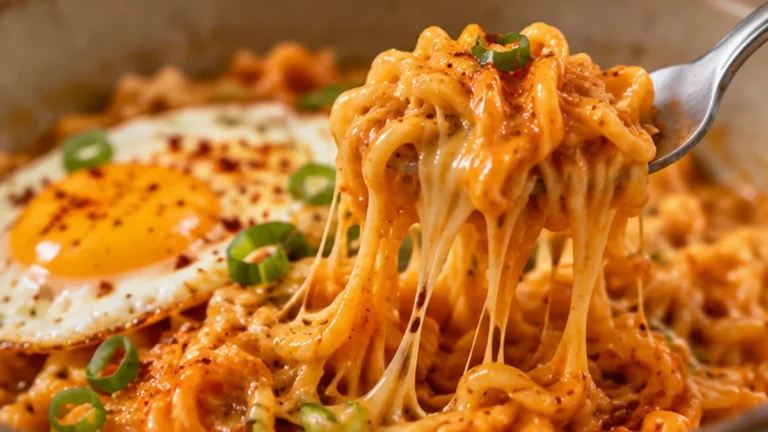
For smooth spicy cheesy ramen with egg, turn the heat to its lowest setting. Tear the American cheese slice into small pieces and stir until it dissolves into the sauce. Scatter in the mozzarella and stir until no unmelted clumps remain. If the liquid looks too thick or stringy, add reserved noodle water one teaspoon at a time. The ideal texture is glossy and fluid enough to coat a forkful, not a solid cheese sheet.
5. Toss Noodles, Check Heat, and Serve
When finishing spicy cheesy ramen with egg, add the drained ramen and use tongs to fold it through the orange sauce for about one minute. Turn off the heat as soon as the strands are hot and evenly coated. If the sauce tightens before you serve, loosen it with a spoonful of the reserved water. Taste first: the cheeses, gochujang, and soy sauce all contribute salt, so additional salt is usually unnecessary.
Transfer the ramen to a warm bowl and top with the cooked egg, scallion, and optional red pepper flakes. Eat while the sauce is loose and the cheese is stretchy. For a savory dinner with a similar sweet-spicy contrast but without dairy ramen sauce, our sushi with Algerian sauce is another fusion recipe; it is not a substitute for this noodle technique.
How to Tell the Sauce Is Right
Glossy: the cheese appears integrated, not floating as oily spots.
Coating: a few noodles lift together with sauce, but liquid does not puddle like soup.
Tender with a bite: the ramen has separated fully yet has not become mushy.
Balanced spice: you taste gochujang after the cheese without an overwhelming burn.
Cooked topping: the egg white and yolk are set for the standard preparation.
If the noodles dry out between the stove and the table, warm in a tablespoon of water rather than an extra slice of cheese. Cheese alone makes the mixture thicker. For a different noodle-like texture that can hold a chile dressing, the viral carrot button noodles article explains why glutinous rice flour behaves differently from instant wheat ramen.
Troubleshooting: Common Problems
My Cheese Sauce Is Grainy or Oily
The pan was probably too hot when the cheese went in, or the milk boiled aggressively. Move it off the heat and whisk in one tablespoon of warm noodle water. If it does not completely smooth out, it may still taste fine, but the texture will be less silky. Next time melt the American slice first and add mozzarella gradually at the lowest setting.
The Ramen Is Too Spicy
In spicy cheesy ramen with egg, gochujang strength varies, so the simplest prevention is starting with one teaspoon. For an already-hot batch, add a tablespoon or two of milk and a little reserved water, then taste; avoid adding more salt. Some people prefer extra heat from a few flakes at the table instead of stirring them into the whole pan. Our Korean BBQ turkey meatballs explain a similar spice-adjustment principle for their separate gochujang glaze.
The Sauce Is Thin or Watery
You may have left too much water with the drained noodles or added cold water in a large pour. Return the noodles to low heat for 30 to 60 seconds, tossing gently, and let excess liquid evaporate. Do not boil hard to thicken, since that risks separating the dairy. Remember that the noodles will absorb a little moisture as they sit.
The Ramen Turns Into a Sticky Clump
If spicy cheesy ramen with egg clumps, the noodles were cooked too long or the sauce was too cool and concentrated. Toss immediately after draining and use measured starchy water to regain flow. If you are preparing multiple servings, work in a large skillet with enough space to stir. For a family-size noodle bake instead, our Buffalo chicken mac and cheese is developed for batch serving, unlike this quick single bowl.
Easy Variations That Actually Work
Milder ramen: Cut the gochujang to one teaspoon and omit pepper flakes; do not substitute a full ramen flavor packet. More vegetables: Add a handful of washed baby spinach or briefly steamed broccoli during the final toss. More protein: Fold in 2 to 3 ounces of fully cooked chicken, tofu, or edamame, but recalculate nutrition before describing the result as high protein. Our high protein peanut butter ramen provides a separate, measured higher-protein option with chicken and edamame.
Cheese changes: Mild Monterey Jack can replace mozzarella, though it will have less pull. Sharp cheddar is flavorful but can turn oily more easily, so keep some smooth-melting American cheese for stability. No gochujang: Stir in a small amount of sriracha or chili-garlic paste, then adjust the sauce to taste; acidity and sweetness will change. For another naturally cheesy pasta dinner with a more substantial protein base, see our cottage cheese lemon pasta rather than trying to transform the ramen by guesswork.
Gluten-free adaptation: This original is not gluten free. To experiment, use gluten-free rice ramen, gluten-free tamari, and gochujang certified gluten free, and confirm the cheese labels. Cooking times and sauce absorption may change. Our gluten-free wonton wrappers guide explains why wheat alternatives often behave differently; it does not serve as a direct noodle substitution recipe.
Storage, Reheating, and Food Safety
The noodles are best served immediately because they continue drinking up the sauce. If needed, cool leftovers promptly in a shallow covered container and refrigerate at 40°F or below. The FoodSafety.gov cold-storage chart gives general guidance for refrigerated leftovers; for best quality, eat this delicate dairy-and-egg ramen within one to two days. Do not leave it out for more than two hours.
Reheat with a splash of milk or water in a covered pan over medium-low heat until hot throughout; bring leftovers to 165°F where applicable. Expect the noodles to be softer and the cheese slightly less glossy after reheating. Freezing is not recommended because the noodles get soft and the milk-and-cheese emulsion can separate. If meal prep is the main goal, use our chicken fried rice meal prep or a recipe designed to withstand cooling and reheating.
For eggs, FDA safe-food-handling guidance advises firm whites and yolks for ordinary shell eggs, with egg dishes cooked thoroughly. Check any food-allergy labels: ramen usually contains wheat, and the dairy sauce contains milk, while gochujang, soy sauce, and noodles can supply soy or additional wheat. This is not a validated gluten-free, dairy-free, or low-sodium recipe.
Nutrition and Sodium Notes
For one large bowl of spicy cheesy ramen with egg, a representative ingredient-label estimate is approximately 700 calories, 28 grams protein, 70 grams carbohydrate, and 34 grams fat. Sodium is particularly variable—estimated around 1,400 mg depending on the instant noodle block, gochujang, cheese, and reduced-sodium soy sauce. The CDC guide to Nutrition Facts labels explains why comparing sodium per serving matters. Use your own package labels for medical or precise dietary tracking.
Spicy Cheesy Ramen With Egg FAQs
Can I Make Spicy Cheesy Ramen With Egg Without a Seasoning Packet?
Yes, that is how this recipe is written. Gochujang, garlic, a small amount of soy sauce, milk, and melted cheese season the noodles. Skipping the packet lets you adjust the heat and compare ingredient labels, but it does not guarantee a low-sodium meal because the noodles and sauces still contribute sodium.
What Cheese Melts Best Into Spicy Ramen?
A small piece of American cheese is the most forgiving smooth-melting option in this particular sauce. Mozzarella adds stretch but can become stringy if you use a large amount. Add both over very low heat and loosen with hot starchy noodle water. Cheddar can work in part, but it is not always as stable.
Is This the Same as Buldak Carbonara Ramen?
No. Buldak-branded instant ramen has its own sauce packet and flavor profile. This spicy cheesy ramen with egg uses a generic plain instant wheat noodle block, measured gochujang, dairy, and a separately cooked egg. For another distinctly flavored noodle bowl with no cheese, try our peanut butter ramen with chicken instead.
Can I Make It Without Milk?
You can try unsweetened unflavored soy milk or a little additional noodle cooking water, but the cheese sauce will be thinner or less creamy and the nutritional values change. This adjustment does not make the original recipe dairy-free because American cheese and mozzarella still contain milk. Use a recipe formulated for plant-based cheese if strict dairy avoidance is necessary.
Can I Double the Recipe?
Yes. Double each ingredient and cook two ramen blocks in a larger pot, then toss them in a wide skillet so the sauce covers the noodles evenly. Cook two eggs in a roomy pan or in batches; do not crowd them. Serve right away instead of holding the finished noodles in a hot pot. For planned family dinners, browse our dinner recipes collection for dishes that hold their texture longer.
How Do I Keep the Egg Safe?
Cook ordinary shell eggs until both the white and yolk are firm. If you want a softer yolk, start with pasteurized shell eggs and follow the label instructions, especially if serving someone at increased risk of foodborne illness. Do not rely on a steaming bowl of noodles to finish cooking an egg that has not been cooked separately.
Final Tips for a Creamy Ramen Bowl
To get the best spicy cheesy ramen with egg, make the sauce gently, reserve noodle water before draining, melt American cheese before mozzarella, and cook the egg separately. The bowl should taste spicy, savory, and creamy without becoming a stiff cheese clump. Adjust gochujang to your own tolerance and read the labels rather than assuming every instant noodle or fermented chile paste has the same sodium.
Reviewed recipe options
Make this recipe fit me
Choose one of seven popular diet options. NutriMatch will confirm whether the recipe already fits, show a reviewed adaptation when available, or recommend recipes that match your choice.
Please choose a diet first.
Not available for this recipe
This recipe cannot currently be made Dairy-Free with a reviewed adaptation.
NutriMatch will not guess at substitutions. Try one of these recipes that is already reviewed for your choice.
Recipe details, product formulas, and cross-contact information can change. Confirm current labels and use professional guidance when medically necessary.
Not available for this recipe
This recipe cannot currently be made Gluten-Free with a reviewed adaptation.
NutriMatch will not guess at substitutions. Try one of these recipes that is already reviewed for your choice.
Recipe details, product formulas, and cross-contact information can change. Confirm current labels and use professional guidance when medically necessary.
Not available for this recipe
This recipe cannot currently be made High Protein with a reviewed adaptation.
NutriMatch will not guess at substitutions. Try one of these recipes that is already reviewed for your choice.
Recipe details, product formulas, and cross-contact information can change. Confirm current labels and use professional guidance when medically necessary.
Not available for this recipe
This recipe cannot currently be made Keto with a reviewed adaptation.
NutriMatch will not guess at substitutions. Try one of these recipes that is already reviewed for your choice.
Recipe details, product formulas, and cross-contact information can change. Confirm current labels and use professional guidance when medically necessary.
Not available for this recipe
This recipe cannot currently be made Low Carb with a reviewed adaptation.
NutriMatch will not guess at substitutions. Try one of these recipes that is already reviewed for your choice.
Recipe details, product formulas, and cross-contact information can change. Confirm current labels and use professional guidance when medically necessary.
Not available for this recipe
This recipe cannot currently be made Vegan with a reviewed adaptation.
NutriMatch will not guess at substitutions. Try one of these recipes that is already reviewed for your choice.
Recipe details, product formulas, and cross-contact information can change. Confirm current labels and use professional guidance when medically necessary.
Already a reviewed match
This recipe already fits Vegetarian.
No changes are needed based on its reviewed NutriMatch classification. Check the complete ingredients, product labels, and serving details for your own needs.
Recipe details, product formulas, and cross-contact information can change. Confirm current labels and use professional guidance when medically necessary.