Dubai chewy cookie recipe means the viral Korean-style dujjonku: a round cocoa-marshmallow shell wrapped around creamy pistachio and crunchy toasted kataifi. It is not a traditional oven-baked chocolate chip cookie, and the soft exterior is not mochi dough made with rice flour. If you enjoy contrasting a crisp center with a softer coating, our glass-pressed grape bark offers a fruit-and-dark-chocolate version, but this cookie gets its texture from pastry and marshmallows.
This Dubai chewy cookie recipe makes eight pieces using measured U.S. and metric quantities, a short skillet toast, a 20-minute chilling period for the pistachio centers, and low heat for the marshmallow coating. A little white chocolate helps bind the filling, while powdered cocoa makes the finished cookies less sticky. For a different easy chocolate treat that needs no stovetop marshmallow work, see our caramel apple bark with pretzels.
For a dependable Dubai chewy cookie recipe, the key is to cool the toasted kataifi completely, keep the filling firm, and handle the shell while warm and pliable—not hot and runny or cold and stiff. This is a sweet confection, not a protein cookie or a gluten-free snack. Our high protein chocolate mousse is a separate chilled dessert if protein is the priority. The recipe below gives specific visual cues so you can make the first batch without relying on a short video.
Table of Contents
What Is a Dubai Chewy Cookie?
This Dubai chewy cookie recipe uses the crunchy pistachio-kataifi center associated with Dubai-style chocolate bars, but replaces the solid chocolate casing with a flexible cocoa-and-marshmallow covering. Korean bakeries and creators popularized this form, sometimes calling it dujjonku. Its texture is closer to a filled candy or soft rice-cake-like confection than to a cookie baked from flour, butter, and eggs. If you want a standard baked cookie, compare the method with our chickpea chocolate chip cookies; the two are fundamentally different.
This recipe is an independent home-kitchen adaptation of the popular style, not an original invention or an official formula from any bakery. Published Dubai chewy cookie recipe variations differ in the ratio of kataifi to pistachio cream and in how much cocoa they use. We prioritize a firm-enough filling for easy wrapping and a thin, flexible outside layer. If you are making a dessert board, browse snack recipes for crunchy contrasts rather than turning the filling into an overly dry mixture.
Why This Dubai Chewy Cookie Recipe Works
Toasting kataifi until golden dries it enough to keep a crunch inside the filling.
Sweetened pistachio cream and a little melted white chocolate hold the strands together without requiring lots of extra sugar.
Chilling eight measured filling portions makes the marshmallow coating easier to wrap and seal.
Low heat and an immediate stir of sifted cocoa and milk powder keep the shell pliable.
A thin cocoa dusting reduces surface tack without needing a hard chocolate shell.
Two short active cooking steps use ordinary stovetop cookware rather than a specialty candy thermometer.
Ingredients You Need for Dubai Chewy Cookies
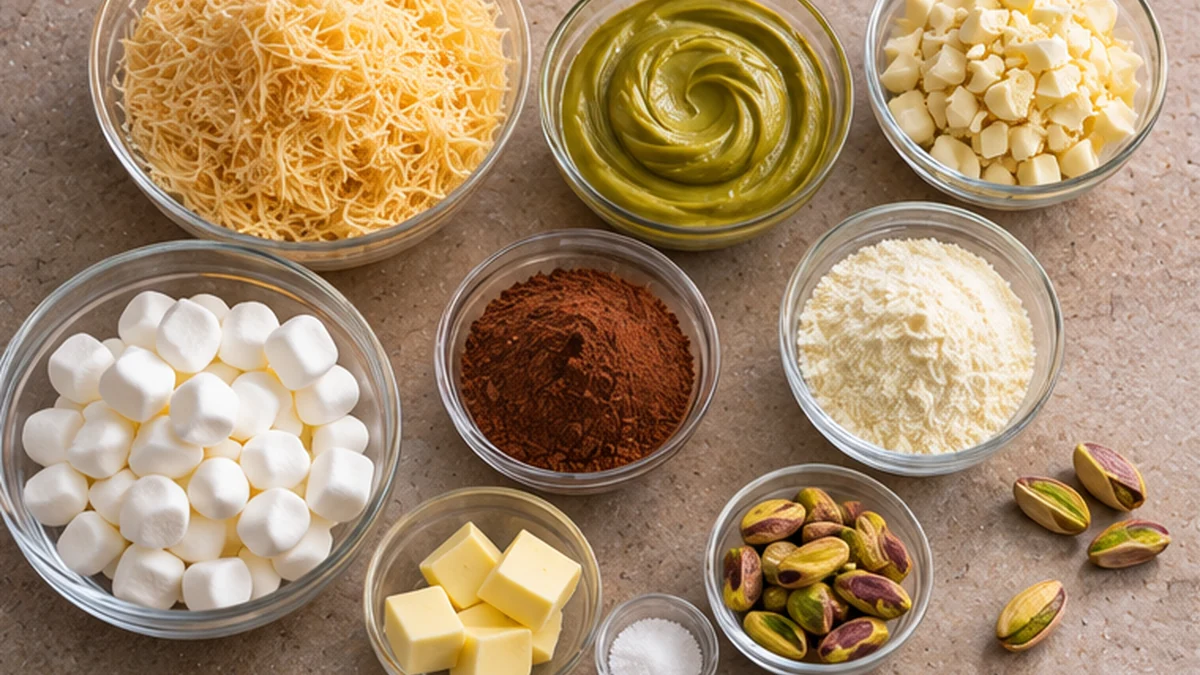
Kataifi (shredded phyllo pastry): For this Dubai chewy cookie recipe, use 3 ounces (85 g) of uncooked, unseasoned shredded wheat pastry, chopped into short strands. If the package is already toasted, skip the browning step and the 1 tablespoon of butter used for it; the nutrition estimate will change. Traditional kataifi contains wheat, so the base recipe is not gluten-free. Compare our gluten-free dessert guide if you need a dessert specifically designed around that requirement.
Sweetened pistachio cream: Use 1/2 cup (120 g) of a spreadable, sweetened pistachio cream, not 100% unsweetened pistachio paste. Those products have very different sweetness and thickness. Stir the jar well and check how much pistachio it actually contains. For another recipe where nut or seed spreads change texture, our sweet potato peanut butter cookies explains why a direct spoon-for-spoon swap is unreliable.
White chocolate and pistachios: Melt 1 1/2 ounces (42 g) chopped white chocolate to help the filling set, and add 2 tablespoons (15 g) finely chopped roasted unsalted pistachios for bite. Pistachios are tree nuts, and white chocolate usually supplies milk. If you are looking for a dark-chocolate coating without the pistachio-wheat filling, our gluten-free candy guide includes a separate chocolate cluster method.
Marshmallows, butter, cocoa, and dry milk: This Dubai chewy cookie recipe uses 5 1/4 ounces (150 g) plain mini marshmallows, 2 tablespoons (28 g) butter, 2 tablespoons (12 g) unsweetened cocoa, and 1 tablespoon (8 g) nonfat dry milk powder. Keep another tablespoon (6 g) cocoa for dusting. Standard marshmallows frequently contain animal gelatin, so this exact version should not be labeled vegetarian. For a creamy cocoa dessert without marshmallow, see our chocolate mousse recipe instead.
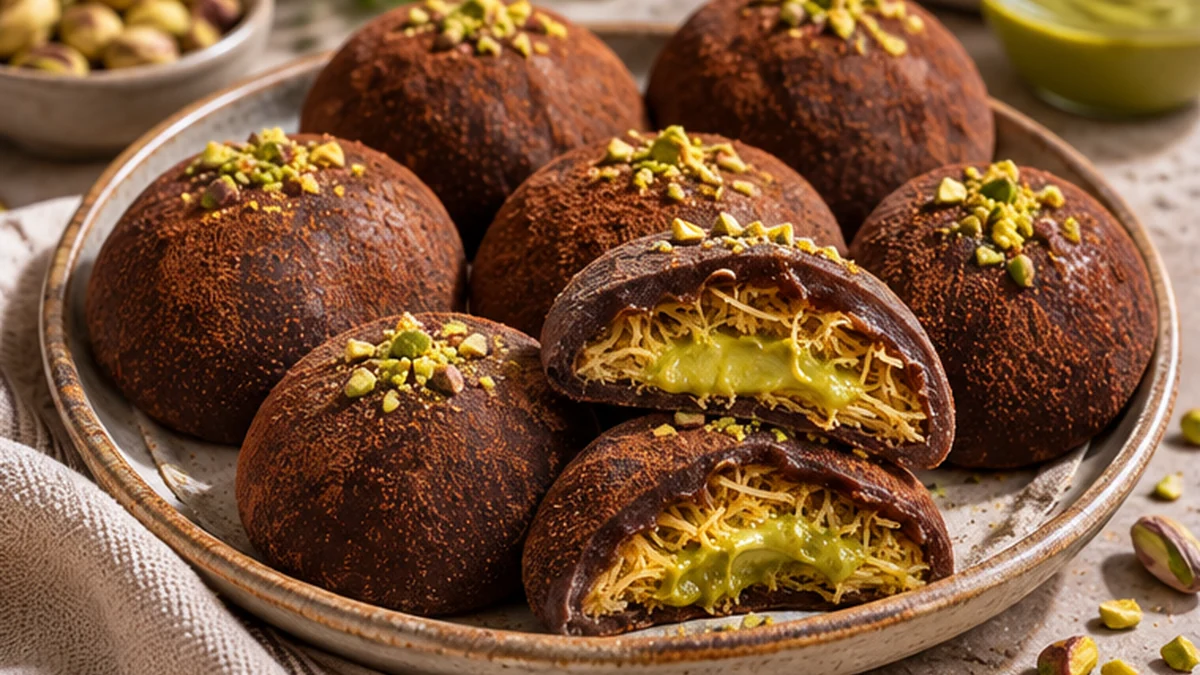
Eight chewy cocoa-marshmallow confections with crisp toasted kataifi, sweet pistachio cream, and a little white chocolate. A Korean-style Dubai chewy cookie recipe made on the stovetop.
Total Time:65 minutes
Yield:8 cookies (8 servings)
Ingredients
Scale
For the filling: 3 ounces (85 g) raw, unseasoned kataifi (shredded wheat phyllo), chopped
1 tablespoon (14 g) unsalted butter, for toasting kataifi
1/2 cup (120 g) sweetened pistachio cream, stirred well (not unsweetened pure paste)
For dusting: 1 tablespoon (6 g) unsweetened cocoa powder
Instructions
Chop the kataifi into short strands. Melt 1 tablespoon butter in a wide nonstick skillet over medium-low heat. Add the pastry and toast, stirring frequently, 7 to 9 minutes until uniformly deep golden and crisp. Transfer immediately to a bowl and cool fully.
Melt the white chocolate in a microwave-safe bowl in 15-second bursts, stirring after each. Combine the cooled toasted kataifi, sweetened pistachio cream, melted white chocolate, and chopped pistachios until evenly coated.
Divide the filling into 8 equal compact balls, pressing firmly but gently. Place on parchment and refrigerate for 20 minutes until firm enough to wrap.
Sift together the 2 tablespoons cocoa powder and the dry milk powder. Prepare a silicone mat or parchment and lightly grease food-safe gloves or utensils.
Melt the remaining 2 tablespoons butter in a clean nonstick pan over LOW heat. Add marshmallows and stir 3 to 5 minutes, just until fully melted and smooth. Remove from heat immediately. Fold in sifted cocoa and milk powder until evenly chocolate-colored.
Turn the warm coating onto the prepared surface. Cool for 2 to 3 minutes until comfortably warm and pliable, never hot enough to burn. Divide into 8 equal pieces and gently flatten each to a thin disc.
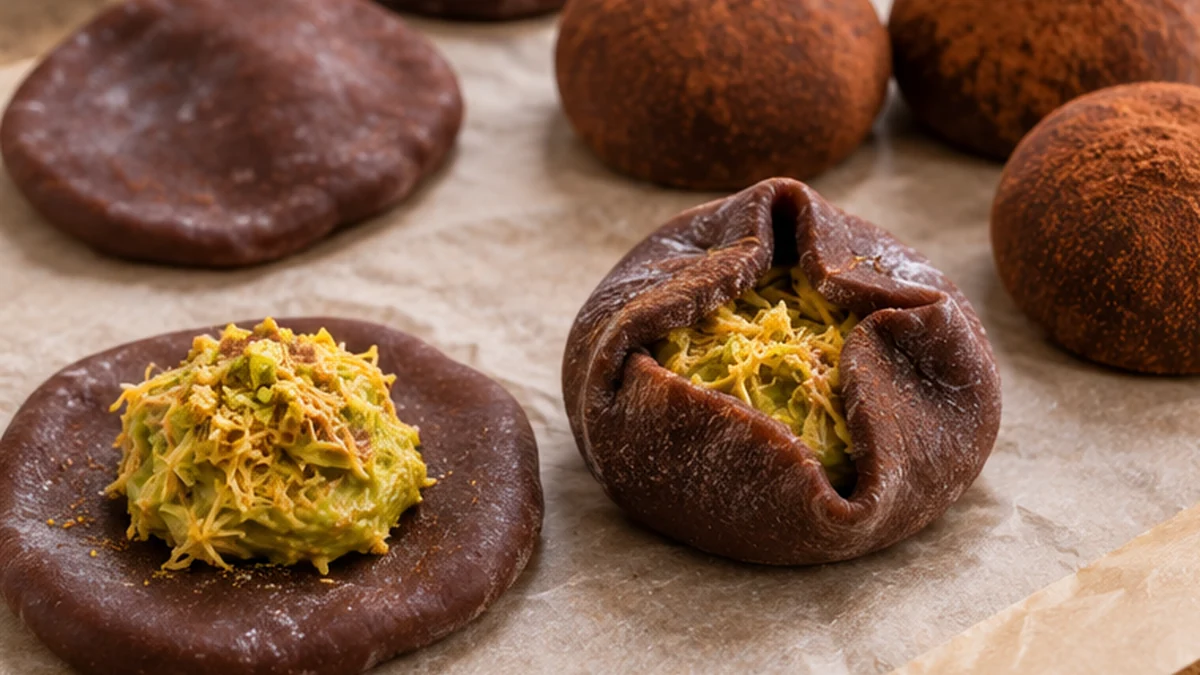
Set a chilled pistachio-kataifi ball in each disc, wrap up the edges, pinch the seam closed, and roll gently into a rounded cookie. Work while the coating remains soft; avoid pulling so hard that it tears.
Dust the cookies lightly with the reserved tablespoon cocoa powder. Let rest on parchment for about 5 minutes to settle, then serve at cool room temperature or refrigerate promptly.
Notes
Use sweetened pistachio cream, not pure unsweetened pistachio paste. Changing products affects both the structure and nutrition.
Kataifi is wheat pastry and must be well toasted and cooled completely to keep its crunch. Packaged pre-toasted kataifi changes the method and fat estimate.
Marshmallow is sticky and can burn while hot. Use low heat and let it cool slightly before handling; lightly greased gloves help.
Standard marshmallows commonly contain animal gelatin, so this recipe is not labeled vegetarian or vegan. Contains tree nuts (pistachios), wheat and milk; check all packaged labels for other allergens.
A soft, thin shell is the goal. Work quickly once the cocoa is mixed into melted marshmallows. Do not refrigerate the coating before wrapping.
Refrigerate leftovers in an airtight container at 40°F or below; for best crunch, aim to eat within 2 to 3 days. Freezing assembled cookies is not recommended for texture.
Nutrition is an ingredient-based estimate for one of 8 cookies, using commercial sweetened pistachio cream, white chocolate, standard marshmallows and nonfat dry milk. Brands, exact portions and dusting can change the estimate.
Author:Adam Moretti
Prep Time:25 minutes
Chilling and resting:25 minutes
Cook Time:15 minutes
Category:Dessert
Method:Stovetop
Cuisine:Korean-Inspired
Diet:Not vegetarian with gelatin marshmallows; contains wheat, milk and pistachios
How to Make Dubai Chewy Cookies Step by Step
1. Toast the Kataifi Until Crisp
For this Dubai chewy cookie recipe, chop the pastry into short strands; long ropes make the filling hard to portion. Melt 1 tablespoon butter in a wide nonstick skillet over medium-low heat. Add the 85 g kataifi and stir frequently for about 7 to 9 minutes until evenly golden, dry, and crisp. Transfer it immediately to a cool bowl. It should rustle when stirred; any damp, pale strands will soften the center later. Our caramel apple bark uses a different moisture-control technique for fruit, but the general lesson is the same: excess moisture ruins crisp textures.
2. Bind and Portion the Pistachio Filling
For this Dubai chewy cookie recipe, let the toasted pastry cool to room temperature. Melt 42 g white chocolate in 15-second microwave bursts, stirring until smooth, then stir it into the pistachio cream with the chopped pistachios and cooled kataifi. Divide the mixture into eight compact balls of similar weight, pressing gently so the pastry holds together without crushing it. Set on parchment and refrigerate for 20 minutes. If you prefer an entirely different frozen-nut snack, our banana yogurt bark is designed for freezing rather than wrapping.
3. Melt the Cocoa Marshmallow Shell
Sift the cocoa powder and dry milk powder together before the marshmallows touch the heat. In a clean nonstick skillet on low, melt 2 tablespoons butter, then add the mini marshmallows. Stir continuously for 3 to 5 minutes until just smooth. Remove from heat, immediately add the sifted powders, and fold until the color is uniform and no pockets of dry powder remain. Do not let the mixture boil or darken; overheated marshmallow becomes tough and difficult to stretch.
4. Divide the Shell and Wrap the Filling
Scrape the cocoa mixture onto a lightly greased silicone mat or parchment and let it cool only 2 to 3 minutes, until warm enough to handle safely. With lightly greased gloves, divide into eight equal pieces. Flatten each into a thin disc, place a chilled pistachio-kataifi ball in the middle, then pinch the coating up and around it. Seal the seam and roll very gently to smooth. This is a wrapping technique rather than the scooping-and-baking method used in our vegan protein cookies.
5. Dust, Rest, and Serve
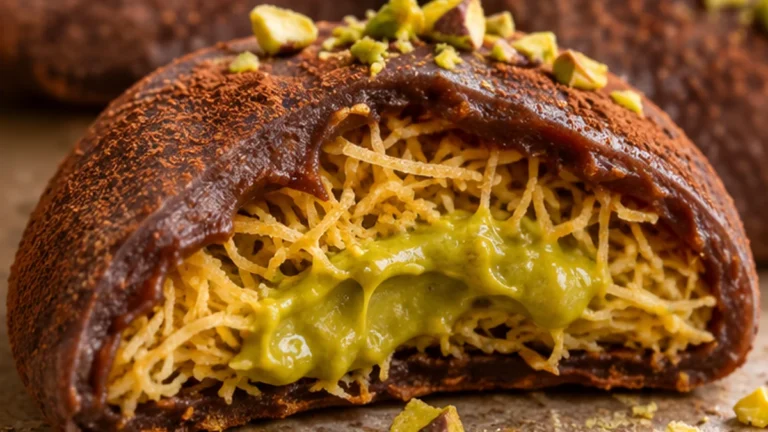
Use a fine sieve to dust each ball lightly with the reserved tablespoon of cocoa powder. Leave the cookies on parchment for about 5 minutes to settle, then serve at cool room temperature. The shell should be slightly tacky but not gluey, with a delicate cocoa finish; cutting one should reveal a green cream center threaded with crisp golden kataifi. For a chocolate dessert with a completely smooth filling, choose our hot fudge sauce over ice cream instead.
Texture Checks That Tell You It Worked
A good finished piece stays round, yields slightly when squeezed, and has no puddle of pistachio cream at the seam. When cut, the center should show distinct crunchy pastry strands suspended in a spreadable pistachio filling. If the exterior snaps like hard candy, the marshmallow was overheated; if it flows off the filling, it was wrapped too warm. Aim for a shell thinner than the filling, so the first bite is crisp as well as chewy.
Fixes for Common Dubai Chewy Cookie Problems
My Filling Is Too Loose to Roll
In this Dubai chewy cookie recipe, the pistachio spread may be thin or the white chocolate has not cooled enough. Refrigerate the filling for another 10 to 15 minutes and press the portion firmly. If it still slumps, add a tablespoon of properly toasted kataifi to the batch rather than adding flour or more sugar. Different nut spreads really do behave differently; our peanut butter cookie recipe illustrates why texture matters more than the label on the front of the jar.
The Kataifi Is Soft or Soggy
The strands may have been under-toasted or combined with warm nut cream while still steamy. Toast until evenly golden and let them cool completely before mixing. Once coated with spread, kataifi gradually loses crunch during storage, so the best texture comes from eating the cookies soon after assembling them. Do not soak or steam the pastry to make it soft; that defeats the contrast the recipe is meant to create.
The Marshmallow Shell Sticks Everywhere
The mixture is either too hot, too thickly spread on an ungreased surface, or handled without a lightly oiled utensil. Allow a couple of minutes of cooling; use a silicone mat and lightly greased gloves. Extra cocoa can dry the outside, but too much tastes chalky. If this type of wrapping feels awkward, our pressed grape bark gives you a simpler chocolate-coated dessert with no stretchy marshmallow step.
The Coating Tears or Turns Rubbery
Cold marshmallow dough loses stretch, and overheating can make it tough. Work with one portion at a time while the rest stays warm, and form thin discs large enough to cover the balls without pulling hard. If the surface cracks, gently warm the coating over very low heat for a few seconds and remix it; never pour hot syrup onto your hands. Use caution with melted marshmallow, which can cause burns.
The Cookies Taste Too Sweet
Sweetened pistachio cream, white chocolate, and marshmallows all contain sugar. Use the specified thin shell and unsweetened cocoa dusting rather than adding more chocolate on top. Choosing a less-sweet pistachio cream changes the texture as well as the sugar, so test a small batch before making substitutions. If a lower-sugar cocoa dessert matters more than reproducing this trend, our protein chocolate mousse is a better starting recipe.
Ingredient Swaps and Variations
If you only have pure pistachio paste instead of sweetened cream for this Dubai chewy cookie recipe, do not use the same half cup and expect the same set. Mix a small amount of melted white chocolate into the paste until it becomes thick but spreadable, then adjust with the kataifi; sweetness and nutrition will be different. A thin hazelnut spread can make the filling harder to shape and is not a one-for-one replacement for the specified pistachio product.
Some online versions add tahini, but this formula is written without it. Tahini changes the flavor and introduces sesame, another major allergen. If you want to try a tiny amount, begin with a teaspoon in the filling and recheck the consistency before rolling. This is not a vegan recipe with regular marshmallows, butter, milk powder, and white chocolate; swaps for all those ingredients would need a separately tested formulation.
Make-Ahead, Storage, and Allergens
For the best crunch, make these cookies on the day you plan to serve them. Keep finished pieces covered in a cool kitchen only for brief serving, not for a long warm buffet. Store extras in a shallow airtight container in the refrigerator at 40°F or below, separating layers with parchment, and aim to eat within 2 to 3 days for texture. A refrigerated shell may be firm; let an individual cookie sit briefly at room temperature before eating. For a longer-storing cookie option, our vegan protein cookie recipe follows a different baked method.
Check every package if allergies matter. This version contains pistachios (tree nuts), wheat (kataifi), and milk; marshmallow and chocolate brands can add other allergens, including soy or gelatin. The FDA food-allergen guidance identifies tree nuts, wheat, milk, and sesame among major allergens. Our gluten-free candy guide helps with checking packaged sweets, but this particular kataifi version must not be described as gluten-free.
Melted marshmallow can burn even after a pan leaves the burner, so handle it with care and allow it to cool until comfortably warm. Serve whole nuts and sticky chewy sweets only to people who can chew them safely; this is not appropriate for very young children. Use clean, dry utensils and store promptly. The FoodSafety.gov cold-storage chart provides general refrigeration guidance, while the two-to-three-day suggestion here is primarily for retaining the crunchy texture.
Nutrition: What the Estimate Means
Each serving of this Dubai chewy cookie recipe is a rich, candy-sized dessert, not a high-protein snack. The recipe card values are an ingredient-based estimate using 85 g kataifi, 120 g sweetened pistachio cream, 42 g white chocolate, 15 g pistachios, 42 g total butter, 150 g marshmallows, 18 g cocoa, and 8 g nonfat dry milk. Exact energy, sugar, sodium, and fat depend heavily on brands and how much cocoa you actually use. Our high protein chocolate mousse is developed for a very different nutritional target.
To refine the numbers at home, add the Nutrition Facts from each packaged ingredient, use the measured package weight actually consumed, then divide by eight equal portions. Some commercial pistachio creams contain much more sugar and added fat than others. The USDA FoodData Central database can help with baseline ingredients, but the package label is more useful for a specific branded spread or marshmallow.
Frequently Asked Questions
Is a Dubai chewy cookie baked?
Not in the way a conventional cookie is baked. This Dubai chewy cookie recipe needs brief stovetop heat to toast the raw wheat kataifi and melt marshmallows, but there is no final oven-baking step after the filling is wrapped. The finished treat sets as it cools. If you want a dough-based baked dessert instead, browse our flourless chocolate chip cookies for a genuinely baked alternative.
What does dujjonku mean?
Dujjonku is a shortened Korean name commonly used for the Dubai-style chewy cookie. The description refers to the chewy cocoa-marshmallow layer and the crunchy pistachio filling. It is influenced by the Dubai chocolate trend, but the stuffed chewy format became particularly popular in South Korea. The name describes a social-media dessert style, not a standardized commercial recipe.
Can I use vermicelli noodles instead of kataifi?
Ordinary wheat vermicelli or rice noodles do not reliably replace shredded phyllo pastry: thickness, fat, and crispness differ. Use unseasoned kataifi sold for pastries, and toast it according to the package and the visual cues above. If you substitute something else, the recipe will need separate testing and may not develop the crisp threads seen when you cut the cookie.
Can I use unsweetened pistachio paste?
Yes, but not without changing the filling ratio. This version uses sweetened pistachio cream; pure paste is often runnier or firmer and less sweet depending on the product. Start with less paste, adjust with a little white chocolate, and chill before shaping. Do not assume the original nutrition applies after the swap. For another snack built around a different nut butter, see our sweet potato peanut butter cookies.
Why is my cookie coating not chewy?
Marshmallows exposed to excessive heat can become dense and rubbery; a mixture that sits too long before shaping can turn firm. Use low heat, remove the pan promptly, and wrap the filling when the coating is lukewarm. Make the cocoa-milk mixture ahead of time so you can stir it in immediately instead of keeping the marshmallows on the burner while measuring ingredients.
Can I freeze Dubai chewy cookies?
Freezing the assembled pieces is not ideal for the intended texture. Moisture and condensation during thawing may soften the toasted kataifi and make the outer layer sticky. You can refrigerate the formed filling balls briefly before wrapping, as the recipe directs, but serve the completed batch fresh when possible. If you want a frozen dessert formulated for storage, see our banana yogurt bark instead.
Are Dubai chewy cookies gluten free or vegetarian?
Not with this ingredient list. Standard kataifi is made from wheat, white chocolate and dry milk contain dairy, and many marshmallows contain animal gelatin. Pistachio is a tree nut. Read each product label, especially if allergies or dietary requirements are involved. Our gluten-free dessert ideas are a better starting place for a gluten-free recipe than attempting an untested substitution here.
Final Tips for a Better First Batch
The most important three checks for a successful Dubai chewy cookie recipe are evenly browned kataifi, filling that stays compact after chilling, and a thin marshmallow shell handled while still flexible. Use a scale, prepare your mat and gloves first, and assemble all eight portions before the coating turns stiff. This is a rich, sweet treat intended for occasional dessert servings. If you prefer something simpler for the same snack platter, combine it with our glass-pressed grape bark or browse snack recipes for a different texture.
Reviewed recipe options
Make this recipe fit me
Choose one of seven popular diet options. NutriMatch will confirm whether the recipe already fits, show a reviewed adaptation when available, or recommend recipes that match your choice.
Use a dairy-free butter alternative in the same measured amount; browning and water content can vary by brand.
Use the dairy-free milk in the same measured amount unless the product label recommends otherwise.
Check: Check packaged substitutes for milk ingredients and the cross-contact information you need.
Use these reviewed changes with the original ingredient quantities and instructions above. The original recipe card stays unchanged.
Recipe details, product formulas, and cross-contact information can change. Confirm current labels and use professional guidance when medically necessary.
Not available for this recipe
This recipe cannot currently be made Gluten-Free with a reviewed adaptation.
NutriMatch will not guess at substitutions. Try one of these recipes that is already reviewed for your choice.
Recipe details, product formulas, and cross-contact information can change. Confirm current labels and use professional guidance when medically necessary.
Not available for this recipe
This recipe cannot currently be made High Protein with a reviewed adaptation.
NutriMatch will not guess at substitutions. Try one of these recipes that is already reviewed for your choice.
Recipe details, product formulas, and cross-contact information can change. Confirm current labels and use professional guidance when medically necessary.
Not available for this recipe
This recipe cannot currently be made Keto with a reviewed adaptation.
NutriMatch will not guess at substitutions. Try one of these recipes that is already reviewed for your choice.
Recipe details, product formulas, and cross-contact information can change. Confirm current labels and use professional guidance when medically necessary.
Not available for this recipe
This recipe cannot currently be made Low Carb with a reviewed adaptation.
NutriMatch will not guess at substitutions. Try one of these recipes that is already reviewed for your choice.
Recipe details, product formulas, and cross-contact information can change. Confirm current labels and use professional guidance when medically necessary.
Not available for this recipe
This recipe cannot currently be made Vegan with a reviewed adaptation.
NutriMatch will not guess at substitutions. Try one of these recipes that is already reviewed for your choice.
Recipe details, product formulas, and cross-contact information can change. Confirm current labels and use professional guidance when medically necessary.
Not available for this recipe
This recipe cannot currently be made Vegetarian with a reviewed adaptation.
NutriMatch will not guess at substitutions. Try one of these recipes that is already reviewed for your choice.
Recipe details, product formulas, and cross-contact information can change. Confirm current labels and use professional guidance when medically necessary.