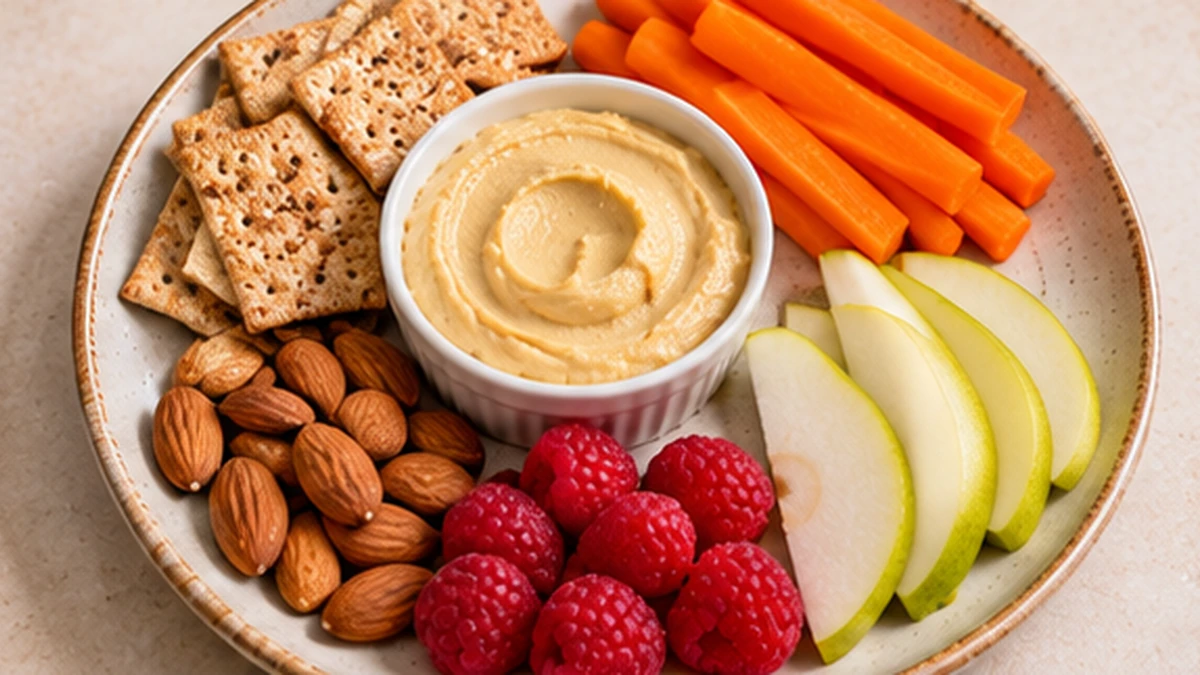
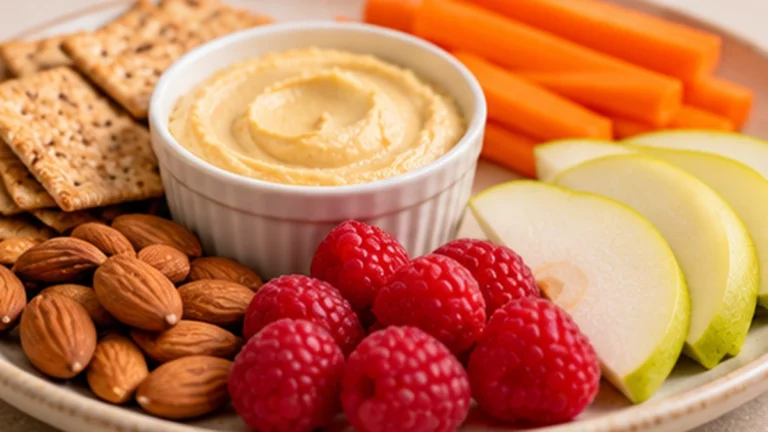
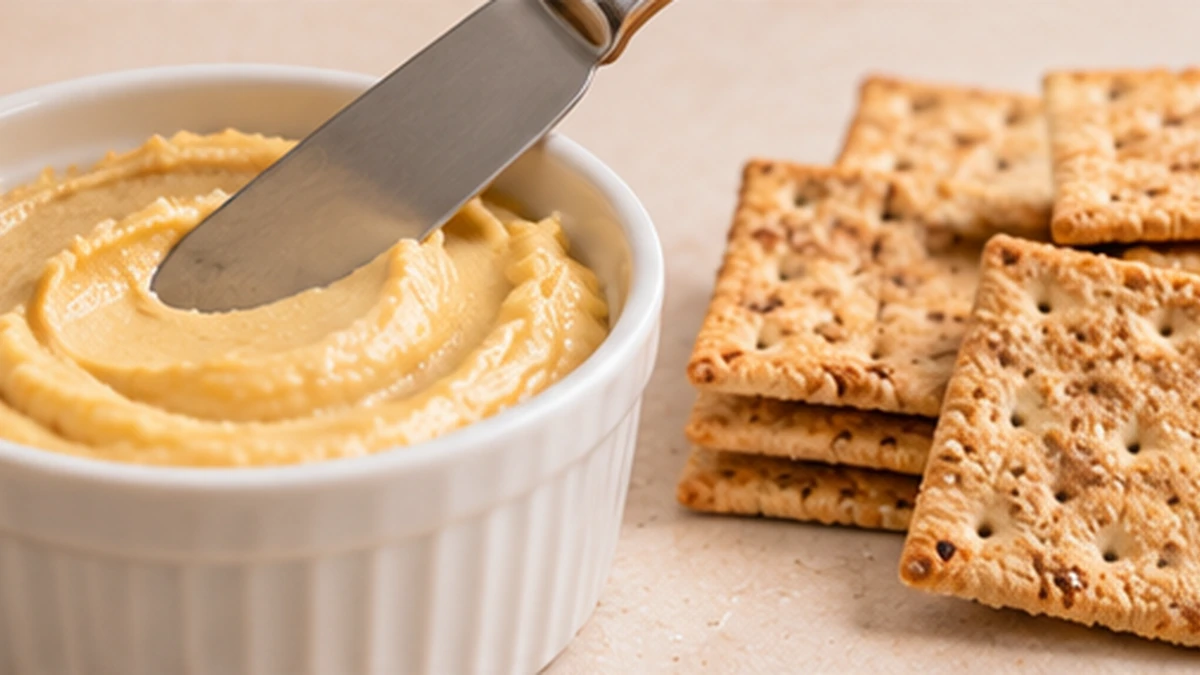
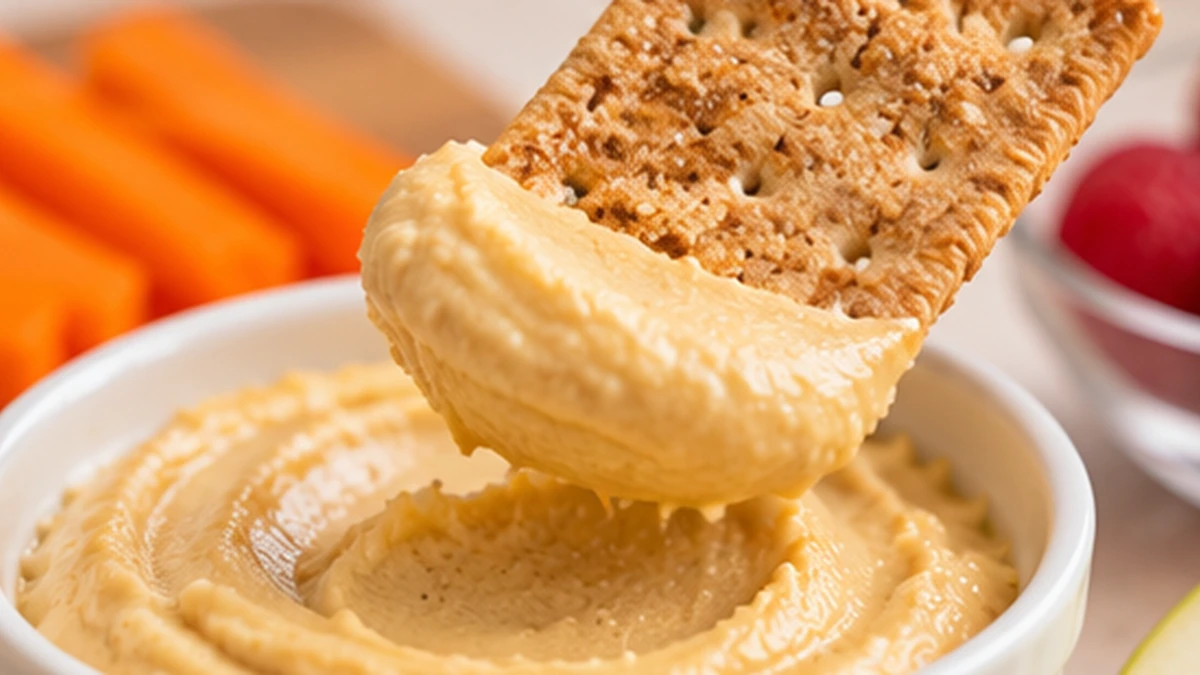
This poopmaxxing snack plate recipe puts six everyday foods on one colorful platter: creamy hummus, crisp carrot sticks, juicy pear slices, fresh raspberries, whole-wheat crackers and unsalted almonds. There is no cooking, no supplement powder and no need to chase an extreme fiber target. The result is a sweet-and-savory grazing plate that takes about 10 minutes to assemble. If you enjoyed our fibermaxxing breakfast ideas, this is a separate afternoon snack built around a savory dip rather than oats or breakfast cereal.
The measured batch makes two substantial snack portions. Each contains approximately 315 calories, 8 grams of protein and 13 grams of dietary fiber, depending on the hummus and crackers you choose. Divide the batch before serving so the nutrition information is meaningful. If you are not accustomed to fiber-rich foods, start with a smaller portion and build up at a comfortable pace.
Table of Contents
Poopmaxxing Snack Plate Recipe at a Glance
Prep time: 10 minutes; cook time: 0 minutes.
Yield: 2 snack portions, each about 259 g.
Six ingredients: hummus, carrots, pear, raspberries, whole-wheat crackers and almonds.
Equipment: cutting board, knife, small dip bowls and two plates.
Plant-based when the packaged hummus and crackers are vegan; contains wheat, almonds and typically sesame.
Estimated fiber: 13 g per serving, not a recommended target for every snack.
What Is a Poopmaxxing Snack Plate?
Poopmaxxing is a playful social-media term for eating more fiber-rich foods with bowel regularity in mind. Food & Wine’s November 2026 coverage described creators sharing fiber-forward dishes and snack platters. That establishes the existence of the trend, not a single official ingredient list, a verified search volume or a medical benefit for this particular combination. This poopmaxxing snack plate recipe is an original everyday interpretation of the idea, not a recreation of one creator’s exact platter.
The appeal of a snack plate is that each food keeps its own texture. Hummus stays creamy, carrots and crackers stay crisp, and fresh fruit adds sweetness without a separate dessert. It has a different purpose from our pea-and-white-bean pesto pasta, which is a cooked dinner. You can prepare this plate without heating the kitchen or washing a blender.
Ingredients and Exact Measurements
Plain hummus — 1/4 cup (60 g). Use a ready-to-eat chickpea hummus, preferably a smooth, mild variety with tahini. Check the label for dairy or other ingredients if you follow a vegan diet. A thick hummus is easier to scoop with crackers than a runny dip. Measure it rather than estimating from the size of the container.
Carrots — about 2 small or 1 large carrot (100 g after trimming). Cut them into sticks about 3 inches long and 1/4 inch thick. The exact number of sticks is less important than their total weight. Very thick carrots are awkward to dip; very thin ones may bend or break. Baby carrots work if they are washed and dried.
Pear — 1 medium (178 g edible portion). Choose a ripe but firm pear that yields slightly near the stem. Keep the skin on, remove the core and slice just before serving. A very soft pear releases juice onto the crackers and makes the plate harder to pack.
Fresh raspberries — 1 cup (123 g). These provide bright tartness and a substantial share of the fiber. Rinse gently under cool running water and drain thoroughly. Frozen raspberries are useful in blended or cooked recipes but become wet and fragile when thawed, so fresh berries are preferable for this poopmaxxing snack plate recipe.
Whole-wheat crackers — 1 ounce (28 g). Look for whole wheat as a leading ingredient and compare fiber and sodium on the package. The number of crackers varies by brand, so weigh the full amount. Choose plain or lightly salted crackers without milk, butter or honey if you want the plate to remain vegan.
Unsalted almonds — 1 ounce (28 g). Raw or dry-roasted almonds provide a firm crunch. Avoid heavily seasoned almonds if you want the hummus to supply the savory flavor. The reference estimate uses raw unsalted almonds. These are whole nuts, not a suitable shape for young children who may choke on them.
Why These Six Ingredients Work Together
A good poopmaxxing snack plate recipe needs more than a pile of ingredients selected for a number on a nutrition label. Each component here has a practical role. Hummus anchors the plate, giving dry crackers and raw vegetables something soft to scoop. The carrots provide a clean crunch and contrast with the rich dip. Pear and raspberries add two kinds of sweetness: mild and juicy versus bright and tangy. Almonds make the texture more substantial, while whole-wheat crackers bridge the sweet and savory sides.
Keeping everything separate also makes it easy to adjust the plate. You can eat some fruit first or dip the carrot sticks into hummus without coating every ingredient. If you want to change the serving size, divide each component equally instead of cutting only the crackers or nuts. That is how you preserve the approximate balance of the original recipe.
Printable Poopmaxxing Snack Plate Recipe
The card makes two portions, not two platters of the full ingredient list. Use half the measured quantity of each ingredient per serving. No extra oil, garnish, sweetener or beverage is included in the nutrition estimate.
A no-cook sweet-and-savory snack platter with hummus, carrots, pear, raspberries, whole-wheat crackers and almonds. Makes two measured portions.
Total Time:10 minutes
Yield:2 servings
Ingredients
Scale
1/4 cup (60 g) plain commercial hummus
100 g carrots (about 2 small), trimmed
1 medium pear (178 g edible portion), skin on
1 cup (123 g) fresh raspberries
1 ounce (28 g) whole-wheat crackers
1 ounce (28 g) raw unsalted almonds
Instructions
Wash hands and equipment. Rinse the carrots, pear and raspberries under running water; drain and dry gently.
Cut carrots into slender sticks. Core the pear and cut into wedges, leaving the skin on.
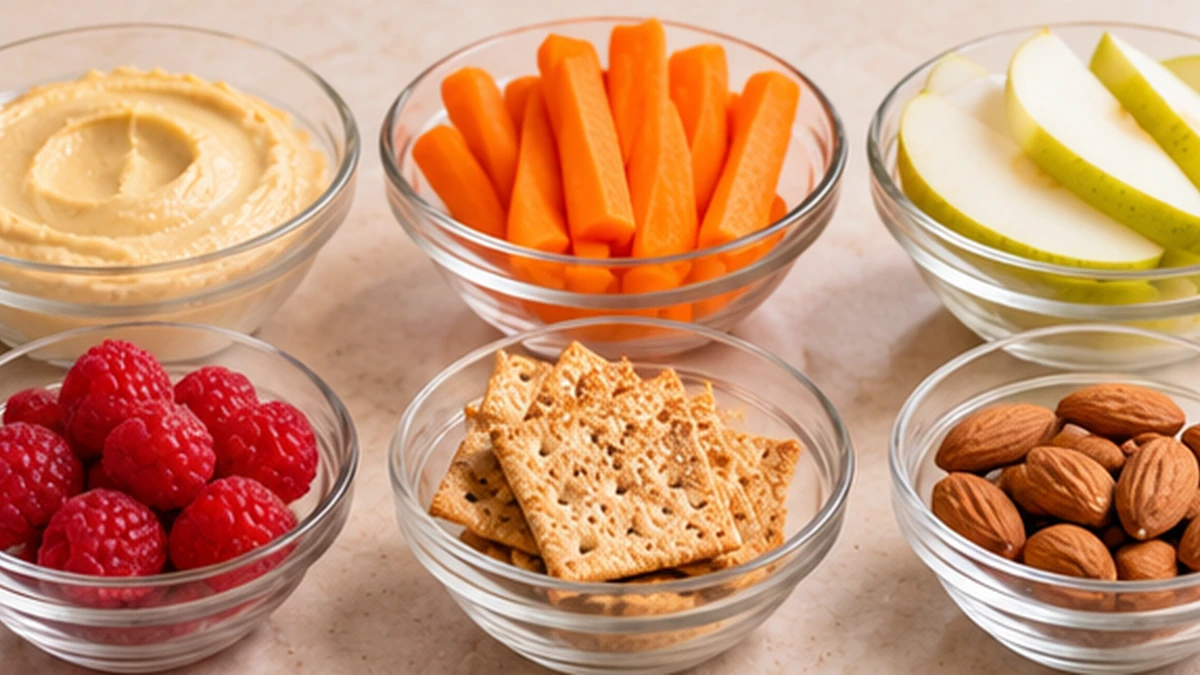
Divide hummus between two small bowls, 2 tablespoons (30 g) each. Divide crackers and almonds into two 14 g portions each.
Arrange half the carrots, pear and raspberries on each plate with one hummus bowl, half the crackers and half the almonds. Keep crackers separate from wet ingredients. Serve immediately.
Notes
Makes two substantial snack portions, each about 259 g. Start with a smaller portion if you are not used to fiber-rich foods.
Nutrition is an estimate using standard USDA reference foods, including commercial hummus and whole-wheat crackers. Brand labels and exact weights change the values.
Choose vegan hummus and crackers without animal-derived ingredients. Contains wheat, almonds and typically sesame; verify labels.
Refrigerate perishable components at 40°F (4°C) or below; do not leave out over two hours (one hour above 90°F). Keep crackers dry and separate.
No extra garnishes or beverages are included in nutrition. This recipe is not a treatment for constipation.
Author:Adam Moretti
Prep Time:10 minutes
Cook Time:0 minutes
Category:Snack
Method:No-Cook
Cuisine:American
Diet:Vegan
How to Make a Poopmaxxing Snack Plate Recipe Step by Step
1. Wash and dry the produce
Wash your hands, knife and board. Rinse the pear and carrots under running water, scrubbing the carrot surfaces if necessary. Rinse the raspberries gently without crushing them. Drain and pat the fruit dry with a clean towel. Follow FDA produce safety guidance; soap and detergent are not appropriate for washing produce. Drying matters for texture too: droplets collect beneath crackers and make them soften before you get a chance to eat them.
2. Cut the carrots and pear
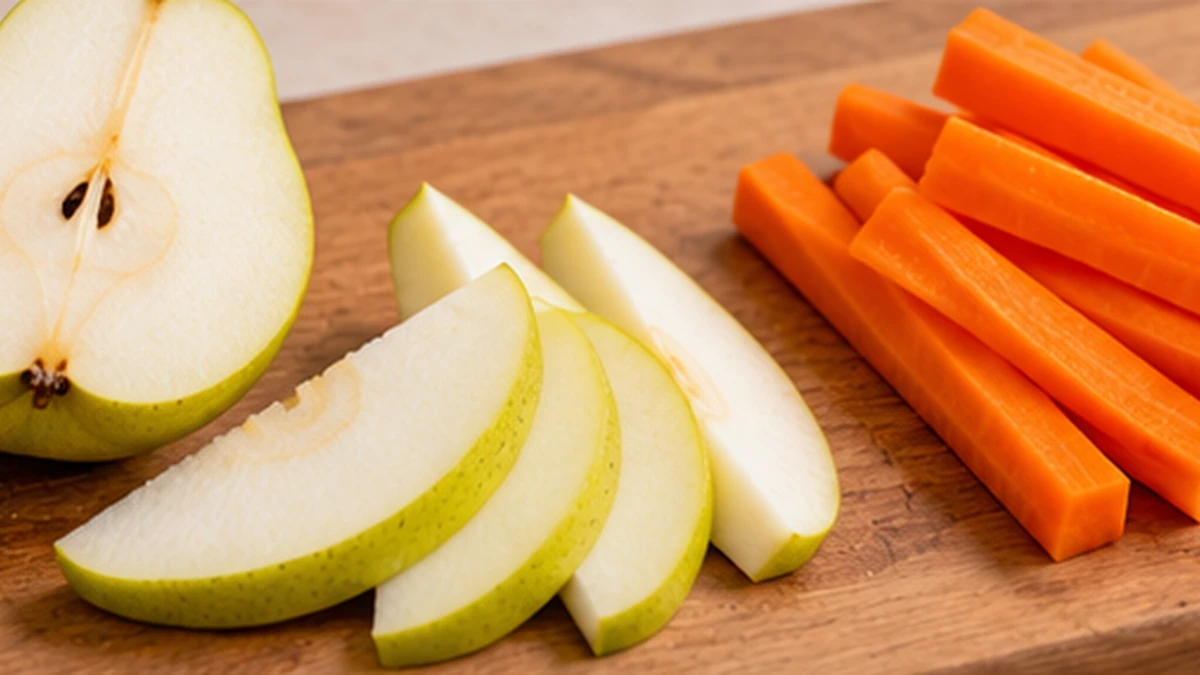
Trim the carrots and cut them into slender sticks. Cut the pear in half lengthwise, remove the core, then slice each half into wedges about 1/4 inch thick. Leave the skin on. Divide both ingredients into two roughly equal groups. If the pear is especially juicy, let the slices sit on a clean towel for a moment before plating. Do not slice the pear hours in advance if you want the pale cut surfaces to look their best.
3. Portion the hummus and dry ingredients
Spoon 2 tablespoons (30 g) hummus into each of two small bowls. Smooth the surface with the back of a spoon or a spreader. Divide the crackers and almonds into two 14 g portions each. This keeps the portions consistent even if the crackers are larger or smaller than those pictured. Use a separate dry bowl for each snack if you are packing them ahead.
4. Assemble and serve
Set the hummus bowl near the center of each plate. Fan the pear slices along one side, then add the carrots, raspberries, crackers and almonds in separate groups. Keep the crackers away from the cut fruit and the hummus until you are ready to eat. Serve immediately, with drinking water alongside if desired. A plate with clearly separated ingredients is easier to share and easier to portion than a mixed bowl.
How Much Fiber Is in This Snack Plate?
The poopmaxxing snack plate recipe uses food-based fiber, not a concentrated fiber supplement. The estimate below uses representative USDA FoodData Central values for raw produce, almonds, commercial hummus and whole-wheat crackers. It assumes that all measured ingredients are eaten and that the batch is split evenly. Check your packaged hummus and cracker labels if you need a more precise estimate.
Hummus, 30 g: about 1.7 g fiber.
Carrots, 50 g: about 1.4 g fiber.
Pear, 89 g: about 2.8 g fiber.
Raspberries, 61.5 g: about 4.0 g fiber.
Whole-wheat crackers, 14 g: about 1.5 g fiber.
Almonds, 14 g: about 1.8 g fiber.
The sum is approximately 13 g per serving. Representative database values give about 315 calories, 43 g carbohydrate, 15 g fat and 8 g protein. These are rounded ingredient-based estimates rather than laboratory results. Actual fiber, fat and sodium can differ meaningfully between cracker and hummus brands. In particular, a cracker labeled whole grain is not necessarily as fiber-rich as the reference whole-wheat cracker used here.
Is More Fiber Always Better?
No. NIDDK’s dietary guidance explains that fluids and a gradual increase in dietary fiber can be useful for people managing constipation. Increasing fiber abruptly can cause gas, discomfort or bloating. A large serving is not necessarily better than a smaller, comfortable serving. This poopmaxxing snack plate recipe is a food idea, not a constipation remedy, a detox or a promise of a bowel movement within a certain time.
If you are new to high-fiber snacks, divide one portion in half, save the other half for later and drink fluids normally throughout the day. People following a prescribed low-fiber diet, those with bowel narrowing or those with persistent digestive symptoms should seek individualized medical advice rather than using an online trend as a treatment plan. Seek medical attention for constipation with blood in the stool, persistent abdominal pain, vomiting or inability to pass gas.
Substitutions That Keep the Plate Practical
Change the fruit: a firm apple with skin can replace the pear, or fresh blackberries can replace the raspberries. The fruit should be sturdy enough to pick up without dripping. These swaps change the fiber and sugar totals, so the numbers in the original card no longer apply.
Change the crunch: use whole-grain crispbread instead of whole-wheat crackers if it has a suitable texture and ingredient list. For a wheat-free version, choose verified gluten-free crackers and check the hummus label for cross-contact. The base poopmaxxing snack plate recipe is not gluten-free because it uses wheat crackers.
Change the nuts: a measured portion of unsalted pumpkin seeds can replace almonds when appropriate for your dietary needs. Do not treat a substitution as an automatic allergy-safety guarantee; check labels and kitchen cross-contact. The standard hummus usually contains sesame, even if it does not contain nuts.
Change the dip: plain white-bean dip is an alternative if you prefer a milder flavor. Its protein, fiber, fat and sodium will depend on the recipe or label. Avoid adding extra oil to the reference estimate without recalculating it. If your hummus is unusually thick, serve it with a small spreader rather than thinning the entire bowl until it runs.
Serving Ideas for Different Snack Occasions
For a desk snack, pack the hummus in a small sealed cup, keep the carrots and fruit in separate sections and carry the crackers and almonds dry. For a shared platter, double the ingredients and provide four small dip cups so people can serve themselves. For another make-ahead snack with a different texture, our high-fiber breakfast cookies offer a baked alternative.
The poopmaxxing snack plate recipe tastes best freshly assembled. Prepare the carrots and measure the crackers and almonds the day before if that makes the morning easier. Keep the carrots and hummus refrigerated in closed containers. Slice the pear and rinse the berries shortly before serving, and keep the dry foods separate from any condensation. Refrigerate cut fruit and hummus at 40°F (4°C) or colder, following FDA refrigerator and food storage guidance.
For quality, eat an assembled refrigerated plate within a day; follow the hummus package’s opening and use-by instructions, whichever is more restrictive. Do not leave hummus and cut fruit at room temperature for longer than two hours, or one hour above 90°F (32°C). For travel, use an insulated bag with ice packs. If a shared platter has been out beyond those limits, discard the perishable items instead of returning them to the fridge. Freezing the assembled platter is not recommended because thawed produce becomes watery and crackers lose their crunch.
Troubleshooting: Keep Everything Crisp and Fresh
Crackers turn soft: the likely cause is moisture from the fruit or hummus. Put them in a dry compartment until serving. Pear slices turn brown: slice closer to serving time and keep them chilled; browning alone is an appearance change, but discard fruit that has spoiled. Raspberries collapse: rinse gently, dry them and avoid piling other ingredients on top.
The plate feels too large: split one serving into two smaller snacks. The dip tastes too salty: select a lower-sodium hummus next time and compare crackers too. The snack is too dry: use the carrot sticks and pear as alternating bites and serve water alongside rather than automatically increasing the dip. These small choices make the poopmaxxing snack plate recipe more enjoyable without turning it into a rigid formula.
Poopmaxxing Snack Plate Recipe FAQs
Is this the original viral poopmaxxing snack plate recipe?
There is no single standardized platter established by the trend coverage. This version is inspired by the concept of a fiber-rich snack plate and uses a measured six-ingredient combination. It is not attributed to a specific creator as their original recipe.
Can I make this snack plate vegan?
Yes, choose hummus and whole-wheat crackers made without dairy, honey or other animal-derived ingredients. The fruit, carrots and plain almonds are plant foods. Check labels rather than relying on the package appearance.
Can I use yogurt instead of hummus?
Yes, but plain yogurt usually contributes little or no fiber. It also changes the protein content and the dietary classification if you use dairy. Our cottage-cheese snack plate is a different protein-focused preparation. For a blended option with raspberries, see our high-protein, high-fiber smoothie; neither needs to be added to this snack.
Can I eat the whole platter at once?
The full batch is two servings, with around 26 g of fiber in total. Eating it as one portion may be uncomfortable if you are not accustomed to that amount. Divide it first and adjust to your individual appetite and tolerance.
Can I make the plate without nuts?
You can substitute an appropriate seed or leave out the almonds, which changes the nutrition estimate. Check the hummus and cracker labels, and keep allergy-related cross-contact in mind. Standard hummus often contains sesame.
Does the poopmaxxing snack plate recipe cure constipation?
No. It is an ordinary snack with fiber-containing ingredients. Constipation has many possible causes, and a snack cannot diagnose or treat them. Regular meals, adequate fluids and gradual dietary changes may be useful, but persistent or concerning symptoms warrant professional care.
What other snacks can I prepare in advance?
For a crunchy snack with a different flavor, try our hot honey popcorn. For a refrigerated breakfast rather than a snack platter, our high-protein overnight oats use a separate, measured recipe. Choose based on taste and what fits your day, not on a contest to consume the most fiber.
Final Tips for a Better Snack Plate
The best part of this poopmaxxing snack plate recipe is its simplicity: a creamy dip, fresh fruit, crisp vegetables and a measured portion of crunchy foods. Buy firm pears, use dry crackers and keep the hummus cold until serving. Start with a portion that suits your appetite and tolerance. The recipe is designed to be enjoyed for flavor and texture, with an honest fiber estimate as a useful extra.
Reviewed recipe options
Make this recipe fit me
Choose one of seven popular diet options. NutriMatch will confirm whether the recipe already fits, show a reviewed adaptation when available, or recommend recipes that match your choice.
Please choose a diet first.
Already a reviewed match
This recipe already fits Dairy-Free.
No changes are needed based on its reviewed NutriMatch classification. Check the complete ingredients, product labels, and serving details for your own needs.
Recipe details, product formulas, and cross-contact information can change. Confirm current labels and use professional guidance when medically necessary.
Not available for this recipe
This recipe cannot currently be made Gluten-Free with a reviewed adaptation.
NutriMatch will not guess at substitutions. Try one of these recipes that is already reviewed for your choice.
Recipe details, product formulas, and cross-contact information can change. Confirm current labels and use professional guidance when medically necessary.
Not available for this recipe
This recipe cannot currently be made High Protein with a reviewed adaptation.
NutriMatch will not guess at substitutions. Try one of these recipes that is already reviewed for your choice.
Recipe details, product formulas, and cross-contact information can change. Confirm current labels and use professional guidance when medically necessary.
Not available for this recipe
This recipe cannot currently be made Keto with a reviewed adaptation.
NutriMatch will not guess at substitutions. Try one of these recipes that is already reviewed for your choice.
Recipe details, product formulas, and cross-contact information can change. Confirm current labels and use professional guidance when medically necessary.
Not available for this recipe
This recipe cannot currently be made Low Carb with a reviewed adaptation.
NutriMatch will not guess at substitutions. Try one of these recipes that is already reviewed for your choice.
Recipe details, product formulas, and cross-contact information can change. Confirm current labels and use professional guidance when medically necessary.
Already a reviewed match
This recipe already fits Vegan.
No changes are needed based on its reviewed NutriMatch classification. Check the complete ingredients, product labels, and serving details for your own needs.
Recipe details, product formulas, and cross-contact information can change. Confirm current labels and use professional guidance when medically necessary.
Already a reviewed match
This recipe already fits Vegetarian.
No changes are needed based on its reviewed NutriMatch classification. Check the complete ingredients, product labels, and serving details for your own needs.
Recipe details, product formulas, and cross-contact information can change. Confirm current labels and use professional guidance when medically necessary.