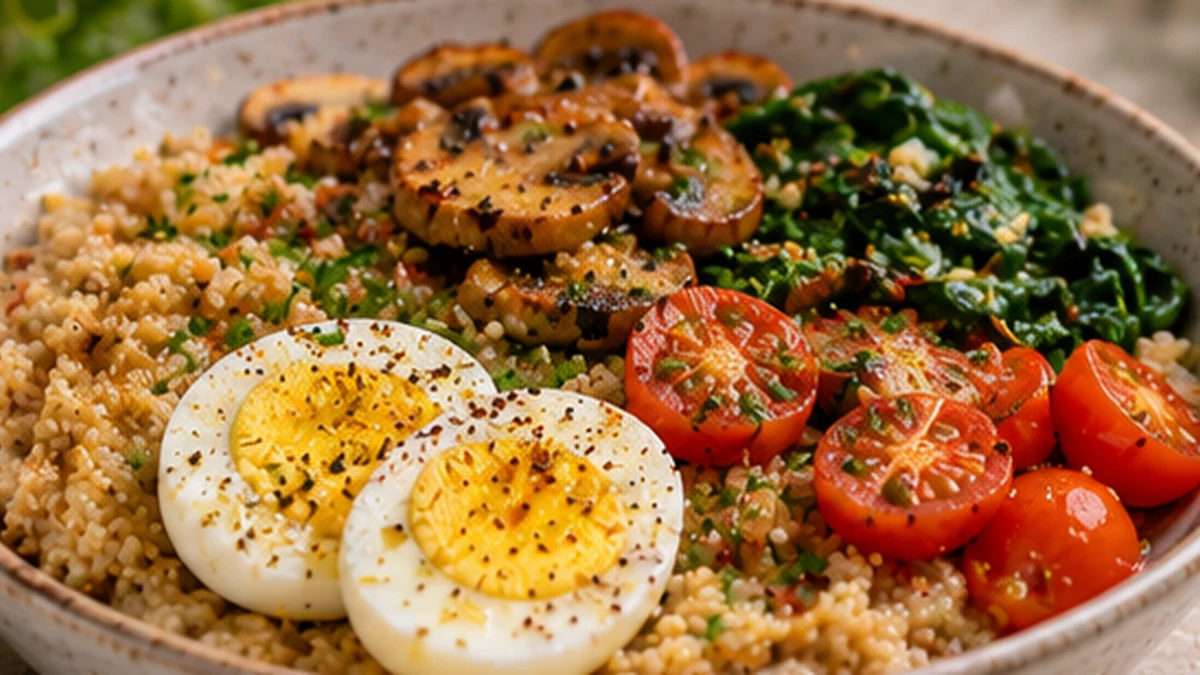
This savory amaranth breakfast bowl is a warm, spoonable breakfast with creamy whole amaranth, browned mushrooms, wilted spinach, juicy cherry tomatoes and a firm hard-boiled egg. Garlic and lemon give the vegetables a bright finish without a heavy sauce. If you usually start your day with sweet oatmeal, this is a different way to use a small whole grain in the morning. Explore our breakfast recipes collection for more make-ahead and savory ideas.
The recipe makes two bowls in about 45 minutes, with the eggs and vegetables cooking while the grain simmers. Each serving has approximately 350 calories and 17 grams of protein, including the measured olive oil and one egg. The grain is naturally gluten-free, and the recipe contains no dairy ingredients. If you need to avoid gluten for medical reasons, choose labeled gluten-free amaranth and check the seasonings and cooking equipment for cross-contact.
A savory amaranth breakfast bowl is not supposed to be a pile of separate fluffy grains. Its tiny seeds release starch as they simmer, making a base that sits somewhere between oatmeal and soft polenta, with a slight pop from the individual seeds. That consistency is useful here: it catches the juices from the mushrooms and tomatoes instead of letting them run to the bottom of the dish.
Table of Contents
Why this savory amaranth breakfast bowl works
For this savory amaranth breakfast bowl, the vegetables are cooked separately so they brown rather than boil in the grain. Mushrooms release moisture before they develop color, and spinach only needs a minute or two to wilt. A short rest lets the cooked amaranth finish absorbing liquid. These three techniques give you contrast between the creamy base, the vegetables and the egg without requiring butter, cheese or a prepared sauce.
If you enjoy a savory breakfast with greens and eggs, our fiber-focused breakfast ideas include a lentil skillet that uses a different base. This bowl is specifically for learning to cook whole amaranth and pairing it with a simple vegetable topping. It also works as a light lunch, although the portions and timing here are designed for breakfast.
What is amaranth, and which kind should you buy?
Amaranth is a tiny seed commonly cooked like a cereal grain. It is classified as a pseudocereal, like quinoa, because it does not belong to the grass family. The Whole Grains Council’s amaranth guide explains its use as a whole grain and gives a basic cooking ratio. Look for pale tan, uncooked whole amaranth in the grain or natural-food aisle.
Whole amaranth grain: tiny raw seeds that simmer into a creamy porridge. This is what the recipe uses.
Amaranth flour: ground seeds used in baking; it would make a paste rather than a bowl with seed texture.
Puffed amaranth: light, dry popped seeds for sprinkling over other foods; it cannot replace the raw grain at the same ratio.
Amaranth greens: edible leaves from the plant, not the grain used here.
When shopping online, check that the package is intended for cooking and not for planting. A clear bag may show seeds much smaller than quinoa. Choose a package with a fresh date and no signs of moisture. Store unused dry amaranth sealed in a cool, dry pantry; follow the package instructions for its best quality date.
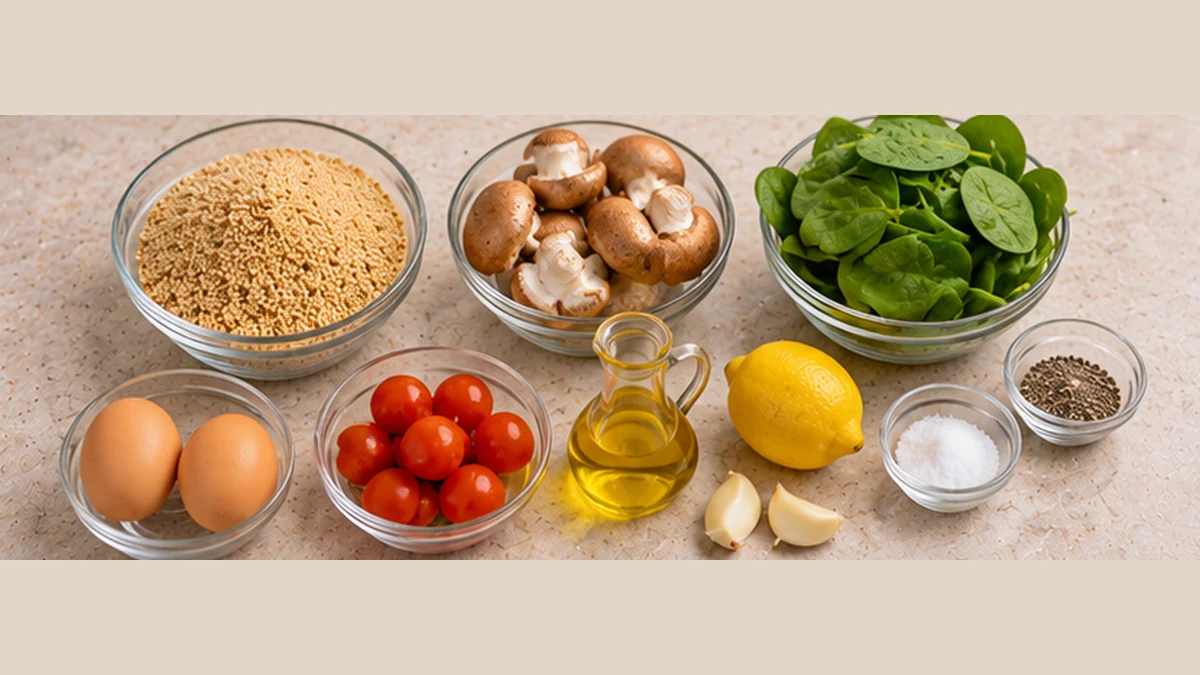
Savory amaranth breakfast bowl ingredients
1/2 cup (96 g) dry whole amaranth grain, labeled gluten-free if needed
1 1/4 cups (300 ml) water, plus 2–4 tablespoons hot water if needed
2 large eggs
1 tablespoon (13.5 g) extra-virgin olive oil
5 ounces (150 g) cremini mushrooms, sliced
2 packed cups (60 g) baby spinach
2/3 cup (100 g) cherry tomatoes, halved
2 garlic cloves (6 g), minced
1 tablespoon (15 ml) fresh lemon juice
1/4 teaspoon fine salt, divided
1/4 teaspoon ground black pepper
1 tablespoon (4 g) chopped fresh parsley, for serving
The dry grain weight is the most useful measurement for consistent portions. A half cup is approximately 96 grams, although the volume weight changes slightly with packing. Measure before rinsing. For the vegetables, the listed weights refer to trimmed raw ingredients; the spinach looks bulky at first but will shrink considerably.
Liquid ratio for a savory amaranth breakfast bowl
The Whole Grains Council cooking chart gives a starting point of two parts liquid to one part grain by volume. This savory amaranth breakfast bowl uses 2 1/2 parts water to one part grain for a slightly looser, porridge-like base. The extra liquid is a recipe design choice rather than a fixed rule for every brand. A narrow saucepan with a partly closed lid will lose less water than a broad uncovered pan.
Do not add all the extra hot water automatically. Start with the measured 1 1/4 cups; check the pan near the end of cooking and add a tablespoon at a time only if needed. Water changes the finished weight and texture, but not the calories of the dry grain portion. Unsalted vegetable broth may be used in place of water if the label meets your dietary needs; account for its sodium separately.
Equipment for an easier morning
Use a fine mesh sieve, a small heavy-bottomed saucepan with a lid, a second saucepan for the eggs, a wide skillet and two bowls. Amaranth seeds can slip through the holes in an ordinary pasta colander. If the mesh is not fine enough, line it with a clean food-safe cloth or use an extra-fine strainer. A flexible spatula is especially useful for scraping the thickening grain away from the bottom of the pot.
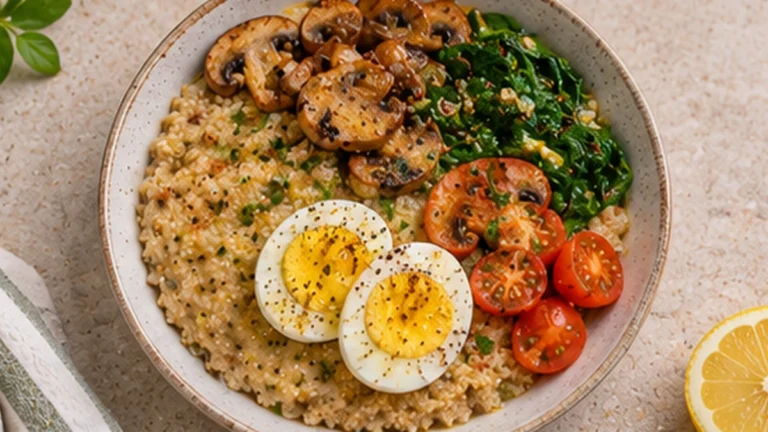
Creamy whole amaranth topped with garlic mushrooms, spinach, cherry tomatoes and hard-boiled eggs. A warm two-serving breakfast with lemon and parsley.
Total Time:45 minutes
Yield:2 bowls
Ingredients
Scale
1/2 cup (96 g) dry whole amaranth grain, labeled gluten-free if needed
1 1/4 cups (300 ml) water, plus 2–4 tablespoons hot water if needed
2 large eggs
1 tablespoon (13.5 g) extra-virgin olive oil
5 ounces (150 g) cremini mushrooms, sliced
2 packed cups (60 g) baby spinach
2/3 cup (100 g) cherry tomatoes, halved
2 garlic cloves (6 g), minced
1 tablespoon (15 ml) fresh lemon juice
1/4 teaspoon fine salt, divided
1/4 teaspoon ground black pepper
1 tablespoon (4 g) chopped fresh parsley, for serving
Instructions
Rinse the amaranth in a very fine mesh sieve. Put it in a small saucepan with 1 1/4 cups water and half the salt. Bring to a boil, reduce to a gentle simmer, partially cover and cook 20–25 minutes, stirring occasionally and more often near the end. If the pan dries before the seeds soften, add hot water 1 tablespoon at a time. Rest covered off the heat for 5 minutes.
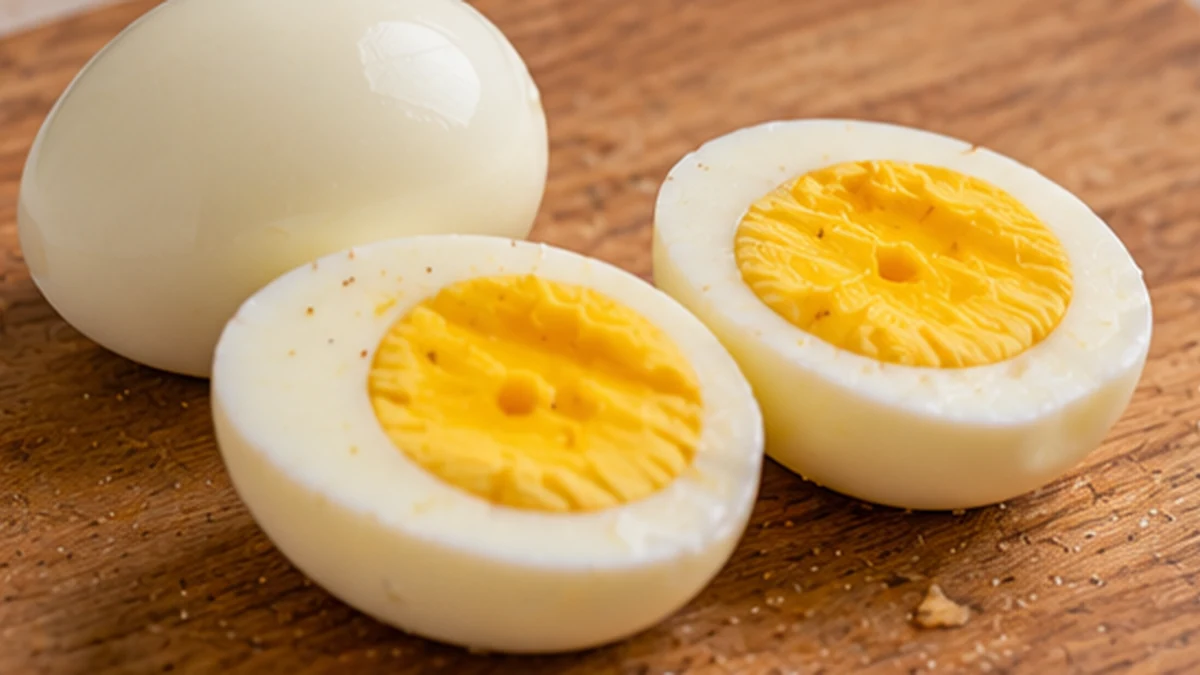
Meanwhile, place the eggs in a separate small saucepan, cover with cold water by about 1 inch and bring to a boil. Cover, turn off the heat and let stand 12 minutes for large eggs. Cool in ice water for 5 minutes, peel and halve. Check that the whites and yolks are firm; if not, continue cooking until fully set.
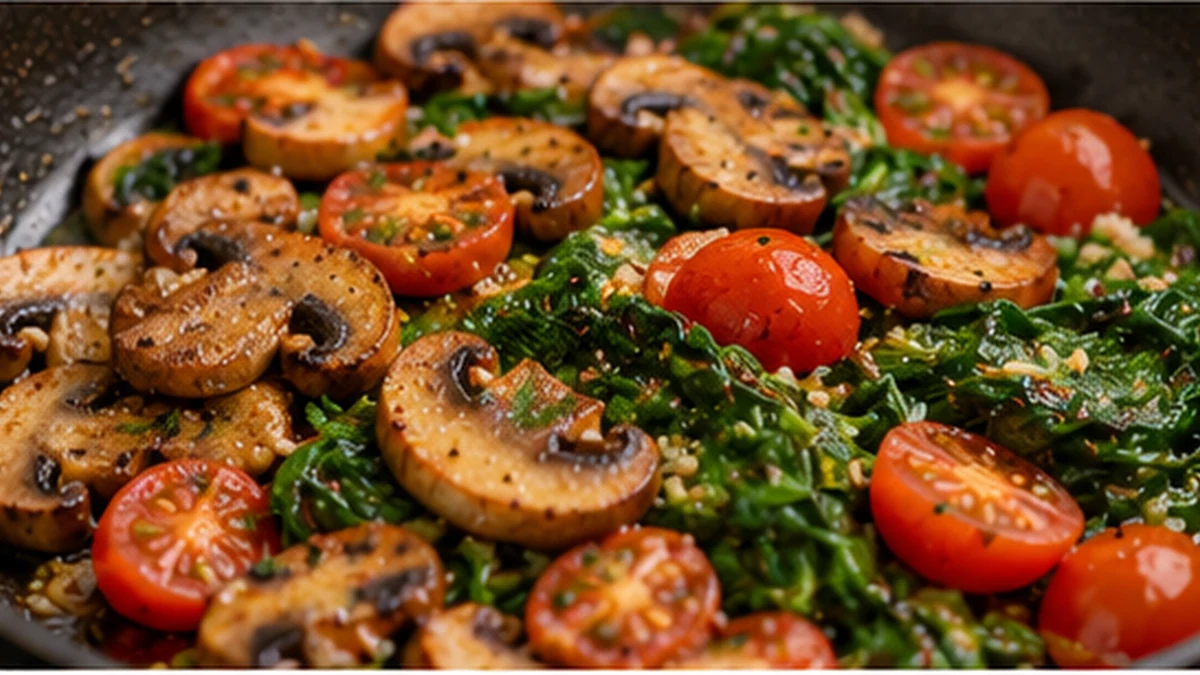
Heat the olive oil in a wide skillet over medium-high heat. Add mushrooms in a single layer and cook 5–7 minutes, stirring occasionally, until browned and excess liquid evaporates.
Add the tomatoes and garlic; cook 1–2 minutes. Fold in the spinach, remaining salt and pepper; cook another 1–2 minutes until wilted. Remove from the heat and stir in the lemon juice.
Stir the rested amaranth and divide equally between two bowls. Top each with half the vegetables and one halved egg. Sprinkle with parsley and serve warm.
Notes
Use whole amaranth grain, not flour or puffed amaranth. Choose labeled gluten-free grain and avoid cross-contact if needed.
Cook the eggs and vegetables while the grain simmers. Allow about 45 minutes elapsed, including the 5-minute rest.
Nutrition is estimated per half of the complete recipe, including all measured oil and toppings. Optional variations are not included.
Refrigerate cooked grain and vegetables promptly in shallow containers and use within 3 days. Reheat to 165°F (74°C); add the chilled egg after reheating.
Author:Adam Moretti
Prep Time:10 minutes
Cook Time:35 minutes
Category:Breakfast
Method:Stovetop / Boil
Cuisine:American
Diet:Vegetarian
How to make a savory amaranth breakfast bowl
1. Simmer the whole amaranth
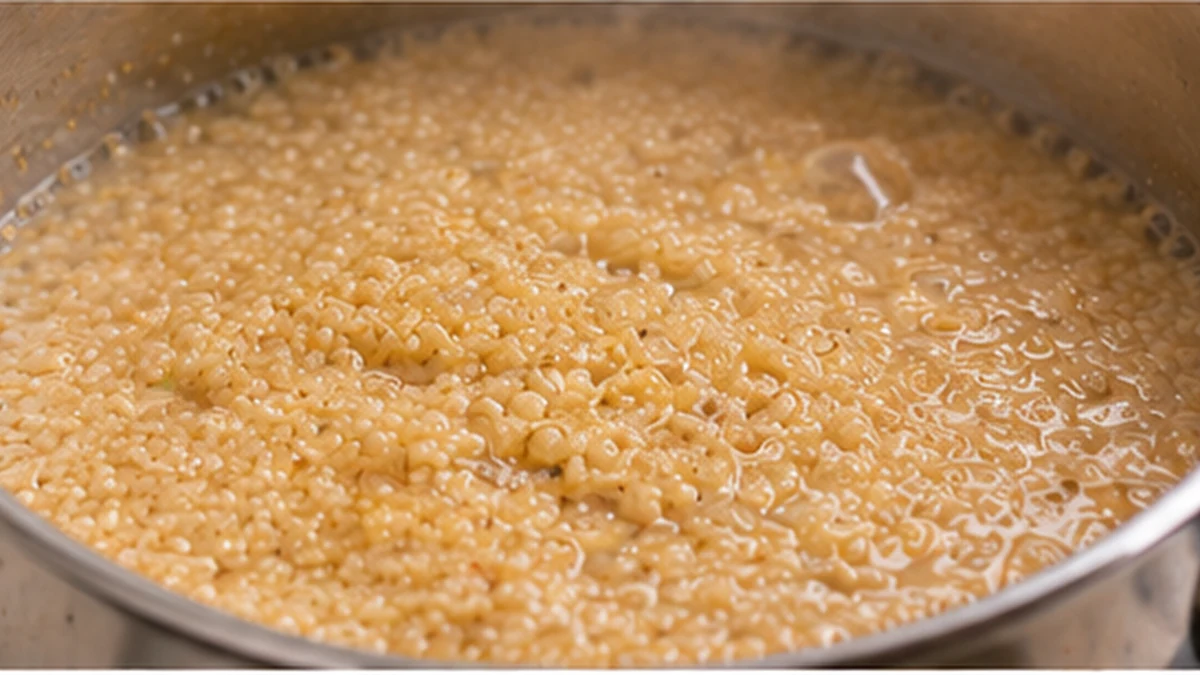
Rinse the measured seeds under cool running water, then transfer to the saucepan with 1 1/4 cups water and half of the measured salt. Bring the water to a boil and immediately turn the heat down. You want a quiet simmer, not a rolling boil that sends the seeds up the sides of the pan. Partly cover and cook for 20–25 minutes, stirring occasionally. Near the end, stir more frequently, since the thickened mixture is more likely to stick.
The seeds should feel tender with a gentle pop, not hard or gritty. Draw a spoon across the bottom: if it leaves a track that fills slowly, the base is close to ready. If the mixture is dry but the seeds are still hard, add hot water a tablespoon at a time and continue simmering. Remove from the heat and let it rest covered for five minutes. Stir again before serving. A small amount of looseness is desirable because the grain will continue to thicken as it cools.
2. Cook the eggs while the grain simmers
Put two large eggs in a separate pot and cover them by about an inch of cold water. Bring to a boil, cover, switch off the heat and allow 12 minutes in the hot water. Cool in ice water for five minutes before peeling and slicing in half. Both the white and the yolk should be fully set. Egg size and cookware can change the required time; continue cooking if the centers are not firm. The USDA egg safety guidance recommends cooking eggs completely and keeping them refrigerated until use.
For a different egg-based meal that can be portioned in advance, try our fluffy steamed egg cups. In a savory amaranth breakfast bowl, the simple boiled egg works well because it needs no additional oil and can be prepared independently of the vegetables.
3. Brown the mushrooms and wilt the greens
Heat the measured tablespoon of olive oil in a wide skillet over medium-high heat. Spread the sliced cremini mushrooms in a single layer and let them cook for five to seven minutes, turning occasionally. Give them time to release their water and develop a brown surface. If your skillet is small, cook in two batches; it may add a few minutes. Once the mushrooms are browned, stir in the halved tomatoes and garlic for one to two minutes.
Add the spinach, the remaining salt and the black pepper. Toss for another minute or two until the leaves collapse and turn glossy. Take the skillet off the heat and add the lemon juice. Keeping the lemon until the end preserves its fresh flavor and avoids adding unnecessary liquid during mushroom browning.
4. Assemble and serve
Divide the cooked amaranth equally between two bowls. Spoon half the vegetable mixture onto each portion, add one egg cut into halves, and finish with the parsley. Keep the toppings in separate sections if you enjoy alternating bites, or stir everything together at the table. Serve immediately while the base is warm. This savory amaranth breakfast bowl is complete as written; extra oil or sauces are optional and are not included in the nutrition estimate.
Troubleshooting the texture
The seeds still feel gritty
Keep cooking over low heat with a little additional hot water. Check that the grain is actually whole amaranth, not a mix with larger grains that need longer. A little bite from the individual seeds is normal, but they should not feel like dry sand. Do not try to fix an undercooked batch just by blending it; more simmering is the better first step.
The porridge is too thick or gluey
Add hot water in small increments and stir gently until it is spoonable. The base naturally firms as it sits, especially after refrigeration. If you are reheating a portion, loosen it before adding the vegetables. Avoid a high heat setting, which can evaporate the added liquid before the center of the portion warms through.
The vegetables are watery or bland
Brown mushrooms before adding the tomatoes and spinach. Wet mushrooms or a crowded pan create steam and prevent browning. Let any excess moisture evaporate before adding the garlic. Finish with the measured lemon and pepper, taste, and adjust only if needed. A squeeze of fresh lemon can make a savory grain bowl taste brighter without needing extra salt.
Variations for different appetites
Use this savory amaranth breakfast bowl as a starting point, not a rule that every breakfast needs to follow. Changes to the egg, grain, oil or toppings change the nutrition, and some substitutions change the dietary classification.
More protein: add a second cooked egg per serving, for roughly 70 extra calories and 6 grams of protein.
Plant-based: replace the eggs with cooked chickpeas or browned firm tofu. Use the package information to recalculate nutrition; tofu introduces soy.
Different vegetables: substitute chopped kale for spinach and cook until tender, or use sliced zucchini in place of mushrooms and let excess liquid evaporate.
Extra richness: add a quarter avocado per bowl, or a small drizzle of oil. Neither is part of the base recipe.
Spiced version: add a pinch of smoked paprika or ground cumin to the mushrooms near the end of browning.
For another breakfast without dairy, look at gluten-free breakfast cookies if you prefer something portable, or try our high-protein overnight oats when you want a chilled breakfast that uses different ingredients and includes dairy in its standard version.
Savory amaranth breakfast bowl nutrition and portion size
The calorie estimate uses 96 grams dry grain for the whole recipe, two large eggs, the measured vegetables and all of the oil. The USDA FoodData Central database is the reference for generic ingredient composition. Dry amaranth contributes about 356 calories to the batch at approximately 371 calories per 100 grams. Each egg contributes roughly 72 calories and the tablespoon of olive oil adds about 119 calories across both portions. Vegetables, garlic, lemon and parsley provide the remainder.
One savory amaranth breakfast bowl supplies approximately 350 calories, 17 grams of protein, 39 grams of carbohydrate, 15 grams of fat and 5 grams of fiber. The numbers are ingredient-based estimates, not laboratory measurements. Water added during cooking does not supply calories. The total cooked weight may differ depending on how much evaporates, so divide the entire prepared recipe into two equal portions rather than assuming a fixed number of grams per bowl.
Although amaranth and eggs contribute protein, this recipe is not designed as a high-protein formula. If your needs call for a higher-protein breakfast, see our high-protein foods guide or cottage cheese egg bake, which uses a different ingredient balance. A breakfast can be useful without meeting a specific macro target.
Is this bowl gluten-free?
The listed whole foods are naturally gluten-free, but cross-contact may occur when grain is processed or packed near wheat, barley or rye. Choose a gluten-free labeled amaranth and verify any packaged seasonings or broth substitutions. The FDA gluten-free labeling rule explains how the U.S. standard applies to packaged foods. Clean the sieve, pan and other utensils before cooking if gluten exposure is a concern. Our gluten-free recipes guide includes more practical label-checking ideas.
How to meal prep a savory amaranth breakfast bowl
Cook the grain and vegetables the evening before, then divide the components into shallow covered containers. Refrigerate promptly at 40°F (4°C) or colder; do not leave cooked food sitting out for more than two hours, or one hour if the room is above 90°F (32°C). For best texture and a conservative meal-prep window, use the grain and vegetables within three days. Store the cooked eggs separately and add them when serving.
The USDA leftover storage advice gives a general refrigerated leftover window of three to four days. Reheat the amaranth and vegetables until they reach 165°F (74°C), adding a tablespoon or two of water and stirring to distribute the heat. Serve the chilled hard-boiled egg on the hot grain rather than microwaving a whole egg, which can burst. Add parsley just before eating.
For a second make-ahead option that is easier to take on the road, prepare our egg bites meal prep recipe on a separate day. With a savory amaranth breakfast bowl, keeping the vegetables in a different container avoids transferring their moisture into the base while it rests overnight.
Frequently asked questions
Does amaranth need to be soaked overnight?
No. Whole amaranth can be rinsed and simmered directly. This recipe requires no overnight soak. If you choose to soak it, do so under refrigeration and expect the cooking liquid and timing to change. Start with the unsoaked method when making the recipe for the first time.
Can I cook amaranth in milk instead of water?
Yes, but the result will be richer and may stick more easily. For a savory amaranth breakfast bowl, water keeps the grain neutral and lets the garlic and lemon stand out. Unsalted vegetable broth is a more direct flavor substitution. Milk changes both the nutrition and the dairy-free classification.
Can I eat the savory amaranth breakfast bowl cold?
Yes, if the components were cooled and refrigerated safely. Cold amaranth is thicker, so stir in a little cold water before serving. The warm version is more porridge-like, while the cold version is closer to a soft grain salad. Keep the egg refrigerated until you are ready to eat.
Can I double the recipe?
Yes. Double the ingredients to make four bowls, use a larger saucepan and check the water as the grain cooks. Brown the vegetables in batches if necessary rather than crowding the skillet. Cool any portions you are saving in shallow containers, not in one large hot pot.
Can I use quinoa instead?
Quinoa works as a different grain bowl, but it has a larger seed and a looser texture. Follow its own package cooking ratio instead of assuming it will behave exactly like amaranth. For the creamy texture described here, use whole amaranth.
How do I make a savory amaranth breakfast bowl without eggs?
Use cooked chickpeas or firm tofu as a topping instead. Brown the tofu separately if you want crisp edges or toss the chickpeas with the mushrooms. The vegan version needs a new nutrition calculation because the substitution is not gram-for-gram equivalent to an egg.
Final serving tips
When preparing a savory amaranth breakfast bowl, the most useful habit is to start the grain first, then cook the egg and vegetables during the simmer. Taste the grain before you take it off the stove, and keep the lemon for the end. With those small details, a savory amaranth breakfast bowl can become a repeatable warm breakfast instead of a one-time experiment with an unfamiliar grain.
Reviewed recipe options
Make this recipe fit me
Choose one of seven popular diet options. NutriMatch will confirm whether the recipe already fits, show a reviewed adaptation when available, or recommend recipes that match your choice.
Please choose a diet first.
Already a reviewed match
This recipe already fits Dairy-Free.
No changes are needed based on its reviewed NutriMatch classification. Check the complete ingredients, product labels, and serving details for your own needs.
Recipe details, product formulas, and cross-contact information can change. Confirm current labels and use professional guidance when medically necessary.
Already a reviewed match
This recipe already fits Gluten-Free.
No changes are needed based on its reviewed NutriMatch classification. Check the complete ingredients, product labels, and serving details for your own needs.
Recipe details, product formulas, and cross-contact information can change. Confirm current labels and use professional guidance when medically necessary.
Not available for this recipe
This recipe cannot currently be made High Protein with a reviewed adaptation.
NutriMatch will not guess at substitutions. Try one of these recipes that is already reviewed for your choice.
Recipe details, product formulas, and cross-contact information can change. Confirm current labels and use professional guidance when medically necessary.
Not available for this recipe
This recipe cannot currently be made Keto with a reviewed adaptation.
NutriMatch will not guess at substitutions. Try one of these recipes that is already reviewed for your choice.
Recipe details, product formulas, and cross-contact information can change. Confirm current labels and use professional guidance when medically necessary.
Not available for this recipe
This recipe cannot currently be made Low Carb with a reviewed adaptation.
NutriMatch will not guess at substitutions. Try one of these recipes that is already reviewed for your choice.
Recipe details, product formulas, and cross-contact information can change. Confirm current labels and use professional guidance when medically necessary.
Not available for this recipe
This recipe cannot currently be made Vegan with a reviewed adaptation.
NutriMatch will not guess at substitutions. Try one of these recipes that is already reviewed for your choice.
Recipe details, product formulas, and cross-contact information can change. Confirm current labels and use professional guidance when medically necessary.
Already a reviewed match
This recipe already fits Vegetarian.
No changes are needed based on its reviewed NutriMatch classification. Check the complete ingredients, product labels, and serving details for your own needs.
Recipe details, product formulas, and cross-contact information can change. Confirm current labels and use professional guidance when medically necessary.