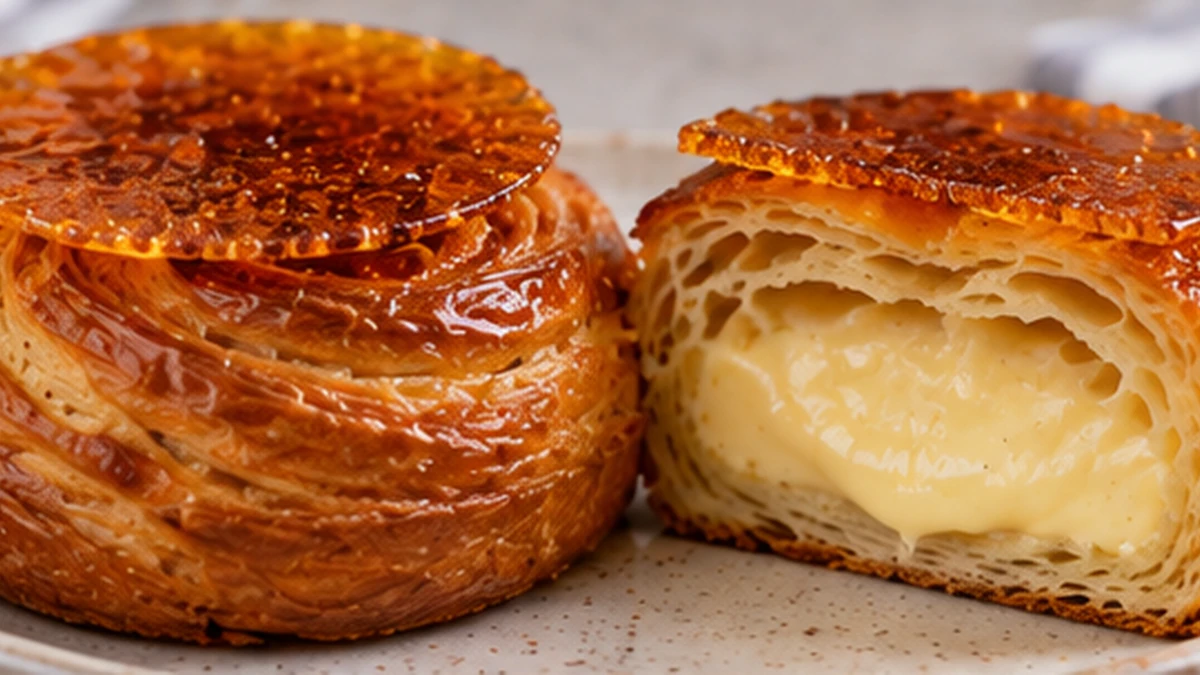
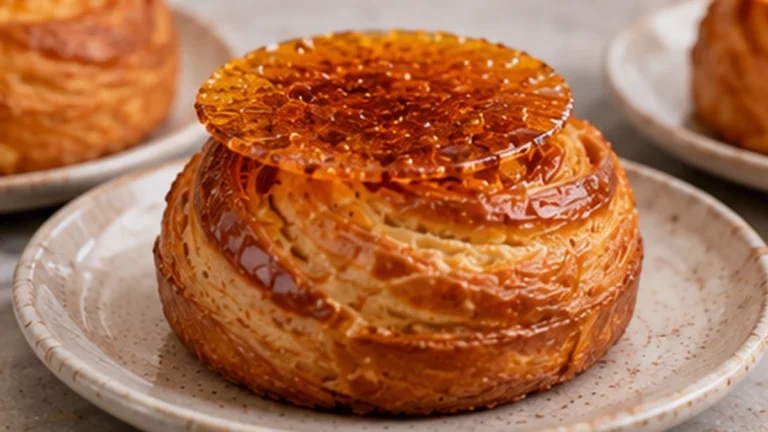
This creme brulee supreme croissant brings a bakery-style dessert into the home kitchen: a flaky butter croissant filled with chilled vanilla pastry cream and finished with a thin, crackly caramel disk. Inspired by the seasonal Paris Baguette pastry, this version starts with fully baked croissants instead of a two-day laminated dough project. If you enjoy the contrast of crisp pastry and a soft center in our homemade orange toaster pastries, this recipe takes that idea in a distinctly custard-filled direction.
The creme brulee supreme croissant comes together in three components, but the order matters. Cook the cream first, chill it until firm enough to pipe, and prepare the sugar topping separately. Fill the croissants only when both the pastry and the custard are cool. The caramel goes on last, so its snap survives until serving. Four pastries are enough for a small brunch or dessert platter, without committing to a large batch of pastry cream.
This is an independently developed home adaptation based on Paris Baguette’s published description, not its proprietary recipe or a verified taste match. The quantities and timing below are a practical starting point for home cooks, rather than the commercial bakery’s measurements.
Table of Contents
What is the creme brulee supreme croissant?
Paris Baguette introduced a seasonal crème brûlée collection in November 2026. Its November 24 holiday menu feature highlights the contrast between vanilla custard and caramelized sugar. The November 2 launch announcement places the collection on the seasonal menu beginning November 4. The published product description identifies a supreme croissant with vanilla pastry cream and a caramelized sugar finish.
Unlike a conventional crème brûlée, which is baked in a ramekin and eaten with a spoon, this creme brulee supreme croissant is handheld. It uses a flour-based laminated shell, a cornstarch-thickened pastry cream and a separately cooled sugar topping. That distinction matters because a loose baked custard would be difficult to pipe and could soak the pastry. A round spiral croissant gives the most similar outline; a classic crescent works when the round style is unavailable.
Creme brulee supreme croissant at a glance
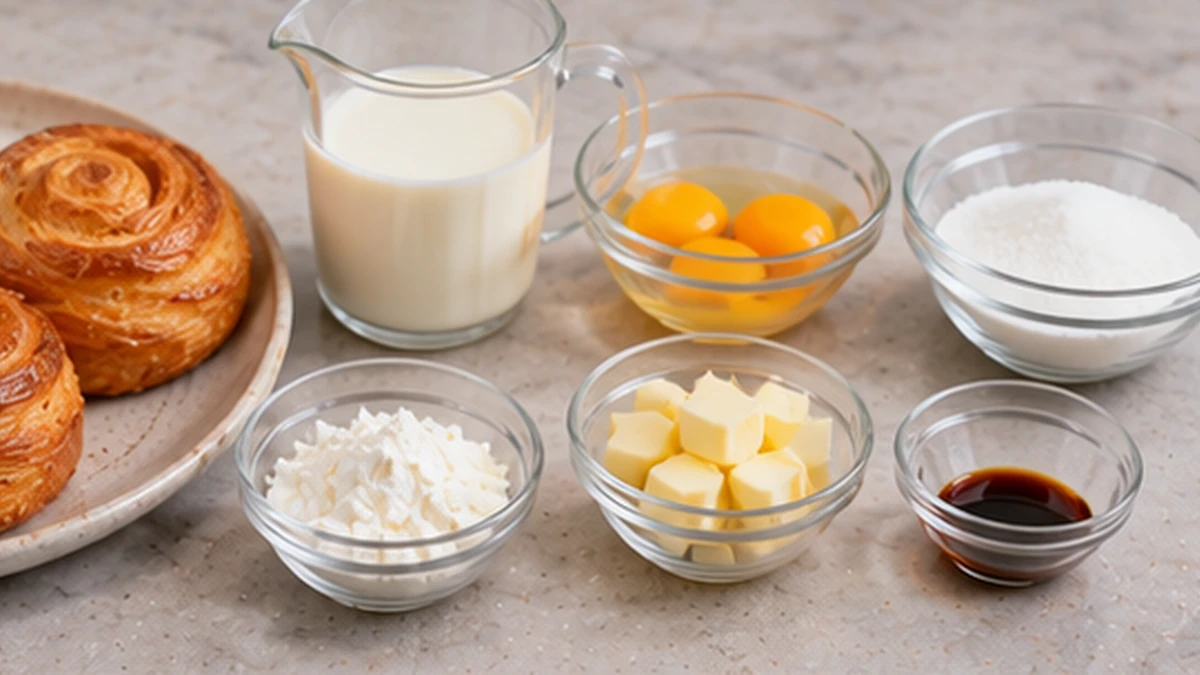
Yield: four filled croissants. Active preparation: about 20 minutes. Stovetop cooking: about 15 minutes. Chilling and cooling: approximately 90 minutes, with the caramel cooling during the custard chill. Allow 2 hours and 5 minutes overall, plus any extra time the custard needs to reach refrigerator temperature. No oven is required when starting with fully baked, crisp croissants. You will need a small saucepan, whisk, piping bag or sturdy zip-top bag, a skillet, parchment or a silicone baking mat, and a heatproof spatula.
2 tablespoons plus 1 teaspoon (30 g) granulated sugar, for the pastry cream
1½ tablespoons (12 g) cornstarch
1 tablespoon (14 g) unsalted butter
1 teaspoon (5 mL) vanilla extract
3 tablespoons plus ½ teaspoon (40 g) granulated sugar, for the caramel topping
Choosing the croissants
Look for plain, fully baked butter croissants with a firm outer shell and an airy interior. A round pastry with a visible spiral is ideal for the creme brulee supreme croissant because the top offers a broad surface for the sugar disk. Do not buy an already filled or chocolate-coated croissant. A medium-size crescent of about two ounces will also work, although its narrower crown may need a smaller disk or a few short caramel shards instead of one large circle.
A soft supermarket croissant will taste pleasant but provides less contrast than one with a dry, flaky crust. If it needs refreshing, warm it in a 300°F oven for 5 to 7 minutes, then cool completely before filling. This optional step adds time and is not included in the base recipe. Do not fill a warm pastry, since the heat can thin the cream and make the shell damp. If you want a more traditional baked dessert for the same table, our cocoa marshmallow cake is a separate chocolate option.
Why the custard uses yolks and cornstarch
Whole milk provides the liquid and a little fat, while egg yolks give the cream its characteristic yellow color and richness. Cornstarch helps it hold a pipeable shape after chilling. Unlike whipped cream, which can collapse under a heavy sugar topping, pastry cream has a cooked starch structure. A tablespoon of unsalted butter adds smoothness without making the filling taste like buttercream. Vanilla extract supplies the main flavor; there is no need for artificial crème brûlée syrup.
Weigh the cornstarch if possible. A heaped spoon can produce a stiff, pasty cream, whereas too little starch makes it difficult to fill the pastry without leakage. Use the sugar quantities separately: 30 grams for the filling and 40 grams for the topping. Adding all the sugar to the milk would leave no crisp caramel and make the filling substantially sweeter.
How to make a creme brulee supreme croissant
1. Prepare the pastry cream base
Set a small saucepan over medium heat with the milk. Meanwhile whisk the egg yolks and 30 grams of sugar in a heatproof bowl until the mixture looks smooth and slightly lighter. Whisk in the cornstarch until there are no visible dry pockets. Prepare a shallow clean bowl for cooling the finished custard. The milk is ready when it is steaming and small bubbles form around the edge; avoid letting it boil over.
Pour a small portion of the hot milk into the yolk mixture while whisking continuously. Gradually add more until the mixture is warm and fluid, then pour everything back into the saucepan. This tempering step reduces the chance of the egg forming separate cooked strands when it meets the hot milk. Scrape the bowl thoroughly so the measured yolks and starch are not left behind.
2. Cook until thick, then chill
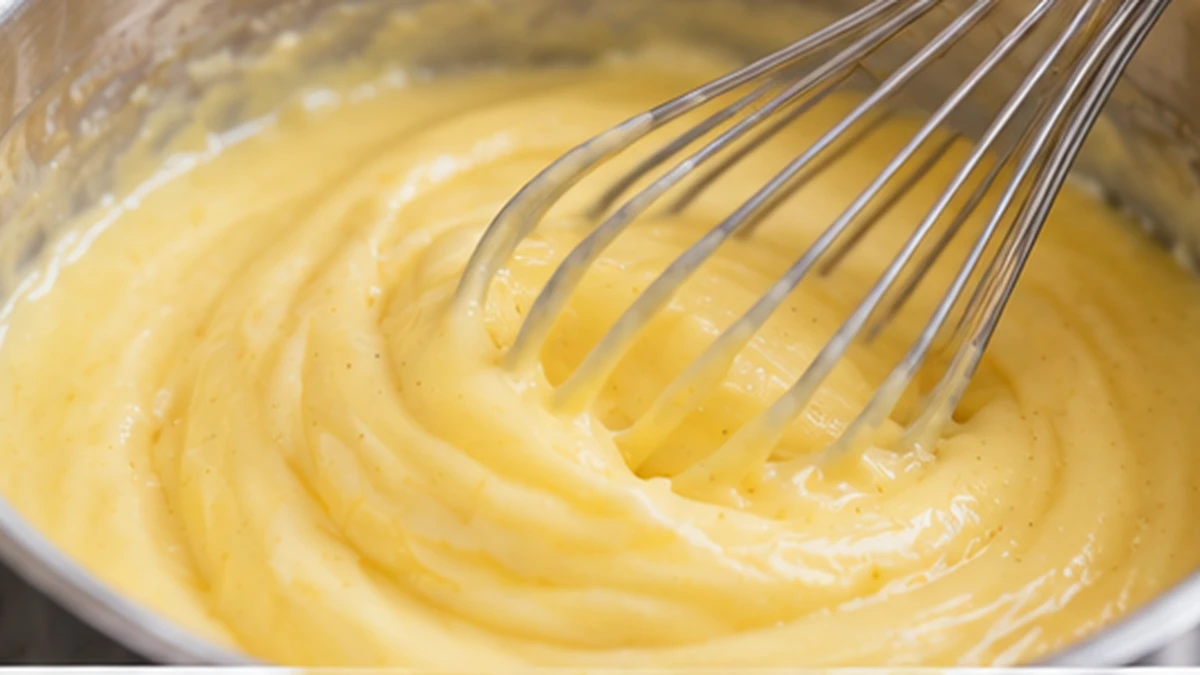
Whisk over medium to medium-low heat, reaching the corners and base of the pan. The cream will change from a thin liquid into a glossy, thick mixture. Once it bubbles gently, continue whisking for about one minute. Check that it has reached at least 160°F with an instant-read thermometer; the thickened cream should hold the lines left by the whisk briefly. Avoid fierce boiling or walking away from the saucepan, because the mixture thickens quickly near the end.
Remove from the heat and whisk in the butter and vanilla. If small lumps remain, press the hot cream through a fine-mesh strainer into a shallow bowl. Cover the surface directly with food-safe wrap to prevent a skin forming. Set the bowl in an ice bath briefly if necessary, then refrigerate promptly until thoroughly cold and pipeable, about 90 minutes. The exact cooling time depends on the depth of the bowl and refrigerator. Do not treat the estimated time as a substitute for proper chilling.
For a simpler chilled vanilla dessert without laminated pastry, see our peppermint brownie Frosty Fusion or a cold vanilla peppermint smoothie. Both are distinct recipes with different textures, not substitutes for the cooked custard here.
3. Make four thin caramel disks
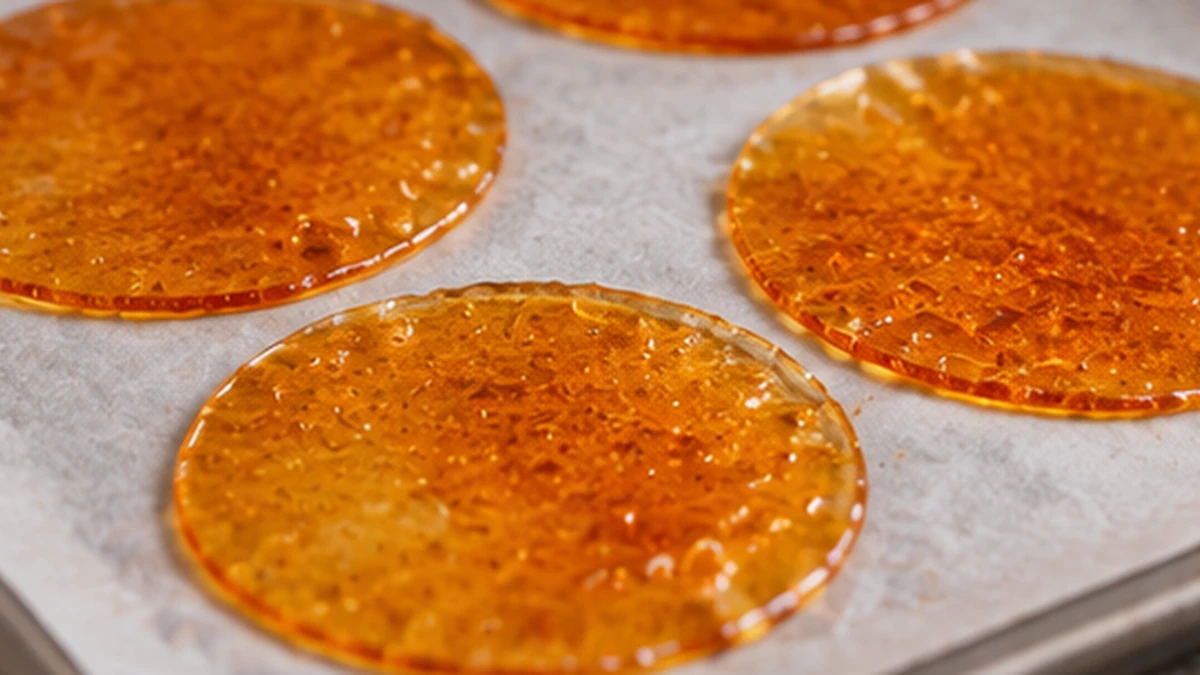
While the custard chills, line a heatproof baking sheet with parchment rated for high temperatures or a silicone mat. Put the remaining 40 grams of sugar into a small, dry, light-colored skillet in an even layer. Heat over medium-low, watching carefully. As the edges melt, tilt the pan gently to distribute the liquid; avoid aggressive stirring that can cause dry crystals to clump. Continue until the sugar is fully melted and an even amber color. Take the pan off the heat immediately.
Using a heatproof metal spoon, carefully deposit four small pools onto the lined sheet, spreading each very gently into a thin circle about 2 to 2½ inches across, or narrower than your croissants. Work on a stable counter away from children and pets. Melted sugar is extremely hot and sticks to skin; never touch, taste or handle the disks until completely cooled. Do not add water to the hot caramel or carry the pan across the kitchen. Let the disks cool undisturbed, usually 10 to 15 minutes, until hard and easy to lift.
The separately cooled disk is the home shortcut that distinguishes this creme brulee supreme croissant from a torch-finished bakery pastry. It does not require a culinary torch and avoids heating the filled croissant. Aim for a thin, brittle finish rather than thick hard candy. If the disk has sharp edges or is too thick to bite comfortably, do not serve it. Make thinner pieces in a new batch instead.
4. Fill the cooled croissants
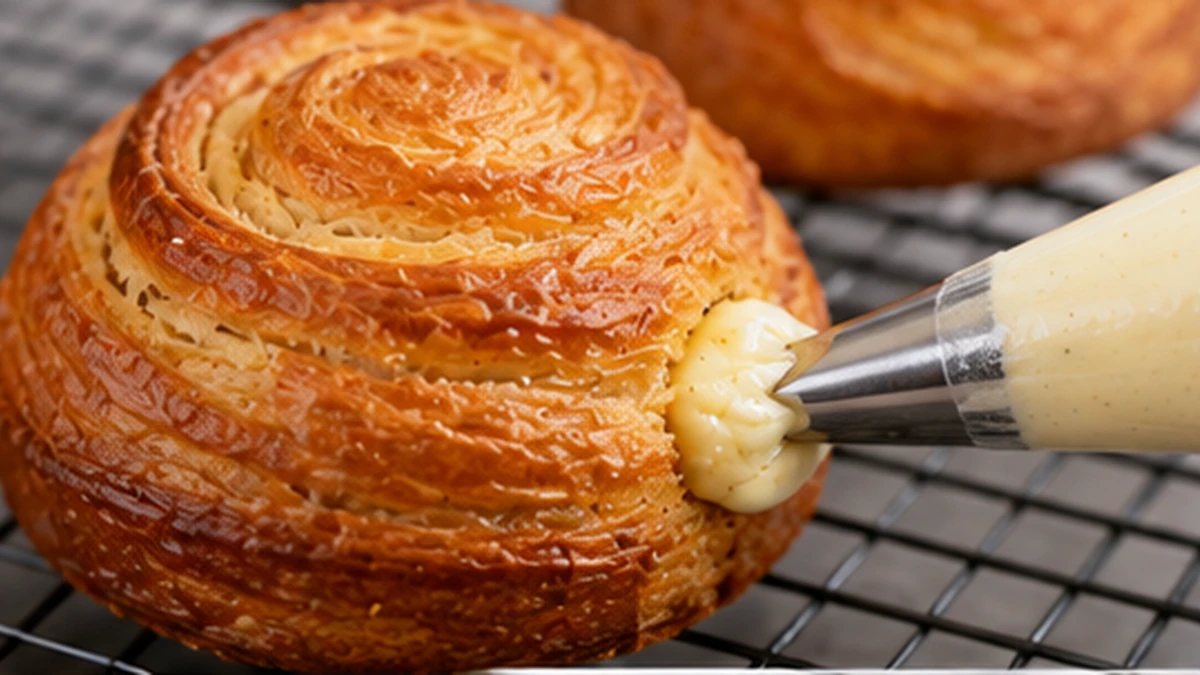
Once the custard is thoroughly chilled, whisk it briefly by hand until smooth. Transfer it to a piping bag fitted with a narrow plain tip. Reserve about two teaspoons of the cream to anchor the sugar disks later. Use the tip of a small knife to make a modest opening in the side of each croissant, taking care not to cut all the way through. Insert the piping tip and gently fill each pastry with approximately one quarter of the remaining custard.
Depending on the air pockets in your croissant, the filling may collect in a single chamber or spread through several layers. Pipe slowly and stop if the cream begins to escape. If the pastry is unusually small, leave any excess filling refrigerated rather than forcing it inside. Without a piping bag, split the pastry partway along one side and spoon in the cream; the appearance changes but the same ingredients still work.
5. Finish and serve
Place a small dab of the reserved custard on each croissant crown. Lift each completely cooled caramel disk from its liner and place it on top. Do not press hard enough to crush the spiral. Serve the creme brulee supreme croissant immediately with the crisp topping intact. Cutting through the center reveals the contrast of golden layers and pale yellow filling. If the disk is wider than the pastry, choose a smaller piece instead of balancing a large, fragile overhang.
2 tablespoons plus 1 teaspoon (30 g) granulated sugar, for the pastry cream
1½ tablespoons (12 g) cornstarch
1 tablespoon (14 g) unsalted butter
1 teaspoon (5 mL) vanilla extract
3 tablespoons plus ½ teaspoon (40 g) granulated sugar, for the caramel topping
Instructions
Warm the whole milk in a small saucepan over medium heat until steaming. Whisk the yolks, 30 g sugar and cornstarch in a heatproof bowl until smooth. Gradually whisk in the hot milk, then return the mixture to the saucepan.
Whisk over medium to medium-low heat until thick and gently bubbling; cook about 1 minute more, whisking, and verify at least 160°F. Remove from heat and whisk in butter and vanilla. Strain if necessary. Transfer to a shallow bowl, cover the surface, cool promptly and refrigerate until fully chilled and pipeable, about 90 minutes.
While the cream chills, line a heatproof sheet with high-temperature parchment or silicone. Melt the remaining 40 g sugar in a dry small skillet over medium-low heat until amber. Remove from heat. Carefully spoon four thin disks about 2 to 2½ inches wide onto the liner; cool completely, about 10 to 15 minutes. Never touch hot caramel.
Whisk the cold custard until smooth and reserve about 2 teaspoons for the tops. Pipe equal portions of the remaining custard into small side openings in the four fully baked, cooled croissants. Stop if the filling begins to escape.
Place a dab of reserved custard on each crown and add one fully cooled caramel disk. Serve immediately.
Notes
Use plain, fully baked croissants about 60 g each. Round croissants are preferred, but crescents work with smaller disks. Optional refreshing in the oven adds time.
Chilling time is approximate; wait until the custard is fully cold. Caramel cooling overlaps custard chilling. Refrigerate filled pastries promptly and use within two days of making the custard.
Hot caramel can cause serious burns; keep children away and never touch the disks until completely cold.
Nutrition estimates use generic butter croissants and all filling and topping ingredients divided into four. Bakery labels and actual filling retained may change values. Contains wheat, milk and egg; check packaged ingredients.
Independent home adaptation; not the proprietary bakery recipe or a tested taste match.
Author:Adam Moretti
Prep Time:20 minutes
Chilling and cooling:90 minutes
Cook Time:15 minutes
Category:Dessert
Method:Stovetop
Cuisine:French-inspired
Diet:No specific diet
Troubleshooting the filling and topping
My pastry cream is thin
The most common issues are an inaccurate starch measurement, insufficient cooking or checking the consistency before the cream has cooled. A hot cream naturally appears looser than the chilled version. If it never thickened in the pan, return it to the stove promptly and whisk until the starch has fully cooked. If the refrigerated cream remains watery, use a fresh batch for the croissants rather than soaking the pastry. Avoid adding dry starch directly to finished cold custard, which tends to create lumps.
The custard looks grainy
A few small lumps can come from poorly dispersed starch or egg setting against a hot saucepan. Strain while hot if the issue is minor. Severe scorching or curdling calls for a new batch. Use medium-low heat, keep the whisk moving around the corners and temper the eggs gradually. A heavy-bottomed saucepan helps distribute heat more evenly than a thin pan.
The caramel is too dark or sticks
Sugar continues darkening after the skillet leaves the burner, especially in a heavy pan. Remove it at an even amber stage rather than waiting for a deep brown color. Do not use ordinary wax paper; hot sugar can damage it. Use oven-safe parchment or a silicone baking mat, and allow the disks to cool completely before lifting. If the caramel smells burnt, discard it after cooling and start with fresh sugar. Adding vanilla to burnt caramel will not remove the bitterness.
My creme brulee supreme croissant becomes soggy
Moisture moves from the cream into the pastry, and sugar absorbs moisture from both the air and the filling. Assemble shortly before serving. Keep the plain croissants, custard and caramel in separate containers until needed. Avoid sealing a warm pastry in a bag where condensation can build. A crisp croissant and cold, thick filling provide the best starting point, but even good components will soften if stored together overnight.
Substitutions and variations
Crescent croissants: Use the same weight of fully baked pastry and make a few smaller caramel disks or pieces that fit the curve. For a smaller serving, divide the components among mini croissants; the nutrition per piece will change. Do not use raw croissant dough as a direct substitute: it must first be baked and cooled according to its package or recipe.
Milk and vanilla: Two-percent milk can be used in place of whole milk, although the filling will be slightly less rich. Vanilla bean paste can replace vanilla extract in the same volume if the package recommends that equivalence. Avoid adding a large amount of sweet syrup to the finished cream, since extra liquid can change its consistency.
Dietary considerations: The base recipe contains milk, wheat and egg. Check bakery ingredient labels for soy, other allergens or animal-derived additives. A gluten-free laminated pastry or dairy-free custard requires a separate reformulation, not simply a label change. For another festive pastry-like breakfast, consider our peppermint chocolate waffle instead.
Serving the creme brulee supreme croissant
Serve one creme brulee supreme croissant per person as a dessert or sweet brunch pastry. A cup of unsweetened coffee offsets the sweet topping; for a festive flavored drink, our peppermint cream cold brew offers a minty option, while snowcap marshmallow matcha is a different tea-based pairing. For a less coffee-forward option, try our iced sugar cookie cream matcha. These drinks are optional serving suggestions, not ingredients in the recipe or its nutrition calculation.
For a dessert board, place the filled pastries near serving plates just before guests arrive and keep the sugar disks separate until the last minute. Add a bowl of fruit on the side if desired. If you want a second small-bite treat, the compost hot chocolate bark provides a chocolate contrast and the holiday chaos cookie offers a baked cookie option. Do not pile other sweets on top of the croissants; the caramel should remain the main topping.
Make-ahead, storage and food safety
For a make-ahead creme brulee supreme croissant, the filling is the best component to prepare in advance. Refrigerate promptly in a shallow covered container at 40°F or below and use within two days for this recipe. Store plain croissants according to their bakery instructions. Once fully cool, the caramel disks can be stored separately in an airtight container at room temperature in a dry place for up to a day for best texture. Do not refrigerate the bare disks, since moisture can make them sticky.
Once filled, refrigerate any uneaten pastries promptly and use within two days of making the custard. Expect a softer crust and remove the caramel before chilling if possible. The FDA egg safety guidance recommends cooking egg dishes to 160°F and refrigerating promptly, with a maximum of two hours at room temperature, or one hour above 90°F. Count preparation and serving time together. Do not freeze assembled croissants for this recipe; thawed pastry cream can separate and the caramel can dissolve.
Nutrition and serving size
One creme brulee supreme croissant serving is one filled pastry with its share of caramel, approximately 155 grams before cooking losses (the finished weight will vary). Estimated nutrition uses four 60-gram butter croissants, whole milk, two egg yolks, all measured sugar, starch, butter and vanilla divided by four. The USDA FoodData Central reference for butter croissants (FDC 174987) gives approximately 406 calories per 100 grams; the exact bakery label may differ. The estimate is for the homemade recipe, not restaurant nutrition. A larger croissant or an extra caramel disk will increase the totals. This is a sweet pastry, not a high-protein or low-sugar recipe.
Frequently asked questions
Can I make the creme brulee supreme croissant without a torch?
Yes. The sugar disks are cooked separately on the stovetop and cooled before being placed on the pastry. This gives the characteristic crisp contrast without using a torch near the bread or warming the filling. Follow the caramel safety instructions and keep the disks thin.
Is this the exact Paris Baguette recipe?
No. The inspiration comes from the public holiday menu description of a croissant, vanilla pastry cream and caramelized sugar. The bakery’s exact dough, filling and topping formula have not been verified. This version uses a ready-baked pastry and a separate caramel disk for a manageable home method.
Can I use instant pudding instead?
Prepared vanilla pudding is a possible convenience variation if it is thick enough to pipe. It will have a different flavor, texture and nutrition from cooked pastry cream. The base recipe deliberately uses yolks and cornstarch for a more traditional filling.
Can I prepare the creme brulee supreme croissant the night before?
Prepare the custard the night before and refrigerate it. Keep the croissants unfilled and the caramel dry. Fill and top the pastries shortly before serving. A fully assembled pastry left overnight in the fridge will lose some of its contrast.
What if I cannot find a round supreme croissant?
A plain medium butter croissant is a practical alternative. Use a smaller caramel disk and fill through the side. The spiral shape is part of the bakery presentation, but the essential combination of laminated pastry, vanilla filling and brittle sugar is preserved.
Can I use brown sugar for the topping?
Granulated white sugar is preferred because it melts predictably and allows the amber color to be monitored. Brown sugar contains molasses and moisture, which can change the texture and make the finished disk less crisp. Use white sugar for the topping in the base recipe.
Final tips
A successful creme brulee supreme croissant depends more on timing than on complicated pastry skills. Start with a crisp fully baked shell, cook and cool the pastry cream thoroughly, and keep the sugar topping dry. Assemble only what you plan to serve. The result is a home interpretation of the seasonal bakery idea, with a distinct crackle over a creamy center and a practical way to make four individual desserts.
Reviewed recipe options
Make this recipe fit me
Choose one of seven popular diet options. NutriMatch will confirm whether the recipe already fits, show a reviewed adaptation when available, or recommend recipes that match your choice.
Please choose a diet first.
Not available for this recipe
This recipe cannot currently be made Dairy-Free with a reviewed adaptation.
NutriMatch will not guess at substitutions. Try one of these recipes that is already reviewed for your choice.
Recipe details, product formulas, and cross-contact information can change. Confirm current labels and use professional guidance when medically necessary.
Not available for this recipe
This recipe cannot currently be made Gluten-Free with a reviewed adaptation.
NutriMatch will not guess at substitutions. Try one of these recipes that is already reviewed for your choice.
Recipe details, product formulas, and cross-contact information can change. Confirm current labels and use professional guidance when medically necessary.
Not available for this recipe
This recipe cannot currently be made High Protein with a reviewed adaptation.
NutriMatch will not guess at substitutions. Try one of these recipes that is already reviewed for your choice.
Recipe details, product formulas, and cross-contact information can change. Confirm current labels and use professional guidance when medically necessary.
Not available for this recipe
This recipe cannot currently be made Keto with a reviewed adaptation.
NutriMatch will not guess at substitutions. Try one of these recipes that is already reviewed for your choice.
Recipe details, product formulas, and cross-contact information can change. Confirm current labels and use professional guidance when medically necessary.
Not available for this recipe
This recipe cannot currently be made Low Carb with a reviewed adaptation.
NutriMatch will not guess at substitutions. Try one of these recipes that is already reviewed for your choice.
Recipe details, product formulas, and cross-contact information can change. Confirm current labels and use professional guidance when medically necessary.
Not available for this recipe
This recipe cannot currently be made Vegan with a reviewed adaptation.
NutriMatch will not guess at substitutions. Try one of these recipes that is already reviewed for your choice.
Recipe details, product formulas, and cross-contact information can change. Confirm current labels and use professional guidance when medically necessary.
Not available for this recipe
This recipe cannot currently be made Vegetarian with a reviewed adaptation.
NutriMatch will not guess at substitutions. Try one of these recipes that is already reviewed for your choice.
Recipe details, product formulas, and cross-contact information can change. Confirm current labels and use professional guidance when medically necessary.