Starbucks Snowcap Marshmallow Matcha is a new holiday matcha drink announced for December 1, 2026, in U.S. coffeehouses: green matcha and milk finished with melted-marshmallow-flavored cold foam and a crisp cookie topping. This homemade version makes one large iced glass in about 10 minutes. It keeps the matcha bright green, gives the topping a soft, pourable texture, and adds crushed vanilla wafer at the very end so the cookie stays crunchy. If you love seasonal green-tea drinks, our iced sugar cookie cream matcha is a different recipe with sugar-cookie-flavored foam and festive sprinkles rather than marshmallow foam and wafer crumbs.
The key to this Starbucks Snowcap Marshmallow Matcha copycat is treating the drink as two preparations: a smooth, lightly sweetened iced matcha latte and a small batch of chilled marshmallow cold foam. Do not blend the ice into the drink or turn the topping into stiff whipped cream. You want a distinct white cap that gradually mixes with the green latte as you sip. A handheld frother is helpful, but a small whisk and chilled bowl work too.
What is confirmed:Starbucks announced on November 9, 2026 that the Snowcap Marshmallow Matcha consists of smooth matcha and milk topped with melted-marshmallow-flavored cold foam and crispy cookie topping; the Snowcap trio is set to launch December 1, with hot and iced availability. The company did not disclose exact home-kitchen ingredient ratios or commercial nutrition at that announcement. This is an original, independent inspired-by preparation, not a leaked Starbucks formula, company-sponsored recipe, or claim of a side-by-side taste test.
Table of Contents
Starbucks Snowcap Marshmallow Matcha at a Glance
Style: an iced green-tea latte, not coffee, espresso or a blended Frappuccino.
Flavor balance: earthy, mildly bittersweet matcha under a sweet vanilla-marshmallow foam.
Texture: chilled, pourable cold foam rather than stiff icing or a large whipped-cream swirl.
Topping: finely crushed crisp vanilla wafer cookies added immediately before drinking.
Yield and time: one 16-ounce glass; around 10 minutes of active preparation.
Equipment: a small bowl, fine sieve if needed, bamboo whisk or milk frother, and a tall glass.
This Starbucks Snowcap Marshmallow Matcha recipe is intentionally for one drink. Making a giant pitcher of matcha with foam already attached gives the topping time to sink and the cookies time to soften. For a group, measure the matcha base into individual glasses and keep the foam chilled until guests are ready. The full ingredient amounts, including cookie topping, are included in the nutrition estimate below.
What Makes the Snowcap Marshmallow Matcha Different?
Unlike an ordinary iced matcha latte, Starbucks Snowcap Marshmallow Matcha layers a marshmallow-flavored white cap over the tea and finishes with a crunchy cookie. Starbucks also announced a Snowcap Marshmallow Mocha; that separate drink uses espresso and mocha sauce, so copying its coffee-and-chocolate ingredients into the matcha would muddle the profile. The matcha should remain the most noticeable flavor until the cold foam starts to mingle with it.
In Starbucks Snowcap Marshmallow Matcha, marshmallow flavor does not necessarily mean whole marshmallows are floating on top. The announced topping is melted-marshmallow-flavored foam, not a handful of mini marshmallows. For the home version, a measured spoonful of marshmallow crème provides recognizable sweetness and aroma, while cold heavy cream and milk let the mixture froth. This method is an approximation of the flavor concept, not the brand’s unpublished cold-foam manufacturing process.
Another essential feature of Starbucks Snowcap Marshmallow Matcha is the cookie. Starbucks calls it a crispy cookie topping without publishing a household shopping list in the announcement. A crushed plain vanilla wafer is a practical choice because it supplies dry crunch without cinnamon, cocoa, colored sugar or peppermint. Avoid soft-baked cookies that immediately become paste. If you want a comparison of sweet cold-foam textures without matcha, our strawberry cold foam without heavy cream uses a much lighter milk-based structure.
Ingredients and Exact Measurements
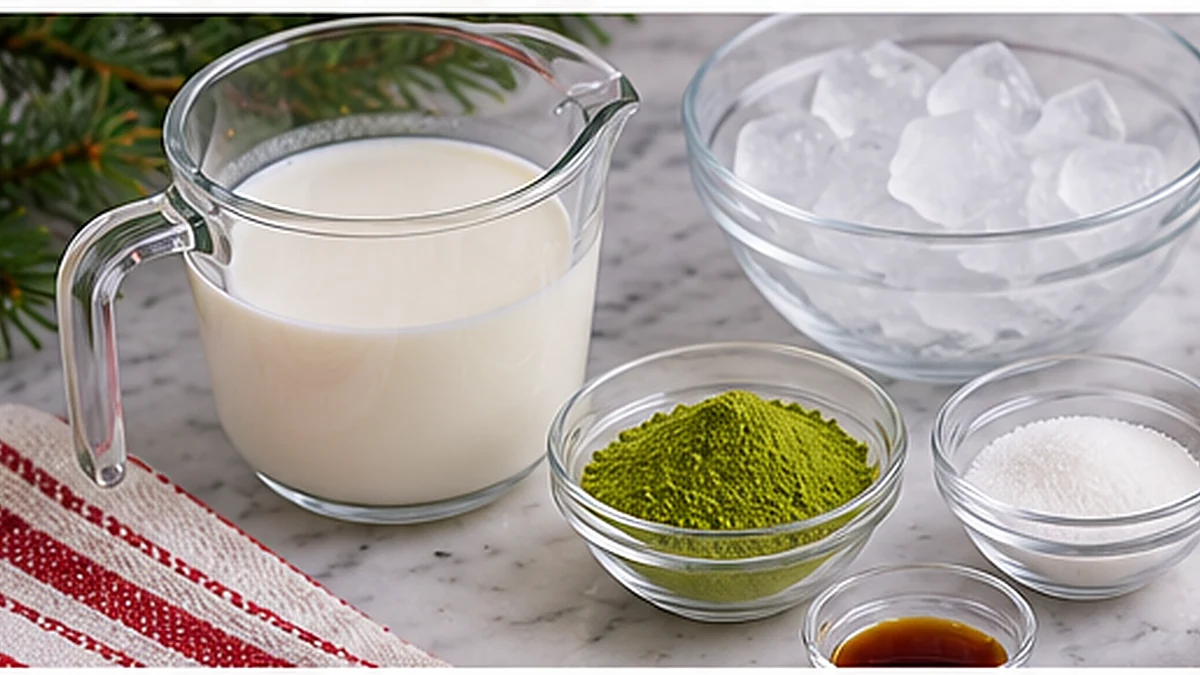
These quantities make one generous Starbucks Snowcap Marshmallow Matcha iced drink. The base uses unsweetened matcha powder rather than presweetened matcha-latte mix; using a sweetened mix on top of marshmallow crème and added sugar can make the result cloying. Keep the dairy cold and the wafer dry. A simple kitchen scale improves consistency for the matcha powder, crème and cookie topping.
For the matcha latte
1½ teaspoons plain culinary or latte-grade matcha powder (about 3 g), sifted if lumpy.
2 tablespoons warm water (30 mL), approximately 160–175°F / 71–79°C; hot but not boiling.
¾ cup chilled 2% milk (180 mL).
2 teaspoons granulated sugar (about 8 g), stirred into the warm matcha; adjust only after tasting.
¾ cup ice cubes, or enough to fill a 16-ounce glass around halfway.
For the melted-marshmallow-style cold foam
3 tablespoons cold heavy whipping cream (45 mL).
2 tablespoons cold 2% milk (30 mL).
1 tablespoon marshmallow crème or marshmallow fluff (about 20 g); use a product meant to be eaten as sold.
⅛ teaspoon pure vanilla extract.
A tiny pinch of fine salt, optional but useful for balance.
1 tablespoon finely crushed crisp vanilla wafer cookies (about 7 g), added only at serving.
Why marshmallow crème instead of melting ordinary marshmallows? A small measured dollop mixes more reliably into cold cream and gives a pourable foam without stovetop cooking or gelatin lumps. If a brand of crème is extremely thick, briefly stir it with the two tablespoons of cold milk until loose before adding the cream. Do not heat the cream mixture and then expect it to foam immediately—it works better when cold.
If you already make a black sesame latte, you may recognize the same principle of dispersing a concentrated flavor in a little liquid before adding the rest of the milk. Here the flavor is green tea, not sesame, and the extra white cap and cookie layer make this a more dessert-like drink. The color can be lighter or darker depending on matcha freshness and the amount of ice.
The Recipe Card
The Starbucks Snowcap Marshmallow Matcha recipe card contains the measured one-glass version, including the wafer topping. Use the same amounts for the nutrition numbers here; extra cookie crumbs or marshmallow candy added for decoration are not included. You can save the printable card and scale the ingredients up for two people, but froth each portion in a suitably narrow container to keep the foam airy.
An independent 10-minute iced matcha latte with soft marshmallow-crème cold foam and crunchy vanilla-wafer crumbs, inspired by the Starbucks holiday drink announced for December 2026.
2 tablespoons warm water (30 mL), about 160–175°F / 71–79°C
¾ cup cold 2% milk (180 mL)
2 teaspoons granulated sugar (about 8 g)
¾ cup ice cubes
Marshmallow cold foam and topping
3 tablespoons cold heavy whipping cream (45 mL)
2 tablespoons cold 2% milk (30 mL)
1 tablespoon marshmallow crème (about 20 g)
⅛ teaspoon vanilla extract
Tiny pinch fine salt (optional)
1 tablespoon crushed crisp vanilla wafer cookies (about 7 g)
Instructions
Sift matcha into a small bowl. Whisk with the 2 tablespoons warm water for 20–40 seconds until smooth, then dissolve the 2 teaspoons sugar in the warm tea.
Fill a 16-ounce glass approximately halfway with ¾ cup ice. Add ¾ cup cold 2% milk, then pour in the matcha concentrate; stir briefly for an even pale-green base.
In a narrow cold cup, loosen the marshmallow crème with 2 tablespoons cold 2% milk. Add the 3 tablespoons cold heavy cream, vanilla and optional tiny pinch salt.
Froth 15–30 seconds until the mixture is glossy, lightly aerated and still pourable; stop before it becomes stiff whipped cream.
Gently spoon or pour foam over iced matcha. Scatter the tablespoon crushed vanilla wafer on top just before serving. Drink immediately.
Notes
One serving is one complete 16-ounce iced glass including all measured foam and wafer crumbs.
Inspired by Starbucks Snowcap Marshmallow Matcha announced for December 1, 2026; not an official or taste-tested Starbucks formula.
The official announcement specifies matcha, milk, melted-marshmallow-flavored cold foam and crispy cookie topping. Whole mini marshmallows, matcha powder dusting and colorful sprinkles are not part of this basic recipe.
For a hot version, warm the ¾ cup milk (do not boil), omit ice and add freshly frothed cold foam just before serving. The foam melts faster; nutrition is similar if all other ingredients are unchanged.
Nutrition estimates use ordinary 2% milk, heavy cream, marshmallow crème and vanilla wafer labels; brand and tablespoon-weight variation can change totals.
Contains dairy and potentially egg and wheat depending on packaged ingredients. Contains caffeine from matcha. Check individual labels; no special-diet claims are made.
Keep dairy refrigerated at 40°F (4°C) or below. Serve immediately; store prepared components chilled and cookie crumbs dry and separate.
Author:Adam Moretti
Prep Time:10 minutes
Cook Time:0 minutes
Category:Beverage / Drink
Method:No-cook (whisking and cold frothing)
Cuisine:American café-inspired
Diet:No specific diet
How to Make Starbucks Snowcap Marshmallow Matcha at Home
Step 1: Sift and dissolve the matcha
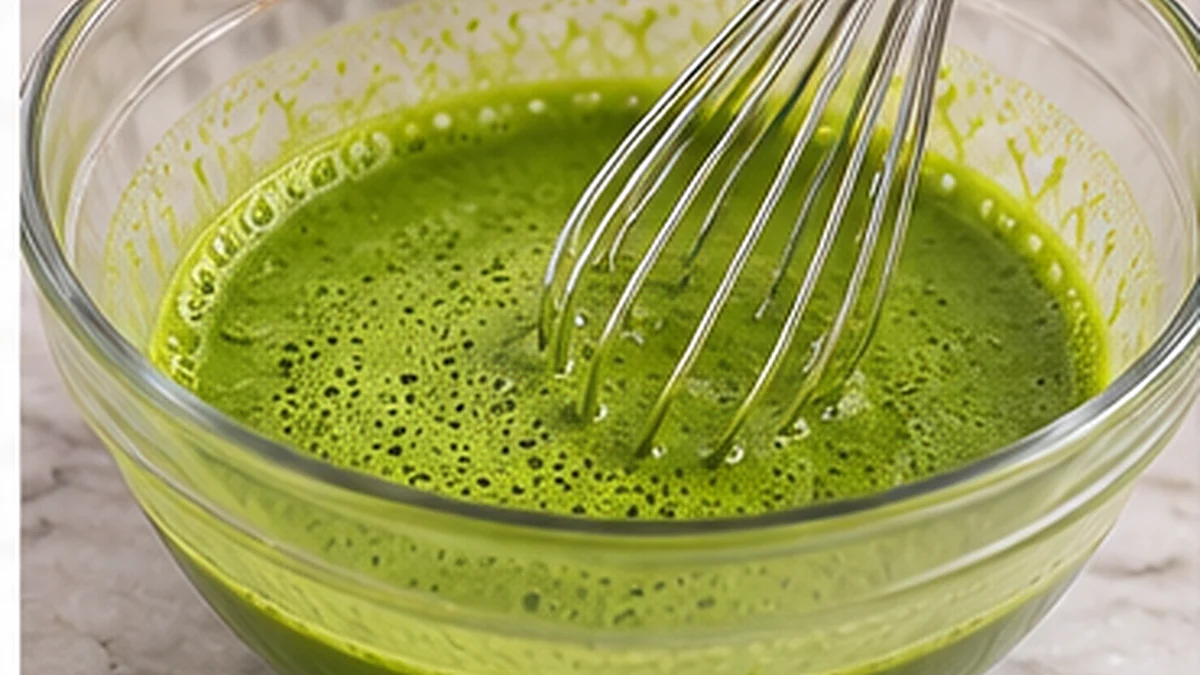
Place 1½ teaspoons of matcha in a small bowl or wide mug. Add the two tablespoons of warm water and whisk briskly in a zigzag motion for 20–40 seconds until no dry pockets remain and a fine layer of bubbles forms. If using a handheld frother, start low so the powder stays inside the bowl. Stir in the measured two teaspoons of sugar while the mixture is still warm enough to dissolve it.
For Starbucks Snowcap Marshmallow Matcha, the concentrated green base should be smooth and vivid, not grainy and dark at the bottom. Boiling water can make some matcha taste harsh; lukewarm water may leave the powder stubbornly clumped. If you see green specks stuck to the bowl, scrape the sides and whisk again. A small fine-mesh sieve before mixing is the simplest fix for powder that has been stored in a humid cupboard.
Step 2: Build the iced green layer
Fill a 16-ounce clear glass around halfway with ice and pour in the ¾ cup of cold milk. Slowly add the whisked matcha. For dramatic green swirls, pour it along the inside wall; for the most consistent flavor, stir once or twice until the milk is evenly pale green. Neither approach changes the ingredients. Leave at least an inch of headroom so the marshmallow foam has somewhere to sit.
Temperature matters for Starbucks Snowcap Marshmallow Matcha. Warm matcha concentrate poured over ice will cool fast, but making a large boiling-hot batch will melt too much ice and thin the drink. If the green base looks watery after stirring, reduce the warm water to the measured two tablespoons next time rather than adding more powder blindly. A drink with too much matcha can taste astringent even when the foam is very sweet.
Step 3: Loosen the marshmallow crème
In a narrow, chilled cup, stir the tablespoon of marshmallow crème with two tablespoons of cold 2% milk until mostly smooth. Add the cold heavy cream, a drop of vanilla and a tiny pinch of salt. A few small streaks of crème are fine at first; there should not be large rubbery lumps. The mixture should flow off a spoon in a thick ribbon before you froth it.
Step 4: Froth until soft and pourable
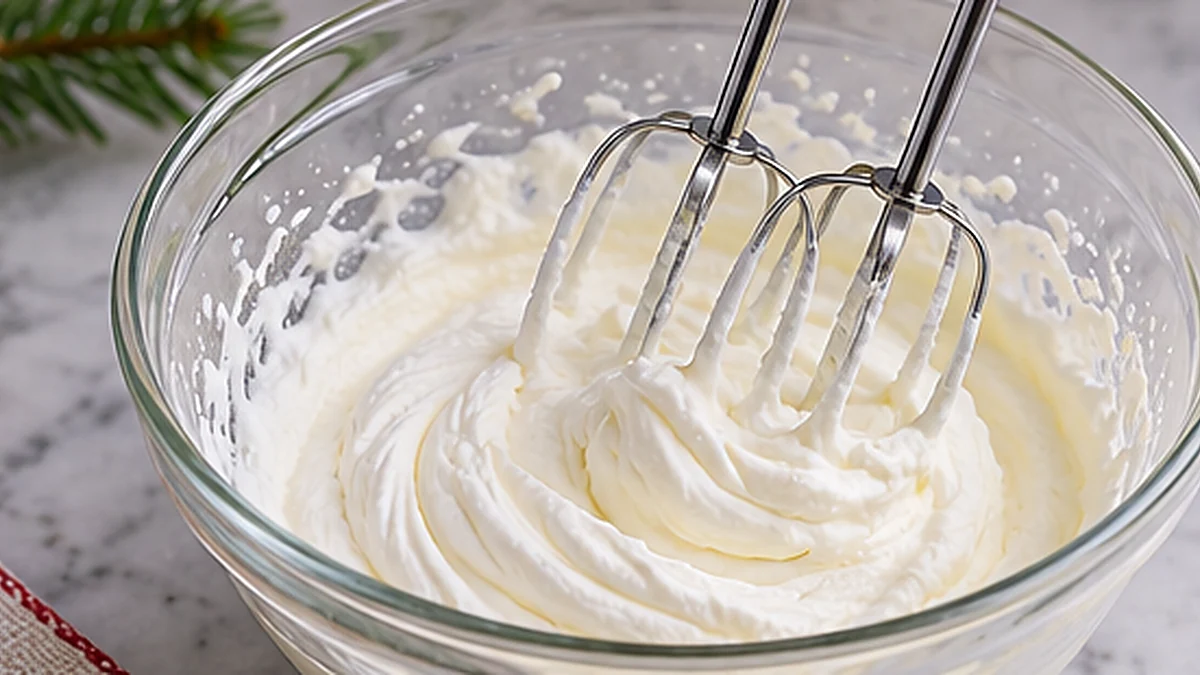
Use a handheld milk frother for about 15–30 seconds, moving it just below the surface, until the mixture expands slightly and looks like a soft, glossy pourable cream. Stop as soon as it can sit briefly on top of the matcha; continuing until it holds stiff peaks turns it into whipped cream, which is a different texture. If your mixture is very thick, fold in one teaspoon more cold milk and stop there.
An electric whisk also works in a small bowl, but the timing depends on the cream brand and tool. With no appliance, shake the cold mixture vigorously in a tightly closed jar for a brief moment, then open and spoon the aerated layer over the glass. Do not shake hot liquids in a sealed container. The result will usually be less stable than foam made with a frother, but it still provides a creamy marshmallow finish.
Step 5: Add the snowcap and crunchy cookie finish
Spoon or slowly pour the cold foam over the iced matcha so it forms a white layer. Just before drinking, scatter one tablespoon of finely crushed vanilla wafers over the top. Do not stir the crumbs into the foam ahead of time: their crunch is the point. Serve immediately with a straw or a long spoon. If you like an especially photogenic cap, keep the foam slightly thicker and pour it down the back of a spoon.
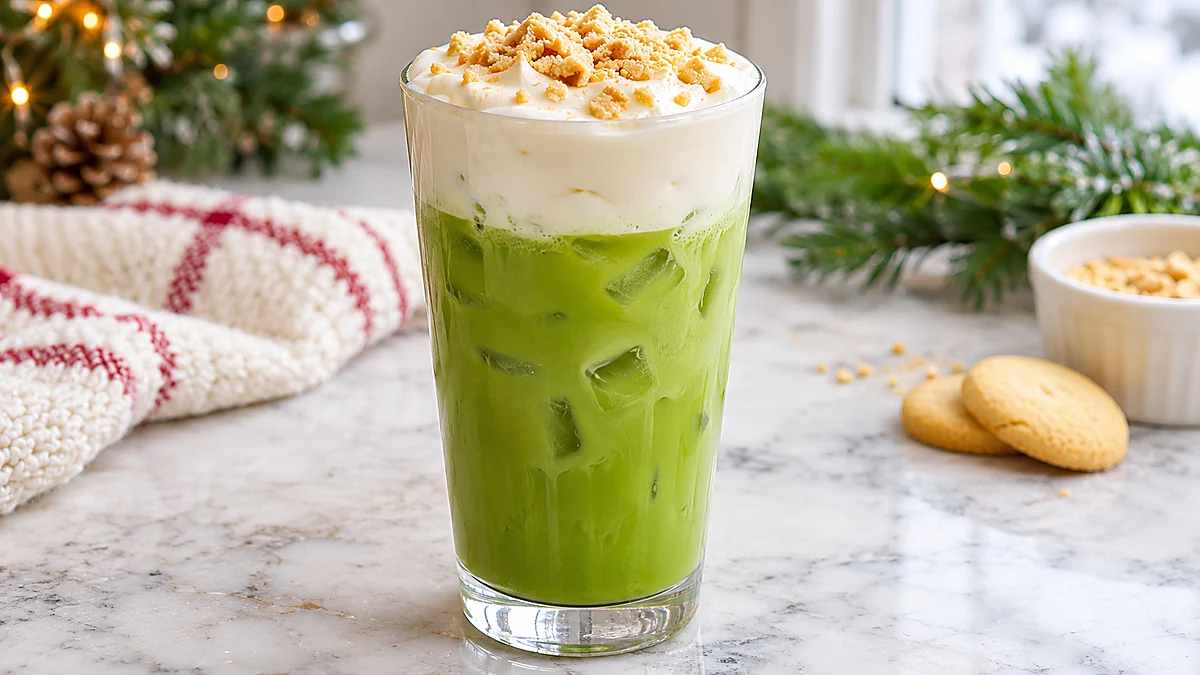
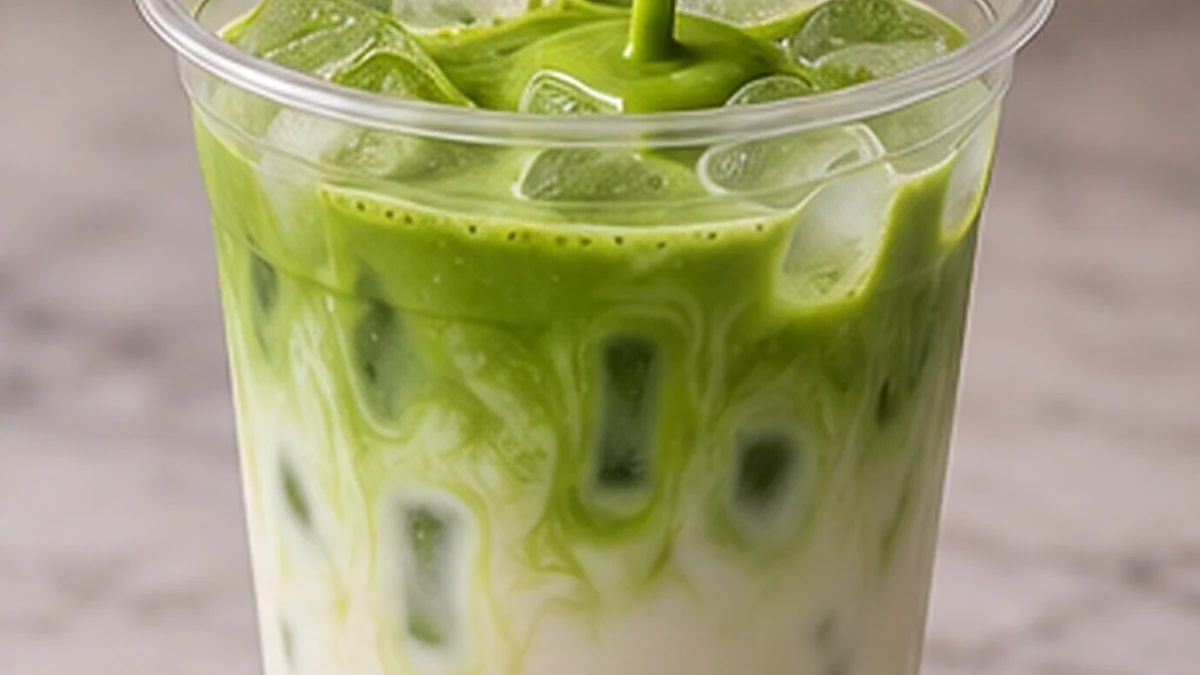
The finished Starbucks Snowcap Marshmallow Matcha should look like green tea below a distinct white cap with a little golden crumble. It should not have a red-and-green sprinkle layer, a chocolate drizzle, or a handful of mini marshmallows unless you intentionally make a separate personal variation. That restraint is what keeps the drink recognizably connected to the announced matcha-and-marshmallow concept rather than cookies and cream latte or a blended dessert.
Visual Cues: How to Know It Is Right
Matcha base: bright to muted green, fully dispersed, with no powder clumps collecting at the bottom.
Milk texture: cold and fluid; not a frozen slush and not so thin that it tastes like melted ice.
Foam: glossy, soft and pourable, sitting for a few minutes on the cold drink before gradually blending.
Cookie topping: small golden crumbs that still crunch for the first few sips, not soggy cookie paste.
Overall sweetness: gently sweet green tea underneath a more indulgent marshmallow layer; the two should balance.
In Starbucks Snowcap Marshmallow Matcha, color alone is not a quality score. Natural matcha ranges from lively green to duller olive depending on grade and freshness, and different 2% milks are slightly different colors. If it tastes smooth and vegetal without hard bitterness, the base is probably doing its job. The foam should smell lightly vanilla-marshmallow rather than like melted sugar alone.
Troubleshooting Your Starbucks Snowcap Marshmallow Matcha
The matcha tastes bitter or powdery
Use fresh, well-sealed matcha and whisk it with the warm water before adding cold milk. Sift especially fine powder if it has formed lumps. The solution is not automatically extra sugar; sometimes the real problem is too much tea or boiling water. If your first cup is strong, try one level teaspoon of matcha for the next serving, recognizing that this will change caffeine and nutrition modestly.
The marshmallow cold foam sinks immediately
Chill the cream and milk; use a narrower vessel; froth just long enough to add air. Pour the foam gently over the back of a spoon and make sure the iced matcha is not warm. A very dilute topping falls through the ice quickly; an overbeaten topping sits as a lump instead of a cap. Start with the measured ratio before improvising extra milk or crème.
The top tastes too much like candy
Marshmallow crème and vanilla wafers are already sweet. Reduce the sugar in the matcha base to one teaspoon or omit it, then taste after adding the foam. Avoid a sweetened matcha mix, vanilla syrup and extra marshmallows all in the same glass unless you deliberately want a much sweeter dessert drink. If reducing sugar for a health reason, review the other ingredients as well rather than assuming the drink becomes sugar-free.
The cookie topping disappears into the foam
Add the wafer crumbs at the last possible moment and crush them coarsely enough to provide texture without making giant pieces. Thin crumbs from a soft cookie will hydrate almost immediately. One tablespoon is adequate for the one-glass recipe; a full cookie perched on the rim would look different and would not be included in the nutrition estimate.
The drink separates before serving
Layered iced drinks naturally separate. Stir the matcha base briefly before topping, and assemble only when it is time to drink. If you must transport it, carry the foam and dry cookie topping in separate chilled containers. The finished texture will not be identical after sitting for an hour, even when all components stay refrigerated.
Starbucks Snowcap Marshmallow Matcha Swaps and Variations
A lower-sugar approach
Omit or halve the two teaspoons of sugar in the green tea base, while keeping the measured marshmallow crème and cookie topping. This is the simplest place to reduce added sugar without making the foam unworkable. A nonnutritive sweetener could replace some of the sugar, but its taste differs in cold milk and brand-specific amounts vary; the listed nutrition only covers the granulated-sugar version.
Hot Starbucks Snowcap Marshmallow Matcha
For a hot Starbucks Snowcap Marshmallow Matcha, warm the ¾ cup milk gently without boiling, whisk the matcha concentrate as directed and stir the two together in a heat-safe mug. Spoon freshly made cold foam on top just before serving. The contrasting foam will warm, loosen and melt faster than on ice; that is expected. Omit the ice and keep the dry cookie garnish for the last moment. Starbucks announced hot and iced availability, but this is a home-kitchen interpretation of the hot format.
Using oat milk or another plant milk
You can replace the 2% milk in the green base with unsweetened oat milk, but the foam in this recipe still contains dairy heavy cream and possibly animal-derived ingredients in the marshmallow product. Do not call the result vegan or dairy-free simply because you swap the latte milk. For a fully plant-based foam, use a suitable plant whipping alternative and verify the marshmallow and wafer labels; it will have different macros, texture and frothing behavior. Our vegan iced coffee is a separate recipe designed around dairy-free ingredients from the start.
A less rich cold foam
Two tablespoons of cream plus a little more cold milk may produce a lighter cap, but it will usually be less stable. You can also explore the milk-based technique in our strawberry cold foam recipe rather than assuming every foam can be lightened without altering its behavior. Do not change the recipe-card Nutrition while silently changing the cream amount; cream is a large part of the fat and calorie total.
What to Serve with the Drink
This is a sweet seasonal drink in its own right, so it does not need a second dessert to feel festive. If you do want a holiday plate, a slice of cocoa marshmallow cake creates a chocolate contrast, while peppermint cheesecake dip supplies an entirely different tangy, creamy dessert. They are suggested pairings only, not part of the matcha ingredients or calorie count.
For a winter coffee-house tasting table, offer this green tea drink beside our peppermint cream cold brew, which uses actual coffee, or cookie butter cloud Dunkalatte copycat, which has espresso and coffee milk. That gives guests meaningful flavor differences rather than three versions of the same drink. If you prefer a gentle aromatic drink without matcha, the pandan latte has a different herbaceous profile.
Storage, Make-Ahead, and Food Safety
For the best Starbucks Snowcap Marshmallow Matcha texture, drink this immediately after topping. You may whisk the matcha concentrate ahead, cool it and refrigerate it covered for later the same day; stir before adding to milk. The cold foam is best made fresh. If made shortly ahead, keep it in a sealed refrigerator container and briefly re-froth before use. Store the vanilla wafer crumbs dry and separately, never mixed into damp foam.
Because Starbucks Snowcap Marshmallow Matcha uses milk and heavy cream, keep components at 40°F (4°C) or below and follow the FoodSafety.gov refrigeration guidance: refrigerate perishables within two hours, or within one hour if the ambient temperature is above 90°F (32°C). The FDA storage guidance also explains why a cold refrigerator matters. A fully assembled iced glass becomes diluted and loses its clean foam layer with time; it is not a good batch-prep drink.
Marshmallow crème labels vary. Some products may contain egg whites; cookie wafers commonly contain wheat and may contain other allergens. If food allergies or an egg restriction apply, read the labels of the specific products used. This recipe is not labeled gluten-free, vegan, dairy-free or allergen-free. Matcha contains caffeine, although the actual amount varies with powder brand and serving size. It is not a caffeine-free children’s drink.
Nutrition Estimate for One Homemade Glass
One Starbucks Snowcap Marshmallow Matcha recipe makes one glass, so there is no serving-size division. Using typical U.S. dairy and pantry ingredient values, the approximate total is 395 calories, 41 g carbohydrate, 8 g protein and 22 g fat. The estimate includes about 210 mL of 2% milk in total, 45 mL heavy cream, 20 g marshmallow crème, 8 g sugar, roughly 3 g matcha and 7 g vanilla wafer. It excludes additional garnish, milk substitutions or a second cookie.
The exact values depend on how much marshmallow crème fits your tablespoon, the cream fat percentage, the matcha powder and the vanilla wafer brand. These are rounded ingredient-based calculations, not laboratory measurements or official Starbucks Nutrition Facts. For detailed ingredient-level reference data, use USDA FoodData Central and check the nutrition panels of packaged crème and wafers. Matcha caffeine is not represented in the macronutrient rows.
Frequently Asked Questions
What is Starbucks Snowcap Marshmallow Matcha?
Starbucks Snowcap Marshmallow Matcha is a holiday matcha-and-milk beverage announced by Starbucks for a December 1, 2026 U.S. launch, finished with melted-marshmallow-flavored cold foam and crisp cookie topping. Starbucks said the Snowcap drinks would be offered hot or iced. This page is a homemade copycat-style recipe based on that published product description, not the company’s proprietary preparation.
Is there coffee in Snowcap Marshmallow Matcha?
No espresso or brewed coffee is needed for the matcha version. Matcha is powdered green tea and does contain caffeine. If you want a coffee-free drink with no tea caffeine either, consider a different beverage entirely; our coffee jelly drink also contains caffeine from coffee and is not an equivalent substitute. The distinction matters if you are choosing a drink based on caffeine tolerance.
Does marshmallow cold foam contain marshmallows?
A marshmallow flavor can be made in different ways. Our home recipe uses a spoonful of marshmallow crème mixed into cold cream and milk; it does not melt individual marshmallows or scatter marshmallow candies on top. Starbucks has not published a complete home recipe for its commercial topping in the announcement cited above, so this is only one practical approach.
Can I make the matcha without a bamboo whisk?
Yes. A small regular whisk works if you sift the powder and add the warm water gradually. A handheld frother also disperses matcha quickly, but keep it low in the bowl to reduce splashing. The separate cold-foam step is best handled with a frother or electric whisk, not by trying to blend the whole assembled drink.
Can I make this in a blender?
You can blend the matcha and milk briefly without ice for a smooth base, then pour over ice, but there is no need to pulverize the whole glass. Blend the green base and foam separately; blending them together removes the snowcap layer. For a genuinely blended drink, choose another recipe rather than calling a milkshake Snowcap Marshmallow Matcha.
Why is this not the same as sugar cookie cream matcha?
Our sugar-cookie drink has its own vanilla sugar-cookie-style foam and colorful holiday sprinkles. This one focuses on marshmallow flavor and neutral crispy cookie crumbs. Both start with matcha and milk, but the toppings change the flavor, texture and search intent. They should remain separate articles rather than changing one recipe title to capture another launch.
Can I use mini marshmallows instead of marshmallow crème?
Not as a one-for-one swap in this no-cook foam. Whole marshmallows are not designed to dissolve smoothly into chilled dairy, so they leave chewy chunks. If you choose to use mini marshmallows as a decorative topping, that is an optional deviation from the official crispy-cookie-topped description; the extra candy is not counted in the basic nutrition. For the most faithful visual presentation, use just cold foam and wafer crumbs.
How much matcha should be used for one glass?
This Starbucks Snowcap Marshmallow Matcha recipe uses 1½ level teaspoons, around 3 grams. Powder density varies, so weighing it is more precise. A strongly flavored brand may taste better with slightly less; a mild one may need a little more. Start with the specified amount and adjust after you know how the tea tastes under the foam, not before.
Final Tips for Homemade Starbucks Snowcap Marshmallow Matcha
For Starbucks Snowcap Marshmallow Matcha, keep your ingredients cold except for the two tablespoons of warm water used to disperse the tea. Assemble a bright, smooth matcha base first, aerate the marshmallow cream mixture only until pourable, then add the wafer crumbs as the final step. The glass should look layered and taste like matcha with a sweet marshmallow finish, not like a green whipped-cream dessert with candy piled on top.
This independent Starbucks Snowcap Marshmallow Matcha recipe is a practical way to explore the new 2026 drink at home before or after the limited holiday menu appears. If you enjoy experimenting with tea textures, our loaded tea without Herbalife has a very different fruit-and-tea profile; it is not a swap for this creamy matcha. Save the recipe card for the measured base and use your own dairy and wafer nutrition labels when detailed tracking matters.
Choose one of seven popular diet options. NutriMatch will confirm whether the recipe already fits, show a reviewed adaptation when available, or recommend recipes that match your choice.
Please choose a diet first.
Not available for this recipe
This recipe cannot currently be made Dairy-Free with a reviewed adaptation.
NutriMatch will not guess at substitutions. Try one of these recipes that is already reviewed for your choice.
Recipe details, product formulas, and cross-contact information can change. Confirm current labels and use professional guidance when medically necessary.
Not available for this recipe
This recipe cannot currently be made Gluten-Free with a reviewed adaptation.
NutriMatch will not guess at substitutions. Try one of these recipes that is already reviewed for your choice.
Recipe details, product formulas, and cross-contact information can change. Confirm current labels and use professional guidance when medically necessary.
Not available for this recipe
This recipe cannot currently be made High Protein with a reviewed adaptation.
NutriMatch will not guess at substitutions. Try one of these recipes that is already reviewed for your choice.
Recipe details, product formulas, and cross-contact information can change. Confirm current labels and use professional guidance when medically necessary.
Not available for this recipe
This recipe cannot currently be made Keto with a reviewed adaptation.
NutriMatch will not guess at substitutions. Try one of these recipes that is already reviewed for your choice.
Recipe details, product formulas, and cross-contact information can change. Confirm current labels and use professional guidance when medically necessary.
Not available for this recipe
This recipe cannot currently be made Low Carb with a reviewed adaptation.
NutriMatch will not guess at substitutions. Try one of these recipes that is already reviewed for your choice.
Recipe details, product formulas, and cross-contact information can change. Confirm current labels and use professional guidance when medically necessary.
Not available for this recipe
This recipe cannot currently be made Vegan with a reviewed adaptation.
NutriMatch will not guess at substitutions. Try one of these recipes that is already reviewed for your choice.
Recipe details, product formulas, and cross-contact information can change. Confirm current labels and use professional guidance when medically necessary.
Not available for this recipe
This recipe cannot currently be made Vegetarian with a reviewed adaptation.
NutriMatch will not guess at substitutions. Try one of these recipes that is already reviewed for your choice.
Recipe details, product formulas, and cross-contact information can change. Confirm current labels and use professional guidance when medically necessary.