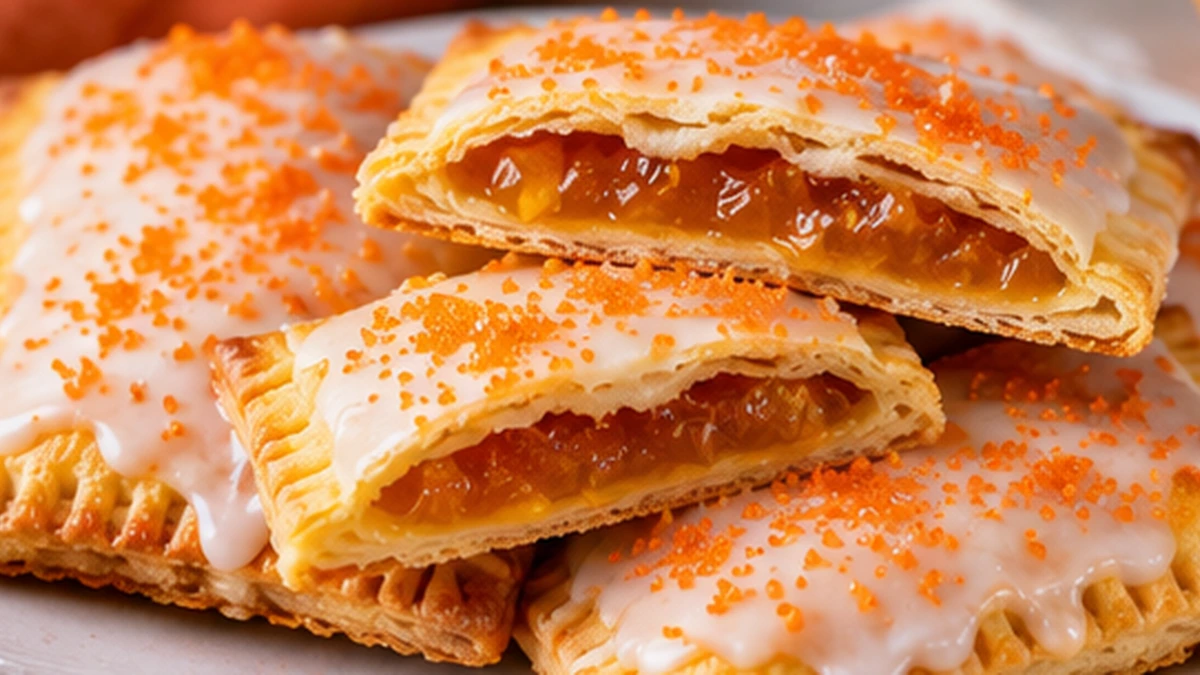
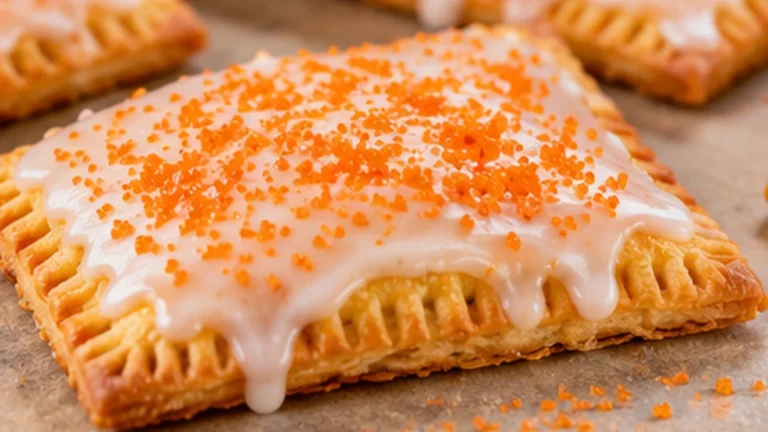
These homemade Liquid Death orange Pop Tarts are a citrus-filled tribute to the limited-edition Squeezed to Death Frosted Orange toaster pastry. A buttery, fork-crimped crust surrounds a thick orange marmalade center, while a pale orange-juice icing and crunchy orange sanding sugar finish the top. If you enjoy recreating new bakery releases, our sugar cookie Bundtlet copycat is another sweet baking project. This version makes six individually filled pastries, with no specialty drink required.
The inspiration is real: the October 2026 brand announcement introduced a limited-time US retail release beginning in November 2026. According to FoodBev’s product coverage, the commercial pastry combines a citrus filling, a golden-orange crust, frosting and orange sprinkles, inspired by the brand’s orange-flavored sparkling water. This independent recipe uses ordinary grocery ingredients to recreate those defining features, rather than claiming to duplicate the factory formula or a personally tested flavor match.
Table of Contents
What are Liquid Death orange Pop Tarts?
The collaboration turns the orange soda idea into a filled breakfast pastry. The familiar rectangular shape, bright filling and sprinkled frosting matter more to this homemade version than carbonation. In fact, adding sparkling water to a jam filling would make the mixture harder to seal. Instead, orange zest flavors the crust, marmalade supplies the concentrated fruit center, and juice gives the icing a clean citrus note. The homemade crust is golden rather than artificially orange, with visibly flaky edges.
The result is a hand pie with the appearance of a frosted toaster pastry. Expect a slightly thicker, more buttery crust than a shelf-stable commercial pastry. These Liquid Death orange Pop Tarts are baked in a conventional oven and should not be put in a slot toaster after frosting. You can make them for breakfast alongside coffee or serve them as a small dessert. For a richer chocolate bakery-inspired option, see our cocoa marshmallow cake.
Recipe at a glance
Yield: 6 pastries, approximately 3 by 4 inches each.
Active preparation: 30 minutes; baking: about 25 minutes.
Additional time: 90 minutes for chilling, cooling and setting the icing.
Total elapsed time: approximately 2 hours 25 minutes.
Equipment: mixing bowl, rolling pin, ruler, knife or pastry cutter, fork, sheet pan, parchment and wire rack.
Oven: 375°F (190°C), conventional setting.
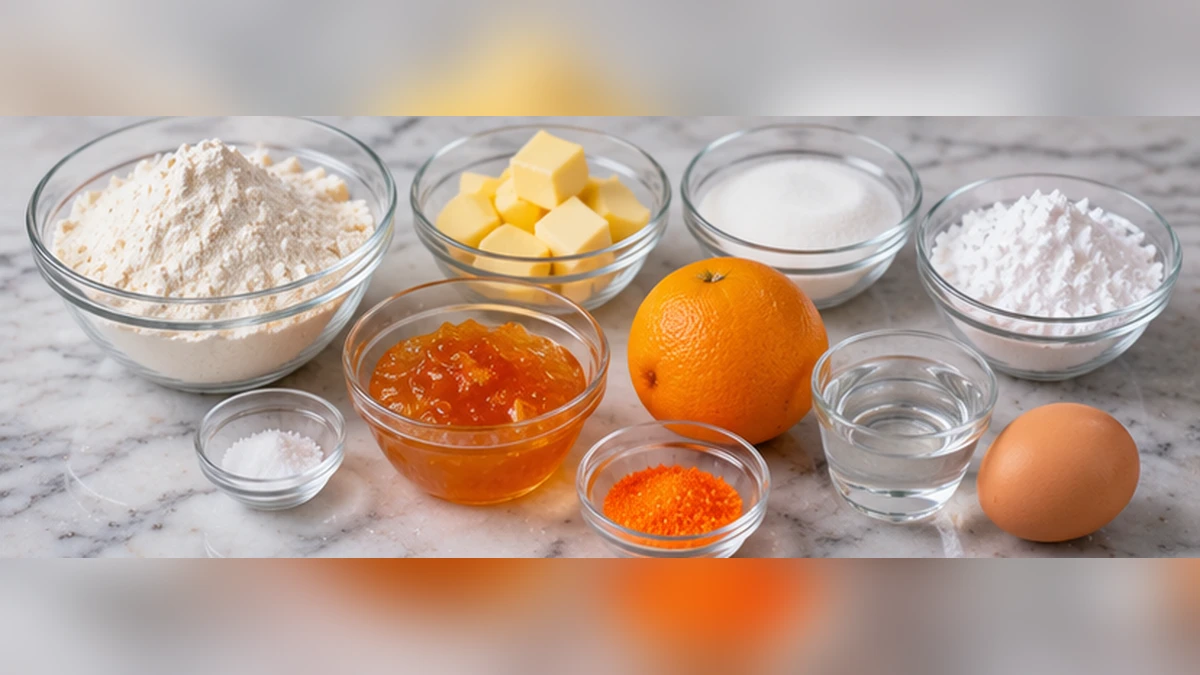
Ingredients for homemade orange Pop Tarts
2 cups (250 g) all-purpose flour, plus a little for rolling
2 tablespoons (25 g) granulated sugar
1/2 teaspoon (3 g) fine salt
3/4 cup (170 g) cold unsalted butter, cubed
1 teaspoon finely grated orange zest (from the orange below)
1/4 cup (60 ml) ice water, plus 1–2 teaspoons only if needed
6 tablespoons (120 g) thick orange marmalade
1 large egg, beaten, for sealing and brushing
1 cup (120 g) powdered sugar
1 tablespoon plus 1 teaspoon (20 ml) fresh orange juice, from 1 orange
1 tablespoon (15 g) orange sanding sugar or orange sprinkles
Flour creates a sturdy shell that can hold jam without falling apart in your hand. Weighing it is more reliable than dipping a measuring cup into the bag; too much flour makes the pastry difficult to roll and gives it a dusty finish. Use the ordinary all-purpose variety, not self-rising flour. There is no baking powder in this recipe, because the edges should remain relatively flat and easy to seal.
Cold unsalted butter supplies the flaky layers. Cut it into small cubes and return it to the refrigerator if your kitchen is warm. Granulated sugar adds a little sweetness, and salt prevents the crust from tasting flat. The orange zest should be grated finely so that no large pieces tear the dough. Grate only the colored outer surface, avoiding the bitter white pith. Juice the same orange for the icing later.
Choose a thick marmalade, preferably with finely cut peel. A sweet orange variety produces a more candy-like filling; a traditional bitter Seville orange marmalade makes a more grown-up pastry. Both work structurally if the jam holds its shape on a spoon. Do not add orange juice to a loose filling to make it taste stronger. The extra liquid can turn into steam or run through the seam.
Powdered sugar and orange juice make an icing without milk or raw egg. Orange sanding sugar is a practical way to recreate the speckled top. Standard jimmies also work, but the texture will be softer and the appearance different. The topping is included in the nutrition estimate. Check the marmalade and decoration labels if you have particular dietary requirements.
How to make Liquid Death orange Pop Tarts
1. Mix and chill the dough
Whisk the flour, granulated sugar, salt and zest together. Add the cold butter and work it in with a pastry blender or your fingertips until the mixture resembles coarse crumbs with a few pea-sized butter pieces remaining. Add the ice water gradually, tossing rather than kneading. Stop when a squeezed handful holds together; use the extra teaspoon or two only if the dough is still dry. Divide into two equal portions, flatten into rectangles, wrap and chill for 30 minutes.
Do not aim for a smooth bread dough. Visible butter pieces and a slightly rough surface are normal at this stage. The water hydrates the flour, but excess mixing can develop gluten and produce a tougher crust. If you find dry patches when pressing the dough together, sprinkle a little of the reserved water directly over them rather than pouring more liquid into the entire bowl.
2. Roll and cut matching rectangles
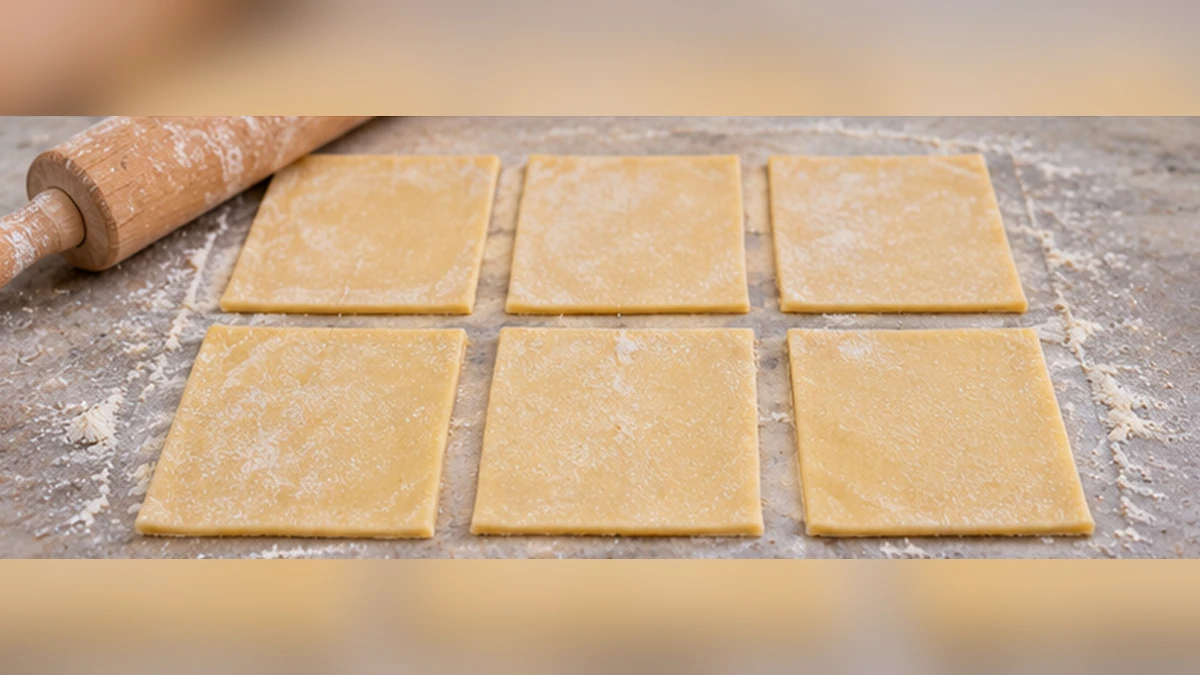
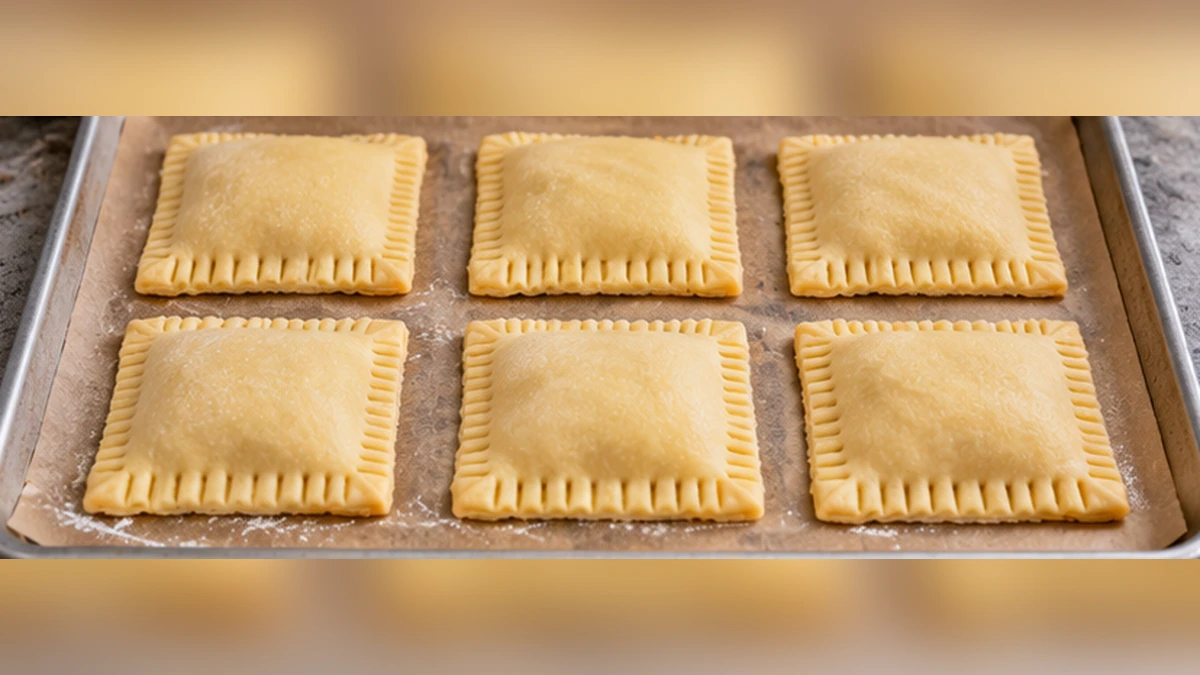
On a lightly floured surface, roll each chilled dough portion into a rectangle about 9 by 8 inches, roughly 1/8 to 3/16 inch thick. Trim uneven edges as necessary, reusing small scraps without excessive kneading. Cut each sheet into six rectangles measuring approximately 3 by 4 inches. You need 12 rectangles in total: six bottoms and six lids. If the edges crack when rolling, let the dough sit for a few minutes and try again. If it becomes greasy or sticky, refrigerate briefly.
A ruler is especially useful here because a small mismatch between the top and bottom can leave exposed filling. For the best shape, move the six bottom pieces onto a parchment-lined baking sheet before filling them. Use a thin spatula to lift them if they stick. Do not stretch the lids to make them fit, since stretched pastry can shrink during baking.
3. Fill with orange marmalade
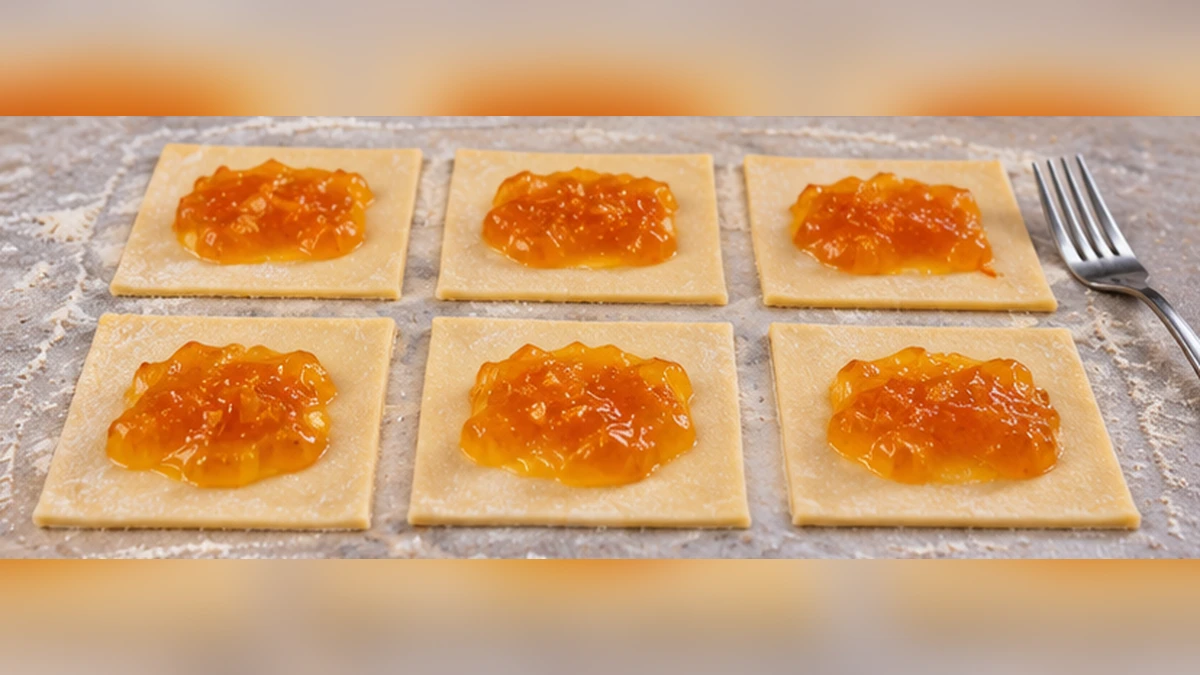
Place one level tablespoon (20 g) of thick marmalade in the center of each of the six bottom rectangles. Spread it slightly, leaving a clear 1/2-inch border all around. Keep the border free of jam. Beat the egg in a separate bowl and brush a thin line around the exposed edges. Set a matching rectangle on top, gently pressing from the middle outward to remove large air pockets without squeezing the filling onto the border.
The most important rule when assembling Liquid Death orange Pop Tarts is to resist the temptation to add extra jam. A larger spoonful may look generous, but the expanding filling can force open the seam. A measured layer gives a more even bite, and the icing supplies additional sweetness later. If jam touches the sealing edge, wipe it away before applying the egg.
4. Seal, vent and bake
Press the edges together with your fingers, then crimp all four sides firmly with a fork. Prick each lid three or four times to let steam escape. Brush the tops lightly with beaten egg and refrigerate the assembled tray for 15 minutes while the oven preheats to 375°F (190°C). Bake on the center rack for about 22–25 minutes, until the tops and bottom edges are golden and the pastry looks dry rather than doughy.
A small amount of bubbling jam at a vent is not automatically a failure. If a seam opens, leave the pastry in place until it is fully baked; trying to move hot jam with a utensil can spread it over the pan or burn your skin. Transfer the pastries to a wire rack after a few minutes, then allow at least 30 minutes of cooling before frosting. Thick pastry or a crowded pan can require a little more baking time.
5. Glaze and decorate
Stir the powdered sugar with 1 tablespoon of orange juice, then gradually add the remaining teaspoon until the icing is thick but spreadable. Use the back of a spoon to spread a small pool over each completely cooled pastry, leaving the fork marks visible. Scatter the orange sanding sugar over the wet icing. Leave the finished pastries for about 15 minutes, or longer if the room is humid, to let the surface set.
Icing should not be runny enough to disappear into the crust. If it flows quickly off the spoon, add a little more powdered sugar. If it is too stiff, add orange juice a few drops at a time. Unlike a hot doughnut glaze, this topping is intended to sit on the pastry. Wait until the pastry is fully cool; the frosting will melt or turn translucent on a warm surface.
Six flaky orange-zest pastries filled with thick orange marmalade and topped with orange-juice icing and orange sanding sugar. Independent inspired-by recipe.
Total Time:2 hours 25 minutes
Yield:6 pastries
Ingredients
Scale
2 cups (250 g) all-purpose flour, plus a little for rolling
2 tablespoons (25 g) granulated sugar
1/2 teaspoon (3 g) fine salt
3/4 cup (170 g) cold unsalted butter, cubed
1 teaspoon finely grated orange zest (from the orange below)
1/4 cup (60 ml) ice water, plus 1–2 teaspoons only if needed
6 tablespoons (120 g) thick orange marmalade
1 large egg, beaten, for sealing and brushing
1 cup (120 g) powdered sugar
1 tablespoon plus 1 teaspoon (20 ml) fresh orange juice, from 1 orange
1 tablespoon (15 g) orange sanding sugar or orange sprinkles
Instructions
Whisk flour, granulated sugar, salt and orange zest. Cut in cold cubed butter until coarse crumbs with pea-sized pieces remain. Toss with 60 ml ice water, adding 1–2 teaspoons only if needed. Divide into two rectangles, wrap and chill 30 minutes.
Roll each portion on a lightly floured surface into a 9-by-8-inch rectangle, about 1/8 to 3/16 inch thick. Cut each into six 3-by-4-inch rectangles, for 12 total. Place six bottoms on a parchment-lined baking sheet.
Spoon 1 tablespoon (20 g) thick marmalade onto each bottom, leaving a 1/2-inch border. Beat the egg, brush the edges lightly and cover with the remaining rectangles. Press out air, crimp all edges with a fork, and prick each lid three or four times. Brush the tops lightly with egg.
Chill the assembled pastries for 15 minutes while preheating the oven to 375°F (190°C). Bake on the center rack 22–25 minutes, until golden and baked through. Transfer to a rack after a few minutes and cool for at least 30 minutes.
Mix powdered sugar with 1 tablespoon orange juice, then gradually add the remaining teaspoon to make a thick spreadable icing. Spread on fully cooled pastries, sprinkle with orange sanding sugar and allow to set about 15 minutes.
Notes
Independent inspired-by recipe, not the proprietary product formula or a taste-tested match. No Liquid Death beverage is required.
Active prep 30 minutes, baking approximately 25 minutes, additional inactive time 90 minutes (30 + 15 minutes chilling, 30 minutes cooling and 15 minutes icing set); total approximately 2 hours 25 minutes.
Nutrition includes the entire egg, icing and sanding sugar; actual retained egg wash and brands vary. Extra rolling flour not included. Representative USDA ingredient values are used.
Refrigerate leftovers within two hours and use within three days. Freeze unfrosted baked pastries for up to one month for best quality. Do not heat frosted pastries in a slot toaster.
Contains wheat, milk and egg. Check decoration and jam labels. Images are illustrative generated food photography, not photographs of a tested batch.
Author:Adam Moretti
Prep Time:30 minutes
Cook Time:25 minutes
Category:Dessert
Method:Oven
Cuisine:American
Diet:No specific diet
Why the orange flavor works without the sparkling drink
Liquid Death orange Pop Tarts are inspired by a soda-flavored beverage, but the beverage itself is not necessary for a homemade pastry. Fresh zest brings fragrant orange oils into the crust, marmalade concentrates sweet-tart fruit in the center, and the orange juice icing ties the two together. Those three separate layers keep citrus present in every bite without making the dough wet. If you want a stronger orange character, choose a more aromatic marmalade rather than adding more liquid.
The same general principle applies to other brand-inspired sweets: reproduce the defining flavor and texture in a form that makes sense in a home kitchen. Our hot chocolate bark copycat uses a completely different chocolate format, and the Griswold Family Chaos Cookie relies on contrasting mix-ins. Here, the defining contrast is fruit jam, a crisp pastry shell and a sugary topping.
Troubleshooting orange toaster pastries
The filling leaked
Check three things: the consistency of the marmalade, the amount of filling, and the seal. A thin jam is the hardest to contain. Keep the full border clear, use only one tablespoon per pastry, crimp the entire perimeter and vent the top. The 15-minute chill also helps the dough retain its shape. If your jam is unusually loose, use a thicker brand instead of hoping it will thicken inside the oven.
The crust is tough or shrinks
Too much bench flour, excess kneading or stretching the rectangles can all contribute. Roll with short, even strokes and rotate the dough rather than pulling the corners. If a rectangle springs back as you roll, chill it briefly to allow the dough to relax. A crust that is pale underneath may also need a little more time; do not judge doneness by the frosting, which goes on only after baking.
The icing will not set
Warm pastry, excessive juice and humid air are common causes. Make sure the tops are at room temperature and keep the glaze thick enough to spread instead of pour. Let the pastries sit uncovered until the top is no longer tacky. Do not stack them until then, because the sugar topping can imprint on the pastry above it. If you enjoy a different texture, the warm scoopable cookie dough is intended to stay soft rather than set.
Ingredient swaps and shortcuts
Refrigerated pie dough can replace the homemade crust if time is limited. You will need enough to cut twelve 3-by-4-inch rectangles, and you should follow the package baking directions if they differ. The texture and nutrition will change. Orange marmalade is the closest readily available filling; thick apricot preserves with a little orange zest are a possible variation, but they produce a different fruit flavor. The base recipe does not require orange extract or food coloring.
For an unfrosted version, simply omit the icing and sanding sugar. It is still an orange hand pie, but it will no longer resemble the commercial frosted pastry as closely. An egg-free wash can be tried with a little water for sealing and a light brushing of milk, if egg avoidance is needed and dairy is suitable; this is a variation rather than the base recipe. The standard recipe contains wheat, milk and egg.
Serving and storing your homemade pastries
Serve the pastries after the icing has set, with coffee, tea or a glass of cold milk. The orange marmalade gives a bright contrast to rich breakfast foods. For a fruity snack platter, try our popping cranberries alongside the pastries rather than adding cranberries to this filling. One pastry is one serving. The recipe is a sweet treat, not a low-sugar or high-protein breakfast.
For a conservative home-storage approach, refrigerate leftovers in a covered container within two hours and use within three days. Separate layers with parchment after the icing sets. You can freeze the baked, unfrosted pastries for up to one month for best texture, thaw in the refrigerator, warm briefly in an oven, and cool before frosting. Avoid warming a frosted pastry in a slot toaster because dripping icing can burn or damage the appliance.
The dough can also be prepared a day ahead and refrigerated, tightly wrapped. Let it soften just enough to roll before assembling. Keep the egg wash cold until needed, discard leftover wash and clean surfaces that contacted raw dough or egg. The FDA guidance on flour safety explains why raw flour and uncooked dough should not be eaten. This applies even when the dough contains no egg.
Nutrition and serving size
Each of the six pastries contains an estimated 522 calories, including the icing and orange sanding sugar. The calculation uses ingredient weights and representative values from USDA FoodData Central, counting the full egg wash as a conservative estimate even though some may remain in the bowl. Marmalade and sprinkles vary by brand, and any additional flour used to roll the dough is not counted. These figures describe the homemade recipe, not the nutrition label of the commercial product.
FAQs about Liquid Death Orange Pop Tarts
Do I need Liquid Death orange sparkling water?
No. This independent recipe uses marmalade, zest and orange juice to create its orange profile. Carbonated water is not needed for the filling, frosting or dough.
Are Liquid Death orange Pop Tarts available year-round?
The announced November 2026 release was limited-time, so availability depends on the retailer and remaining stock. This recipe is designed to be made with ordinary ingredients even after the store-bought version disappears.
Can I make these in an air fryer?
The specified cooking method is a conventional oven. An air fryer may brown the tops and edges faster than the center cooks, so this recipe does not provide an unverified air-fryer timing. Use the oven for the stated method and baking cues.
Can I use orange curd instead of marmalade?
Orange curd has a different consistency and often contains eggs and butter. It can leak or change texture when heated. A thick marmalade is the more dependable choice for this recipe, and a curd-filled variation would need separate testing and storage guidance.
Why are homemade Liquid Death orange Pop Tarts not bright orange inside the crust?
The homemade dough uses natural orange zest and browns in the oven rather than relying on added orange coloring. The filling and decorations provide the most visible orange color. That difference is intentional, not a sign of underbaking.
Can I double the recipe?
Yes. Double the ingredient amounts, divide the dough into four portions, and bake twelve pastries in two batches if your oven cannot fit both trays without crowding. Keep the second tray chilled while the first bakes. The total elapsed time will increase for sequential batches.
Final tips
For the most recognizable homemade Liquid Death orange Pop Tarts, aim for six equally sized rectangles, a modest layer of bright marmalade and a thick white-orange glaze scattered with orange sugar. Keep the butter cold, avoid overfilling, and wait until the pastries are cool before decorating. Those details are what make the homemade version practical to reproduce without needing the commercial product itself.
Reviewed recipe options
Make this recipe fit me
Choose one of seven popular diet options. NutriMatch will confirm whether the recipe already fits, show a reviewed adaptation when available, or recommend recipes that match your choice.
Please choose a diet first.
Not available for this recipe
This recipe cannot currently be made Dairy-Free with a reviewed adaptation.
NutriMatch will not guess at substitutions. Try one of these recipes that is already reviewed for your choice.
Recipe details, product formulas, and cross-contact information can change. Confirm current labels and use professional guidance when medically necessary.
Not available for this recipe
This recipe cannot currently be made Gluten-Free with a reviewed adaptation.
NutriMatch will not guess at substitutions. Try one of these recipes that is already reviewed for your choice.
Recipe details, product formulas, and cross-contact information can change. Confirm current labels and use professional guidance when medically necessary.
Not available for this recipe
This recipe cannot currently be made High Protein with a reviewed adaptation.
NutriMatch will not guess at substitutions. Try one of these recipes that is already reviewed for your choice.
Recipe details, product formulas, and cross-contact information can change. Confirm current labels and use professional guidance when medically necessary.
Not available for this recipe
This recipe cannot currently be made Keto with a reviewed adaptation.
NutriMatch will not guess at substitutions. Try one of these recipes that is already reviewed for your choice.
Recipe details, product formulas, and cross-contact information can change. Confirm current labels and use professional guidance when medically necessary.
Not available for this recipe
This recipe cannot currently be made Low Carb with a reviewed adaptation.
NutriMatch will not guess at substitutions. Try one of these recipes that is already reviewed for your choice.
Recipe details, product formulas, and cross-contact information can change. Confirm current labels and use professional guidance when medically necessary.
Not available for this recipe
This recipe cannot currently be made Vegan with a reviewed adaptation.
NutriMatch will not guess at substitutions. Try one of these recipes that is already reviewed for your choice.
Recipe details, product formulas, and cross-contact information can change. Confirm current labels and use professional guidance when medically necessary.
Not available for this recipe
This recipe cannot currently be made Vegetarian with a reviewed adaptation.
NutriMatch will not guess at substitutions. Try one of these recipes that is already reviewed for your choice.
Recipe details, product formulas, and cross-contact information can change. Confirm current labels and use professional guidance when medically necessary.