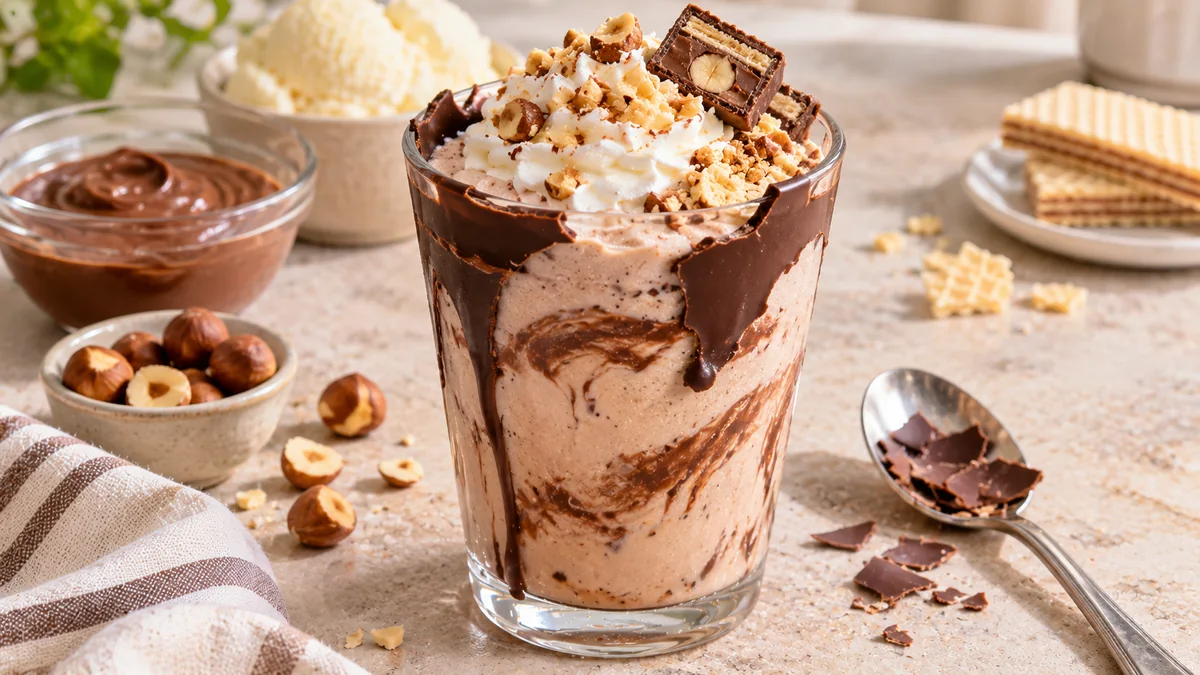
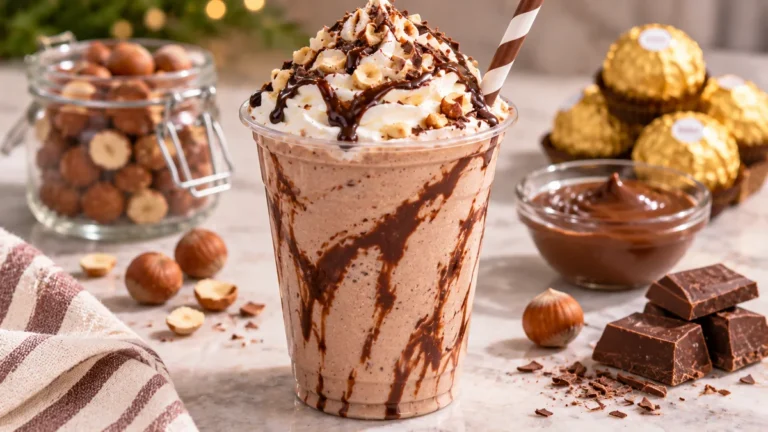
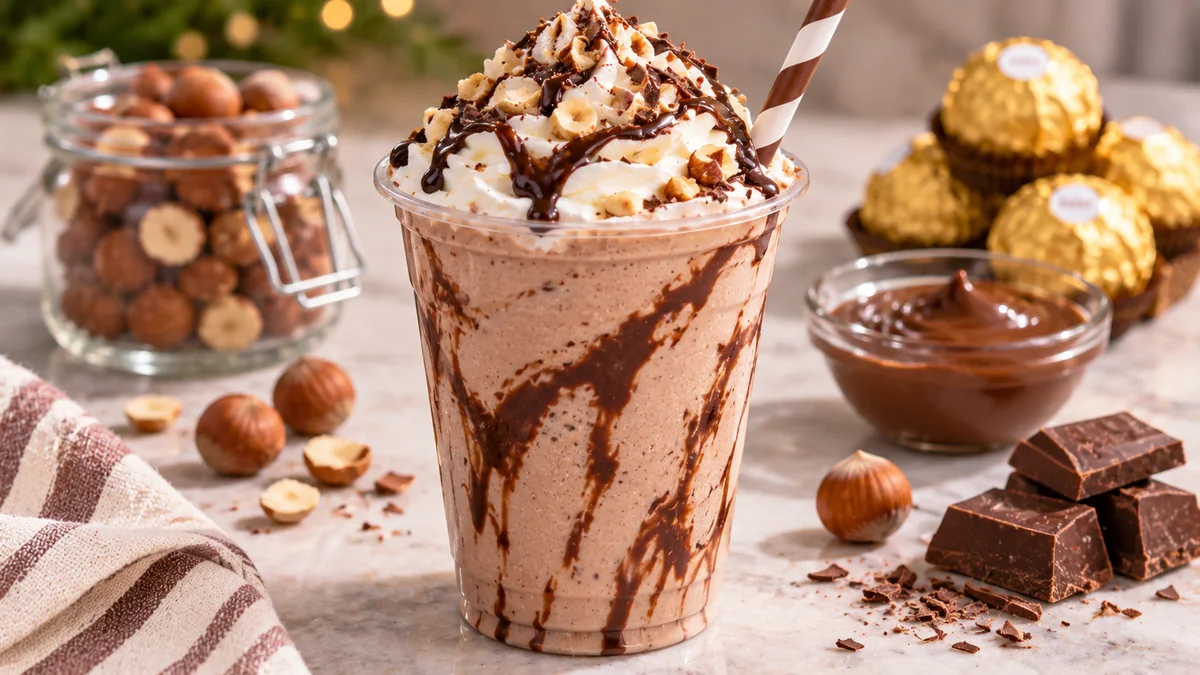
This hazelnut chocolate shake is a homemade, dessert-style spin on Shake Shack’s 2026 Ferrero Rocher holiday drink. It blends vanilla ice cream with chocolate-hazelnut spread, but the memorable part is a thin coating of dark chocolate inside a cold glass. Tap the coating with a spoon and it breaks into crisp shards against the thick shake. The contrast is why this copycat is more interesting than an ordinary Nutella milkshake.
If you love chocolate drinks but want a different texture, compare our cookies and cream latte. That recipe is espresso-based and intentionally pourable; this one is very cold, thick and rich enough for a spoon. You do not need a restaurant cup, special candy molds or a commercial ice-cream machine to make it.
The reference hazelnut chocolate shake launched in participating U.S. Shake Shack restaurants in November 2026 and uses vanilla frozen custard, chocolate-hazelnut spread, a crackable dark chocolate shell, whipped cream, nuts, wafer flakes and a chocolate-hazelnut candy square. This is an independent inspired-by recipe, not Shake Shack’s proprietary formula. No one outside the company can verify that the ingredient ratios below match the restaurant version exactly.
Table of Contents
Hazelnut Chocolate Shake: What Makes This Copycat Different?
A lot of chocolate-hazelnut milkshakes start with chocolate ice cream. For a closer flavor direction, this hazelnut chocolate shake starts with a vanilla base and puts the chocolate in the spread, glass shell and toppings. The result tastes distinctly of hazelnut instead of becoming a uniform cocoa drink. Keeping the spread measured also helps the ice cream stay thick.
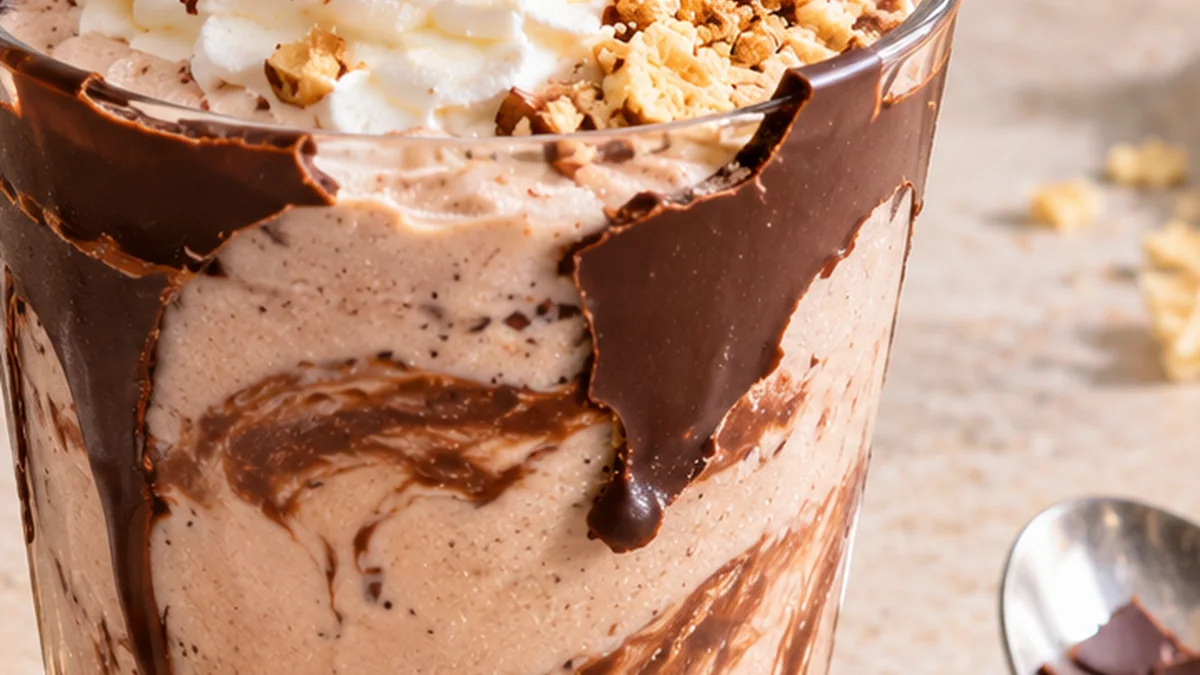
The shell for this hazelnut chocolate shake is made from dark chocolate and a small amount of coconut oil. Melting them together creates a thin coating that firms up quickly on cold glass. It will not behave exactly like a commercial coating, but it gives the same enjoyable snap when a spoon presses into it. Unlike the shell on glass-pressed grape bark, the coating here is only a delicate layer on the inside of the serving glass.
Chocolate-hazelnut flavor is mixed into vanilla ice cream rather than replacing it with chocolate ice cream.
Cold glasses help the chocolate shell set before the drink is poured.
A small amount of milk loosens the shake without turning it into a thin beverage.
Toasted chopped hazelnuts and crisp wafer pieces add two kinds of crunch.
You can make the chocolate shell first and keep the glasses cold while blending.
Ingredients for the Hazelnut Chocolate Shake
Vanilla ice cream — 2 cups (about 300 g). Choose a brand that scoops firmly straight from the freezer. Dense premium vanilla ice cream makes the hazelnut chocolate shake thicker; lower-fat ice cream or frozen desserts with a different overrun may give a looser result. Vanilla frozen custard is especially close in spirit to the restaurant, but regular ice cream is easier to find.
Chocolate-hazelnut spread — 3 level tablespoons (about 56 g). Stir the jar first if the oil has separated. Nutella-style spread brings hazelnut and cocoa together, and three measured tablespoons are plenty for two glasses. The nutrition reference uses standard sweetened chocolate-hazelnut spread; sugar-free, dark or homemade varieties are different.
Whole milk — 1/4 cup (60 mL), cold. This small amount is just enough to help the blender catch the ice cream. Start with only two tablespoons and hold the rest back until needed. The hazelnut chocolate shake should barely flow from the blender, not splash like ordinary chocolate milk.
Dark chocolate — 2 ounces (about 56 g), finely chopped. Use a bar intended for melting, around 60–70% cocoa, for the shell. A very high-cocoa chocolate can taste more bitter than the sweet filling. Candy coatings or chips with different stabilizers may thicken differently.
Refined coconut oil — 1 teaspoon. Stirred into the chocolate, it helps the coating spread thinly. Refined coconut oil keeps coconut flavor low. If you omit it, the shell can still set, but it may be harder to coat the sides evenly and can crack in thicker pieces.
Whipped cream — 1/4 cup total. Divide between the two glasses. A soft topping looks better than an enormous mound that hides the shell. You can use lightly whipped cold heavy cream or ordinary prepared whipped cream; check its label for nutrition and additives.
Roasted hazelnuts — 2 tablespoons, chopped. Toasted nuts deepen the aroma. Roughly chop them rather than leaving large whole nuts that can fall off the glass. If using raw nuts, toast until fragrant and cool completely before serving.
Crisp wafer cookie — about 20 g, crushed. Use plain vanilla or chocolate wafer fingers. These supply the light, airy crunch associated with the Ferrero Rocher topping. Most wafer cookies contain wheat, so verify the label; this recipe is not presented as gluten-free.
Chocolate-hazelnut candy — 1 small piece for the entire batch, halved. One small Ferrero Rocher-type candy may garnish both servings. If you cannot find a small candy, replace it with a chocolate square and a few extra nuts; that substitution changes nutrition slightly.
For this hazelnut chocolate shake, a pinch of flaky salt is optional and not included in the estimate. Avoid adding extra chocolate sauce, sprinkles or more hazelnut spread without adjusting the nutrition information. If you prefer a lighter, more protein-focused chocolate spoon dessert, our high-protein chocolate mousse uses a very different set of ingredients and should not inherit this copycat’s numbers.
How to Make a Crackable Chocolate Shell in a Glass
The shell is the signature feature of a hazelnut chocolate shake inspired by this holiday release. Set two clean, dry, sturdy glass tumblers in the freezer for about 10 minutes. Use freezer-safe glassware, and do not place hot glass in the freezer; abrupt temperature changes can crack it. The goal is cold glass, not frozen-solid glass at the point of contact.
For this hazelnut chocolate shake shell, microwave the chopped chocolate with the coconut oil in a dry, microwave-safe bowl in 15-second bursts at medium power, stirring between each one. Stop when almost melted and let residual heat finish the job. If you prefer a double boiler, keep the bottom of the bowl above simmering water and do not let steam or water get into the chocolate.
Allow the chocolate to cool until fluid but no longer hot, about 2–3 minutes. Working with one chilled glass at a time, spoon about half the chocolate inside and rotate the glass so a thin coat reaches partway up the sides. Let any excess slide back toward the bottom. Return the glass to the refrigerator or freezer for about 3–5 minutes until firm, then repeat with the second glass.
An important distinction: the chocolate coating is meant to be cracked at serving, not pulverized in a blender. If you pour warm shake into the glass, the shell will soften. If the shell feels thick and stubborn, let the glass stand for one minute and press the rim with a spoon rather than striking the glass hard.
Blend the Vanilla-Hazelnut Shake Base
For the hazelnut chocolate shake base, put the cold milk and chocolate-hazelnut spread in the blender first. Pulse briefly to loosen the spread, then add the vanilla ice cream. Blend on low in short bursts, stopping as soon as the mixture becomes smooth. If your blender struggles, stop the motor, scrape down with a spatula and add only one tablespoon of the reserved milk at a time.
This hazelnut chocolate shake benefits from less liquid than a café-style frappe. Start with a ratio of one cup ice cream to roughly one-eighth cup milk per serving, with the spread folded into that base. A high-speed blender may incorporate enough air to make the drink look taller, but volume varies. Thick texture is a better goal than matching the restaurant’s cup size.
To keep the hazelnut chocolate shake smooth, do not add the chopped hazelnuts or wafers to the blender. They belong on top, where they stay crisp. For a different frozen holiday drink built around fruit and chocolate, see our Merry Berry Frappuccino copycat; that recipe uses syrup and fruit instead of nuts and a chocolate-lined glass.
Assemble the Hazelnut Chocolate Shake and Add Crunch
Take the chilled shell-lined glasses out of the freezer only when you are ready to serve. Divide the thick hazelnut chocolate shake evenly between them, using a flexible spatula to guide the ice cream base into the center. Keep a little of the shell visible above the shake so guests can see where to tap it with a spoon.
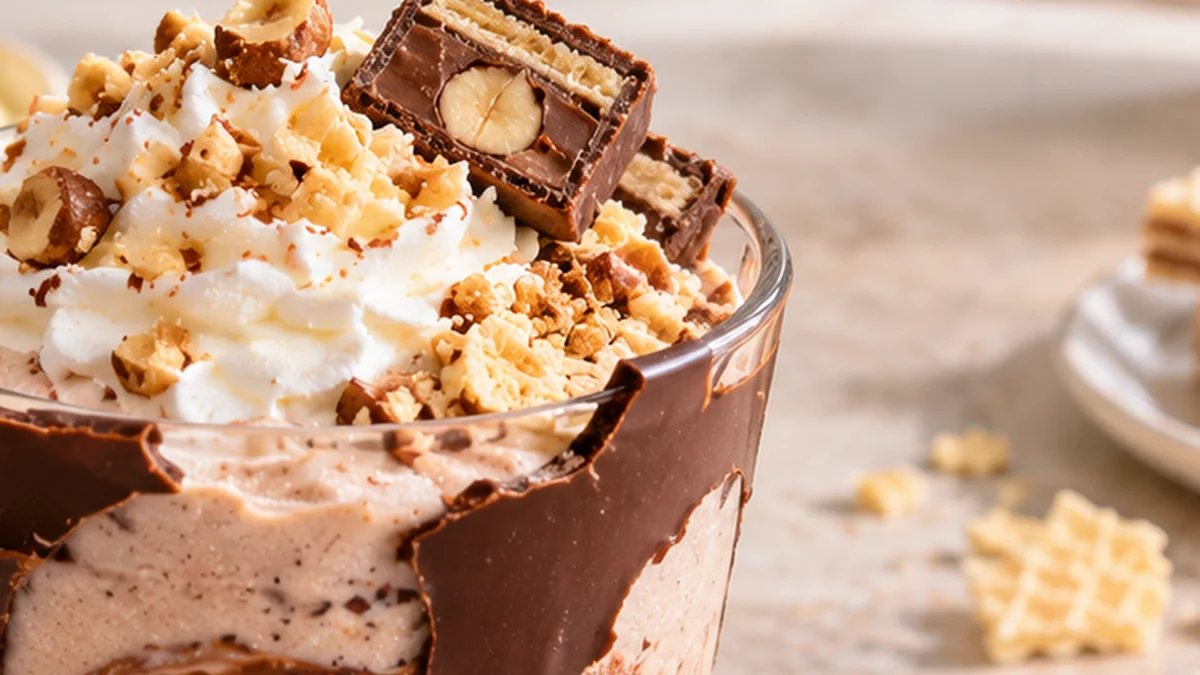
Finish each glass with half the whipped cream, half the roasted hazelnuts and half the wafer crumbs. Place half of the chocolate-hazelnut candy piece on each topping. Serve immediately with a long spoon. A wide straw also works once the shake starts to soften, but a spoon shows off the crunchy shell better.
For presentation, avoid burying the toppings under extra fudge sauce. If you want another holiday dessert to serve alongside instead of adding more sugar to the glass, our peppermint chocolate waffle provides chocolate and mint as a separate plated treat. The nutty flavor of this recipe is better showcased with relatively simple garnish.
Printable Hazelnut Chocolate Shake Recipe
The recipe card makes exactly two dessert-size shakes and includes the shell, whipped cream, nuts, wafers and candy. Nutrition is for one of the two finished portions, not the base alone. Ingredients are listed by volume and approximate weight to help you replicate the texture. The shell and toppings are essential to the intended version.
A homemade 2026 holiday Shake Shack-inspired vanilla and chocolate-hazelnut frozen shake served in dark chocolate-coated glasses with whipped cream, roasted hazelnuts, wafer crumbs and a candy garnish. Independent copycat, not the official restaurant formula.
Total Time:22 minutes
Yield:2 dessert shakes
Ingredients
Scale
2 cups (about 300 g) very cold vanilla ice cream or vanilla frozen custard
20 g crisp vanilla or chocolate wafer cookie pieces, crushed
1 small (about 12.5 g) chocolate-hazelnut candy, halved for topping
Instructions
Place two clean, completely dry, sturdy, freezer-safe 12–16-ounce glasses in the freezer for 10 minutes. Do not place warm glassware directly in the freezer.
In a dry microwave-safe bowl, heat dark chocolate with coconut oil in 15-second bursts, stirring between intervals, until mostly melted; stir until smooth. Cool 2–3 minutes until fluid but not hot.
Spoon half the melted chocolate into a chilled glass and slowly turn the glass to coat the inside in a thin, uneven chocolate layer. Repeat with the second glass and chill 3–5 minutes until set.
Pulse 2 tablespoons of the measured cold milk with the chocolate-hazelnut spread in a blender. Add the vanilla ice cream and blend briefly on low until thick and smooth. Add only the remaining milk a tablespoon at a time if the blades need help.
Divide the blended shake between the cold chocolate-lined glasses. Top each with half the whipped cream, hazelnuts and crushed wafer. Garnish with half the chocolate-hazelnut candy.
Serve immediately with a long spoon. Gently press the thin dark chocolate shell with the spoon to crack it; do not strike the glass.
Notes
Independent inspired-by copycat, not a formula from or endorsed by Shake Shack or Ferrero Rocher.
Makes two indulgent dessert shakes. Chocolate shell, toppings, and candy ARE included in reference nutrition.
Glassware safety: use sturdy, dry, freezer-safe glasses and let melted chocolate cool before coating. Do not expose fragile glass to sudden thermal shock.
Nutrition is a rough ingredient-based estimate using ordinary ice cream, sweetened spread (e.g. Nutella 200 kcal/37 g), dark chocolate, coconut oil, milk and toppings. Values vary widely by products and serving sizes.
Contains hazelnuts/tree nuts and dairy; typical wafer cookies contain wheat. The entire recipe is NOT nut-free, dairy-free or guaranteed gluten-free.
Prepare shell-lined glasses ahead but blend and garnish immediately before eating to preserve the texture.
Dairy ingredients must remain refrigerated or frozen until use. Do not leave the finished shake out for more than two hours, or one hour in hot conditions above 90°F.
Author:Adam Moretti
Prep Time:15 minutes
Chill shell:5 minutes
Cook Time:2 minutes
Category:Drinks, Desserts
Method:Blender and microwave
Cuisine:American
Diet:Vegetarian (check all product labels)
Why Is My Hazelnut Chocolate Shake Too Thin?
Most thin hazelnut chocolate shakes come from too much milk, softened ice cream or blending for too long. If yours is watery, add another small scoop of frozen vanilla ice cream and pulse for only a second or two. That improves the body, but it also changes the calories and yield; recalculate the recipe if you make the change permanent.
If the spread has stiffened in a cold blender, add it to the milk before the ice cream. If the base becomes grainy, check whether the chocolate shell was accidentally blended into it. Melted chocolate should remain on the glass, not be poured into the frozen mixture. A smooth hazelnut chocolate shake does not require cocoa powder, protein powder or crushed ice.
Ice cubes are particularly unhelpful here. They may make a drink colder, but they dilute the creamy texture as they melt. If you like an iced rather than spoonable drink, consider our protein soda recipe instead; it is based on a completely different liquid and carbonation method.
How to Keep the Chocolate Shell Crisp
For a crisp hazelnut chocolate shake shell, cold, completely dry glasses are the most important detail. Any pooled water beneath the chocolate can keep the coating uneven. Use a thin layer: a very thick layer can be hard to crack neatly, while a paper-thin coat may disappear as soon as the shake touches it. Aim for a visible dark band on the glass that sets when chilled.
Use the shell-lined glasses within a few hours for the best appearance. Keep them covered and refrigerated after the chocolate sets, and avoid touching the inside. You can melt and apply the coating in advance, but blend the ice cream only at serving time. As a comparison, a hot chocolate such as our cottage cheese hot chocolate needs a different dairy-handling method and is served warm, not in a shell-lined frozen glass.
The shell is made with chocolate and oil, so avoid pouring freshly heated chocolate into ice-cold fragile drinkware. Melt in a separate bowl, cool until merely warm and coat a glass that was chilled briefly. When in doubt about your glassware, use a thick ceramic cup that is rated for temperature changes.
Variations and Smart Substitutions
A Smaller Dessert Portion
For smaller hazelnut chocolate shake portions, make the full batch and divide it among four small glasses. Each glass has approximately half the nutrition of the large serving only if the chocolate shell, whipped cream and other toppings are divided evenly. This is a practical serving adjustment, not a claim that a sweet shake is a balanced meal.
No Coconut Oil
For a hazelnut chocolate shake shell without oil, you can try 2 ounces of melted dark chocolate. Spread an especially thin coating and chill it fully; the result may be more brittle or tougher. Different chocolate bars set differently, so first test one spoonful on a chilled plate. If it cracks cleanly without becoming unpleasantly hard, the texture will probably work.
Nut-Free or Dairy-Free?
This hazelnut chocolate shake is not suitable for nut allergies: the hazelnut spread, garnish and candy all contain hazelnuts, and some contain other nuts. It also contains dairy, and most wafers contain wheat. It is not safe to promise a “nut-free version” simply by omitting the chopped nuts, because the spread and candy remain allergen sources.
For dairy-free needs, a separate tested plant-based dessert is more reliable than making one-for-one changes to ice cream and whipped cream, which can affect the setting of the chocolate shell and the nutrition. For a cold dessert using Greek yogurt instead, high-protein Jello fluff is a different recipe, though it still contains dairy.
Optional Coffee-Hazelnut Variation
Replace 1 tablespoon of the measured milk with 1 tablespoon of cold, concentrated espresso. This will taste more like a coffee-shop milkshake, but it is no longer a strictly chocolate-hazelnut dessert without caffeine. For a drink with coffee as the primary flavor, our iced sugar cookie matcha is a tea-based alternative rather than a substitute ingredient.
Calories and Nutrition: What Is Included?
This is an indulgent hazelnut chocolate shake. The estimated nutrition per large serving is approximately 830 calories, 14 g protein, 90 g carbohydrate and 53 g fat, with about 62 g sugars. The numbers are ingredient-based estimates, not laboratory testing. Brand variation in ice cream, spread, chocolate, wafer cookies and whipped cream can create meaningful differences.
For the reference calculation, the full two-glass batch uses roughly 300 g vanilla ice cream, 56 g sweetened hazelnut spread, 60 mL whole milk, 56 g dark chocolate, 1 tsp coconut oil, 1/4 cup whipped cream, 2 tbsp chopped hazelnuts, 20 g wafer pieces and one small chocolate-hazelnut candy divided between the cups. Nutella lists 200 calories per 37 g serving; that is about 300 calories from the 56 g used here. A USDA-style soft-serve vanilla ice cream reference has about 320 calories per cup, although the ice cream you actually buy may differ. Compare your labels rather than assuming every shake weighs the same.
For additional context about protein across meals rather than desserts, our high-protein foods guide covers practical ingredients and dishes. This hazelnut chocolate shake should not be labeled as high protein solely because it contains milk and nuts, and it should not be marketed as a weight-loss or low-sugar beverage.
Storage, Make-Ahead and Food Safety
You can prepare the chocolate-lined hazelnut chocolate shake glasses ahead of time, but the ice cream base is best blended fresh. If you must hold a finished glass for a short period, keep it cold and serve before the shell softens and the wafers become soggy. A freezer may harden the entire mixture into a scoopable dessert rather than preserving a creamy shake.
Milk, ice cream and whipped cream are perishable. Keep them at 40°F (4°C) or colder until serving; the CDC says to refrigerate perishable food within two hours, or one hour in heat above 90°F (32°C). Do not use a glass of melting dairy as an all-day party decoration. Cold toppings should be added as close to serving as possible.
For a crunchy chocolate dessert you can fully make ahead instead of a freshly blended drink, Dubai chewy cookies are a separate project involving a crispy filling and baked or assembled components, not a milkshake substitute.
Hazelnut Chocolate Shake FAQs
Is This the Real Shake Shack Hazelnut Chocolate Shake Recipe?
No. It is an independently developed, inspired-by homemade copycat based on the publicly described components of Shake Shack’s November 2026 holiday release. The company has not disclosed the exact proportions, ingredients of its frozen custard, shell formula or garnish weights. The goal is a similar flavor and contrast, not a verified duplicate.
Can I Use Chocolate Ice Cream Instead of Vanilla?
Yes, but expect stronger chocolate and less distinct hazelnut flavor. Reduce the chocolate-hazelnut spread slightly only if you prefer a less sweet result. That changes nutrition and no longer follows the original ingredient proportions. Vanilla creates a more balanced homemade hazelnut chocolate shake.
What Is the Best Chocolate for the Crackable Shell?
Use a dark chocolate bar intended for melting, around 60–70% cocoa, and chop it finely. Tempered chocolate sets particularly crisp, but this simple home method uses a little refined coconut oil to help coating. Keep water out of the melting bowl and avoid overheating.
Can I Make the Chocolate Shell Without a Microwave?
Yes. Place chocolate and oil in a heatproof bowl over gently simmering water and stir until almost melted. Remove the bowl and stir until smooth. Let it cool a few minutes before coating the chilled glasses; moisture from steam must not enter the chocolate.
Does This Recipe Have Caffeine?
This hazelnut chocolate shake contains small amounts of naturally occurring caffeine from cocoa in the chocolate and spread. It does not include coffee unless you make the optional espresso variation. The exact amount varies by brand, so this is not guaranteed caffeine-free.
Can I Skip the Candy on Top?
Yes. Use an extra teaspoon of chopped nuts or wafers if you prefer, but note that the omitted chocolate-hazelnut candy is included in the reference nutrition. A simplified topping still tastes good; the shell is the more distinctive element.
Why Does My Chocolate Shell Slide Off the Glass?
It may be too warm, too thick or applied to a wet glass. Dry the glass thoroughly and chill it before coating. Let the melted chocolate cool slightly, rotate the glass while the coating is fluid and return it to the refrigerator to set. A thin layer usually works better than a heavy pool at the bottom.
Final Serving Tips
Make the shell first, blend the base only after the glasses are ready, and garnish immediately. A good hazelnut chocolate shake should have a spoonable vanilla-hazelnut center, a recognizable dark chocolate crack and clean roasted-nut crunch. That combination—rather than a giant swirl of extra sauce—is the detail worth getting right.
If you want another homemade dessert with creamy richness but no crackable glass shell, the high-protein peppermint cheesecake dip is a chilled holiday option with yogurt and cottage cheese. And for a lighter foam texture rather than a dense shake, strawberry cold foam without heavy cream illustrates why milk composition and aeration matter.
Choose one of seven popular diet options. NutriMatch will confirm whether the recipe already fits, show a reviewed adaptation when available, or recommend recipes that match your choice.
Please choose a diet first.
Not available for this recipe
This recipe cannot currently be made Dairy-Free with a reviewed adaptation.
NutriMatch will not guess at substitutions. Try one of these recipes that is already reviewed for your choice.
Recipe details, product formulas, and cross-contact information can change. Confirm current labels and use professional guidance when medically necessary.
Not available for this recipe
This recipe cannot currently be made Gluten-Free with a reviewed adaptation.
NutriMatch will not guess at substitutions. Try one of these recipes that is already reviewed for your choice.
Recipe details, product formulas, and cross-contact information can change. Confirm current labels and use professional guidance when medically necessary.
Not available for this recipe
This recipe cannot currently be made High Protein with a reviewed adaptation.
NutriMatch will not guess at substitutions. Try one of these recipes that is already reviewed for your choice.
Recipe details, product formulas, and cross-contact information can change. Confirm current labels and use professional guidance when medically necessary.
Not available for this recipe
This recipe cannot currently be made Keto with a reviewed adaptation.
NutriMatch will not guess at substitutions. Try one of these recipes that is already reviewed for your choice.
Recipe details, product formulas, and cross-contact information can change. Confirm current labels and use professional guidance when medically necessary.
Not available for this recipe
This recipe cannot currently be made Low Carb with a reviewed adaptation.
NutriMatch will not guess at substitutions. Try one of these recipes that is already reviewed for your choice.
Recipe details, product formulas, and cross-contact information can change. Confirm current labels and use professional guidance when medically necessary.
Not available for this recipe
This recipe cannot currently be made Vegan with a reviewed adaptation.
NutriMatch will not guess at substitutions. Try one of these recipes that is already reviewed for your choice.
Recipe details, product formulas, and cross-contact information can change. Confirm current labels and use professional guidance when medically necessary.
Not available for this recipe
This recipe cannot currently be made Vegetarian with a reviewed adaptation.
NutriMatch will not guess at substitutions. Try one of these recipes that is already reviewed for your choice.
Recipe details, product formulas, and cross-contact information can change. Confirm current labels and use professional guidance when medically necessary.