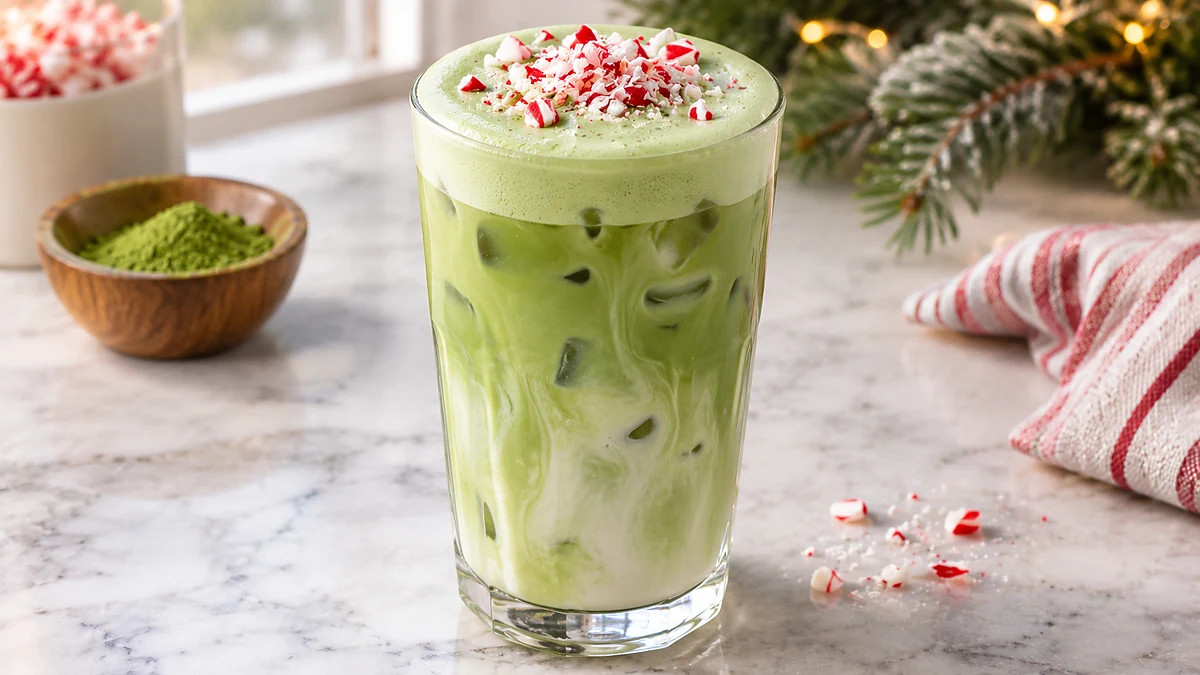
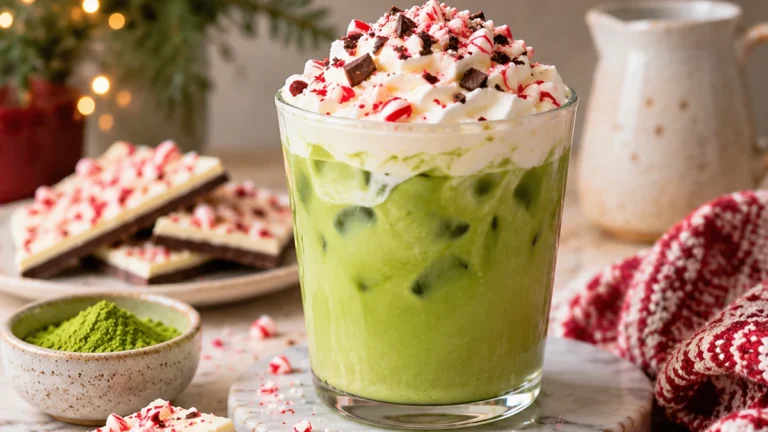
Peet’s Peppermint Bark Matcha is an iced holiday matcha drink with a creamy white-chocolate-and-peppermint milk base, a pale-green peppermint matcha cream topping, and a little red-and-white peppermint crunch. This homemade interpretation makes one large glass in about ten minutes without espresso equipment or a commercial dream-top dispenser. If you already like festive green-tea drinks, our iced sugar cookie cream matcha uses a different cookie-flavored white foam; here, peppermint and white chocolate belong in the drink itself.
The most useful distinction in Peet’s Peppermint Bark Matcha is the topping. The shop describes a Peppermint Matcha Dream Top, not plain whipped cream or a marshmallow cap. At home, we whisk a small quantity of matcha into chilled cream and milk, then aerate it only until it is soft enough to pour. A sprinkle of crushed peppermint candy gives crunch without turning the entire drink into a candy-cane dessert.
Peet’s announced the holiday menu on November 4, 2026, describing white chocolate sauce, peppermint syrup, cold milk, matcha dream top and peppermint crunch in its official seasonal announcement. This recipe is an original home approximation based on those publicly stated flavors; the company has not shared its exact proportions, proprietary topping formula or café preparation steps. This article does not claim a restaurant taste test or an identical finished product.
Table of Contents
What Is Peet’s Peppermint Bark Matcha?
Peet’s Peppermint Bark Matcha is a cold, layered green-tea drink that combines a sweet white-chocolate peppermint milk with a soft matcha-based topping. White chocolate gives the base a rounded, almost confectionery richness, while matcha adds the grassy tea note that keeps the result from tasting like mint milk. The peppermint crunch on the surface is deliberately small: it should deliver a few crisp bites, not an impenetrable layer that must be chewed through before sipping.
The original description is more precise than a generic “peppermint matcha.” Peet’s Peppermint Bark Matcha uses both a flavored milk base and a special top. We keep those two components separate so you can adjust mint sweetness without making the matcha foam bitter. Unlike our Snowcap Marshmallow Matcha, this version contains no marshmallow crème and has a distinct white-chocolate note.
At a Glance
Style: iced matcha latte with a peppermint matcha cold-foam-style top
Best cup: 16–20 fluid ounces, with enough headspace for the foam
Yield: one generous drink; divide among two small glasses if preferred
Hands-on time: about 10 minutes; no cooking or set time
Main flavors: white chocolate, mint, earthy matcha and a little candy crunch
Equipment: matcha whisk or small frother, narrow frothing cup and a tall glass
Ingredients for the Homemade Version
For balanced Peet’s Peppermint Bark Matcha, measure the white chocolate and peppermint syrup rather than pouring freehand. A few grams can change a drink of this size dramatically. We also keep the mint concentration modest because crushed peppermint candy will add extra flavor at the last sip. These are ingredients for one serving, including all toppings counted in the nutrition estimate.
Plain Unsweetened Matcha
Use 1½ teaspoons (about 3 g) plain unsweetened matcha for the drink and another ½ teaspoon (about 1 g) for the top. Fine, fresh powder gives a vivid green color and disperses better than older, clumped matcha. The top’s extra half teaspoon makes the cream naturally pale green; if you put all the matcha in the base instead, you lose the recognizable two-tone look. Never assume a presweetened matcha latte mix is an equal replacement—it may already contain sugar or milk powder.
Milk and White Chocolate Sauce
For Peet’s Peppermint Bark Matcha, measure ¾ cup cold 2% milk for the iced base, plus 1 tablespoon cold 2% milk for the topping. Stir 1 tablespoon (about 20 g) prepared white chocolate dessert sauce into the base. Use a smooth sauce that mixes into cold dairy; chips and chopped white chocolate do not dissolve reliably unless they have first been gently melted into another warm ingredient. Refrigerate the measured milk while you whisk the matcha. A dairy-free substitution is possible, but it changes both nutrition and foam performance and is not the base recipe.
Peppermint Syrup, Not Undiluted Extract
In Peet’s Peppermint Bark Matcha, use 2 teaspoons regular peppermint coffee syrup in total: 1½ teaspoons in the milk base and ½ teaspoon in the cream top. This is a measured home starting point, not an official Peet’s syrup dose. Food-grade peppermint extract is vastly stronger; do not swap the same volume of extract for syrup. A few drops of extract may already overpower an entire glass, so if you only have extract, choose a separate recipe formulated specifically around it. Our peppermint cream cold brew offers another example of measured peppermint sweetness in a chilled drink.
Cold Cream for the Matcha Dream-Top Interpretation
For the homemade topping, combine 2 tablespoons cold heavy whipping cream with the additional tablespoon of cold milk, ½ teaspoon matcha and ½ teaspoon peppermint syrup. A tiny amount of cream is enough for a floating layer that is airy but still sippable. This is a home cold-foam method inspired by the chain’s named topping, not the actual proprietary dream-top recipe. If you prefer a lighter foam, the approach in our strawberry cold foam without heavy cream is a different, non-identical alternative.
Ice and Peppermint Crunch
Use roughly ¾ cup ice cubes, which makes a generously chilled drink without pulverizing the ice into a frappé. Finish with 1 teaspoon (about 4 g) finely crushed red-and-white peppermint hard candy. The candy needs to be crushed into small pieces, not left as large sharp shards. Choose a clearly labeled peppermint candy without gelatin if you rely on a vegetarian classification; packaged colors and processing vary by brand. Add it just before serving so it stays crisp.
Why the Order of Assembly Matters
Peet’s Peppermint Bark Matcha tastes and looks better when built in three distinct stages: a fully dispersed matcha concentrate, a cold sweetened milk base, and a separately frothed cream top. Dumping dry matcha into a finished glass creates green clumps; pouring an unfrothed cream mixture on top creates a greasy layer; stirring in the candy early stains the drink and dissolves the crunch. This order is simple, but it is the difference between a neat iced café drink and a muddy shake.
Begin with the white-chocolate milk rather than the foam. A little warm water helps the matcha dissolve, but the larger volume of milk should stay cold. The white-chocolate sauce must be fully blended with milk before ice goes in; otherwise, heavy streaks can settle at the bottom. If your sauce is thick from refrigeration, temper it briefly with a tablespoon of the milk before incorporating the rest.
How to Make Peet’s Peppermint Bark Matcha at Home
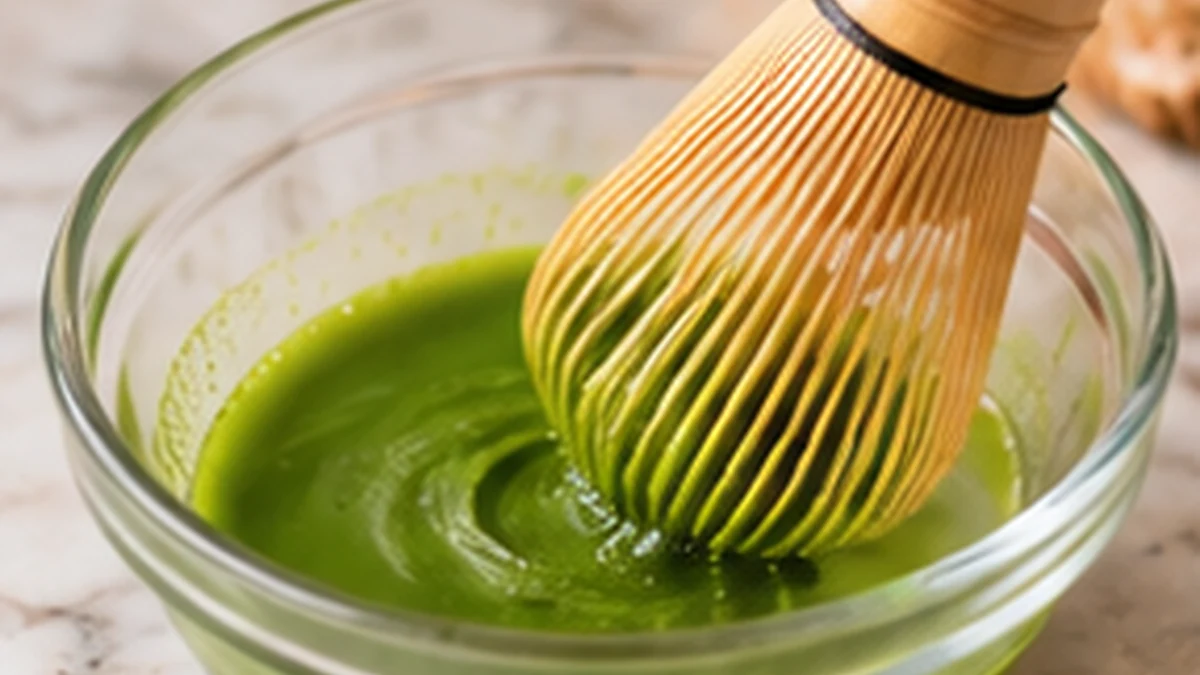
Sift 1½ teaspoons unsweetened matcha into a small bowl; whisk with 2 tablespoons warm water for 20–30 seconds until smooth and lightly foamy.
In a separate cup, stir 1 tablespoon white chocolate sauce and 1½ teaspoons peppermint syrup into ¾ cup cold 2% milk until there are no thick sauce ribbons.
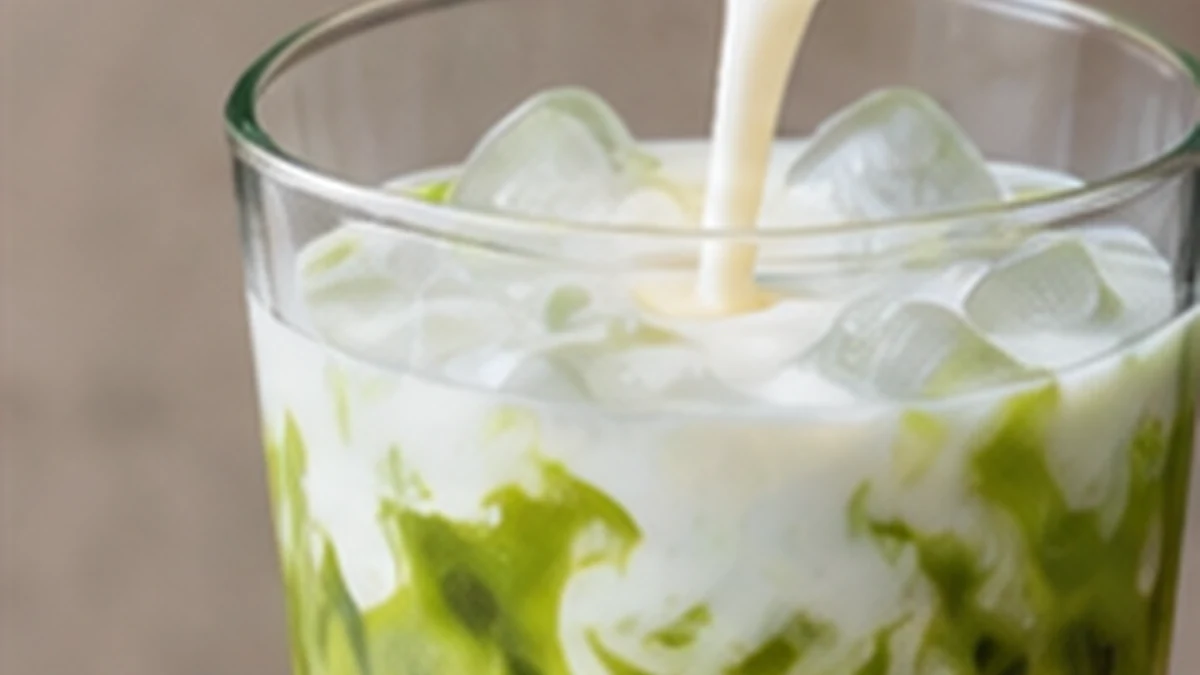
Combine the smooth matcha concentrate with the flavored cold milk and stir. Fill a 16–20 fl oz glass with about ¾ cup ice and pour the green milk mixture over it.
In a narrow cold frothing cup, combine 2 tablespoons heavy whipping cream, 1 tablespoon 2% milk, ½ teaspoon matcha powder and ½ teaspoon peppermint syrup. Froth for 15–25 seconds until airy but still pourable.
Slowly float the pale-green foam over the iced matcha. Sprinkle 1 teaspoon finely crushed red-and-white peppermint candy over the top and serve immediately.
The recipe card below provides the same measures for quick reference. Its ten-minute time is an active preparation estimate for a home batch, not a claim about how quickly Peet’s baristas prepare the restaurant drink. Warm water is used only for dispersing the matcha; no stovetop or oven cooking is needed.
When whisking matcha, start with water that feels hot but is not boiling. The objective is smooth suspension, not prolonged cooking. A bamboo chasen works, but a small electric milk frother also works in a narrow cup. Once the powder is wet, move the whisk in short back-and-forth strokes rather than stirring with a spoon. Tiny bubbles are fine; avoid whipping until half the cup is foam because the final drink needs liquid room.
Make the Peppermint Matcha Top
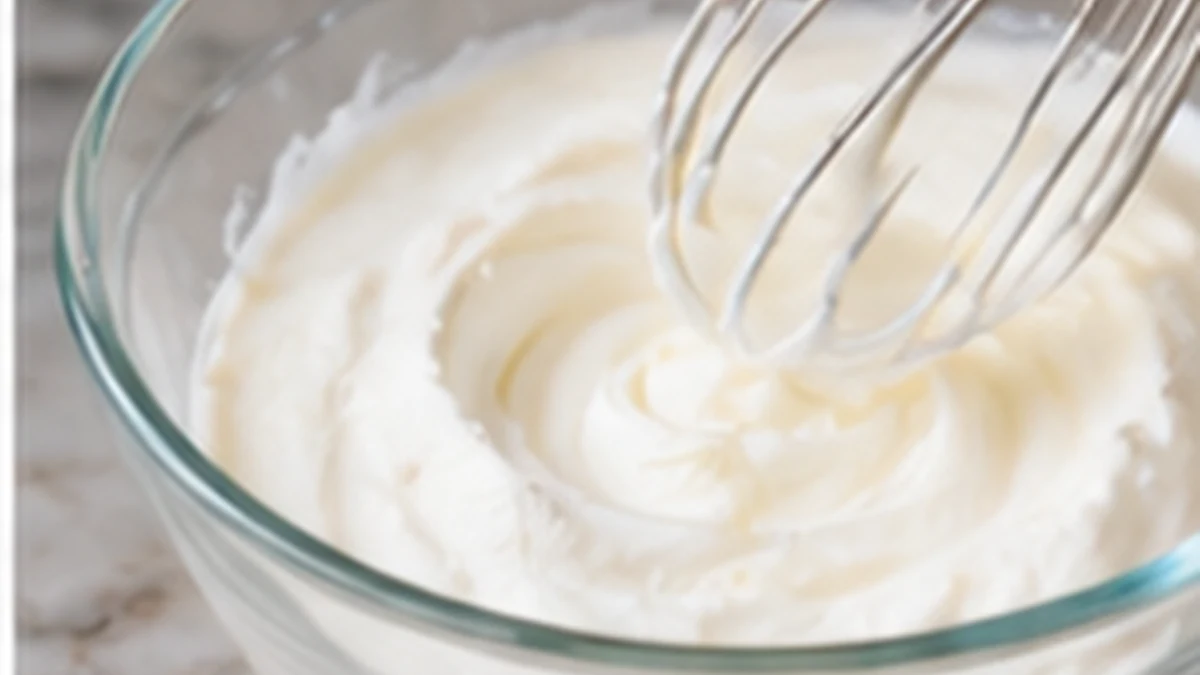
For Peet’s Peppermint Bark Matcha, chill the heavy cream and milk before using. Use a narrow vessel tall enough to contain bubbles without splashing and add the reserved matcha and peppermint syrup. Froth in a few short bursts until the mixture lightens and starts to fall in a ribbon from a spoon. Stop before it holds stiff peaks. The goal is a soft cap that spreads slowly over ice, not a pipeable whipped-cream frosting. This matters because a stiff topping can make the drink hard to sip through a straw.
A bright pale-green cap is ideal, but an exact color is not a quality test: the shade varies widely among matcha powders and the fat content of cream. If the mixture is too thick, add an extra teaspoon of cold milk and stir gently. If it is still runny, chill the cup for a few minutes and froth briefly again. Do not solve a weak foam by adding more sugar syrup, because syrup can make the texture looser.
Assemble the Glass and Keep the Layers
Pour the white-chocolate peppermint matcha over fresh ice in a tall glass, leaving at least an inch of headspace. Hold a spoon just over the surface and pour the foam over the back so it lands gently. The foam may form an imperfect green-and-cream seam; that is normal. Sprinkle the candy only after the top has settled. For a small holiday brunch, the green drink base can be prepared in a pitcher, but froth the toppings in individual portions right before serving.
Serve Peet’s Peppermint Bark Matcha immediately. The crunchy mint coating starts to soften within minutes, especially if it sits where melted ice can reach it. If you plan to photograph or present the drink, have the finished garnish and camera ready before pouring the foam. Our Merry Berry Frappuccino uses a very different blended strawberry-white-chocolate profile, but it shares the same lesson: assemble delicate layered holiday drinks at the last minute.
Peet’s Peppermint Bark Matcha vs. Other Holiday Matcha Drinks
Although they are all green drinks with seasonal toppings, Peet’s Peppermint Bark Matcha should not be treated as interchangeable with the Starbucks sugar-cookie and snowcap recipes. The company’s announced blend emphasizes white chocolate plus peppermint beneath a matcha-containing peppermint top. The sugar-cookie drink puts its bakery note in vanilla foam with colored sprinkles, while Snowcap focuses on a marshmallow-flavored foam and crisp vanilla-cookie topping. These are different flavor architectures, so a full ingredient swap is not an honest copycat.
For a coffee-based mint alternative instead of green tea, see our peppermint cream cold brew or the dessert-style snowcap marshmallow mocha. For a less-rich matcha, adjust the white chocolate first rather than doubling the matcha. In this recipe, matcha supplies the tea foundation, not a shortcut to making white-chocolate peppermint milk taste green.
Troubleshooting Your Iced Peppermint Matcha
The Drink Tastes Like Toothpaste
If Peet’s Peppermint Bark Matcha tastes too minty, the most common cause is too much flavoring. Coffee syrup is already diluted and sweetened, but it can still dominate a delicate matcha drink. Measure the two teaspoons total, and remember that the crushed peppermint candy on top adds more mint as it dissolves. If you used peppermint extract instead of syrup, that is probably the issue; the products are not interchangeable by volume. For your next glass, decrease the syrup by ½ teaspoon and taste before adding the garnish.
White Chocolate Collects at the Bottom
For Peet’s Peppermint Bark Matcha, not every sauce disperses easily in cold milk. Thick dessert toppings can settle into a sugary ribbon. Stir the measured sauce first with one or two tablespoons of milk until smooth, then add the rest of the milk gradually. If necessary, use a few seconds of gentle whisking before the ice goes in. Avoid dropping solid white-chocolate chips into a cold glass; they will not create the same smooth base.
Matcha Is Bitter or Grainy
Sift the powder and use a small quantity of warm water to wet every particle. Very hot water can intensify harsh flavors, and old matcha may already taste flat or bitter. A slightly earthy base is expected beneath white chocolate and peppermint; bitterness should not be severe. For a milder glass, use a little less matcha in the base while keeping the half teaspoon in the top so the color and flavor remain balanced. The advice in our black sesame latte is useful as a comparison of how powdered flavors disperse in milk, though its ingredients are completely different.
The Foam Sinks or Separates
Warm or overworked cream produces an unstable topping. Chill both dairy ingredients and the frothing container if possible, work in short bursts, and do not add extra syrup to correct a thin mixture. If the foam is thick and holds stiff peaks, add a teaspoon of milk and stir gently; if it is barely aerated, froth for another five seconds. Pouring over the back of a spoon helps, but a little natural mixing at the boundary is normal and does not make the drink unsafe or spoiled.
Candy Pieces Get Sticky
Peppermint candy is hygroscopic: moisture on the foam softens it. Chop the topping immediately before serving and use only the measured teaspoon. Do not mix it into the cream in advance. If you need a make-ahead component, keep crushed candy in a dry, sealed container away from humidity and add it when the guest is ready to drink. Store-bought crushed candy pieces can be convenient, but review ingredient labels and the amount of added coloring.
Adjustments That Keep the Recipe Recognizable
Less Sweet, Still Minty
Reduce the white-chocolate sauce to 2 teaspoons and leave the peppermint syrup as written. The drink becomes less rich, and the earthy matcha will become more prominent. You may also omit half of the candy topping. Do not report this modified version using the original nutrition figures because the sugar and calories have changed. For readers wanting an entirely different, non-mint fruit note, our cranberry orange coffee is a distinct seasonal option.
Dairy-Free or Vegan Adaptations
A plant-based matcha base is possible: use unsweetened oat or soy milk, a verified dairy-free white-chocolate sauce, and a whipping-friendly plant cream. However, these ingredients do not behave identically to 2% milk and heavy cream, and ordinary white chocolate contains milk. The original recipe is not dairy-free or vegan; do not tag it as either in a recipe finder based only on a substitution paragraph. Check syrup, candy and packaged cream ingredients for your individual restrictions.
Stronger Tea Without More Mint
If you enjoy a bold matcha taste, increase the plain matcha in the main drink to 2 teaspoons, leaving the peppermint syrup unchanged. The result will be slightly darker green and more tea-forward, but the foam can still stay pale if its separate half teaspoon is unchanged. For comparison, our iced sugar cookie cream matcha also uses a separately whisked matcha concentrate, making it a useful technique reference without repeating the same flavor profile.
An Extra Chocolate Accent
If you want to push the bark theme further, shave ½ teaspoon of a plain white-chocolate bar over the top in addition to the peppermint crunch. That garnish is optional and not included in the standard recipe card or nutrition estimate. The core drink already includes white chocolate sauce, so extra shavings are decorative rather than necessary. Avoid chocolate-cookie crumbs, coffee beans or marshmallows here because they introduce other flavors that are not part of the announced drink profile.
Can You Make It Ahead?
To prepare Peet’s Peppermint Bark Matcha ahead, make the matcha concentrate and white-chocolate milk in covered containers and refrigerate them promptly. Stir the flavored milk again before assembly because sauce can settle. A practical make-ahead window is within the same day, ideally no more than 24 hours for the fresh prepared concentrate and milk mixture; keep it at 40°F (4°C) or below. For detailed storage charts and temperatures, consult the official FoodSafety.gov cold-storage guidance.
Froth the cream topping close to serving time. It loses its airy structure as it sits, and a premixed jar of matcha foam is not the same as fresh cold foam. Keep the crushed candy separately in a dry container and hold ice out of all prepared components. Avoid storing a fully assembled drink for hours because diluted matcha, sunken foam and dissolved crunch produce a very different experience.
Nutrition: Homemade vs. Peet’s Official Drink
Peet’s own Peppermint Bark Matcha product page currently lists 270 calories and 9 g protein for a medium drink with the default 2% milk selection. That figure belongs to the chain’s product and cannot be copied into a recipe using different amounts of white-chocolate sauce and cream. The drink in this article is a separately calculated home serving, and food labels for the specific sauce and syrup you use should take priority over generalized database values.
For the home recipe, the working assumptions are about ¾ cup plus 1 tablespoon 2% milk, 2 tablespoons heavy whipping cream, 1 tablespoon (20 g) white-chocolate sauce, 2 teaspoons peppermint coffee syrup, 4 g total matcha powder, and 1 teaspoon (4 g) crushed peppermint hard candy. Those amounts produce an approximate 335 calories, 39 g carbohydrates, 7 g protein and 17 g fat per glass; saturated fat, sugar and sodium vary significantly with brand. The result is a transparent estimate, not laboratory-tested nutrition.
White-chocolate sauce in particular can vary greatly: some labels are primarily sugar syrup, while others contain more cocoa butter and milk solids. Check the FDA guide to the Nutrition Facts label before entering a homemade drink into a nutrition tracker. Using lower-fat milk or less sauce can cut calories, but changing the cream or syrup changes both mouthfeel and sweetness. None of the recipe numbers make this a high-protein or low-carb drink.
Allergens, Dietary Features, and Caffeine
This recipe contains milk from 2% dairy milk, heavy cream and ordinary white-chocolate sauce. Packaged sauces and candy may contain soy or other allergens, and cross-contact information depends on the manufacturer. The base recipe can be marked vegetarian only when a vegetarian-compatible white-chocolate sauce and peppermint candy without animal gelatin are chosen and confirmed by labels. Do not automatically call it gluten-free, dairy-free, vegan, keto or low-carb without a separate ingredient review.
Matcha is finely powdered green tea and contains caffeine, even though there is no espresso or brewed coffee in the ingredients. The exact milligrams vary by matcha type and weight; this recipe uses about 4 g total, split between drink and topping. If you are limiting caffeine, use less matcha and account for your other caffeinated drinks. For a completely different creamy holiday drink with no matcha, our high-protein eggnog takes a gently cooked dairy-and-egg approach, not a café-style tea approach.
Frequently Asked Questions
Is Peet’s Peppermint Bark Matcha actually new in 2026?
Yes. Peet’s announced its 2026 seasonal lineup on November 4 and identified this iced drink as a new offering at participating coffeebars for a limited time. Availability can vary by location. The company’s release describes white chocolate sauce, peppermint syrup, cold milk, a Peppermint Matcha Dream Top and peppermint crunch, but not a full home recipe.
Is this an official Peet’s recipe?
No. This is an independently developed, measured home version based on the publicly described components. Peet’s has not published the exact amounts or the formula for its Dream Top, so we do not claim an identical recreation or a verified side-by-side taste comparison. The aim is a practical way to make a comparable flavor profile with grocery-store ingredients.
Is the drink coffee-free?
Peet’s Peppermint Bark Matcha contains no espresso or coffee in this particular homemade recipe. It is made with matcha tea powder, which contains caffeine; therefore “coffee-free” does not mean “caffeine-free.” People who avoid caffeine completely should not assume this drink meets that requirement.
Can I skip white chocolate sauce?
You can make a peppermint matcha latte without it, but the result will no longer closely follow the announced Peppermint Bark Matcha profile. White chocolate adds sweetness and a rounded creaminess that a splash of plain vanilla cannot fully replace. If avoiding dairy, use a suitable dairy-free white-chocolate sauce and adjust the nutrition estimate.
What is the difference between matcha foam and whipped cream?
The topping here is a short-frothed, pourable cream-and-milk mixture containing matcha and a little peppermint syrup. Regular whipped cream is often beaten much longer until it becomes stiff enough to hold a swirl. This home preparation is a cold-foam-style interpretation of Peet’s proprietary Matcha Dream Top, not a claim to use their exact commercial recipe.
Can I make two drinks from one batch?
Yes. Double each ingredient, whisk the matcha concentrate in a slightly larger bowl and froth the topping in a container with enough headroom. Divide the base over two glasses of ice and add the foam and candy right before serving. Keep the ratio the same; do not double the mint only in the base because the topping also carries peppermint flavor.
Does the official 270-calorie number apply to this homemade version?
No. That posted amount is for a Peet’s medium drink with the selected 2% milk configuration. This homemade version uses different ingredients and a defined cream topping; the approximate nutrition in the recipe card is calculated from its own ingredient assumptions. Always check current labels when you need greater accuracy.
Final Tips for the Best Homemade Glass
The simplest way to get a good Peet’s Peppermint Bark Matcha is to protect the distinction between layers. Dissolve the white-chocolate sauce completely, whisk the matcha separately, and keep the cream icy cold while aerating it into a soft top. Add crushed peppermint only when you serve. That keeps the contrast between earthy tea, smooth white-chocolate mint and crisp candy clear instead of tasting like one oversweet green mixture.
If you are preparing a Christmas drinks spread, this Peet’s Peppermint Bark Matcha fits beside our Vanilla Peppermint D-Lite smoothie and Merry Berry Frappuccino; each has a separate base, texture and ingredient list. Use the full amounts below first, then make sweetness adjustments one at a time. It is an easy homemade holiday treat, not a low-sugar or high-protein health drink.
An independent homemade iced matcha with white chocolate and peppermint milk, a soft peppermint-matcha cream top and crushed peppermint crunch. Not the official Peet’s formula.
Total Time:10 minutes
Yield:1 large iced drink
Ingredients
Scale
1½ tsp (about 3 g) plain unsweetened matcha powder, for the base
2 tbsp (30 ml) warm water, for the matcha concentrate
¾ cup (180 ml) cold 2% dairy milk, for the base
1 tbsp (20 g) vegetarian-compatible white chocolate dessert sauce (no gelatin), for the base
1½ tsp (7.5 ml) peppermint coffee syrup, for the base
¾ cup ice cubes (about 100 g)
2 tbsp (30 ml) cold heavy whipping cream, for the foam
1 tbsp (15 ml) cold 2% dairy milk, for the foam
½ tsp (about 1 g) plain unsweetened matcha powder, for the foam
½ tsp (2.5 ml) peppermint coffee syrup, for the foam
1 tsp (about 4 g) finely crushed gelatin-free red-and-white peppermint hard candy, for topping
Instructions
Sift 1½ tsp matcha into a small bowl, add 2 tbsp warm water and whisk for 20–30 seconds until smooth and lightly frothy.
Stir 1 tbsp white chocolate sauce and 1½ tsp peppermint coffee syrup into ¾ cup cold 2% milk until the sauce is evenly dispersed. Add the whisked matcha and stir briefly.
Fill a large 16–20 fl oz glass with about ¾ cup ice. Pour in the green white-chocolate-peppermint matcha milk.
In a cold narrow cup, combine 2 tbsp heavy cream, 1 tbsp cold 2% milk, ½ tsp matcha and ½ tsp peppermint syrup. Froth 15–25 seconds until softly aerated but still pourable.
Float the foam over the iced matcha, sprinkle 1 tsp crushed peppermint candy over the top and serve right away.
Notes
This is an original, inspired-by copycat; Peet’s has not published the proprietary Dream Top recipe or ingredient ratios.
Use peppermint coffee syrup; peppermint extract is much more concentrated and cannot be substituted teaspoon for teaspoon.
For a vegetarian-friendly recipe, verify white chocolate sauce and peppermint candy labels; candy must not contain animal gelatin.
For a lighter drink reduce the white chocolate sauce or cream and recalculate nutrition; the recipe card assumes all amounts as listed.
Nutrition is an approximate calculation for one complete glass including foam and candy, not the Peet’s published 270-calorie medium beverage figure.
Contains dairy and possibly soy from packaged sauce; check labels. Matcha contains caffeine. Serve promptly and refrigerate dairy below 40°F (4°C).
Author:Adam Moretti
Prep Time:10 minutes
Cook Time:0 minutes
Category:Drinks
Method:No-Cook / Whisk and Froth
Cuisine:American café-inspired
Diet:Vegetarian
Reviewed recipe options
Make this recipe fit me
Choose one of seven popular diet options. NutriMatch will confirm whether the recipe already fits, show a reviewed adaptation when available, or recommend recipes that match your choice.
Please choose a diet first.
Not available for this recipe
This recipe cannot currently be made Dairy-Free with a reviewed adaptation.
NutriMatch will not guess at substitutions. Try one of these recipes that is already reviewed for your choice.
Recipe details, product formulas, and cross-contact information can change. Confirm current labels and use professional guidance when medically necessary.
Not available for this recipe
This recipe cannot currently be made Gluten-Free with a reviewed adaptation.
NutriMatch will not guess at substitutions. Try one of these recipes that is already reviewed for your choice.
Recipe details, product formulas, and cross-contact information can change. Confirm current labels and use professional guidance when medically necessary.
Not available for this recipe
This recipe cannot currently be made High Protein with a reviewed adaptation.
NutriMatch will not guess at substitutions. Try one of these recipes that is already reviewed for your choice.
Recipe details, product formulas, and cross-contact information can change. Confirm current labels and use professional guidance when medically necessary.
Not available for this recipe
This recipe cannot currently be made Keto with a reviewed adaptation.
NutriMatch will not guess at substitutions. Try one of these recipes that is already reviewed for your choice.
Recipe details, product formulas, and cross-contact information can change. Confirm current labels and use professional guidance when medically necessary.
Not available for this recipe
This recipe cannot currently be made Low Carb with a reviewed adaptation.
NutriMatch will not guess at substitutions. Try one of these recipes that is already reviewed for your choice.
Recipe details, product formulas, and cross-contact information can change. Confirm current labels and use professional guidance when medically necessary.
Not available for this recipe
This recipe cannot currently be made Vegan with a reviewed adaptation.
NutriMatch will not guess at substitutions. Try one of these recipes that is already reviewed for your choice.
Recipe details, product formulas, and cross-contact information can change. Confirm current labels and use professional guidance when medically necessary.
Already a reviewed match
This recipe already fits Vegetarian.
No changes are needed based on its reviewed NutriMatch classification. Check the complete ingredients, product labels, and serving details for your own needs.
Recipe details, product formulas, and cross-contact information can change. Confirm current labels and use professional guidance when medically necessary.